
Premise 1: Jesus Was The Only Non-Hypocrite
Jesus was the only true non-hypocrite. Unlike every other human being, He lived in perfect alignment with His words, His values, and His identity. There was never a gap between what Jesus taught and how He lived. He called others to love, forgive, serve, and speak truth—and He did each of these things flawlessly. While even the most sincere people struggle with inconsistency and self-deception, Jesus demonstrated complete moral integrity. He never masked His intentions, never pretended to be something He wasn’t, and never sought to impress others at the expense of truth.
What made Jesus so radically different from the religious leaders of His day was His authenticity. He did not merely preach righteousness—He embodied it. He did not seek applause or public admiration—He sought obedience to the Father, even when that obedience led to rejection, suffering, and ultimately death. In fact, it was this very authenticity that caused His own family to reject Him and provoked hypocritical leaders to plot His execution—and carry it out. In a world saturated with masks, image management, and moral duplicity, Jesus stood apart as unmistakably transparent, humble, and sincere.
This is why His words carried such authority and why His critiques of hypocrisy were so piercing—because He alone was above reproach. And it’s also why His invitation is so powerful: not to follow a flawed human model, but to follow the One who never failed, never faked, and never fell short.
Scriptures Showing Jesus’s Non-Hypocrisy and Genuineness
| Theme | Scripture Reference | Full Scripture Text |
|---|---|---|
| Perfect Obedience to God | John 8:29 | “The one who sent me is with me; he has not left me alone, for I always do what pleases him.” |
| Sinlessness | Hebrews 4:15 | “For we do not have a high priest who is unable to empathize with our weaknesses, but we have one who has been tempted in every way, just as we are—yet he did not sin.” |
| Truthfulness | John 14:6 | “Jesus answered, ‘I am the way and the truth and the life. No one comes to the Father except through me.’” |
| Consistency in Word & Action | 1 Peter 2:22 | “He committed no sin, and no deceit was found in his mouth.” |
| No Hidden Agenda | Matthew 22:16 | “They sent their disciples to him along with the Herodians. ‘Teacher,’ they said, ‘we know that you are a man of integrity and that you teach the way of God in accordance with the truth. You aren’t swayed by others, because you pay no attention to who they are.’” |
| Just and Upright | Isaiah 53:9 | “He had done no violence, nor was any deceit in his mouth.” |
| Faithful Witness | Revelation 1:5 | “…and from Jesus Christ, who is the faithful witness, the firstborn from the dead, and the ruler of the kings of the earth. To him who loves us and has freed us from our sins by his blood…” |
| Genuine Compassion | Matthew 9:36 | “When he saw the crowds, he had compassion on them, because they were harassed and helpless, like sheep without a shepherd.” |
| Integrity in Teaching | John 7:18 | “Whoever speaks on their own does so to gain personal glory, but he who seeks the glory of the one who sent him is a man of truth; there is nothing false about him.” |
These scriptures make it unmistakably clear: Jesus stands alone in perfect integrity, truth, and moral consistency. While every human being struggles with hypocrisy and failure, Jesus never spoke a false word, never acted with selfish motive, and never wavered from the will of God. His life was the embodiment of truth—not only in what He taught, but in how He lived. In a world full of pretense and contradiction, Jesus offers a model of flawless authenticity.
Christianity Should Be Measured by Jesus—Not by Those Who Fail to Reflect Him
Too often, people judge Christianity based on the actions of those who claim to follow Christ rather than by Christ Himself. This is understandable—when a professing Christian acts hypocritically, harshly, or immorally, it can create disillusionment. But it’s also a mistaken way to evaluate the truth of the Christian faith. The standard of Christianity is not any flawed human being, but Jesus Christ—who lived a sinless life, loved perfectly, forgave radically, served selflessly, and laid down His life for others.
Jesus never asked His followers to be the measure of truth; instead, He pointed to Himself as the way, the truth, and the life (John 14:6). He even warned that many would falsely claim His name while not truly knowing Him (Matthew 7:21–23), and that wolves in sheep’s clothing would rise among His followers (Matthew 7:15). In other words, moral failure among Christians is not a contradiction of Jesus’ teachings—it’s a tragic confirmation of His warnings.
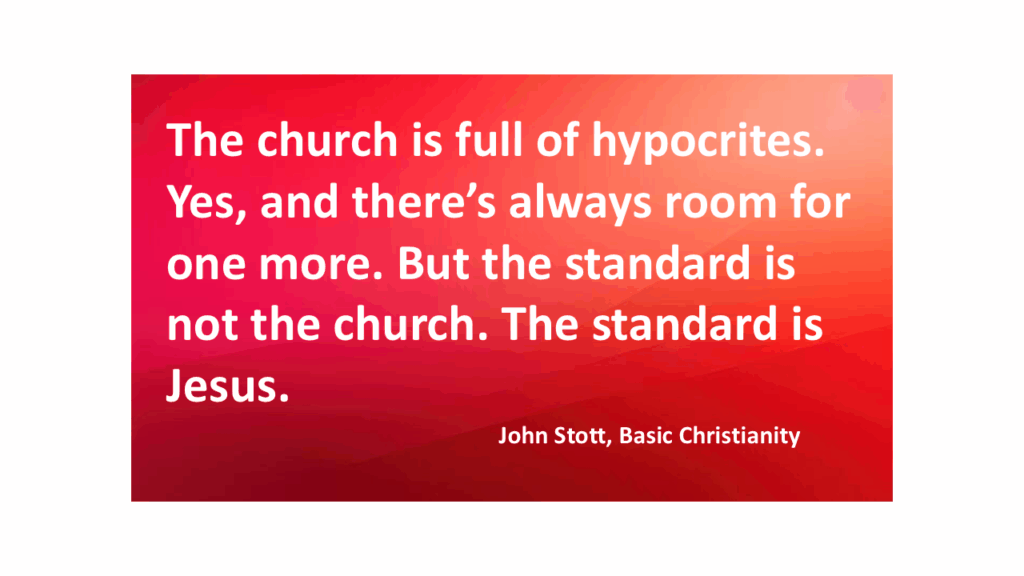
No one judges the brilliance of a symphony by a novice violinist’s mistakes. Likewise, Christianity should not be dismissed because some of its followers fall short of its perfect Founder. Jesus’ life and teachings remain the purest expression of truth, compassion, and righteousness the world has ever known. The question is not how well others have followed Him, but whether He is who He claimed to be.
If we want to understand Christianity fairly, we must begin with Christ—His words, His actions, His cross, and His resurrection. He alone embodies the heart of the faith. Let the failures of others humble us, but let the beauty of Christ compel us to seek the real thing.
Challenge Question: If Christianity is centered on the life and teachings of Jesus, is it reasonable to reject it based on the failures of His followers—or does that risk missing the true standard altogether?
Premise 2: Hypocrisy Poses A Huge Problem For Everyone
The true test of a man’s character is what he does when no one is watching
John Wooden—UCLA National Championship Coach
What if every thought, word, and action of your life were recorded—every conversation, every hidden motive, every private moment? Imagine a surveillance tape that didn’t miss a single second, capturing not just what you did publicly, but what you thought privately. Most of us would be horrified at the idea. Why? Because deep down, we know we’ve all worked hard to hide the worst parts of ourselves so others will believe we’re better than we truly are.
But what if this scenario isn’t hypothetical at all? What if there really is a record—one not made by human hands, but by God Himself? Scripture tells us that nothing is hidden from His sight. He sees our outward actions, our unspoken thoughts, and even the intentions of our hearts. While we may be able to fool others—and even ourselves—God sees it all in perfect clarity.
And no creature is hidden from his sight, but all are naked and exposed to the eyes of him to whom we must give account.
Hebrews 4:13
When we think of hypocrisy, we usually think of what we saw someone else do or say. Rarely do we think about what God saw us do or heard us say.
The bigger issue always is ” What did God hear from us, or What did God see us do” The Bible speaks about hypocrisy as a problem between us and God. The God who knows every thought, word, action, non-action, attitude and motive can see into every situation we are in.
God Will Judge the Real Us Not the Person We Project to the World
There is nothing concealed that will not be disclosed, or hidden that will not be made known
Luke 12:2
The Bible describes God as the perfect judge—flawless in wisdom, justice, and truth. For God to judge each person with complete fairness, He must know every detail perfectly. And He does. Scripture affirms that God sees every action, hears every word, and even knows every thought we’ve ever had. Nothing escapes His notice.
Now imagine if that kind of awareness existed on a human level. What if your children, your parents, your spouse, your boss, or your neighbors had access to a full record of your life—everything you’ve ever said or done in secret? Would they view you the same way? Most of us instinctively know the answer: probably not. We all have moments we hide, motives we disguise, and thoughts we’d never want others to hear.
This isn’t just a Christian problem—it’s a human problem. Hypocrisy is the universal condition of presenting a cleaner, nobler version of ourselves to the world while concealing our brokenness. And yet, many are quick to judge others harshly while giving themselves a pass. Jesus warned against this very thing when He said, “First take the plank out of your own eye, and then you will see clearly to remove the speck from your brother’s eye” (Matthew 7:5).
Even more sobering than God’s perfect knowledge of our thoughts, words, deeds, and motives is this: He promises to judge us by the very standard we use to judge others. No one will be measured by an abstract or hidden rule, but by the criteria they themselves apply to those around them.
“Do not judge others, and you will not be judged … The standard you use in judging is the standard by which you will be judged.
Jesus—The Sermon On The Mount
This leaves no room for moral superiority—whether for the Christian or the skeptic. Jesus is making it clear that anyone who demands perfection from others in matters of hypocrisy or any other sin must be prepared to be judged by that very same standard. Throughout the Sermon on the Mount, He repeatedly exposes humanity’s inability to live in perfect sinlessness, reminding us that harsh judgment of others does not elevate us, but instead turns the microscope back onto our own hearts in the eyes of God.
For Christians, the reality that God sees and hears everything is not only sobering—it’s motivating. It’s one of the primary reasons believers seek God’s mercy in the first place. Knowing that we cannot hide from Him drives us toward forgiveness, humility, and repentance. And when we fail again—as we all do—it’s the awareness of His full knowledge and His unmatched grace that leads us to confess our sins and turn back to Him. Christianity doesn’t deny hypocrisy—it acknowledges it and offers a solution through Christ.
In light of this, the reality is sobering: we are all hypocrites to some degree, putting on a more polished version of ourselves while covering over our flaws. But God sees the real us—not to shame us, but to invite us to honesty, repentance, and forgiveness. The gospel isn’t that we have to hide our hypocrisy better—it’s that Jesus died for hypocrites like us, offering grace and transformation to those willing to walk in the light.
Challenge Question: If God truly sees every thought, word, and action—even those we’ve hidden from others—how should that awareness shape the way we judge others, view ourselves, and respond to the offer of forgiveness?
Premise 3: Christianity Offers The Antidote To Hypocrisy
When God’s Spirit is present, He brings true liberation—freedom from sin, from condemnation, and from spiritual blindness. But this freedom goes even deeper than moral cleansing; it brings the freedom to be real us without shame, guilt, or pretense.
Now the Lord is the Spirit, and where the Spirit of the Lord is, there is freedom.
2 Corinthians 3:17
When someone receives the gift of salvation through Christ, they no longer have to hide behind a polished image or pretend to be perfect. The need to perform, impress, or cover up flaws is replaced by the security of being fully known and fully loved by God. Because Jesus has already paid the price for sin, there is no longer any condemnation for those who are in Him (Romans 8:1). That means believers are free to walk in the light, not in fear or shame.
This freedom also transforms how we relate to others—especially within the church. The Spirit creates a community where no one has to pretend, because everyone understands they are saved by grace, not by good behavior. The church isn’t a gathering of the spiritually elite; it’s a place where broken people meet the Healer and help one another grow. In a Spirit-filled church, it’s not weakness that disqualifies you—it’s denying your weakness. Confession is welcomed, burdens are shared, and grace flows freely. As Paul said in 2 Corinthians 12:9, “I will boast all the more gladly of my weaknesses, so that the power of Christ may rest upon me.”
Where the Spirit of the Lord is, there is liberty—and that liberty includes the freedom to be authentic, vulnerable, and forgiven.
The Gospel Sets Us Free from Judgmentalism and Hypocrisy
One of the most liberating truths of the gospel is that it not only frees us from sin and condemnation—but also from the toxic patterns of judgmentalism and hypocrisy. When we truly understand the message of grace, it changes how we see both ourselves and others.
Judgmentalism thrives in a world where people believe they must earn their worth by comparison. We judge others harshly to feel better about ourselves or to mask our own failures. But the gospel levels the playing field. It tells us that all have sinned and fall short of the glory of God (Romans 3:23)—and that our only hope is found in Jesus, not in our performance. When we grasp this, we no longer need to elevate ourselves by tearing others down. The gospel removes our self-righteousness and replaces it with humility, because we know we’re all recipients of undeserved mercy.
Likewise, the gospel sets us free from hypocrisy—the pressure to pretend, perform, or hide our flaws to maintain a “righteous” image. In Christ, we are already fully accepted, not because we are perfect, but because He is. This means we can stop living double lives, stop putting on masks, and start being honest about our struggles. We no longer need to fear being exposed, because our identity is no longer built on perfection—it’s built on grace.
As a result, the church becomes not a courtroom of critics but a hospital for sinners. In a gospel-centered community, we’re free to speak truth in love without condemnation, and to confess our sins without fear of rejection. The gospel doesn’t just change our status before God—it transforms our relationships with others by replacing judgment with compassion and hypocrisy with authenticity.
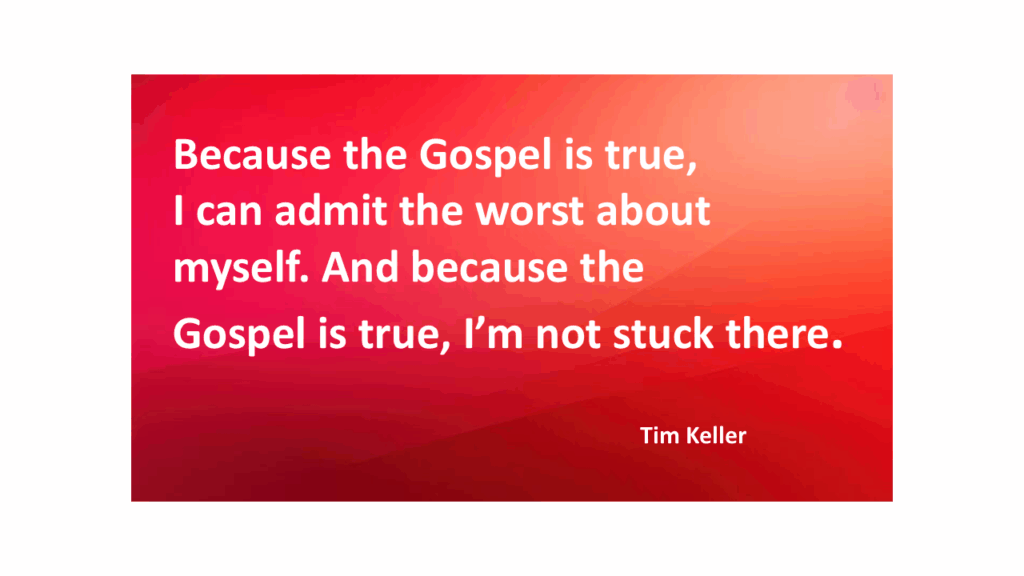
True freedom is found in knowing that the Creator of the universe sees you completely—flaws, failures, and all—and still loves you fully. His love is not based on your performance, your image, or your ability to hide your imperfections. It is unconditional. And He offers that love freely to anyone who is willing to humble themselves and admit that the real, broken version of themselves needs a real Savior. In that moment of honesty and surrender, we no longer have to pretend—we are set free by grace to be known, forgiven, and truly transformed.
Challenge Question: If it were true that God sees everything about you—your thoughts, struggles, failures—and still offers love, forgiveness, and freedom without requiring you to pretend or perform, would that change how you view Him? What keeps people from exploring that kind of relationship?
ThinkCube Veracity Grid
- Have I considered the facts carefully and with an open mind?
- Is my conclusion the result of a careful examination of the facts, or is it a conclusion made in spite of the facts?
- Is my conclusion the one that makes the most sense of the evidence?