
Premise 1: Mankind’s Conscience Reveals A Moral Law Whose Source Cannot Be Found In The Natural World
When Gentiles, who do not have the law, by nature do what the law says, they are a law to themselves even thought they do not have the law. They show that the work of the law is written on their hearts, while their conscience also bears witness, and their conflicting thoughts accuse or even excuse them
Romans 2:14-15
The word Gentiles comes from the Greek word meaning “nations” or “ethnicities,” referring to all people outside the Jewish nation. In Romans 2, Paul is making the point that although the Jews were the only nation entrusted with the Scriptures—God’s revealed biography and moral standard for living—other nations still demonstrated a basic awareness of right and wrong. Even without having read the Ten Commandments, these Gentile nations reflect many of their core principles. Their behavior reveals that the moral law of God has been written on their hearts, evidenced by their conscience and moral instincts. This universal moral awareness affirms that God’s standards are not arbitrary or confined to one culture, but are embedded in the human soul. Here is a breakdown of Romans 2:14-15:
“For when Gentiles, who do not have the law…”
- Who are the Gentiles?
The word “Gentiles” refers to non-Jewish nations or ethnic groups—those who were not given the Law of Moses (the Torah). They didn’t grow up with the written Word or the covenant God made with Israel. - What is “the law” here?
Paul is referring specifically to the Mosaic Law—the set of commandments given to Israel through Moses, including the Ten Commandments and ceremonial, civil, and moral laws.
“…by nature do what the law requires…”
- Even though Gentiles didn’t have direct access to the Law, many still lived according to basic moral principles—honoring parents, prohibiting murder, theft, lying, etc.
- This shows that humans are not entirely ignorant of right and wrong. There is a natural or built-in moral compass—a form of general revelation.
“…they are a law to themselves, even though they do not have the law.”
- This doesn’t mean they invent morality subjectively. Rather, it means they demonstrate an inner awareness of moral law apart from the written Law.
- God has given all people a conscience and moral sense, making them accountable. They possess a kind of internal moral standard, even without external Scripture.
“They show that the work of the law is written on their hearts…”
- This echoes the idea of natural law: that moral truth is embedded in human nature.
- It also foreshadows the New Covenant language in Jeremiah 31:33—“I will put my law within them, and I will write it on their hearts…”
- Even without reading the Bible, people reflect God’s moral law in their basic understanding of right and wrong.
“…while their conscience also bears witness…”
- Conscience is the inner voice or faculty that affirms or condemns our behavior. It’s not infallible but serves as a witness to the moral law.
- It testifies to the reality of accountability and moral awareness within each person.
“…and their conflicting thoughts accuse or even excuse them.”
- This speaks to the inner moral debate that everyone experiences: guilt, justification, moral reflection.
- Sometimes our conscience condemns us for wrongdoing; other times it may affirm that our actions were right or justified.
- This internal conflict is proof of a built-in moral standard and highlights personal responsibility before God.
Paul is teaching that even people who’ve never received the written Law of God still have an inner awareness of moral truth. Their actions show that God’s law is “written on their hearts” through conscience and moral intuition. This makes them morally accountable before God—“without excuse” (Romans 1:20).
This passage sets the groundwork for Paul’s larger argument in Romans: that all people—Jew and Gentile alike—are accountable before God and in need of the Gospel. It also powerfully affirms the idea that God’s witness through conscience and nature is universal.
The Conscience Reveals To Us A Moral Law Whose Source Cannot Be Found In The Natural World
Conscience reveals to us a moral law whose source cannot be found in the natural world.
C.S. Lewis—Mere Christianity
The Moral Law tells us the tune we have to play: our instincts are merely they keys
One of the most profound clues to the existence of God is not written in the stars or embedded in DNA—it is found within every human heart. Across all cultures and time periods, people possess an inner voice known as the conscience—a built-in sense of moral right and wrong. This conscience doesn’t merely reflect social customs or personal preferences; it speaks with authority, calling us to justice, compassion, honesty, and self-sacrifice. As C.S. Lewis observed, the conscience reveals a moral law whose source cannot be found in the natural world. It points beyond biology, evolution, or environment to something—or Someone—greater. This inner moral awareness is not an accident; it is a signal from the divine, a universal witness that we live in a moral universe governed by a moral Lawgiver.
This profound insight, famously expressed by C.S. Lewis, strikes at the very core of the human condition. It suggests that there is something within us—our conscience—that points beyond us.
The Conscience as an Internal Compass
Every human being, regardless of culture, education, or religion, has an internal sense of right and wrong. This moral instinct may vary in expression across societies, but the underlying categories—such as justice, honesty, mercy, loyalty, and fairness—are remarkably consistent. People may disagree on what constitutes justice, but almost no one denies that justice matters.
This universal presence of conscience is not merely a byproduct of social conditioning. If that were the case, moral standards would be entirely relative, and things like torture, betrayal, or genocide would have no grounds for universal condemnation. Yet our deepest moral instincts insist that some things are truly wrong—regardless of time, place, or consensus.
Naturalism Can’t Fully Explain It
If the natural world were all that existed—merely atoms, molecules, evolutionary drives, and survival instincts—then morality would be nothing more than a social utility. Under pure naturalism, concepts like “good” and “evil” would be illusions, evolved to help us cooperate or preserve the species.
But conscience stubbornly defies this reduction. It doesn’t merely tell us what is useful, but what is right. It often tells us to do what is hard, even dangerous. Heroes who risk their lives for strangers, whistleblowers who speak out at great cost, or individuals who wrestle with guilt despite not being caught—these are not behaviors that can be fully explained by evolutionary advantage.
Conscience obligates. It commands. It convicts. And that authority, that weight, cannot be traced to nature alone.
The Moral Law Points to a Moral Lawgiver
If there is a real, objective moral law—one that transcends cultures and personal preferences—then it must come from outside the system. Just as physical laws point to an intelligent Designer, so moral laws point to a personal, moral Lawgiver.
This is why Lewis wrote in Mere Christianity:
“The moment you say that one set of moral ideas can be better than another, you are, in fact, measuring them both by a standard… You are, in fact, comparing them with some real morality, admitting that there is such a thing as a real Right, independent of what people think, and that some people’s ideas get nearer to that real Right than others.”
In other words, conscience doesn’t just tell us we have preferences. It tells us we are accountable.
Conscience Prepares Us for the Gospel
Conscience is one of God’s universal witnesses to all humanity. It doesn’t tell the whole story of redemption—but it prepares the heart to receive it. It tells us that we fall short of even our own standards, let alone God’s. It drives us to seek forgiveness, justice, and meaning.
And in that sense, conscience not only reveals a moral law—but reveals our need for grace.
The conscience is not a product of biology or accident. It is a divine imprint, a whisper of God’s voice within us. It reminds us that morality is real, that justice matters, and that we are accountable. And most importantly, it points beyond itself—to a perfect, moral, and personal Creator.
Challenge Question: If our conscience consistently calls us to a standard of right and wrong that transcends personal preference and cultural norms, what does that suggest about the origin of morality—and are we accountable to the One who gave it?
Premise 2: The Universal Testimony Of Conscience Is Evidence of God
The universal presence of conscience in every human heart—across all cultures and times—is compelling evidence for the existence of a moral Lawgiver. It reflects an inner awareness of right and wrong that cannot be fully explained by evolution, culture, or environment alone. This moral compass points to a God who has written His law on every heart.
con·science
/ˈkänSHəns/
The sense or consciousness of the moral goodness or blameworthiness of one’s own conduct, intentions, or character together with a feeling of obligation to do right or be good.
The human conscience is universal. Anthropologists have consistently observed that an innate moral awareness exists across all cultures—a shared understanding of right and wrong, including prohibitions against theft, adultery, lying, murder, and selfishness. These universal moral intuitions suggest that humanity is not merely the byproduct of blind natural evolution, but rather possesses a soul and consciousness capable of moral reflection. Unlike animals, humans not only contemplate their own existence but also wrestle with how they—and their societies—ought to behave while they exist. The nearly 5,000 religions found throughout the world, along with the moral codes embedded even within the most primitive or isolated civilizations, testify to this deep-seated sense of duty, honor, and accountability. Such moral instincts seem to point not to randomness, but to a design—suggesting that moral law is woven into the very fabric of human nature.
The unique characteristic of conscience is that it is not only universally observed across all nations and cultures—it is also personally experienced within the soul of every individual. While nature speaks loudly and beautifully of God’s existence, power, intelligence, and sovereignty over space, time, and matter, conscience speaks more intimately. It is not merely external evidence, but internal testimony.
Scriptural Support for God’s Moral Law Written Within
| Scripture | Reference | Summary / Relevance |
|---|---|---|
| Romans 2:14–15 | “Indeed, when Gentiles, who do not have the law, do by nature things required by the law… they show that the requirements of the law are written on their hearts, their consciences also bearing witness…” | Paul affirms that even those without Scripture instinctively know moral truths, proving God’s moral law is internal and universal. |
| Romans 1:19–20 | “What may be known about God is plain to them… For since the creation of the world God’s invisible qualities… have been clearly seen… so that people are without excuse.” | God reveals Himself through both nature and inner knowledge, making moral awareness part of His witness. |
| Ecclesiastes 3:11 | “He has also set eternity in the human heart; yet no one can fathom what God has done from beginning to end.” | Humanity is uniquely wired to long for meaning, truth, and transcendence—evidence of a God-shaped conscience. |
| John 1:9 | “The true Light that gives light to everyone was coming into the world.” | Christ, the moral and spiritual Light, illuminates every human being—pointing to an internal awareness of right and wrong. |
| Proverbs 20:27 | “The spirit of man is the lamp of the Lord, searching all the innermost parts of his being.” | Our inner moral awareness is described as God’s own searchlight within us. |
| Genesis 1:27 | “So God created mankind in His own image…” | Being made in God’s image includes a moral and spiritual nature that reflects His character. |
| Jeremiah 31:33 | “I will put my law in their minds and write it on their hearts…” | God’s moral law is not only external but written internally on human hearts—a foreshadowing of the role of conscience. |
| 2 Corinthians 4:2 | “…commending ourselves to every man’s conscience in the sight of God.” | Paul appeals to the conscience as a reliable moral witness before God. |
| Titus 1:15 | “To the pure, all things are pure… but to those who are corrupted… nothing is pure. In fact, both their minds and consciences are corrupted.” | A corrupted conscience implies there is a right and original moral standard built in. |
| 1 Timothy 1:5 | “The goal of this command is love, which comes from a pure heart and a good conscience and a sincere faith.” | A good conscience is foundational to sincere faith and moral living. |
Nature may lead us to conclude there is a Creator of great might and precision, but conscience tells us something even more personal: that this Creator cares about moral choices, justice, goodness, and how we treat one another. In that sense, the conscience provides richer data—a deeper starting point—because it doesn’t just hint that a divine Mind exists; it confronts us with the reality that this Mind expects something from us. It calls us to live not only with awareness, but with integrity.
Thus, while nature reveals the majesty of God, conscience reveals His moral character. And while the stars above may stir wonder, it is the whisper within that stirs accountability.
The Conscience Not Only Instills God’s Moral Code Instinctively—It also Serves as Evidence of His Existence
While the natural world reveals God’s power, precision, and beauty, the conscience speaks more intimately. It doesn’t just show that there is a God; it tells us that this God cares how we live. The conscience holds us accountable, often without external pressure, and compels us to reflect, repent, or justify our actions. This internal witness is not something we created—it is something we respond to, and at times, even try to silence. The very fact that we feel guilt, remorse, or a call toward integrity points to a moral standard outside of ourselves. In this way, the conscience functions not just as a moral compass, but as a kind of spiritual radar—direct evidence that we are not alone, and that the One who made us has written His law upon our hearts.
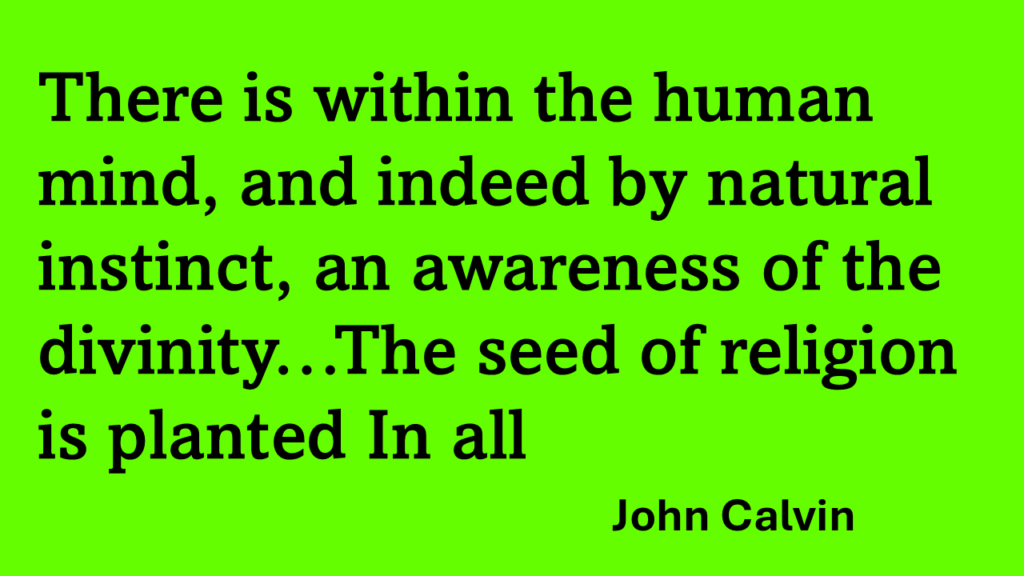
Every human being carries an innate sense of the divine. This awareness is not merely an abstract idea or philosophical construct—it is deeply embedded in the conscience, the internal moral compass that distinguishes right from wrong and compels moral reflection.
The human conscience acts as the echo chamber of this instinctive awareness of God. It not only affirms that moral categories such as justice, guilt, and goodness exist—it implies that they are grounded in a higher moral authority. People across all cultures and times have felt the pangs of guilt, the need for forgiveness, the drive to justify or atone for their actions. This persistent moral awareness is not accidental. It points to something (or Someone) beyond ourselves who holds us accountable, even when no human witness is present.
Challenge Question: If the human conscience is merely a product of evolutionary survival or social conditioning, why does it so often condemn behaviors that could benefit survival, power, or self-interest—and why does it persist even when no social penalty is present?
Premise 3: Religion Is The Human Conscience Responding To The Divine
Virtually every civilization throughout history—whether primitive or advanced—has developed some form of religious expression: temples, sacrifices, prayers, sacred texts, rituals, or moral codes. The universality of religion is not merely sociological; it is profoundly existential. At the heart of this religious impulse is the human conscience—often serving as the catalyst that drives people to seek reconciliation with a higher power. Conscience compels individuals to ask questions of origin, purpose, and destiny. Whether through shame, guilt, or the longing to live rightly, it functions like a spiritual radar—sensing the divine even before formal theology is introduced. Across cultures and eras, both primitive tribes and modern societies have sought to appease the very God they intuitively believe gave them this moral awareness in the first place.
All of the world’s approximately 4,700 documented religions testify to a profound and universal truth: that the human conscience is not only a shared moral compass, but also a restless witness within the soul. Across every culture and civilization, religious systems—whether ancient or modern, structured or tribal—reveal two consistent realities. First, that morality is not arbitrary but instinctively recognized through conscience. And second, that when this moral law is violated, people instinctively seek a way to appease, silence, or cleanse the guilt that follows.
How Primitive Tribes Seek to Appease Conscience Through Religion
| Practice | Explanation / Purpose |
|---|---|
| Animal sacrifices | Blood offerings made to appease angry gods or spirits after wrongdoing. |
| Offerings of crops or possessions | Giving up valued items to show remorse and gain divine favor or protection. |
| Shamanic rituals or trance states | Spiritual mediators (shamans) seek guidance or forgiveness from the spirit world. |
| Self-inflicted pain or bloodletting | Demonstrating sincerity, remorse, or payment for sin through physical suffering. |
| Ceremonial cleansing (water, smoke, fire) | Purification rituals symbolizing the removal of guilt or spiritual defilement. |
| Oral confession to elders or spirits | Public or private acknowledgment of wrongdoing to relieve guilt and restore harmony. |
| Taboos and moral codes | Following sacred cultural laws to avoid spiritual guilt and maintain good standing. |
| Rites of passage or initiation | Symbolic acts marking moral transition, often including confession, trials, or sacrifice. |
| Appeasing ancestor spirits | Rituals and offerings directed toward ancestors believed to hold power over blessing or curse. |
| Totemic or symbolic rituals | Engagement with spiritual symbols or objects believed to restore balance and peace. |
Ways the World’s Religions Have Sought to Appease the Conscience
| Religion | Method of Appeasement | Explanation / Purpose |
|---|---|---|
| Judaism | Observance of the Law (Torah, mitzvot) | Obedience to God’s commandments to preserve a clean conscience and honor the covenant. |
| Yom Kippur (Day of Atonement) | Annual fasting and confession to seek reconciliation with God and others. | |
| Tzedakah (charitable giving) | Alleviating guilt and fulfilling justice through acts of generosity. | |
| Ritual purity laws (e.g., mikveh) | Physical and symbolic cleansing to restore moral and ceremonial purity. | |
| Islam | Daily prayers (Salah) | Structured prayer for repentance, reflection, and spiritual alignment with God. |
| Fasting during Ramadan | Purification through self-denial and remembrance of God. | |
| Almsgiving (Zakat) | Purifying wealth and conscience through obligatory charity. | |
| Pilgrimage to Mecca (Hajj) | Humble devotion to seek forgiveness and spiritual renewal. | |
| Repentance (Tawbah) | Sincere turning away from sin and returning to obedience. | |
| Hinduism | Karma and dharma observance | Living rightly to avoid guilt and purify the soul across lifetimes. |
| Temple offerings and puja rituals | Acts of devotion to deities to restore spiritual and moral balance. | |
| Pilgrimage to sacred rivers or temples | Journey for spiritual cleansing and reconciliation with the divine. | |
| Meditation and chanting mantras | Inner cleansing and release from desires that burden the conscience. | |
| Buddhism | Eightfold Path and moral discipline (sila) | Ethical conduct aimed at overcoming guilt, craving, and suffering. |
| Meditation and mindfulness | Developing awareness to confront and release guilt and illusion. | |
| Acts of compassion and generosity (dana) | Altruistic behavior to atone for past wrongs and gain merit. | |
| Monastic life or retreat observance | Detachment from worldly attachments that give rise to guilt and suffering. | |
| Sikhism | Honest living and service to others (seva) | Ethical living and compassion ease the conscience and honor God. |
| Daily prayer and scripture recitation | Aligning one’s heart with divine truth for spiritual cleansing. | |
| Pilgrimage to Harmandir Sahib (Golden Temple) | Symbolic renewal and humble devotion to seek peace with God. | |
| Community service and equality | Righteous action reflecting divine justice and moral responsibility. | |
| Taoism / Confucianism | Harmony, virtue, and filial piety | Moral order and respectful living to maintain inner and social balance. |
| Ancestor veneration and ritual offerings | Honoring ancestors to restore spiritual and moral alignment. | |
| Meditation, qi cultivation, detachment | Releasing guilt and tension by flowing in harmony with the Tao or moral principle. |
This global phenomenon demonstrates that the conscience is not a cultural invention but a universal human faculty—implanted deeply in the human spirit. Sacrifices, prayers, pilgrimages, purification rituals, confessions, and codes of conduct all reflect mankind’s inner awareness that something is wrong—and something must be done about it. These diverse religious expressions point to a deeper, shared yearning: the longing to be made right, not just with oneself or society, but with the higher moral authority the conscience ultimately points to.
In this sense, Calvin’s “seed of religion” planted in every human heart blossoms through conscience. It becomes a motive force behind universal religiosity—compelling humans to worship, to seek, to pray, to moralize, and ultimately to acknowledge that they are not the highest authority in their own lives. From Judaism to Taoism, from Mecca to the Ganges, the world’s major religions reveal a shared human longing: to silence guilt, restore harmony, and be made right. Though the methods vary, the conscience speaks universally—urging each person toward cleansing, reconciliation, and moral peace.
Challenge Question: If morality is merely a product of social evolution or cultural conditioning, why do people across radically different cultures and time periods—from ancient tribes to modern cities—experience similar feelings of guilt, and why do they instinctively seek ways to relieve or “atone” for that guilt? Could this point to a deeper, universal moral law—and perhaps even a Moral Lawgiver?
Premise 4: The Human Conscience Is God’s Personal Witness To Every Single Person On Earth
The human conscience is not just a psychological mechanism or a product of cultural conditioning—it is God’s personal and internal witness to every single person on earth. Unlike external revelations found in nature, Scripture, or religious traditions, the conscience speaks from within. It operates universally, across every language, nation, and belief system, pointing each individual to a standard of right and wrong that transcends societal norms.
This inner voice urges us toward truth, justice, compassion, and integrity—often without formal instruction. It convicts us when we do wrong, affirms us when we do right, and compels us to seek forgiveness when we fall short. In this way, conscience functions as a moral compass—but one that doesn’t merely reflect our environment; it reflects the character of the One who made us.
Mankind is the only species—out of the estimated 8 to 10 million on Earth—that contemplates existence, wrestles with the concept of a Creator or higher power, reflects on mortality, and distinguishes between right and wrong. While all other species live by instinct and are driven by the mechanics of brute survival, humans possess a unique moral awareness that transcends biology. This internal compass—known as the conscience—not only separates us from the animal kingdom but serves as one of the clearest indicators that we are made in the image of God. It is the signature of something greater stamped on the human soul, pointing beyond matter and molecules to moral law and meaning.
Even in the absence of written law or divine revelation, the conscience silently declares: There is a God—and He cares how you live. It bears witness to our moral accountability and leaves us without excuse, as Romans 2:15–16 affirms:
“They show that the work of the law is written on their hearts, while their conscience also bears witness… on the day when God judges the secrets of men by Christ Jesus.”
Ultimately, the conscience is God’s internal call to every person—a personal, persistent reminder that we were created by a moral and relational Creator who desires not just obedience, but reconciliation.
Where the Gospel Is Unheard, the Conscience Still Speaks
Romans 2:15–16 says that “their conscience also bears witness,” revealing that the conscience does more than simply inform us of right and wrong—it testifies to the very existence and nature of the One who defines right and wrong. It acts not merely as a moral compass, but as a courtroom within the soul where thoughts either accuse or defend one’s actions in light of an ultimate standard. That standard is not culturally defined or personally invented; it is rooted in the character of God.
The conscience is not an impersonal alarm system—it is a personal witness placed within every human being that echoes the voice of a moral Lawgiver. This is why moral conviction feels so deeply binding, even when no one is watching. It reveals not only that there is a law, but that we are accountable to the One who gave it. In this way, the conscience becomes a built-in testimony to God Himself—a quiet but persistent voice pointing us beyond ourselves to the divine standard we have either honored or violated.
This is precisely why Paul connects the conscience with the Day of Judgment in verse 16: “on that day when, according to my gospel, God judges the secrets of men by Christ Jesus.” The conscience is preparing every soul for that day, confirming that God has already placed a moral witness within each of us—so that no one stands in total ignorance.
Even in places where the name of Jesus has never been preached and the Bible has never been opened, God has not left Himself without a witness. The human conscience—deeply embedded within every person—is one of God’s most intimate and persistent forms of communication. It speaks to right and wrong, convicts the heart when wrong is done, and affirms moral goodness. It is not infallible or saving on its own, but it is universal, internal, and deeply personal.
This is why no culture, no matter how isolated, is without some sense of moral law—and why guilt, shame, atonement rituals, and moral reflection are found across the globe. As Paul affirms in Romans 2:14–15, even Gentiles who do not have the Law “do by nature things required by the Law… their consciences also bearing witness, and their thoughts sometimes accusing them and at other times even defending them.”
The conscience, then, functions as God’s moral megaphone in the soul, urging people to seek what is good, to acknowledge their failures, and to grope for reconciliation with the One to whom they are ultimately accountable. While the gospel of Christ provides the full and final remedy for sin, the conscience serves as a preparatory voice—alerting the heart to its need, and pointing toward the hope that God, in His mercy, will make Himself known.
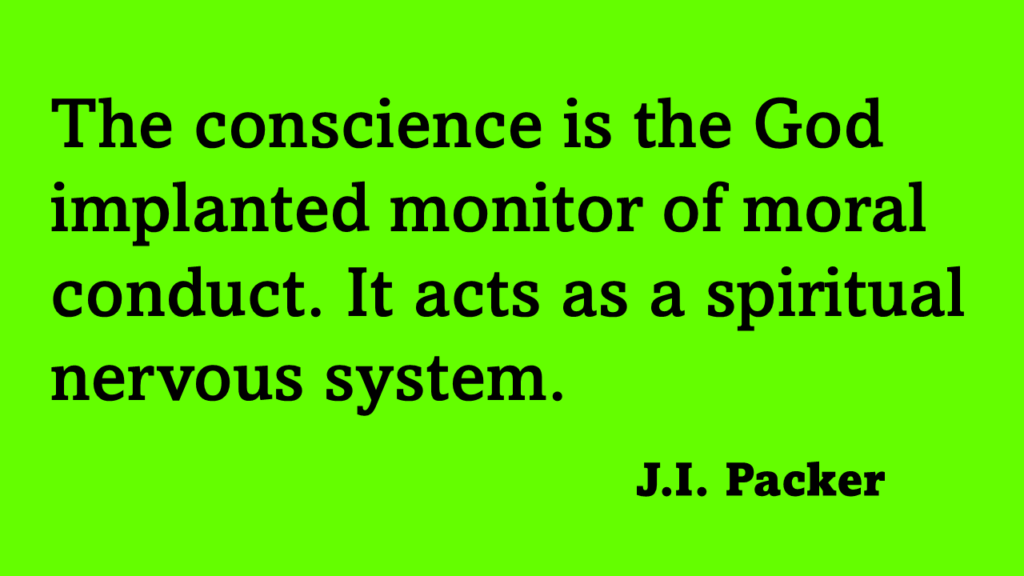
In this way, even those who have never heard a sermon, read a Scripture, or encountered a missionary are not without a divine appeal. The conscience speaks—and in doing so, it points beyond itself to the God who speaks through it. It stirs within every heart a sense of moral accountability, a longing for peace, and a recognition that something is not right within us.
The voice of conscience beckons every human soul to cry out, “What must I do with this guilt, this shame, this restlessness inside me?” It is as if God has planted a homing signal in the human heart—one that urges us to seek Him. And for those who do—who sincerely respond to the light they’ve been given and humbly seek the One who gave them this moral awareness—God will not leave them empty, unheard, or begging.
As Scripture promises, “He is not far from each one of us” (Acts 17:27), and “those who seek Him will find Him” (Jeremiah 29:13; Proverbs 8:17). The God who gave the conscience as a witness is also the God who stands ready to answer the cry it provokes.
Challenge Question: If the human conscience were merely the product of psychological evolution or cultural conditioning, why does it so often transcend cultural norms, challenge personal desires, and compel people to act against their own self-interest—even in isolation and across all cultures? Could this universal moral voice point to something—or Someone—beyond ourselves?
ThinkCube Truth Veracity Grid
- Have I considered the facts carefully and with an open mind?
- Is my conclusion the result of a careful examination of the facts, or is it a conclusion made in spite of the facts?
- Is my conclusion the one that makes the most sense of the evidence?