Premise 1: The Fall Gave Birth To Suffering
The Fall of Man is best understood against the backdrop of God’s original design. In the beginning, God created the world “very good” (Genesis 1:31), giving humanity a perfect environment, harmonious relationships, and genuine moral freedom. Adam and Eve enjoyed fellowship with God, with one clear command not to eat from the tree of the knowledge of good and evil (Genesis 2:15–17). This freedom carried the real possibility of obedience or rebellion. The temptation came when Satan, through the serpent, questioned God’s Word and goodness (Genesis 3:1–5). Eve was deceived, but Adam willfully disobeyed God’s explicit command (Genesis 3:6; 1 Timothy 2:14). That single act of rebellion introduced sin, death, and suffering into human experience (Romans 5:12–19), not only for them but for all humanity under Adam’s representative headship.
Many people ask why God would allow the sin of two people to negatively impact the entire world and the lives of everyone who came after them. The answer lies in God’s omniscience—His perfect knowledge of the past, present, and future. In His wisdom, He appointed Adam and Eve as the representatives of all humanity, knowing that their response to His command would mirror what any of us would have done under the same circumstances. Faced with the same test, we too would have failed. The way we know we would have failed is because we the pattern plays out around the world every single day. People eat, drink, pursue, or idolize the very things God has warned against, and while He has graciously provided everything necessary for human flourishing, we abandon His instruction and choose the paths that lead to our own suffering. Much of the pain skeptics attribute to God is, in reality, the direct result of their own sinful choices.
Examples of Everyday Human Disobedience
| God’s Command | Disobedience & Consequences | Scripture on Consequences |
|---|---|---|
| Honor your body as God’s temple (1 Cor. 6:19–20) | Gluttony, poor diet, neglect of health—leads to heart disease, stress related illnesses | Proverbs 23:20–21 – “Be not among drunkards or among gluttonous eaters of meat… and drowsiness will clothe them with rags.” |
| Glorify God in your eating and drinking (1 Cor. 10:31) | Overeating, processed foods, substance abuse—Leads to Type 2 Diabetes, and liver disease | Proverbs 25:16 – “If you have found honey, eat only enough for you, lest you have your fill of it and vomit it.” |
| Avoid drunkenness (Eph. 5:18) | Alcohol abuse, drug use—Leads to Addiction, cirrhosis, overdose | Proverbs 20:1 – “Wine is a mocker, strong drink a brawler, and whoever is led astray by it is not wise.” |
| Do not defile yourself with immorality (1 Thess. 4:3) | Sexual immorality, promiscuity—Leads to STI’s, Unplanned pregnancies, emotional trauma | Proverbs 6:32 – “He who commits adultery lacks sense; he who does it destroys himself.” |
| Flee sexual immorality (1 Cor. 6:18) | Adultery, fornication, pornography—Leads to broken families, generational pain, addiction. | Galatians 6:7–8 – “Whatever one sows, that will he also reap… the one who sows to his own flesh will reap corruption.” |
| Do not murder (Exod. 20:13) | Hatred, anger, revenge, violence—Leads to Death, imprisonment. | Matthew 26:52 – “All who take the sword will perish by the sword.” |
| Love your neighbor as yourself (Mark 12:31) | Greed, pride, neglect of others. —Leads to Gang and drug violence, poverty cycles | James 3:16 – “For where jealousy and selfish ambition exist, there will be disorder and every vile practice.” |
| Pursue peace and live at peace with all (Rom. 12:18) | Hatred, war, terrorism—Leads to War, terrorism, mass casualties | James 4:1–2 – “What causes quarrels and what causes fights among you?… You desire and do not have, so you murder.” |
All of these negative effects are rooted in the same kind of decision Adam and Eve made in the garden. God had given them everything they needed—abundance, freedom, beauty, and fellowship with Him—yet they reached for the one thing He had forbidden. That same pattern repeats throughout human history. People reject God’s wisdom, ignore His commands, and grasp for what seems desirable in the moment, only to reap pain and destruction in the end.
One of the clearest demonstrations of our tendency to desire what is forbidden comes from what psychologists call Reactance Theory, originally developed by Jack Brehm and tested repeatedly in experiments from the 2000s to the 2010s. In these studies, participants were offered a selection of items to choose from, but then suddenly one option was restricted or declared off-limits. Almost immediately, that restricted item became the most attractive in the eyes of the participants. When it was later made available again, it was chosen far more often than the other options, even though nothing had changed about the item itself. The very act of being told “no” magnified its desirability. This phenomenon mirrors the dynamic in the Garden of Eden. Adam and Eve had an entire paradise of “yeses” at their disposal—every tree that was pleasant to the sight and good for food—yet their attention and desire became fixed on the single tree God had forbidden.
Another common question is, “Why such severe consequences for eating a piece of fruit from a forbidden tree?” The reality is that the fruit itself was not the core issue. The tree and its produce were spiritually neutral. The real issue was the moral test it represented. Adam and Eve lived in a flawless world—a pristine paradise filled with every kind of food and beauty imaginable. They enjoyed perfect peace, security, and satisfaction, surrounded by the majesty of God’s creation, and had direct fellowship with Him. Nothing harmful existed; every moment was wholly good.
In this environment of abundance and blessing, God set apart one single tree as the boundary of their obedience. This was not an act of deprivation, but a clear and simple test to see if they would trust, honor, respect, and obey the God whose power, intelligence, and benevolence were evident all around them. By granting them access to everything except this one tree, God gave them the opportunity to demonstrate contentment and faithfulness. Their choice to disregard His command was an act of willful rebellion—not a minor dietary infraction.
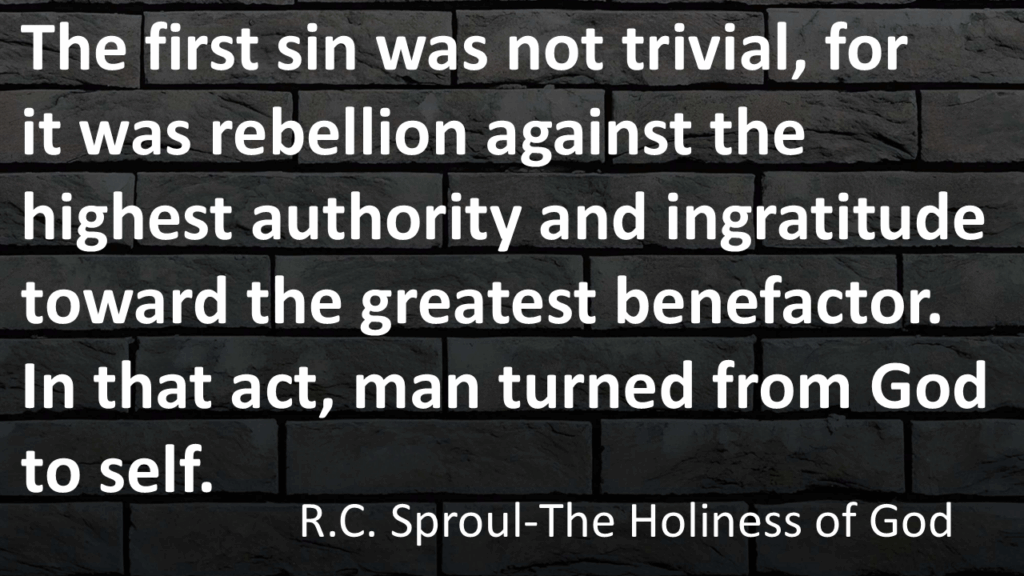
The consequences were cosmic. In response to their sin, God removed many of the protections and provisions He had so generously supplied, provisions they had taken for granted without gratitude. The Fall introduced death, suffering, and decay into the human story. It’s a scenario that still plays out in miniature in everyday life: parents may generously and sacrificially provide for their children, giving them safety, comfort, and love, only to have those children bristle and rebel the moment they are denied the latest iPhone or gaming console. In the same way, Adam and Eve’s ingratitude in the midst of lavish blessing revealed the depth of the human heart’s tendency toward discontent and self-will.
Challenge Question: If the Bible’s account of the Fall is simply a myth, how do you explain humanity’s universal tendency to reject moral boundaries—even in the midst of abundance—and then shift the blame for the resulting consequences onto someone else, including God?”
Premise 2: God’s Original Design Had No Suffering
In God’s original design, there was no suffering of any kind. Scripture tells us in Genesis 1:31, “God saw all that He had made, and it was very good.” This was not just a statement about the beauty of creation, but about its perfection—everything was in complete harmony with His will. Humanity enjoyed a flawless relationship with God, living in open fellowship with Him as seen in Genesis 2:15–17, where Adam was placed in the garden to work it and keep it, freely enjoying its bounty under God’s loving command. There was also perfect harmony between human beings, as illustrated in Genesis 2:18–25. Adam and Eve lived in unity, without shame, rivalry, or conflict. Furthermore, there was harmony between humanity and the rest of creation, as described in Genesis 1:28–30: mankind was given dominion over the earth, not to exploit it, but to steward it in peace and abundance. Death, pain, and decay were absent—there was no curse to mar the beauty of life, no disease to afflict the body, no grief to break the heart. It was a world overflowing with provision, beauty, and joy, untouched by the shadow of suffering.
How the Fall Introduced Suffering
| Relationship in Creation | Before the Fall (Genesis 1–2) | After the Fall (Genesis 3 & Beyond) | Resulting Suffering |
|---|---|---|---|
| God ↔ Humanity | Perfect fellowship; open communion with God; obedience to His command (Gen. 2:15–17). | Separation from God; fear and hiding; expulsion from Eden (Gen. 3:8–10, 23–24). | Spiritual death, alienation from God, loss of direct access to His presence. |
| Human ↔ Human | Complete unity, trust, and intimacy without shame (Gen. 2:18–25). | Blame-shifting, conflict, and relational strife (Gen. 3:12, 16). | Marital discord, jealousy, violence, broken relationships. |
| Human ↔ Creation | Dominion in peace; abundant provision; no harm from nature (Gen. 1:28–30). | Ground cursed; thorns and thistles; toil and frustration in labor (Gen. 3:17–19). | Natural disasters, scarcity, hard labor, environmental decay. |
| Human ↔ Self | Innocence, no shame or fear; complete physical and emotional well-being (Gen. 2:25). | Awareness of nakedness; shame, guilt, and inner turmoil (Gen. 3:7, 10). | Emotional pain, anxiety, depression, physical suffering. |
| Life ↔ Death | Immortality; no decay or disease; life sustained by God’s provision. | Mortality; physical death enters the human experience (Gen. 3:19; Rom. 5:12). | Sickness, aging, grief, the inevitability of death. |
Ecological Conditions Before and After the Fall
| Category | Before the Fall | After the Fall |
|---|---|---|
| Natural Disasters | None | Earthquakes, floods, droughts, hurricanes, tornadoes, volcanic eruptions, wildfires, tsunamis |
| Human Health | Perfect health, no sickness or death | Diseases (cancer, infections, epidemics, pandemics), aging, genetic mutations, birth defects |
| Environmental Harmony | Peaceful, stable climate, no decay | Climate extremes, soil erosion, pollution, famine, ecological imbalance |
| Animal World | Harmony among all creatures | Predation, parasites, animal suffering, extinction |
| Human Experience | No pain, no laborious struggle | Pain in childbirth, hard labor, violence, war, suffering |
Imagine the world in which Adam and Eve actually lived and ruled: a perfect climate with no threat of natural disasters, perfect health with no disease, pain, or fatigue, and perfect provision for every necessity. They enjoyed unbroken fellowship with their Creator, free from guilt, shame, or fear. Every aspect of their existence was a miraculous and gracious gift from God, and they knew the Giver personally and intimately.
Yet in the end, the Fall was far more than the breaking of a single command—it was the breaking of every harmony God had perfectly designed. In one decisive act of rebellion, humanity’s relationship with God, with one another, with creation, with self, and even with life itself was shattered. From that moment, every form of suffering—spiritual, emotional, relational, and physical—poured into the human story, altering the course of history and leaving no part of creation untouched.
Blaming God for the Existence of Suffering Means Blaming Him For The Fall
To blame God for the existence of suffering means you would have to blame Him for the Fall. Yet Scripture makes it clear that God did not create evil, nor did He force humanity into disobedience. Instead, He gave Adam and Eve everything they needed to flourish in a perfect world, along with the freedom to choose obedience or rebellion. The Fall was not the result of God’s cruelty but of mankind’s decision to distrust His word and grasp for what He had forbidden.
Blaming God for suffering overlooks this reality: the true source of evil is humanity’s misuse of free will under the influence of Satan. The Fall was not an isolated event but the beginning of a pattern that has echoed throughout all of human history. Mankind continues to make the same kind of rebellious choices, and the consequences are repeatedly tragic. To blame God for the suffering caused by man’s sinful free will is like blaming a physician for the pain of a patient who refuses to follow the prescribed cure, or faulting a parent for the injuries of a child who disregards clear warnings. The responsibility lies not with the giver of good instruction but with the one who rejects it.
Challenge Question: If suffering in the world is largely the result of humanity’s repeated misuse of free will, is it fair or reasonable to place the blame on God rather than on the choices of mankind?
Premise 3: God Could Have Made Man Good —But At The Expense Of Free Will
One of the most common objections to the Christian faith comes in the form of this question: “If God is all-powerful and all-loving, why didn’t He simply create human beings to always be good, even if it meant sacrificing free will?” On the surface, this seems reasonable. If God had made us like robots who only obey, would that not eliminate suffering and evil altogether? But when examined more carefully, this question reveals a misunderstanding about the nature of love, morality, and God’s ultimate purpose for humanity.
Try to exclude the possibility of suffering which the order of nature and the existence of free will involve, and you will find that you have excluded life itself.
C.S. Lewis—The Problem of Pain
If God were to eliminate the possibility of suffering, He would also have to eliminate the structures of cause and effect in nature and the freedom of human choice. But without those, there would be no real life, no real love, no real growth—only mechanical existence. In other words, a world without the possibility of suffering would also be a world without the possibility of being truly human.
1.Love Requires Choice
At the heart of God’s design for humanity is love. Scripture makes clear that the greatest command is to “love the Lord your God with all your heart” (Deut. 6:5; Matt. 22:37). But genuine love cannot be forced—it must be freely chosen. A world in which people were programmed to “love” God would not actually contain love at all, only compulsion. By granting humanity free will, God opened the possibility of rejection, but also the possibility of authentic relationship.
Imagine a spouse who only “loves” because they are programmed to do so. Their affection would be hollow. God wanted something greater: real communion, where His creatures can respond to His love freely.
2. Moral Goodness Without Choice Is an Illusion
Morality assumes the capacity to choose between good and evil. If God had created humanity without the ability to choose, there would be no such thing as moral goodness—only programmed behavior. Obedience in such a world would be meaningless, because virtue can only exist where disobedience is possible.
For example, courage means little in the absence of danger, and generosity means little in the absence of need. Likewise, righteousness has meaning only when contrasted with the possibility of sin. Without free will, humanity might avoid sin, but it would also lose the capacity for genuine virtue.
3. The Dignity of Humanity
By creating humanity in His image (Genesis 1:27), God elevated mankind to a unique place in creation. Unlike animals who act primarily on instinct, humans were designed with the moral and rational capacity to know God, to reflect His character, and to rule creation under Him. Stripping away free will would have reduced humanity to something less than image-bearers of God. Free will is part of the dignity God gave us—it allows us to rise to heights of worship, compassion, and creativity. Tragically, it also allows us to fall.
God’s Redemption of Free Will
The story does not end with the Fall. Though man chose wrongly, God entered into human history through Christ to offer redemption. Jesus lived the perfectly obedient life Adam failed to live, and through His death and resurrection, He offers not only forgiveness but transformation. In Christ, believers receive the Holy Spirit, who empowers them to use their freedom rightly—to love God, to resist sin, and to serve others (Gal. 5:13).
One day, in the new heavens and new earth, the redeemed will live in perfect freedom: free from sin, yet not stripped of their will. Their desires will be so aligned with God’s goodness that choosing evil will no longer even be appealing. In other words, free will is not abolished but perfected.
Some skeptics ask why God didn’t simply create humanity already perfected. The answer lies in God’s larger purpose. By allowing history to unfold, God demonstrates not only His power but also His mercy, justice, patience, and love. Humanity’s story is not just about avoiding evil but about revealing the depths of God’s character. Through redemption, we come to know God in ways Adam and Eve could not have known in innocence.
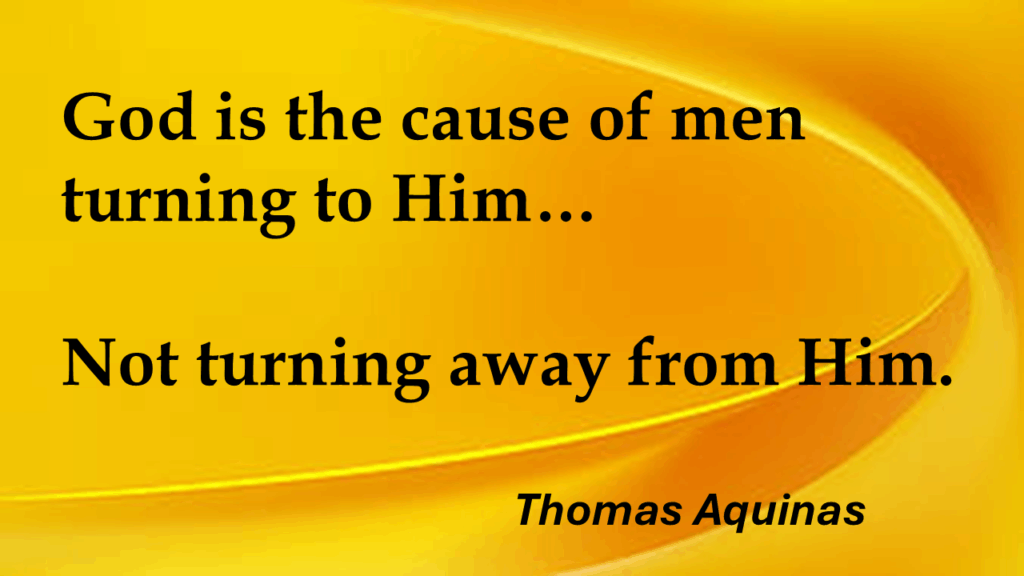
The question “Why didn’t God just make man good, even if it meant sacrificing free will?” assumes that a world without free will would be better. But such a world would lack love, lack morality, lack dignity, and ultimately lack true fellowship with God. Free will makes evil possible, but it also makes genuine love, righteousness, and redemption possible. The tragedy of the Fall only magnifies the beauty of God’s plan: through Christ, He redeems fallen freedom and leads His people to a future where they will be both free and incapable of sin—not because they are forced, but because their hearts are forever captivated by His goodness.
Challenge Question: If removing the possibility of suffering would also remove free will, love, and even real life itself, would a world without suffering actually be better? Would it reduce us to something less than human?
Premise 4: While God Did Not Cause The Fall He Will One Day Reverse It
While there are undoubtedly countless reasons God allows mankind to continue experiencing the horrendous effects of the Fall, Scripture gives us a few we can understand even now.
1. God is sovereign over the Fall and uses it for good.
The Fall did not surprise God, nor did it occur outside His control. In His sovereignty, He uses even the consequences of human rebellion to accomplish His purposes (Genesis 50:20; Romans 8:28). What man meant for evil, God can turn into a tool for redemption and sanctification.
2. The Fall is a daily reminder that we need God.
Suffering exposes the limits of human strength and self-sufficiency. It pushes us to recognize that without God, we are powerless to heal the deepest wounds of our hearts and our world (2 Corinthians 12:9–10).
3. The Fall is a daily reminder of the consequences of not obeying and trusting God.
Pain, decay, and death stand as visible warnings that turning from God always brings destruction. They echo the truth spoken in Eden: “In the day that you eat of it you shall surely die” (Genesis 2:17).
4. God uses suffering to teach courage, perseverance, compassion, and sacrifice.
Trials refine our faith like fire refines gold (1 Peter 1:6–7). They produce endurance, deepen empathy, and teach us to bear one another’s burdens (Romans 5:3–5; Galatians 6:2).
5. God uses suffering as the backdrop for the Gospel of Grace.
Without the darkness of sin and its consequences, the brilliance of God’s mercy in Christ would not be seen as clearly. The Fall sets the stage for the cross, where grace is displayed in its fullest measure (Romans 5:20–21).
Mankind caused the Fall, and the truth is sobering: when God gives mankind everything—including life itself—and man chooses to disobey, betray, and abandon Him, then the Fall is exactly what mankind deserves forever. Yet, in mercy, God has not given us the full measure of that judgment. Instead, He has left us with the consequences of the Fall but also offers Himself as our refuge and support as we navigate this broken world—if we will have Him. More than that, He offers the hope of escape and the promise of an eternal life where the effects of the Fall will not only be absent but completely forgotten.
‘He will wipe every tear from their eyes. There will be no more death’
Revelation 21:4
or mourning or crying or pain, for the old order of things has passed away.”
The Christian’s firm belief is that God not only saves His people from their sins but will one day deliver them completely from the effects of sin. This confident expectation is what Scripture calls “the living hope” (1 Peter 1:3–4)—a hope anchored in the resurrection of Jesus Christ and the promise of an imperishable, undefiled, and unfading inheritance kept in heaven. The Bible repeatedly reminds believers that while suffering is an unavoidable part of life in this fallen world, it will not last forever. Trials, no matter how severe, are temporary in light of eternity.
For this light momentary affliction is preparing for us an eternal weight of glory beyond all comparison
2 Corinthians 4:17
When measured against the endless joy, peace, and wholeness of God’s presence in heaven, even a lifetime of hardship is but the blink of an eye. This living hope strengthens the believer to endure suffering with faith and perseverance, knowing that one day God will make all things new, wipe away every tear, and erase every trace of sin’s curse from creation.
The New Heaven and The New Earth Means The Fall Will Be Completely Reversed
Genesis is the first book of the Bible, and it is where the details of the Fall are recorded—the moment when sin entered the world and humanity’s perfect relationship with God, creation, and one another was shattered. The last book of the Bible, Revelation, is where we see the reversal of the Fall. In Greek, the word Revelation is apokalypsis, meaning “uncovering,” “unveiling,” or “disclosure.” While many associate Revelation primarily with scenes of judgment, the Antichrist, and catastrophic natural disasters, a significant portion of the book is devoted to vividly describing what believers can expect regarding heaven, eternity, the future of the earth, and eternal life with God. It is, in many ways, the ultimate “bad news first, good news second” account.
As sobering and awe-inspiring as the apokalypsis is in its portrayal of coming trials, it is equally breathtaking in its description of the New Heaven and the New Earth. Few realize that the present earth will not simply be destroyed—it will be replaced. The same is true for heaven. This will not be a renovation or a repair project, but a glorious unveiling of something entirely new and infinitely superior, crafted by God Himself for His redeemed people to enjoy forever.
Here’s a list of key Scriptures that talk about the new heavens and the new earth:
Old Testament
- Isaiah 65:17 – “For behold, I create new heavens and a new earth, and the former things shall not be remembered or come into mind.”
- Isaiah 66:22 – “For as the new heavens and the new earth that I make shall remain before me, says the Lord, so shall your offspring and your name remain.”
New Testament
- 2 Peter 3:13 – “But according to his promise we are waiting for new heavens and a new earth in which righteousness dwells.”
- Revelation 21:1 – “Then I saw a new heaven and a new earth, for the first heaven and the first earth had passed away, and the sea was no more.”
- Revelation 21:5 – “And he who was seated on the throne said, ‘Behold, I am making all things new.’”
- Revelation 22:1–5 – The vision of the river of life and the tree of life in the new creation, where God dwells with His people.
The reason there will be a new heaven and a new earth is because sin has contaminated both. Satan, once a glorious angel, fell through pride and rebellion, corrupting other angels with him (Revelation 12:7–9). On earth, Satan, demons, and sinful humanity have defiled God’s good creation through sin and disobedience. Because of this, God has promised to bring forth a renewed creation. As 2 Peter 3:13 declares, “But according to His promise we are waiting for new heavens and a new earth in which righteousness dwells.” This new creation will be a realm where sin has never existed and righteousness reigns forever.
Don’t let your hearts be troubled. Trust in God, and trust also in me. There is more than enough room in my Father’s home. If this were not so, would I have told you that I am going to prepare a place for you? When everything is ready, I will come and get you, so that you will always be with me where I am.
John 14:1-3
Even now, the beauty and magnificence we see in this fallen world cannot compare with what the new earth will be like. Jesus assured His disciples in John 14:1–3 that He was going to prepare a place for the redeemed. Ever since His resurrection and ascension, Christ has been preparing that eternal home for His people. Consider this: God created the entire universe in just six days, yet Jesus has had thousands of years to prepare the dwelling place of the saints. If the present creation still stirs awe despite its corruption, how much greater will be the glory, splendor, and wonder of the new heavens and new earth where the curse is fully reversed and God dwells with His people forever.
What The New Heaven and the New Earth Will Be Like
| Scripture | Promise / Description | What It Means for the Inhabitants |
|---|---|---|
| Revelation 21:1 — “Then I saw a new heaven and a new earth, for the first heaven and the first earth had passed away.” | The old, corrupted creation will be completely replaced by something entirely new. | Believers will live in a perfected environment untouched by sin, decay, or death. |
| Revelation 21:3 — “Behold, the dwelling place of God is with man. He will dwell with them, and they will be his people.” | God will live personally among His people forever. | Perfect, unbroken fellowship with God — no separation, no distance, no fear of losing His presence. |
| Revelation 21:4 — “He will wipe away every tear from their eyes… death shall be no more… no mourning, crying, or pain.” | All sources of sorrow, pain, and loss will be removed forever. | Eternal joy, peace, and security; the memory of suffering will be gone. |
| Revelation 21:23 — “The city has no need of sun or moon… the glory of God gives it light, and its lamp is the Lamb.” | God’s glory and Christ Himself will be the source of light. | Eternal illumination and warmth from God’s presence; no darkness or night — physical or spiritual. |
| Revelation 21:27 — “Nothing unclean will ever enter it… only those who are written in the Lamb’s book of life.” | Only the redeemed will dwell there; sin cannot enter. | Perfect holiness and safety; no crime, no lies, no betrayal — only righteousness. |
| Revelation 22:1–2 — “The river of the water of life… the tree of life… leaves for the healing of the nations.” | Abundant life flows directly from God’s throne; the Tree of Life is restored. | Eternal vitality, renewal, and complete healing — physically, emotionally, spiritually. |
| Revelation 22:3 — “No longer will there be anything accursed.” | The curse of sin is fully removed. | No more brokenness, futility, or frustration in any aspect of life. |
| Revelation 22:4–5 — “They will see his face… and they will reign forever and ever.” | Direct vision of God and eternal reign with Christ. | Perfect intimacy with God and meaningful, joyful purpose for all eternity. |
| 2 Peter 3:13 — “We are waiting for new heavens and a new earth in which righteousness dwells.” | The new creation will be characterized entirely by righteousness. | An existence free from corruption, injustice, or evil — complete moral purity forever. |
For the Christian the New Heaven and New Earth are sublime consolations to help us persevere, and endure the negative effects of the fall. This is no small doctrine and every book of the New Testament reminds Christians that life in the New Heaven and New Earth are what they should be preoccupied with and earnestly look forward to. When you look at some of the vivid details Jesus gave in the Gospels, and John described in Revelation it becomes obvious why the New Testament writers suggested believers focus on and long for what is ahead.
Not only will physical suffering be gone forever, but relational suffering will vanish as well. The New Heaven and New Earth will bring a perfect environment, a perfect community, and unhindered intimacy with God, the Creator — a complete and glorious reversal of all that was lost. In His infinite wisdom, God allowed humanity the free will to choose the sin that brought about the Fall, yet in that same wisdom, He provided the remedy: help and comfort in suffering now, the blessing of belonging to a redeemed yet imperfect community of believers committed to easing the burdens of others, and the unshakable promise of total deliverance from the very presence of suffering. Eternity will be marked by unbroken peace, overflowing joy, and fellowship with Him — just as it was in the garden before the nightmare began.
Challenge Question: If a purely naturalistic worldview insists that suffering, decay, and death are meaningless byproducts of a blind, accidental universe, on what basis can skeptics dismiss the biblical claim that these realities actually point to something profoundly wrong with the world—and to a promised restoration that uniquely explains both our moral outrage at suffering and our deep longing for a world made new?
ThinkCube Truth Veracity Grid
- Have I considered the facts carefully and with an open mind?
- Is my conclusion the result of a careful examination of the facts, or is it a conclusion made in spite of the facts?
- Is my conclusion the one that makes the most sense of the evidence?