Premise 1: Evolution Fails The Scientific Method
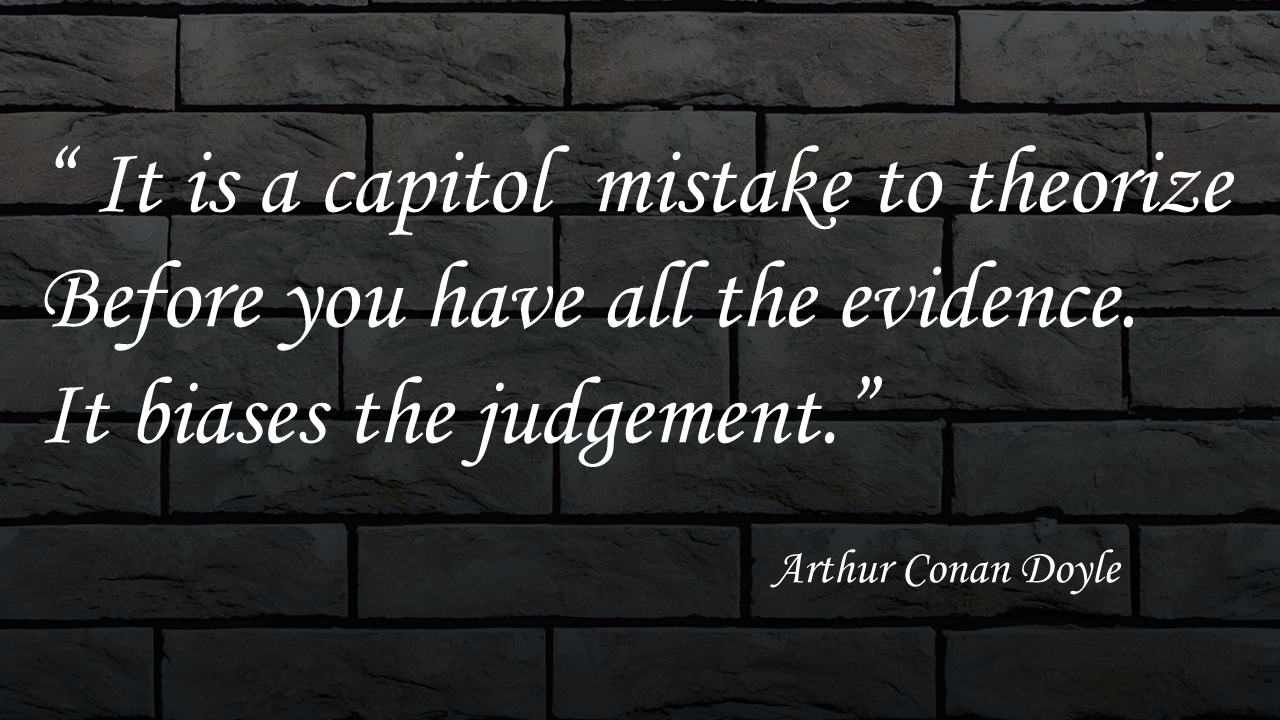
Nothing is certain until it is proved!
Sherlock Holmes
Most people are unaware that, despite Charles Darwin’s deep desire for his theory to be true, he harbored serious doubts and was apprehensive about how future scientific discoveries might challenge it. In fact, Darwin devoted an entire chapter in On the Origin of Species to addressing what he considered potentially fatal flaws in his theory. The chapter, titled “Difficulties Of The Theory,” opens with a candid and sobering admission:
Long before having arrived at this part of my work, a crowd of difficulties will have occurred to the reader. Some of them are so grave that to this day I can never reflect on them without being staggered.
Charles Darwin; Origin of Species; Chapter 6 Difficulties Of The Theory
Charles Darwin devoted an entire chapter to openly acknowledging the sobering vulnerabilities of his theory suggests that he viewed it as a work in progress, not as settled science. If Darwin were alive today, he would likely be surprised to see his theory taught as biological certainty—especially given that many of the very questions he raised remain unresolved to this day.
The major difficulties Darwin expressed in Chapter 6 “Difficulties Of The Theory”
- Why aren’t their any transitional forms in the fossil record ?
- How could instincts, traits and behaviors be passed down through modification by descent ?
- How their can be different or diverse habits and instincts within the same species ?
- How could organs of extreme perfection and complexity evolve gradually ?
- Why does cross breeding between species cause sterility, and sterility in offspring ?
Charles Darwin not only addressed these “difficulties” in Chapter 6 of On the Origin of Species, but also discussed them extensively in numerous published letters to colleagues. The Darwin Correspondence Project at Cambridge University has preserved these written exchanges, which include conversations with prominent scientists such as Charles Lyell (a Scottish geologist), Asa Gray (a renowned botanist), Louis Agassiz (an influential ornithologist), and many others.
I am quite conscious that my speculations run beyond the bounds of true science…
Charles Darwin to Asa Gray; Darwin Correspondence Project, Cambridge University
It is a mere rag of an hypothesis with as many flaws & holes as sound parts.
In his letters, Darwin candidly acknowledged the potential shortcomings of his theory in meeting the rigorous standards of the scientific method. He used phrases such as “grave objections” and described aspects of his work as a “ragtag theory,” reflecting his own hesitation to bypass scientific scrutiny in promoting a theory that, even to him, contained significant and unresolved gaps.
sci·ence
/ˈsīəns/
the systematic study of the structure and behavior of the physical and natural world through observation, experimentation, and the testing of theories against the evidence obtained.
The word science is derived from the Latin term scientia, meaning “knowledge”—specifically, knowledge grounded in demonstrable and reproducible evidence. In keeping with this definition, the goal of science is to arrive at measurable, testable results through systematic observation, experimentation, and analysis—a process known as the scientific method.
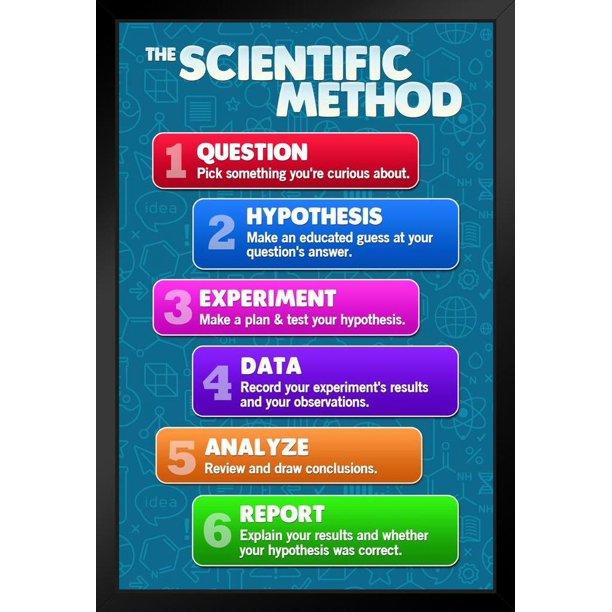
True science is built on a foundation of observable, repeatable, and verifiable data. It is not shaped by personal opinions, philosophical preferences, or speculative assumptions. Every major scientific law or theory—whether in physics, chemistry, biology, or astronomy—has had to pass the rigorous, non-subjective standards of the scientific method. These standards demand repeated confirmation through independent testing and peer review before any idea can be recognized as legitimate science, published in scholarly literature, or taught as part of an established scientific curriculum.
The man of science has learned to believe in justification, not by faith, but by verification
Thomas Huxley; English Biologist, Anthropologist -Friend and Correspondent with Charles Darwin
The scientific method is the essential barrier that separates true scientific discovery from limitless error. In essence, it serves as a built-in safeguard that prevents science from devolving into mere propaganda, speculation, or philosophical opinion. This process is specifically designed to test the integrity of theories, hypotheses, and ideas through careful observation, controlled experimentation, and repeated validation. When properly applied and upheld, the scientific method produces objective data that can be legitimately analyzed and interpreted—ensuring that conclusions are grounded in evidence rather than assumption.
The Theory of Evolution Does Not Meet the Requirements Of The Scientific Method
A scientific law is established when a natural phenomenon is repeatedly observed to occur under specific conditions, without exception. It becomes a law only after extensive testing, consistent replication, and universal agreement within the scientific community. Unlike theories, scientific laws describe what happens in nature—usually in concise, often mathematical terms.
What are the characteristics of a scientific law:
- Based in physics
- Can be observed by anyone
- Occurs in the natural world without any intervention by people
- Explains factually the how of what was observed under specific conditions
- Usually expressed and supported by a mathematical formula or equation
- Used to predict outcomes, and can be proven
- They do not violate or contradict other proven Laws of Science
Scientific Method Tools That Distinguish Genuine Science from Pseudoscience
- Observation – Carefully identifying and describing a phenomenon or pattern in the natural world.
- Hypothesis – Forming a testable and falsifiable explanation or prediction based on the observations.
- Experimentation – Conducting controlled tests to gather data and determine whether the hypothesis holds under various conditions.
- Repetition and Verification – Repeating experiments and confirming results independently to ensure reliability, consistency, and reproducibility.
These steps help distinguish true science, which is grounded in empirical evidence and repeatable outcomes, from unverified or pseudoscientific claims, which lack objective testing and validation.
The Theory of Evolution, particularly in its broad Darwinian form (explaining the origin and development of all life from a common ancestor through unguided natural processes), fails to meet several key criteria of the scientific method—especially when judged by the same rigorous standards applied to operational sciences like physics and chemistry.
Here’s a breakdown of how and where it falls short:
Lack of Direct Observation
Scientific Method Standard: Scientific claims must be based on observable phenomena.
❌ Evolutionary Theory Limitation:
- The origin of life, the Big Bang, and the gradual transformation of species over millions of years cannot be directly observed or replicated.
- Evolutionary changes of the magnitude claimed (e.g., fish to amphibian, reptile to bird) are said to occur over such long timescales that no human can observe them happen.
Inability to Be Repeated or Reproduced
Scientific Method Standard: Experiments should be repeatable and yield consistent results.
❌ Evolutionary Theory Limitation:
- You cannot recreate the conditions of the early Earth to repeat the emergence of life (abiogenesis). No lab has created life from non-living chemicals or matter.
- Macroevolutionary transitions have never been experimentally replicated (e.g., no lab has observed bacteria turning into a new kind of organism).
Even long-term experiments like the Lenski experiment with E. coli (over 75,000 generations) show adaptation and minor variation, but not new genetic information or new species emergence.
Lack of Falsifiability
Scientific Method Standard: A theory must be falsifiable—able to be tested in a way that it could be proven wrong.
❌ Evolutionary Theory Limitation:
- Evolution is often redefined to fit contradictory evidence. For example:
- Gradual change and sudden change (punctuated equilibrium) are both called “evolution.”
- Fossils that appear “out of place” in the geological column are often explained away or ignored rather than falsifying the theory.
- If no conceivable evidence can disprove a theory, then it has stepped out of the scientific realm into philosophical speculation.
Contradiction of Known Scientific Laws
Scientific Method Standard: Valid theories must align with established scientific laws.
❌ Evolutionary Theory Limitation:
- Violates the Law of Biogenesis: Life has never been observed to arise from non-life.
- Conflicts with the Second Law of Thermodynamics: Evolution suggests increasing complexity and order, while the Second Law states systems tend toward disorder unless energy is directed by an organizing mechanism.
- Genetic Entropy: Modern genetics shows that mutations tend to degrade information, not create new, functional, coded complexity necessary for novel organs or body plans.
Selective Use of Evidence / Contradictory Data Ignored
Scientific Method Standard: All data must be considered, even if it contradicts the prevailing theory.
❌ Evolutionary Theory Limitation:
- The fossil record shows sudden appearance, stasis, and missing transitional forms—contradicting the gradualism Darwin predicted.
- Living fossils (e.g., coelacanths, horseshoe crabs, ginkgo trees) show no evolution for hundreds of millions of years.
- The presence of modern organisms (like birds and mammals) in “dinosaur layers” undermines the evolutionary timeline but is often ignored or hidden from public view.
Dependence on Speculative, Unobservable Events
Scientific Method Standard: Theories must rest on observable, testable mechanisms.
❌ Evolutionary Theory Limitation:
- Claims such as the first cell arising from a primordial soup, common ancestry, or random mutations building complex organs are historical reconstructions, not scientifically testable events.
- Natural selection can explain loss of function or adaptation, but not the origin of entirely new structures or genetic codes.
One morning I woke up and something had happened in the night—and it struck me thatI had been working on this stuff [evolution] for twenty years and there was not one thing I knew about it. That’s quite a shock to learn that one can be misled for so long… I’ve tried putting a simple question to various people… Can you tell me anything you know about evolution, anyone thing, any one thing that is true? I tried that question on the geology staff at the Field Museum of Natural History and the only answer I got was silence.
Dr. Collin Patterson; Senior Paleontologist British Museum of Natural History
While microevolution (small changes within species) can meet some of the scientific method’s criteria, the broader claims of Darwinian macroevolution do not. In key areas—observability, testability, reproducibility, and alignment with natural laws—evolution as a grand theory fails to meet the rigorous standards required of true empirical science.
Challenge Question: If the theory of evolution cannot be directly observed, tested, or repeated, relies on speculative mechanisms, and appears to contradict established scientific laws such as biogenesis and thermodynamics—why is it still presented as settled scientific fact in educational systems worldwide, and should it be reclassified or reevaluated alongside other unverified historical theories rather than being taught as empirical science?
Premise 2: Evolution Has The Trademarks Of Psuedo-science
pseu·do·sci·ence
/ˈso͞odōˌsīəns/
a belief system, theory, or methodology that claims to be scientific but fails to adhere to the standards and principles of genuine science. It often mimics the appearance of science—using technical language, referencing data, or claiming expert support—but lacks the rigorous testing, reproducibility, and falsifiability required by the scientific method.
A scientific law must be repeatedly observed, tested, and confirmed under consistent conditions—it describes what reliably happens in nature. In contrast, a theory aims to explain why or how something happens, but many theories—especially in historical or theoretical sciences—cannot be directly observed or experimentally tested in the same way.
The difference between a scientific theory and law is that a theory is a body of knowledge and explanatory concepts that seek to explain a major phenomenon in nature. Whereas a Law is an empirical statement of a biological principle that through repeated testing appears to be without exception.
While some theories are supported by strong indirect evidence and logical inference, they do not meet the same rigorous standards as scientific laws. Therefore, teaching a theory as validated scientific truth—without acknowledging its limits, assumptions, or lack of direct testing— blurs the line between empirical science and speculative interpretation.
For science to remain credible, theories should be presented as provisional explanations, not as unquestionable facts—especially when they cannot be observed, tested, or reproduced in real time.
Google Top Ten Laws of Science you can find this list on howstuffworks.com.
| 10 Top Scientific Laws | Scientist Who Discovered | Formula |
| 1. Law of Universal Gravitation | Sir Isaac Newton | F = G × [(m1m2)/r2] |
| 2. Law of Thermodynamics | Rudolf Clausius and William Thompson Kelvin | ΔU = Q − W |
| 3. Evolution and Natural Selection | Blank | Blank |
| 4. Law of Buoyancy | Archimedes | FB = wfl |
| 5. Law of Motion | Sir Isaac Newton | F=m x a |
| 6. Electrostatic Law | Charles-Augustin de Coulomb | F=r2keq1q2 |
| 7. Law of Conservation of Mass | Antoine Lavoisier | Mass of products = Mass of reactants |
| 8. Laws of Planetary Motion | Johannes Kepler | T = 2 π r 3 G M E |
| 9. Law of Cosmic Expansion | Edwin Hubble | v = H*r. |
| 10. Big Bang Theory | Blank | Blank |
Four Scientific Exceptions To Notice:
- # 3 Evolution and #10 Big Bang Theory are listed as laws not theories
- They are the only two listed without a specific discoverer or specific date of discovery
- They are the only two listed that cannot be written as mathematical equations to explain how or why
- They are the only two that haven’t been observed, tested, and proven repeatedly in order to become law.
Evolution and The Big Bang are the only two major theories in the history of scientific discovery that have been universally accepted, taught and published as scientific fact while remaining as unproven hypotheses. All of the other 8 major laws and theories have been proven and verified using the scientific method.
In the history of modern science —The Big Bang Theory and the Theory Of Evolution are also the only two theories that are allowed to ignore or contradict other established Laws of Science.
Key Characteristics of Pseudoscience:
- Lacks Falsifiability
The claims cannot be tested or disproven, making them immune to being proven false (e.g., “It happened too long ago to observe, but trust the model”). - Relies on Anecdotes or Assumptions
Evidence is often based on selected examples or speculation rather than controlled, repeatable experiments. - Ignores Contradictory Evidence
Contradictory data is often dismissed or explained away without fair scientific scrutiny. - Does Not Make Accurate Predictions
It cannot reliably predict outcomes ahead of time the way valid scientific laws or models can. - Appeals to Authority, Consensus, or Emotion
It often defends itself with statements like “most scientists agree,” or uses persuasive language rather than evidence-based reasoning. - Is Often Dogmatic
It resists revision or correction, even in the face of new evidence, which is contrary to the self-correcting nature of real science.
Theory of Evolution vs. Characteristics of Pseudoscience
| Pseudoscience Characteristic | How the Theory of Evolution Exhibits This |
|---|---|
| 1. Lacks Falsifiability | Evolutionary claims (e.g., common ancestry, origin of life) are often framed in ways that cannot be disproven—any fossil arrangement or genetic similarity is interpreted as evidence for evolution, making it immune to falsification. |
| 2. Relies on Anecdotes or Assumptions | Evolution often uses isolated fossil finds, inferred tree diagrams, and assumptions about deep time without direct observational or experimental support. |
| 3. Ignores Contradictory Evidence | Fossils showing sudden appearance or stasis, living fossils, and complex organisms in unexpected layers are frequently reinterpreted or excluded from textbooks. |
| 4. Fails to Make Accurate Predictions | Evolution struggles to make precise, testable predictions. For example, it failed to predict the absence of transitional fossils or the complexity of so-called “junk DNA.” |
| 5. Lacks Peer-Reviewed Experimental Verification | No experiment has ever demonstrated the emergence of new functional genetic information or a new kind of organism through mutation and selection alone. Abiogenesis remains completely unverified in laboratory conditions. |
| 6. Appeals to Authority, Consensus, or Emotion | Evolution is often defended by statements like “virtually all scientists agree,” rather than direct evidence. Dissent is often silenced by appeals to consensus or ridicule rather than rebutted with data. |
| 7. Is Often Dogmatic | Challenges to evolutionary theory—such as intelligent design or creation models—are frequently dismissed out of hand. Evolutionary theory is rarely allowed to be questioned in academic settings, making it resistant to correction. |
When judged by the same standards used to identify pseudoscience, the Theory of Evolution—particularly its broad claims about origins, complexity, and species development—mirrors many of the defining traits of pseudoscientific thinking. This raises the question: Should it continue to be taught as settled, empirical science without acknowledging its philosophical assumptions and scientific limitations?
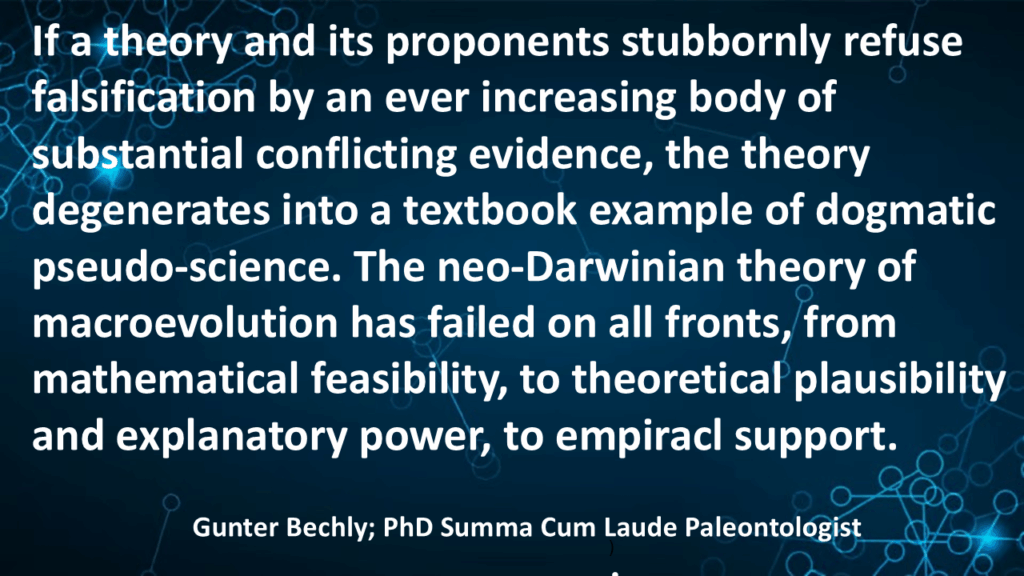
Many Scientist Acknowledge the The Trademark Characteristics Common to Pseudoscience
As evidence accumulates and ideological pressure weakens, a growing number of credible scientists are breaking ranks with Darwinian orthodoxy, raising legitimate doubts about its scientific foundation—and in some cases, calling it out as pseudoscientific in nature. The truth of the matter is— advances in Genetics, Paleontology, Reproductive Science, Particle Physics and Bio-Chemistry have only highlighted more inconsistencies and doubts to the point where many modern accomplished scientists are becoming boldly outspoken in their criticism of both Evolution and Big Bang Theory.
| Halton Christian—Astronomer; Author of Atlas of Peculiar Galaxies | “As a general scientific principle, it is undesirable to depend crucially on what is unobservable to explain what is observable, as happens frequently in Big Bang Cosmology” |
| James Shapiro—Professor Biochemistry and Molecular Biology; University of Chicago | “There are no detailed Darwinian accounts (Data) for the evolution of any fundamental biochemical or cellular system, only a variety of wishful speculations. It is remarkable that Darwinism is accepted as a satisfactory explanation of such a vast subject” |
| Sir William Dawson—Geologist; Former President British Assoc. for the Advancement of Science | “The evolutionist doctrine is itself one of the strangest phenomena of humanity, a system destitute of any shadow of proof and supported by vague analogies and figures of speech. Now, no one pretends that they rest on facts actually observed” |
| Dr. David Berlinski—Mathematician and Philosopher (The Deniable Darwin) | “Darwin’s theory is the great white elephant of contemporary thought. It is large, almost completely useless, and the object of superstitious awe.” |
| Michael Denton—Geneticist, Former Evolutionist (Evolution; A Theory In Crisis) | “Ultimately, the Darwinian theory of evolution is no more nor less than the great cosmogenic myth of the twentieth century.” |
| Dr. Stanely Salthe—Evolutionary Biologist | “Darwinian evolutionary theory was an interesting idea in the 19th century… I have become a critic of Darwinian evolutionary theory and am now one of many scientists who see it as a dogma.” |
| Dr. Philip Skell—Member of the National Academy of Sciences | “I am skeptical of claims for the predictive value of Darwinian theory…It does not provide a fruitful framework for experimental biology” |
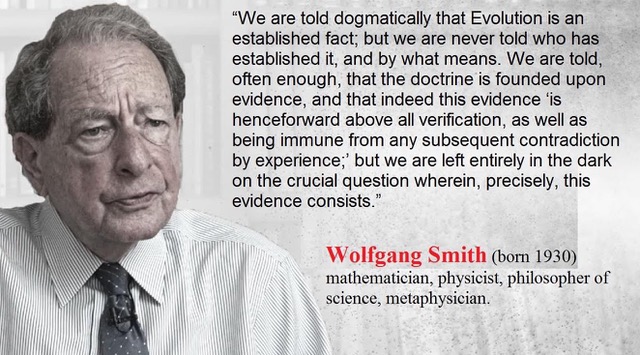
| Dr. Wolfgang Smith—Mathematician and Physicist | The doctrine of evolution has swept the world not because it has been proved by irrefutable scientific evidence, but because it is the only ‘alternative’ to special creation.” |
| Dr. Lynn Margulis—Microbiologist, University of Massachusetts | Neo-Darwinism is a dogma, built on a myth. The critics of Darwin are often correct in their criticisms, even if they don’t always understand the alternative mechanisms. |
| Dr. Jonathan Wells—Molecular Biologist | “Darwinism is merely a framework of ideas that is imposed on the evidence. The data can often be interpreted in ways that fit quite different explanations.” |
The Integrity of A Scientific Theory is Dependent on the Sufficiency and Testability of the Data
The Theory of Evolution became widely accepted in the Western world within just 20 years of the 1859 publication of The Origin of Species, despite the fact that all of the major questions Darwin himself raised remained unanswered. This premature acceptance is scientifically irreconcilable when held against the very standards of empirical validation and methodological rigor that define modern science.
By today’s standards, the scientific establishment affirmed evolution as fact without the necessary confirming evidence. At the time Darwin wrote Origin:
- Only about 15% of Earth’s species had been discovered. Darwin had no knowledge of over 7.4 million species we now know exist.
- He had no access to genetic or microbiological data—the very mechanisms where evolution would need to occur.
- The structure and function of DNA, the gene, and the genetic code—central to any claim of evolutionary change—were completely unknown to him.
- Darwin based his conclusions on roughly 18% of the fossil record—a fragmentary and incomplete dataset where true evolutionary transitions would need to be demonstrated.
Despite these monumental gaps, the scientific, political, and philosophical establishments of the late 1800s rushed to adopt Darwin’s theory as a scientific truth—and began mandating it in public education. Was this intellectually honest? Was it scientifically responsible? Or was evolution elevated more by ideological motives than by demonstrable evidence?
An even more pressing question emerges: Why is evolution still universally taught as settled science when the same critical weaknesses Darwin acknowledged in 1859 have not been sufficiently resolved? The fossil record still lacks the expected transitional forms. No natural mechanism has been observed to generate new genetic information. Abiogenesis remains entirely speculative. And natural selection still cannot account for the rise of irreducible complexity or the origin of life.
If evolution had been held to the same rigorous scientific standards demanded of every other theory, would it have ever been accepted at all? Or does its enduring dominance expose a deeper commitment to a philosophical worldview—one that excludes design or divine causation—not because the evidence compels it, but because the alternative is unthinkable to a materialistic paradigm?
Challenge Question : Given that many respected scientists—some of them evolutionists or non-religious—have openly acknowledged serious weaknesses in the theory of evolution, including its lack of falsifiability, contradictions with scientific laws, and reliance on unobservable assumptions, should evolutionary theory continue to be taught as unquestioned scientific fact in education systems? Or should it be presented more critically, alongside competing explanations such as intelligent design or special creation, to reflect the ongoing scientific debate?
Premise 3: Many Scientist Are Questioning Or Abandoning The Theory
There is a growing number of scientists—across multiple disciplines—who are increasingly skeptical of Darwinian evolution as a complete or sufficient explanation for the origin and development of life. This skepticism is not merely religious or philosophical—it is grounded in advancements in science itself, especially over the last two decades.
An increasing number of scientists, even a growing number of evolutionists—argue that Darwinian evolutionary theory is not a genuine scientific theory at all…Many of the critics have the highest intellectual credentials.
Michael Ruse; Evololutionist in The New Scientist “An Exercise In Science”
Here’s how key developments have contributed to this shift:
1. Complexity of the Cell and Molecular Machines
- Advancements in cell biology have revealed that even the simplest living cells contain intricate molecular machines, communication systems, error-correcting mechanisms, and digital information storage (DNA).
- Many scientists, including Dr. Michael Behe (biochemist at Lehigh University), argue that such irreducible complexity cannot be built through step-by-step mutations and natural selection alone.
“Molecular machines pose a problem for Darwinian evolution because they cannot function unless all parts are present simultaneously.”
—Michael Behe, Darwin’s Black Box
2. Genetic Limits and Mutation Constraints
- Studies in genetics and microbiology show that mutations typically degrade existing information rather than create new, functional structures.
- Experiments like Lenski’s long-term E. coli study have failed to show the rise of new body plans or functional innovations, despite tens of thousands of generations.
“All mutations studied on the molecular level reduce the genetic information and not increase it.”
—Dr. Lee Spetner, Not by Chance
3. Fossil Record: Sudden Appearance, Not Transitions
- The fossil record does not reveal the gradual change predicted by Darwinian evolution. Instead, it shows the sudden appearance of fully formed species and long periods of stasis.
- Even paleontologists like Stephen Jay Gould, who supported evolution, acknowledged the lack of transitional forms.
“The extreme rarity of transitional forms in the fossil record persists as the trade secret of paleontology.”
—Stephen Jay Gould, Harvard University
4. Shift Among Scientists
- Over 1,200 PhD-level scientists have signed the Dissent from Darwin Statement, which reads:
“We are skeptical of claims for the ability of random mutation and natural selection to account for the complexity of life. Careful examination of the evidence for Darwinian theory should be encouraged.”
—Discovery Institute
- Many of these scientists are not creationists—they simply believe that evolution should not be taught as unquestionable fact, and that its scientific limitations should be openly discussed.
Due to increasing scientific awareness of the limitations in mutation-driven evolution, fossil evidence that contradicts gradualism, and the incredible complexity at the molecular level, more scientists are beginning to:
- Disbelieve in Darwinian evolution as a comprehensive explanation.
- Call for evolution to be taught critically, not dogmatically.
- Advocate for open academic discourse that includes alternative theories like intelligent design or other non-Darwinian models.
The scientists who have signed the Darwin Dissent list did so to express 3 challenges to why the Theory of Evolution should not be taught as fact:
- Modern science has uncovered inconsistencies in the theory that need to be challenged
- Scientist who question the absoluteness of the theory should be able to question it without being persecuted
- The theory should not be taught as scientific certainty, and data revealing it’s inconsistencies should be taught as well as the theory
The list is growing and includes scientists from the US National Academy of Sciences, Russian, Hungarian and Czech National Academies, as well as from universities such as Yale, Princeton, Stanford, MIT, UC Berkeley, UCLA, and others.
Accomplished Scientist On The List
| Scientist | Notable Associations | Degree or Education |
| Lyle Jensen | American Association for the Advancement of Science, American Academy of Arts and Sciences | Biochemist-Pioneer in the field of x-ray crystallography. Professor emeritus with the Department of Biological structure and Department of Biochemistry University of Washington |
| Stanley Salthe | Smithsonian Institution Evolutionary Biologist | Professor Emeritus Biology University of New York Author of Evolutionary Systems: Biological and epistemological Perspectives on Selection and self-Organization |
| Richard von Sternberg | National Institutes of Health’s National Center for Biotechnology Information | PhD Molecular Evolution Florida International University PhD Systems Science Binghampton University Post Doctoral-national Museum of Natural History Post Doctoral- Smitsonian Institute |
| Giuseppe Sermonti | Editor of Rivista di Biologia-oldest published biology journal in the world | Founder of Department of Microbiological Genetics Superior Institute of Health Former vice-president of the XIV International Congress of Genetics Discoverer of Genetic Parasexual Recombination |
| Douglas Axe | Director of Biologic Institute Biola University | Editor of Bio-Complexity Featured in Journal of Molecular Biology Featured in Proceedings of National Academy of Sciences |
| Vladimir L. Voeikov | Member of Russian Academy of Natural Sciences | Professor and Vice-Chairman of The Chair of Biorganic Chemistry Moscow State University First Prize Benveniste Association for “Cosmos and Biosphere” Prigogine Gold medal University of Sienna |
What’s significant about this list is not so much the names and institutions listed there but what they tell you about the many Darwin skeptics in the science world who wouldn’t dare sign because they know the career cost that would come from publicly challenging evolution theory
The Tip Of The Iceberg (Evolution News & Science Today
Is this just the tip of the Iceberg?
This shift reflects a deeper commitment to scientific honesty, where evidence—not consensus or ideology—determines what should be taught as fact in the classroom. Whereas it was academically unsafe just a few decades ago to openly question or refute the Theory of Evolution or Big Bang Cosmology—New scientific evidence from many scientific disciplines such as cosmology, physics, biology, genetics, and bio-chemistry have given many scientist the boldness, and credibility to question both of the major tenets of the theory.
According to research done at Harvard University in 2006 there are an estimated 113,000 Darwin skeptic scientists and academics in the United States alone. This number only includes those who were willing to come forward publicly about their skepticism of the theory.
Dr. Jerry Bergman Ph.D. who compiled the list has himself earned nine degrees and has over 1,000 publications in science journals, and has authored or co-authored 42 books. He has compiled a list of 3,000 “Darwin Skeptics” who are afraid to go public and that list contains about a dozen Nobel Prize winners. He went on to state “I estimate that, if I had the time and resources, I could easily complete a list of over 10,000 names.”
Scientific journals now document many scientific problems and criticisms of evolutionary theory and students need to know about these as well. … Many of the scientific criticisms of which I speak are well known by scientists in various disciplines, including the disciplines of chemistry and biochemistry, in which I have done my work.
Philip S. Skell; Member National Academy of Sciences, Professor Emeritus Penn State University
Dr. Brian Miller a physicist—who holds a B.S. in physics from MIT, and a Ph.D in physics from Duke University speaks internationally on the topics of intelligent design and the impact of worldviews on society has written about what he calls “an underground” in academia.
I have been struck by how our message has been spreading largely underground. A biologist in our network worked as a postdoctoral researcher at Harvard. He recounted how about a quarter of the postdocs he encountered were at least sympathetic to design arguments, but none were willing to acknowledge their support publicly due to the likely repercussions. In addition, increasing numbers of scientists who are not even philosophically open to the possibility of design are secretly dialoguing with our scientists. They have grown weary of their colleagues misrepresenting the state of evolutionary theory to the public, and they have become dismayed over how so many have misrepresented the strength of our arguments.
Dr. Brian Miller; Research Coordinator and Senior Fellow, Center For Science And Culture
It is deeply ironic that the very reasons Charles Darwin devoted an entire chapter—“Difficulties with the Theory”—to expressing doubt about his own hypothesis in The Origin of Species 165 years ago are still the same core issues prompting modern scientists to question the scientific and intellectual integrity of the Theory of Evolution today.
What makes this even more striking is that today’s scientists have access to tools Darwin could never have imagined—including advanced computer modeling, biogenetics, biochemistry, molecular biology, paleontology, and particle physics. Yet, instead of resolving the concerns Darwin raised, these technological and scientific advancements have only magnified them.
Scientists on How Advances Are Exposing The Theory Not Confirming it
| Scientist | Credentials | Representative Statement |
|---|---|---|
| Michael Denton | Medical doctor, molecular biologist, former Senior Research Fellow in Human Molecular Genetics at the University of Otago; author of Evolution: A Theory in Crisis | “The complexity of the simplest known type of cell is so great that it is impossible to accept that such an object could have been thrown together suddenly by some kind of freakish, vastly improbable event.” |
| James A. Shapiro | Professor of Microbiology at the University of Chicago; pioneer in bacterial genetics and genome engineering research | “There is no detailed Darwinian account for the evolution of any fundamental biochemical or cellular system, only a variety of wishful speculations.” |
| Franklin M. Harold | Professor Emeritus of Biochemistry at Colorado State University; former Professor of Medicine at Harvard Medical School | “We must concede that there are presently no detailed Darwinian accounts of the evolution of any biochemical or cellular system.” |
| Eugene V. Koonin | Senior Investigator at the National Center for Biotechnology Information (NCBI), NIH; one of the most cited evolutionary biologists in the world | “The emergence of translation and the genetic code remains the hardest problem in evolutionary biology.” |
| Stuart A. Kauffman | Physician, theoretical biologist, founder of the Institute for Biocomplexity and Informatics; former professor at the University of Pennsylvania | “No one knows how a collection of chemicals became a living cell.” |
| Lynn Margulis | Member of the U.S. National Academy of Sciences; recipient of the National Medal of Science; pioneer of the Endosymbiotic Theory | “Neo-Darwinism, which insists on the slow accrual of mutations, is in a complete funk.” |
| Gerd B. Müller | Professor of Theoretical Biology at the University of Vienna; leading architect of the Extended Evolutionary Synthesis movement | “The explanatory deficits of the Modern Synthesis are many.” |
| Massimo Pigliucci | Former Professor of Evolutionary Biology at Stony Brook University; Professor of Philosophy at CUNY; noted philosopher of science | “The Modern Synthesis has clearly run its course.” |
| David Berlinski | Ph.D. mathematician, philosopher, and former Fellow at the Institut des Hautes Études Scientifiques (IHÉS), France | “Has anyone provided a proof of Darwin’s theory? No. |
| Carl R. Woese | Discoverer of the Archaea domain of life; recipient of the Crafoord Prize, the National Medal of Science, and the Leeuwenhoek Medal | “Biology today is more fragmented than at any time in its history.” |
Far from closing the gaps, progress in virtually every major subfield of science—whether in DNA research, fossil analysis, or cellular complexity—has widened the cracks in the foundational premises of evolutionary theory. These growing fissures have made it increasingly difficult for honest, evidence-driven scientists to uphold evolution as biological fact. In fact, many now argue that science itself is the very reason evolution should no longer be taught as settled truth in schools, but rather as a theory under ongoing examination and serious dispute.
Challenge Question: If modern science—with its unprecedented tools in genetics, molecular biology, paleontology, and physics—has only amplified the very doubts Darwin himself admitted 165 years ago, should the Theory of Evolution still be taught as biological fact in schools, or should it be presented as a theory with significant unresolved challenges?
ThinkCube Truth Veracity Grid
- Have I considered the facts carefully and with an open mind?
- Is my conclusion the result of a careful examination of the facts, or is it a conclusion made in spite of the facts?
- Is my conclusion the one that makes the most sense of the evidence?