Premise 1: The Transitional Fossils Are Missing
The core prediction of Darwin’s theory of evolution is gradualism—the idea that all changes in the history of life occurred not through sudden, dramatic leaps (which might suggest miraculous intervention), but through the slow and continuous accumulation of small variations over vast periods of time. Darwin emphasized this point by using the Latin phrase Natura non facit saltus—“nature does not make jumps”—no fewer than six times in On the Origin of Species.
According to evolutionary theory, all living organisms that have ever existed descended from a single primordial form, and complex structures like organs and body plans developed through countless micro-mutations—infinitesimal, random changes occurring sporadically over millions of years. If this were true, the fossil record should be filled with countless examples of these “in-between” forms—what paleontologists call transitional fossils.
For example—evolutionists maintain that amphibians, reptiles, mammals, and birds all evolved from fish, with the first amphibians supposedly descending from lobe-finned fish around 365 million years ago. If this is true then the fossil record should contain innumerable examples of these animals in the process of becoming other species.
Imagine someone claiming that the modern automobile developed from the first primitive horseless carriage through thousands of small improvements over more than a century.
If we examined the historical record, we would expect to find examples of vehicles at various stages of development—from early engines and simple transmissions to increasingly sophisticated automobiles.
We wouldn’t expect to find only the earliest horseless carriages and today’s modern automobiles, with no evidence of the many stages in between.
Since evolutionist believe that fish evolved into reptiles, and reptiles into birds— Why haven’t fossils in the world’s most extensive fossil beds revealed a reptile with distinct fish characteristics such as gills or fins, or reptiles with any bird characteristics such as feathers, or the essential avian lung? Yet there are countless fossils of fully formed reptiles, fish and birds without a hint of these transitional characteristics.
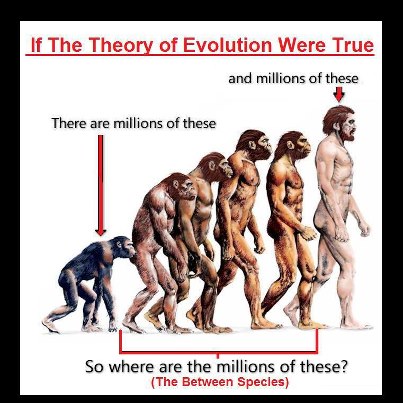
Shouldn’t there be as Many Transitional Fossils as There are Complete Ones?
Charles Darwin predicted that once the fossil record was fully investigated that not only would numerous transitions would be found; but he actually believed that the fossil record would be made up of mostly transitions.
The number of intermediate and transitional links, between all living and extinct species, must have been inconceivably great.
Charles Darwin; The Origin of Species, page 355
So logically:
If every species came from a previous form via gradual micro-changes, there should be a massive number of fossils showing partial transitions—not just fully formed types.
According to the evolutionary chain birds evolved from dinosaurs and scientists claim that in the process of transformation over millions of years dinosaurs shrank down to the size of birds. Once again, none of the fossil beds reveal dinosaur species shrinking but staying the same size as when the species first appears in the fossil record— there are no fossils showing transitions from dinosaurs to birds even though there should be countless examples.
What does the fossil record actually show?
- Sudden appearance of fully formed organisms
- Organisms appear abruptly in the fossil record with no clear evolutionary precursors.
- Example: The Cambrian Explosion (~540 million years ago) shows the sudden appearance of most major animal groups with complex body structures, with no transitional forms leading up to them.
- Long periods of stasis
- Species tend to stay relatively unchanged in the fossil record over long periods, a pattern known as “stasis.”
- Fossils show that once species appear, they often persist with little change until they go extinct.
- A lack of numerous clear transitionals
- Despite millions of catalogued fossils, transitional fossils are rare and often disputed.
- Examples like Archaeopteryx or Tiktaalik are frequently cited as transitional, but even those are isolated, and not the vast, continuous chain of gradual transitions Darwin predicted.
If Darwin’s theory were true, transitional creatures such as invertebrates with partially developed backbones, fish with partially formed legs legs, reptiles with primitive wings and innumerable creatures with semi-evolved anatomical features should be the rule, scattered throughout the fossil strata.
Although each of these classes [fishes, amphibians, reptiles, mammals and primates] are well represented in the fossil record, no one has discovered a fossil creature that is indisputably transitional between one species and another species. Not a single undisputed ‘missing link’ has been found in all the exposed rocks of the Earth’s crust despite the most careful and extensive searches.
Charles Darwin Acknowledged the Fossil Record Didn’t Add Up
Charles Darwin openly admitted that the fossil record posed a serious challenge to his theory of evolution. He recognized that if his theory were true, the geological record should be filled with countless transitional forms showing gradual change over time. Instead, what he observed were long periods of stability and the sudden appearance of fully formed species—an absence he recognized was a grave threat to his theory.
“Why, if species have descended from other species by insensibly fine gradations, do we not everywhere see innumerable transitional forms? Why is not all nature in confusion instead of the species being, as we see them, well defined?
Charles Darwin; On the Origin of Species; Chapter 6: Difficulties on Theory
It is undoubtedly the gravest objection which can be urged against my theory.”
Darwin attributed the lack of transitional fossils to the limited exploration of the fossil record in his time, suggesting that as paleontology advanced, the expected intermediate forms would be found. However, this explanation no longer holds. Over the past century and a half, fossil exploration has dramatically expanded. Modern paleontology has yielded an unprecedented volume of fossil discoveries, aided by technologies such as ultrasound, 3D scanning, sonar, and satellite imaging. Major fossil beds across every continent have been thoroughly excavated and documented—yet the predicted abundance of transitional forms remains conspicuously absent.
Of the 329 living families of terrestrial vertebrates (mammals, birds, reptiles and amphibians) 261 or 79.1 percent have been found as fossils — when birds (which are poorly fossilized) are excluded, the percentage rises to 87.8 percent.
Michael Denton; Biological Researcher, Evolution: A Theory in Crisis p. 189)
There are more than 600 major fossil beds scattered across every continent, offering an unparalleled record of Earth’s biological history. These sites span from the Cambrian Period over 500 million years ago to the more recent Pleistocene Epoch just tens of thousands of years ago, collectively documenting the rise and fall of countless species through deep time. Together, they have produced millions of fossil specimens, ranging from single-celled organisms and trilobites to towering dinosaurs and Ice Age mammals. Many of these beds preserve not only bones but also soft tissues, plants, and entire ecosystems, giving scientists rare snapshots of ancient environments.
Major Fossil Beds of the World
| Fossil Bed (Location & Size) | Number of Fossils | Estimated Age |
|---|---|---|
| Argentina Fossil Beds (Argentina) – multiple sites across Patagonia | Millions | 145–66 million years ago |
| Hell Creek Formation (USA) – ca. 300,000 sq km across 4 states | Thousands (incl. T. rex) | 68–66 million years ago |
| Joggins Fossil Cliffs (Canada) – 15 km of exposed cliffs | Thousands of plant & vertebrate fossils | 315–310 million years ago |
| Jurassic Coast (England) – 150 km coastline | Tens of thousands | ca. 185 million years of history |
| Štanská Skála (Czech Republic) – local quarry sites | Hundreds | 2.6 million–11,700 years ago |
| Jiufotang Formation (China) – ca. 1,200 sq km | Thousands of specimens | ca. 120 million years ago |
| Gobi Desert (Mongolia) – ca. 1,295,000 sq km desert region | Tens of thousands of dinosaur fossils | 100–66 million years ago |
| Messel Pit (Germany) – 0.7 sq km quarry (UNESCO site) | Tens of thousands | ca. 47 million years ago |
| Alexander Island (Antarctica) – ca. 49,000 sq km island | Hundreds | 200–66 million years ago |
| Prince Creek Formation (Alaska, USA) – hundreds of sq km | Thousands of Arctic dinosaur fossils | ca. 70 million years ago |
| Green River Formation (USA) – ca. 65,000 sq km | Millions of fish fossils | 56–34 million years ago |
| La Brea Tar Pits (California, USA) – 23 acres | 3.5 million fossils, 600+ species | 50,000–10,000 years ago |
| Burgess Shale (Canada) – ca. 10 sq km | 65,000 specimens, 120+ species | ca. 508 million years ago |
| Chengjiang Biota (China) – ca. 50 sq km | Thousands, 200+ species | ca. 518 million years ago |
| Wheeler Shale (Utah, USA) – regional shale deposits | Thousands (esp. trilobites) | 507–506 million years ago |
| Karoo Supergroup (South Africa) – ca. 200,000 sq km | Tens of thousands | 299–201 million years ago |
| Solnhofen Limestone (Germany) – ca. 1,600 sq km quarry region | Hundreds of thousands | ca. 150 million years ago |
| Yixian Formation (China) – ca. 1,200 sq km | Thousands | 125–121 million years ago |
| Monte San Giorgio (Switzerland/Italy) – ca. 10 sq km | Thousands | ca. 247 million years ago |
After over 150 years of fossil collecting and more than 200 million documented specimens—including dinosaurs, mammals, turtles, birds, and countless other life forms—the dominant trend in the fossil record is striking anatomical consistency. Species appear abruptly and remain largely unchanged throughout their time in the strata. Despite the expectations of Darwinian evolution, transitional fossils—those showing gradual, step-by-step changes between major groups—are absent.
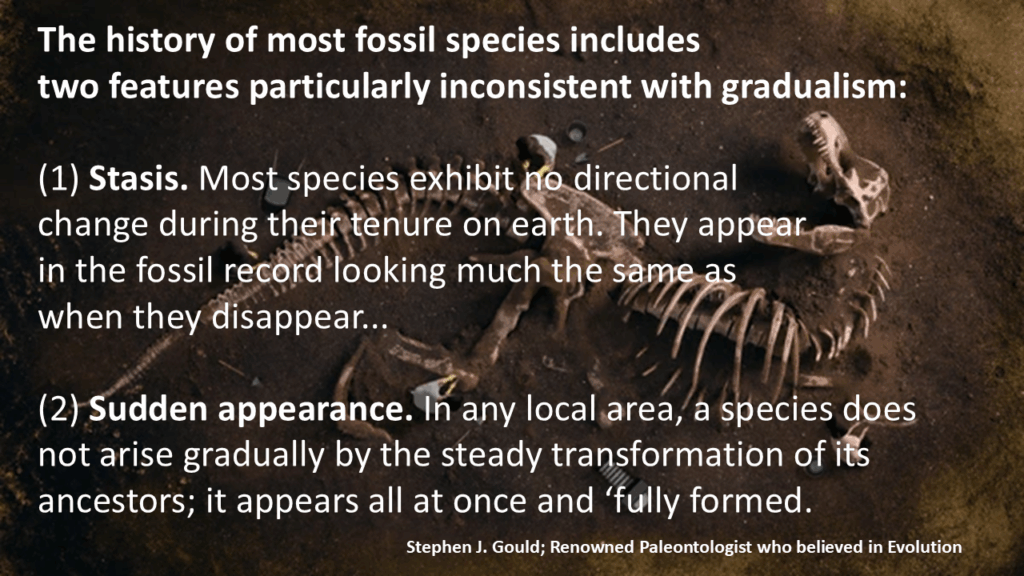
Scientist Have Catalogued Around 200 Million Large Fossils and Billions of Small Fossils
Scientists worldwide have catalogued approximately 200 million large fossils and billions of microfossils, representing an extraordinary range of life forms from nearly every layer of the geologic column. This vast and well-documented fossil record includes plants, invertebrates, fish, reptiles, birds, mammals, and microscopic organisms. Despite the immense volume and diversity of specimens, the fossil evidence overwhelmingly shows that species appear suddenly and remain relatively unchanged, rather than displaying the gradual transitions predicted by classical Darwinian evolution.
The Three Museums with some of the largest collections of fossil specimens:
- Smithsonian Museum of Natural History: 40 million specimens
- American Museum of Natural History: 4.5 million specimens
- British Museum of Natural History: 80 million specimens
The American Museum of Natural History house over 4.5 million fossil specimens. It has the The first fossil collected for American Museum of Natural History was in 1897. It has the world’s largest amphibian, reptile and bird collection in the world. All of the 4.5 million fossil specimens reflect fully formed bird, reptile and amphibian species, none are transitional forms.
Excerpt from private letter by Dr. Colin Patterson of the British Museum of Natural History
“I fully agree with your comments on the lack of of direct illustrations of evolutionary transitions in my book. If I knew of any such fossil I certainly would have included them.
I will lay it on the line…There is not one such fossil for which one might make a watertight argument.“
Almost 88 percent of the varieties of mammals, reptiles, and amphibians have been found in the fossil record. Fish, amphibians, reptiles, mammals and primates are all well represented there has not been even one indisputable transitional link been found despite the most extensive searches.
The missing link between man and apes…is merely the most glamorous of a whole hierarchy of phantom creatures. In the fossil record, missing links are the rule…The more scientist have searched for the transitional forms between species, the more they have been frustrated.
Newsweek (Is Man a Subtle Accident?)
Over 160 years later, the fossil record still lacks the abundance of transitional forms Darwin anticipated—despite extensive global exploration and millions of catalogued fossils. Instead of revealing countless gradual steps between species, the evidence overwhelmingly shows distinct, fully formed organisms appearing suddenly and remaining stable over time.
Predicted Transitional Fossil Evidence VS What Is Found
| Transition Type | What Should Be Present in the Fossil Record | What Has Actually Been Found |
|---|---|---|
| Precambrian Precursors | Numerous simpler, soft-bodied ancestral organisms leading up to Cambrian phyla (e.g., pre-arthropods, pre-chordates, pre-mollusks) | The Precambrian record is nearly devoid of such ancestors; the Cambrian Explosion shows fully formed, diverse body plans appearing abruptly with no clear precursors. |
| Morphological Intermediates | Gradual stages of increasing anatomical complexity—partially formed eyes, limbs, nervous systems, circulatory systems | Fossils overwhelmingly show fully formed features; complex organs like eyes appear suddenly without clear, functional half-steps. |
| Incremental Body Plans | Forms showing gradual development of bilateral symmetry, segmentation, exoskeletons, and coeloms | Cambrian fossils reveal complete and distinct body plans from the start, with no small, gradual transitions documented. |
| Branching Lineages | A rich diversity of intermediate organisms showing “branching” paths, not isolated explosions of new forms | The fossil record displays sudden appearances (“explosions”) followed by stability, not a continuous branching tree. |
| Failed Experiments | Many transitional “dead ends” or extinct evolutionary experiments with partial traits | Instead of abundant transitional “experiments,” the record shows discrete, stable groups, with extinction events but little evidence of half-formed body plans. |
Experts On Gaps and Abrupt Appearances in the Fossil Record
| Name | Credentials | Quote |
|---|---|---|
| Stephen Jay Gould | Harvard paleontologist; co-founder of punctuated equilibrium theory | “The extreme rarity of transitional forms in the fossil record persists as the trade secret of paleontology. |
| Tom Kemp | Curator of Vertebrate Paleontology, Oxford University Museum of Natural History | “As is well known, most fossil species appear instantaneously in the fossil record.” |
| Richard Dawkins | Evolutionary biologist, University of Oxford; author of The Blind Watchmaker | “It is as though they [Cambrian explosion fossils] were just planted there, without any evolutionary history.” |
| Francis Hitching | Science writer and archaeologist | “The curious thing is that there is a consistency about the fossil gaps; the fossils are missing in all the important places.” |
| Niles Eldredge & Stephen Jay Gould | Paleontologists; proponents of punctuated equilibrium (American Museum of Natural History & Harvard University) | “Transitions between major groups are characteristically abrupt.” |
| Everett C. Olson | Vertebrate paleontologist, University of Chicago and UCLA; known for “Olson’s Gap” | “If we seek the ancestries of the marine mammals we run into a blank wall as far as intermediate stages between land and sea are concerned.” |
| Richard B. Goldschmidt | Geneticist and evolutionary biologist, University of California, Berkeley | “Moreover, within the slowly evolving series, like the famous horse series, the decisive steps are abrupt and without transition.” |
This persistent pattern aligns far more closely with the biblical concept of created “kinds” than with the evolutionary expectation of continuous transformation. Rather than pointing to unguided natural processes, the fossil record bears the marks of intentional design, order, and purpose—which are the hallmarks of Creator who brought life into being by wisdom, not by chance.
Challenge Question : If Evolution is true—then why haven’t the countless millions of transitional fossils been found anywhere on the globe?
Premise 2: There Are Fossils That Challenge The Timeline
According to evolutionary theory, new species should arise through a slow, step-by-step process of modification, with simpler ancestors always preceding their more complex descendants. Yet the fossil record often shows the sudden emergence of highly complex organisms without a trail of intermediate forms and, paradoxically, sometimes alongside or even preceding their supposed evolutionary forebears. This striking pattern undermines the predictive structure of the evolutionary tree and raises serious questions about whether the fossil evidence truly supports a gradual, undirected process of biological development.
The Bighorn Basin in Wyoming preserves one of the most continuous fossil records in the world, covering approximately five million years during an early period in the age of mammals. Due to its completeness, paleontologists initially believed it could clearly demonstrate gradual evolutionary change—linking populations across time to illustrate continuous development from one species into another. However, examination of the data revealed a striking contradiction: species once thought to have evolved into others were discovered to overlap in the fossil record with their supposed descendants. This co-existence undermines the notion of a smooth, step-by-step evolutionary sequence.
Fossil formations across the globe lend credence to the lack of harmony in the fossil record. The Thomas Fork Formation in Wyoming contains fossil snails, fish scales, turtle carapaces, reptile bones, and dinosaur eggshells, which should not all be found together.
John A. Dorr; Museum of Paleontology, University of Michigan
This pattern is not limited to the Bighorn Basin. Across the world’s major fossil beds, the fossil record consistently shows a massive overlap of species, with organisms appearing either before or after the timeframes predicted by evolutionary theory. One prominent example is the case of birds and reptiles. Evolutionists argue that birds evolved gradually from reptilian ancestors over millions of years, with reptiles first appearing around 315 million years ago and birds emerging around 150 million years ago—leaving a supposed gap of 165 million years.
Yet, fossil evidence repeatedly shows that fully formed birds and reptiles appear side by side throughout the geologic record. Instead of a neat progression from one form into another, the data reveals a world of coexisting, distinct organisms—disrupting and often overturning the expected evolutionary timeline.
Finding complex organisms in geological layers where evolutionary theory predicts only their distant ancestors would present a serious challenge to Darwin’s proposed timeline.
Imagine archaeologists discovering an iPhone 18 (2026) inside King Tutankhamun’s tomb, dating to approximately 1323 B.C. Such a discovery would place modern technology more than 3,300 years before its invention, forcing historians to reconsider their understanding of technological history.
Similarly, discovering unmistakable bird fossils millions of years before their proposed evolutionary ancestors would raise serious questions about the accepted evolutionary timeline.
The question is straightforward: How could an organism appear in the fossil record before the ancestors from which it supposedly evolved?
Examples That Challenge Evolutionary Timeline
| Group Pair | Evolutionary Expectation | Fossil Record Observation |
|---|---|---|
| Reptiles and Birds | Birds evolved around150 million years ago from reptiles | Found together in the fossil record (e.g., Cretaceous fossil beds globally) |
| Reptiles and Mammals | Mammals evolved around 210 million years ago from reptile-like ancestors | Coexist in many fossil beds from the Triassic and Jurassic periods |
| Fish and Amphibians | Amphibians evolved from lobe-finned fish around 370 million years ago | Coexist in Devonian layers; Ichthyostega and lobe-finned fish appear in overlapping strata |
| Modern Mammals and Dinosaurs | Mammals evolved during or after dinosaurs | Found together in Cretaceous layers (e.g., multituberculate mammals with dinosaurs) |
| Birds and Dinosaurs | Birds evolved from theropod dinosaurs | Found together in Early Cretaceous fossil beds (e.g., Yixian Formation, China) |
| Humans and Non-Human Hominins | Should show gradual replacement | Homo sapiens, Neanderthals, and Denisovans overlapped—coexisted and interbred |
| Homo and Australopithecus | Homo evolved from Australopithecus | Fossils of both genera found in overlapping African layers (~2–3 MYA) |
| Soft-bodied and hard-bodied animals (Cambrian) | Gradual appearance expected | Sudden coexistence in Cambrian Explosion, with many fully formed phyla appearing at once |
In 2005 researchers in China identified a small dinosaur known as Psittacosaurus amongst the stomach region of a fossilized furry mammal that resembled a Tasmanian devil. To find such an advanced predatory mammal came as a surprise to these researchers. The evolutionists had long maintained that the only mammals alive at the time of the dinosaurs were very small and unadvanced.
A study from North Carolina State University in January of 2005 announced that a fossil specimen from Antarctica had been identified as a duck, flipping the evolutionary script. Ducks, some argued, were not supposed to have diverged from their ancestral forms until after the Cretaceous period. Yet this fossil was dated to the late Cretaceous period approximately 70 million years ago, according to evolutionists. This showed that modern birds existed with the dinosaurs they are supposed to have evolved from.
The History Files
Finding birds, ducks, or Tasmanian devils during the Cretaceous period would be like escavating the ruins of Pompeii and finding a 2026 Ford Mustang parked in a garage. These are not evolutionary anomalies, these should be considered evolutionary impossibilities.
The Ashley Beds in South Carolina is an enormous phosphate graveyard that contains mixed remains of man with land and sea animals, notably dinosaurs, pleisosaurs, whales, sharks, rhinos, horses, mastodons, mammoths, porpoises, elephants, deer, pigs, dogs, and sheep. Basically, it shouldn’t exist if evolution were true. These species are supposed to be descendants of each other—yet the appear together during an ancient period when most of these species should not have even existed yet.
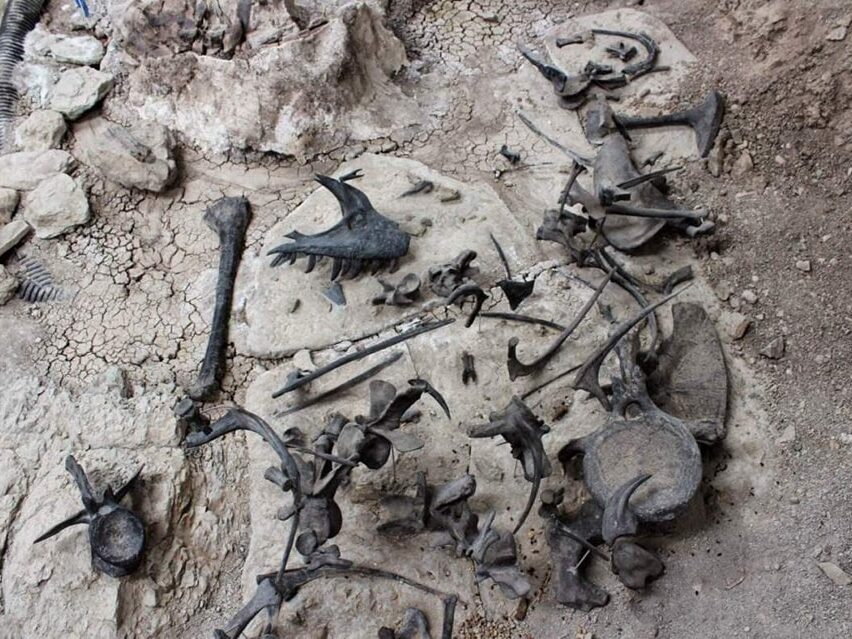
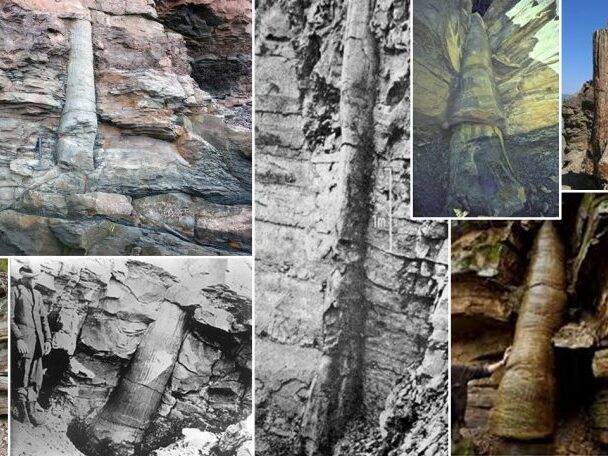
These images of Fossilized Trees Standing Through Dozens of Geological Columns began growing in a geological strata where only simple fungi should be found. Not only are these Polystrate trees standing upright through many rock layers which evolutionist propose represent over 500 million years, but they appear in the geological record where there would not have been any plants, only microscopic algae and simple fungi.
Another timeline conundrum is that Pollen grains have been discovered in Precambrian rock layers—a geological strata that is believed to predate the emergence of flowering, pollen-producing plants by nearly a billion years according to conventional evolutionary timelines. These rocks are typically dated to a time long before angiosperms (flowering plants) were thought to exist.
The presence of pollen in such ancient strata presents a significant anomaly for evolutionary theory, which holds that pollen-bearing plants did not evolve until the Cretaceous period, around 125 million years ago.
Stromatolotites And Asteroids
Stromatolotites are biologically formed sedimentary structures created by colonies of microbes living in shallow marine environments. These layered rock formations are produced by cyanobacteria, a type of single-celled, photosynthetic organism formerly known as blue-green algae. Cyanobacteria are believed to have first appeared around 3.5 billion years ago, long before the emergence of any complex life forms. They are the oldest known photosynthetic organisms on Earth, they predate plants by nearly two billion years.
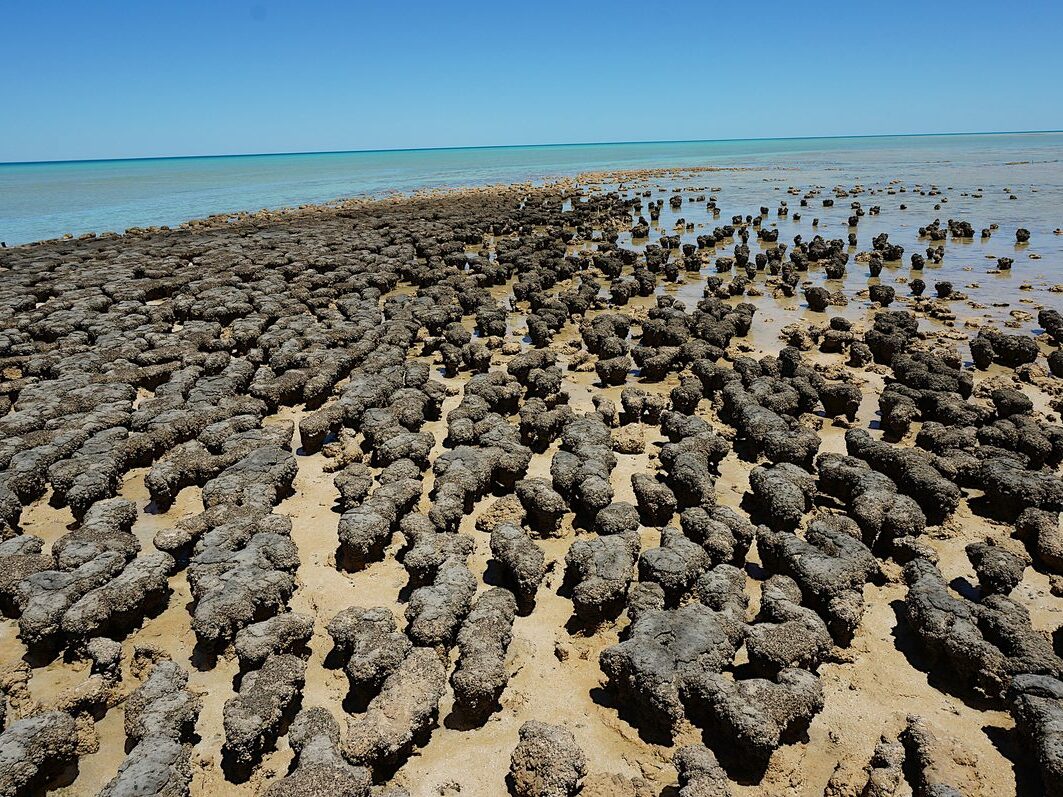
Stromatolites discovered by scientists in Greenland are now considered the oldest evidence of life yet found, pushing the origin of life back to at least 3.7 billion years ago. The problem is that this period corresponds to a time when Earth was believed to be experiencing extremely harsh conditions—conditions thought to be unfavorable for the emergence of life, let alone the thriving existence of complex, photosynthesizing bacteria.
The great age of stromatolite fossils complicates the task of restructuring the evolution of life from the chemicals naturally present on earth—It leaves comparatively little time for evolution to have occurred and puts the process close to a time when Earth was being bombarded by destructive asteroids
New York Times (World’s Oldest Fossils Found In Greenland) August 31, 2016
Finding stromatolites at 3.7 million years ago poses a huge challenge to evolutionary origin-of-life explanations because it implies life arose and became complex far earlier — and much faster or under very different conditions — than evolutionary models expected. It forces evolutionist scientists to pick which part of the story needs revising: the timing, the environment, or the source of life itself.
Challenge Questions: Does the fact that species thought to descend from one another are sometimes found fully formed in the same fossil layers—when, according to evolutionary expectations, they should not yet have existed—cast doubt on the theory of evolution?
Premise 3: Complex Life Appears Where It Should Not Be Yet
While Charles Darwin did not have the access to the extensive fossil documentation paleontologist have today the Cambrian Explosion deeply troubled him. At the time Origin of Species was published in 1859, the earliest fossil layer (the Cambrian) was called the Silurian. The Silurian troubled Darwin because complex life appears suddenly and completely in the earliest layers of the fossil record where only simple life forms should be found.
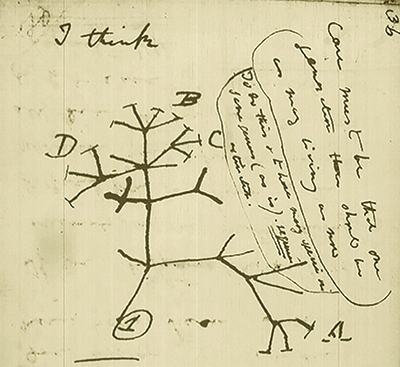
Darwin’s theory presupposed that life would slowly branch out over time, starting with small, simple differences and only much later developing big, dramatic changes. But when scientists look at the fossil record of the Cambrian explosion, it shows that the opposite happened—many of the major animal body plans appeared suddenly and early. Darwin knew this was a grave threat to his theory.
Consequently, if my theory be true, it is indisputable that before the lowest Silurian stratum was deposited, long periods elapsed, as long as, or probably far longer than, the whole interval from the Silurian age to the present day; and that during these vast, yet quite unknown, periods of time, the world swarmed with living creatures.
Charles Darwin; The Origin of Species page 307
Why we do not find records of these vast primordial periods, I can give no satisfactory answer?
Essentially Charles Darwin is stating what should be obvious to everyone at this point—albeit using 19th century vernacular: If simple single-celled organisms evolved over millions of years into multi-celled organisms then at the earliest fossil layers which represent the beginning of evolutionary time—there should not be complex life forms where only simple life forms should be… right?
The Cambrian Explosion Contradicts Evolution
The Cambrian Explosion refers to a remarkable and relatively short period in Earth’s geological history—roughly 541 to 530 million years ago—during which most major animal groups (called phyla) appeared suddenly and almost simultaneously in the fossil record.
Evolutionary scientists date the Cambrian rock layers to approximately 540 million years ago. Yet these sedimentary strata reveal a sudden and dramatic appearance of highly complex, fully formed multicellular organisms—referred to as metazoans—alongside a vast array of hard-shelled invertebrates. This event, often called the “Cambrian Explosion,” introduces an astonishing variety of life forms seemingly without evolutionary precursors in the underlying rock layers.
Among these organisms are clams, snails, horseshoe crabs, trilobites, sponges, brachiopods, worms, jellyfish, sea urchins, sea cucumbers, starfish, brittle stars, sea lilies, and numerous other intricately designed invertebrates. Each of these creatures exhibits fully integrated body systems—such as circulatory, digestive, and nervous systems—along with specialized cell types and structural complexity.
Most of the animal groups that are represented in the fossil record first appear, “fully formed” and identifiable as to their phylum, in the Cambrian, some 550 million years ago. These include such anatomically complex and distinctive types as trilobites, echinoderms, brachiopods, molluscs, and chordates. … The fossil record is therefore of no help with respect to the origin and early diversification of the various animal phyla…
Kevin J. Peterson, Michael R. Dietrich and Mark A. McPeek—Complexity and the Cambrian explosion
What makes this so remarkable is that these organisms appear abruptly and simultaneously in the fossil record, with no clear evolutionary ancestors in the Precambrian layers beneath them. According to the standard theory of evolution—which posits that life diversified gradually through the slow accumulation of modifications—such a sudden emergence is highly problematic. The Cambrian Explosion introduces major animal body plans (phyla) in a geological blink of an eye, contradicting the expectation of transitional forms appearing incrementally over vast periods of time. Here are the ways the Cambrian explosion challenges evolution:
Sudden Appearance vs. Gradualism
- Darwin’s theory predicts slow, progressive change over long periods through small modifications.
- The Cambrian fossil layers show fully formed, complex organisms appearing abruptly, with no gradual buildup or evolutionary trial stages below them.
Lack of Transitional Precursors
- The rock layers immediately beneath the Cambrian (Precambrian) show little to no fossil evidence of the simpler organisms expected to evolve into Cambrian phyla.
- If these phyla evolved naturally, they should have left behind a rich trail of intermediate forms, which are overwhelmingly absent.
Introduction of New Body Plans (Phyla)
- Nearly all major animal body plans (over 20 distinct phyla) appear suddenly in the Cambrian strata.
- Evolution by small mutations would not be expected to produce so many fundamentally different designs in such a short span of geological time (~10–20 million years).
Complexity Without Developmental Precursors
- Cambrian animals like trilobites, brachiopods, and arthropods exhibit advanced body systems (nervous systems, compound eyes, circulatory systems).
- There’s no fossil record of how these systems gradually formed from simpler structures, despite their extreme complexity.
Contradiction to Darwin’s Own Admission
- Darwin wrote: “If it could be demonstrated that any complex organ existed which could not possibly have been formed by numerous, successive, slight modifications, my theory would absolutely break down.”
The Cambrian Explosion appears to illustrate exactly this problem: fully formed complexity with no clear pathway of slight modifications.
No Evidence of Micro-to-Macro Evolution
- Evolution is said to work through micromutations accumulating over time, eventually resulting in macroevolutionary changes.
- The Cambrian record doesn’t show small-scale change accumulating—it shows large-scale leaps, undermining the core mechanism of Darwinian evolution.
Speed of Change Exceeds Evolutionary Rates
- The emergence of so many new body types within a narrow window (possibly as short as 5–10 million years) would require a rate of evolutionary change orders of magnitude faster than what is observed or mathematically plausible through mutation and natural selection alone.
Genetic Novelty Without Gradual Build-up
- New phyla require entirely new genetic information, including developmental genes like Hox genes.
- The Cambrian Explosion suggests a sudden appearance of large quantities of novel genetic instructions, for which no precursor sequences are evident in earlier strata.
Not only do fossil beds reveal descendent species showing up at the same time, but it begs the question of why is there complexity in the oldest part of the fossil record? Complexity being found in the bottom time era of the fossil record defies how evolution is supposed to work. If evolution is true, there should only be simple life forms at the bottom of the fossil record.
Harry F. Sanders (Answers In Depth) October 5, 2018
The discovery of vascular wood and six-legged, composite-eyed insects in the Precambrian salt deposits of the Salt Range in Pakistan is also highly problematic for evolutionists.
Sahni, B., “Microfossils and the Salt Range Thrust,” Proceedings of the NAS, India, 1945, pp. i-xix.)
Charles Darwin hoped that future fossil discoveries would fill in the gaps, but even 150+ years later, the Cambrian Explosion remains one of the most significant anomalies in the evolutionary timeline.
Darwin’s Nightmare Scenario
By Darwin’s own standard the sudden emergence of fully formed, highly complex organisms without any clear line of transitional precursors pose an insurmountable threat to his theory because it undermines the very mechanism Darwin proposed as the driver of evolutionary change.
If it could be demonstrated that any complex organ existed which could not possibly have been formed by numerous, successive, slight modifications, my theory would absolutely break down
Charles Darwin; On the Origin of Species; Chapter 6: Difficulties on Theory
Charles Darwin’s worst nightmare has come true. Despite more than a century of extensive fossil exploration, the record has not confirmed his theory as he had hoped—instead, it has exposed critical weaknesses that, if honestly acknowledged, leave the theory of evolution shipwrecked. Ironically, Darwin was right about one thing: the fossil record has become the greatest threat to his own theory.
Challenge Question: The chief pillar of the Theory of Evolution is descent with modification over millions of years—Doesn’t finding all 20 major animal body plans in the oldest geological column fully formed totally contradict the theory?
Premise 4: Living Fossils Remain Unchanged
“Living fossils” is a term used to describe species that exist today yet are also found in the fossil record, often dating back hundreds of millions of years. These organisms have remained virtually unchanged over vast stretches of geological time. Far from being rare anomalies, living fossils appear throughout the fossil layers. In fact, nearly every major category of living animal has a corresponding ancestor documented in the fossil record.
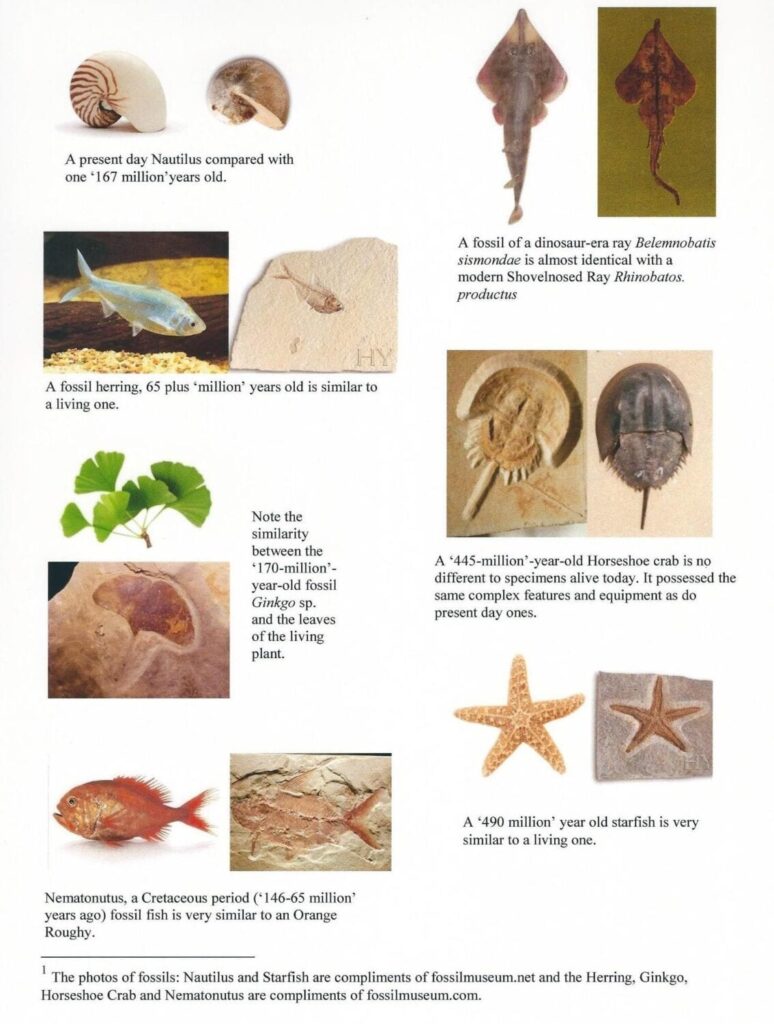
Notable examples include the coelacanth fish (believed by evolutionists to date back 340 million years), Ginkgo trees (125 million years), crocodiles (140 million years), horseshoe crabs (200 million years), Neopilina mollusks (500 million years), and the Tuatara lizard (200 million years).
The dilemma for evolutionary theory is that these species show no significant change over time. The fossilized forms are virtually identical to their modern counterparts, exhibiting no clear evidence of gradual evolution—posing a direct challenge to the idea of constant transformation through mutation and natural selection.
In 1994, a remarkable discovery was made in a remote canyon of Wollemi National Park in eastern Australia. A park officer stumbled upon a grove of living Wollemi pine trees—a species that had long been presumed extinct and was known only from the fossil record. Before this discovery, Wollemi pines were believed to have disappeared around 91 million years ago, based on fossilized specimens dating back to the Cretaceous period.
What makes this find so extraordinary is that the living Wollemi pines are virtually identical in appearance to their ancient fossil counterparts. Despite the supposed passage of nearly 100 million years, there is no observable evidence of evolutionary change. The same distinctive trunk, branching pattern, and foliage seen in the fossils can be seen in the living trees today.
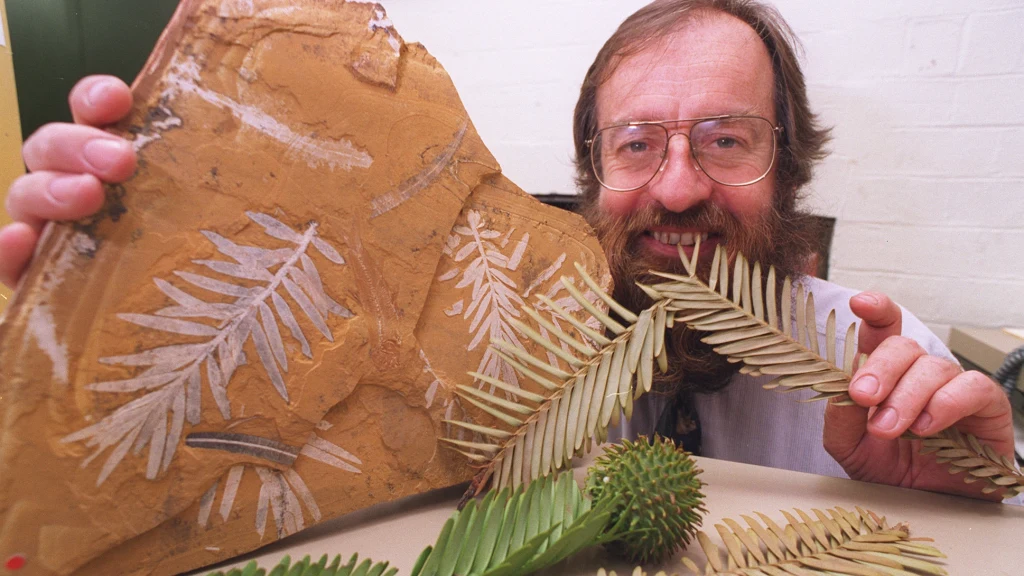
These real life pictures of fossils representing every geological column up to 450 million years ago show that they appeared fully formed with zero directional change. This should be considered impossible if evolution is true.
Amber Fossilization Shows the Absence of Directional Change
A wide variety of animals have been remarkably preserved in fossilized tree resin, known as amber. These include insects, crustaceans, tadpoles, frogs, lizards, annelid worms, snails, and spiders—along with even more delicate materials such as mammalian hair. Amber fossils often capture these creatures in exquisite detail, offering a unique and vivid snapshot of life as it existed millions of years ago.
Why have these life-forms stayed the same for all that time?
New Scientist Article-The Creatures Time Forgot 1999
What makes these discoveries especially compelling is that many of the organisms preserved in amber are virtually indistinguishable from their modern counterparts. These “living fossils” display no significant morphological changes, showing no evidence of the directional evolutionary transformation expected over such vast spans of geological time. Instead, they offer powerful, tangible windows into the past—testifying to the remarkable stability and continuity of certain life forms across millions of years.
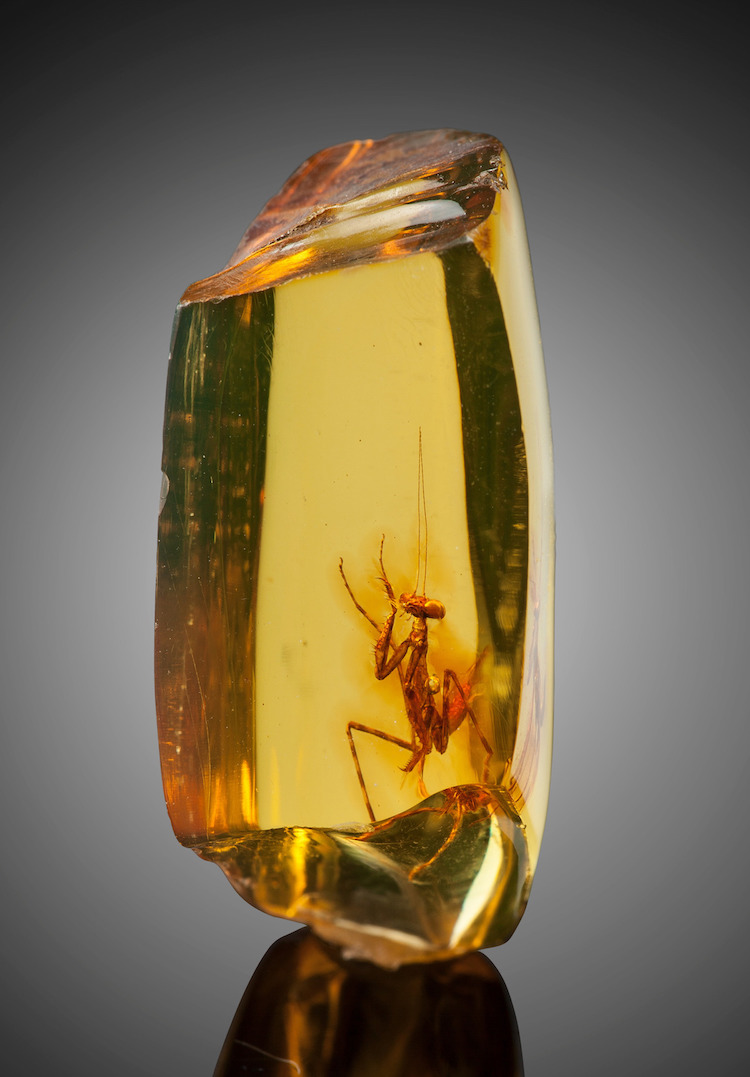

Other living fossils include sponges, squirrels, sharks, aardvarks, nautilaus, brachiopods, ginkgo trees, coalacanth, shrimp, frogs, rays, rabbits rats, platypus, ferns, crocodiles, pelicans, snails, dragonflies…the list goes on an on—these living fossils show Zero evolution. The fossil record indicates sudden appearance of all of these species fully formed identical to the way they appear today.
The abrupt manner in which whole groups of species suddenly appear in certain formations, has been urged by several paleontologists—for instance by Aggassiz, Picted, and by none more forcibly than by Professor Sedgewick as a fatal objection to the belief in the transmutation of species. If numerous species, belonging to the same genera or families, have really started into life all at once, the fact would be fatal to the theory of descent with slow modification through natural selection.
Charles Darwin; Origin of Species, Page 327
Charles Darwin recognized that his theory of evolution by natural selection depended heavily on gradual change over vast periods of time. According to his theory, new species developed through the accumulation of countless small variations passed from one generation to the next.
Darwin was deeply troubled by the sudden appearance of complex organisms in the fossil record, without the countless intermediate forms his theory seemed to predict. He openly acknowledged this difficulty in On the Origin of Species.
One can only imagine his reaction to the discovery of so-called “living fossils”—organisms that have remained remarkably similar in appearance to their ancient fossil ancestors, despite supposedly having millions of years to evolve.
Challenge Question : Evolution is defined as the gradual change in the characteristics of a species over several generations and yet paleontologist have found numerous “living fossils” that show organisms fully formed early in the fossil record that have remained unchanged over millions of years. How can this be explained if evolution is true?
ThinkCube Truth Veracity Grid
- Have I considered the facts carefully and with an open mind?
- Is my conclusion the result of careful examination of the facts, or is it a conclusion made in spite of the facts?
- Is my conclusion the one that makes the most sense of the evidence?