
Premise 1: The Incarnation Is Proof That God Exist
If you were to type the question “Did Jesus really exist?” on Google the answer would be:
“Yes, virtually all scholars of antiquity, including those who aren’t Christian, agree that
Wikipedia
Jesus of Nazareth existed as a historical figure and lived in the first century.”
The question of the historicity of Jesus was generally settled in scholarship in the early 20th century
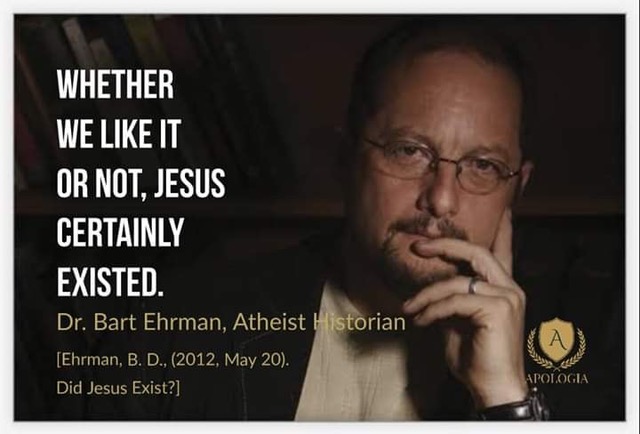
Today scholars agree that a Jewish man named Jesus did exist.” Since Jesus was a real historical figure the question remains: “What did Jesus exist as—a merely human prophet, or was he God?
in·car·na·tion
/ˌinˌkärˈnāSH(ə)n/
a person who embodies in the flesh a deity, spirit, or abstract quality.
The incarnation is intertwined with the concept of the Trinity which means tri-unity or tri-oneness, suggests that God exists in three persons (Father, Son, and Holy Spirit) while remaining one God. The trinity means each member of the Godhead is equally God, each is eternally God, and each is fully God—not three gods but three persons of the one Godhead.
Each person of the trinity is equal in essence yet all three are their own personal expression of the one undivided divine nature. Jesus as the Son of God represents the 2nd person of the Trinity.
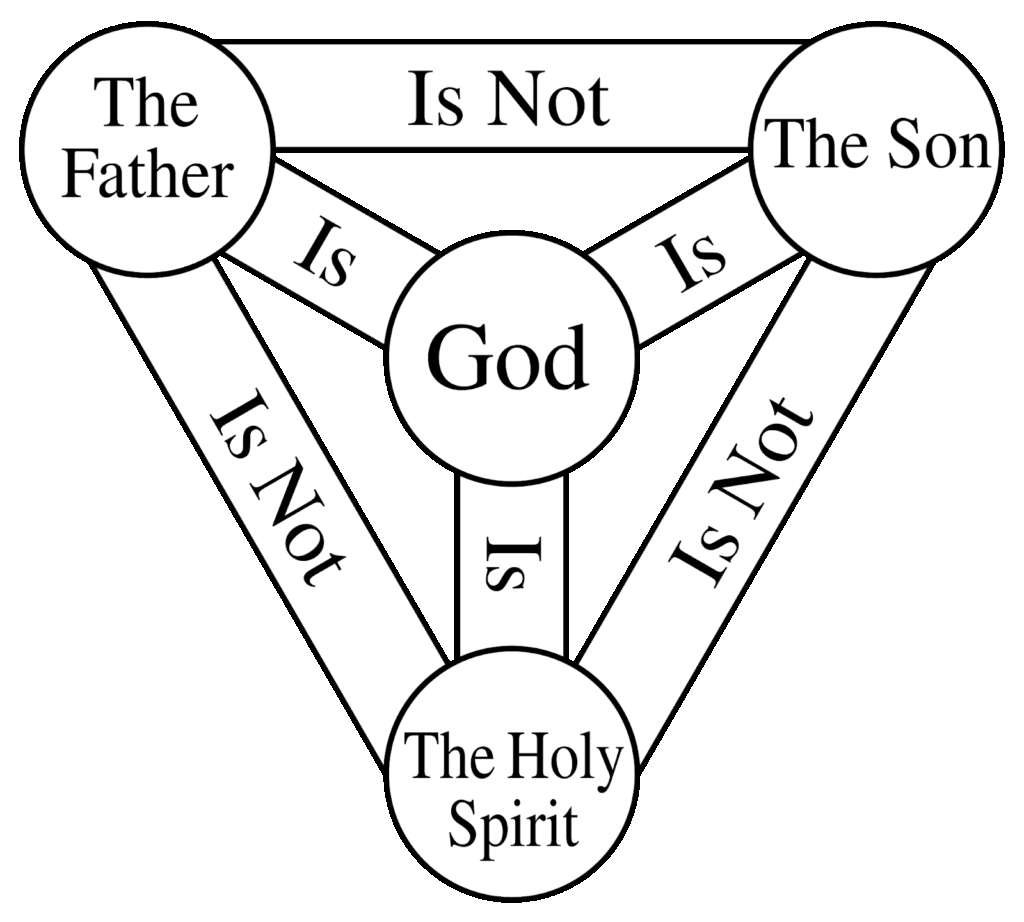
The Latin verb incarnare means “to make flesh.” The Incarnation, a central concept in Christianity, refers to the belief that God, in the person of Jesus Christ, became fully human while remaining fully God. It means that the eternal Son of God took on human form, dwelling among humanity and experiencing the same joys, sorrows, and temptations as humans, without being affected by sin.
The Christian doctrine of incarnation, which states that God became human in the person of Jesus Christ, is central to the belief that Jesus is the Son of God and a demonstration of God’s love and willingness to be intimately involved in humanity’s salvation. The incarnation of Jesus, the belief that God became human in the form of Jesus also provides historical proof that God existed before and after the incarnation.
Here’s How The Incarnation Is Evidence )f God’s existence:
- Direct Manifestation of God: The incarnation implies that God, who is usually unseen and transcendent, actively took on human form in Jesus, making Him a visible and tangible representation of God’s nature and will.
- Demonstrates God’s Power: Jesus’s ability to perform miracles, his sinless life, and ultimately his resurrection, are all seen as demonstrations of his divine power and nature, further pointing to his identity as God incarnate.
In the beginning the Word already existed.
John 1:1, 14
The Word was with God,
and the Word was God.
So the Word became human and made his home among us. He was full of unfailing love and faithfulness. And we have seen his glory, the glory of the Father’s one and only Son.
The apostle John states in verse 14 that while Jesus lived among them they were eyewitnesses of His glory, the glory of the Father’s one and only son. In fact all four of the Gospels in the Bible are eyewitness testimonies about Jesus and his time on earth but they each have a distinctive emphasis. Matthew emphasizes his kingship, Mark his servanthood, Luke his manhood, and John his Godhood.
In opening verse of his gospel John wanted his readers to understand first and foremost—that Jesus was both divine and human. In the first chapter he introduced Jesus as the Word, who was with God in the beginning, who was God, and through whom creation happened.
The concept of “The Word” which is “logos” in the Greek was packed with meaning for both the Jews and Greeks. To the Greek philosophers, the logos represented the abstract reason and order prevalent in the universe. To the Jews the reference of Jesus as the “Word” meant that John was calling Jesus “the wisdom, revelation and the power of God in human form.”
Not only did the Word exist from all eternity, and have face-to-face fellowship with God the Father, but also the Word was God. That simple statement, only four words in both English and Greek (theos ēn ho logos), is perhaps the clearest and most direct declaration of the deity of the Lord Jesus Christ to be found anywhere in Scripture.
John MacArthur; Theologian; The Gospel of John Commentary
The primary emphasis of the Apostle John’s written eyewitness testimony was that Jesus was the incarnate “Word” and that his life on earth provided the most direct revelation of Himself ever given to man. The incarnation provides a tangible, historical, and humanized representation of God, suggesting that God is not simply an abstract concept but a real, active presence in the world.
Long ago God spoke many times and in many ways to our ancestors through the prophets. And now in these final days, he has spoken to us through his Son.
Hebrews 1:1-2
As the incarnate Word, Jesus Christ is God’s final word to mankind: “God, after He spoke long ago to the fathers in the prophets in many portions and in many ways, in these last days has spoken to us in His Son.” Creation and man’s conscience provide “general revelation” of God’s power, intelligence, and eternality.
Jesus coming to earth as the wisdom (logos) of God provided “special revelation” verbally, and behaviorally communicated specifics about God’s attributes, purposes, and holiness. The miracles Jesus performed publicly provided “special revelation” that objectively, and visibly demonstrated God’s power over death, nature, biology that provided proof that he was God.
The incarnation implies that God, who is usually unseen and transcendent, actively took on human form in Jesus, making Him a visible and tangible representation of God’s nature and will.
Challenge Question: Did you know that the existence of Jesus as an historical figure is a settled fact in academia?
Premise 2: Jesus Is God’s Special Revelation Of His Exact Nature
In these last days he has spoken to us by his Son, whom he appointed heir of all things, and through whom also he made the universe. The Son is the radiance of God’s glory and the exact representation of His being.
Hebrews 1:2-3
Hebrews 1:3 says that Jesus is not only the second member of the Trinity, but that He is “the exact representation of God”. Exact representation translates the Greek term used for the impression made by a stamp on a seal. The design on the stamp is reproduced on the wax. Jesus Christ is the reproduction of God. The Bible says Jesus is the perfect, personal imprint of God in time and space.
Jesus is a superior revelation of God. When we see him, we know just what the God of the universe is like. We know how he thinks. We know how he talks. We know how he relates to people. God has spoken in His Son. It is his ultimate communication, his final word, his consummate eloquence.
Kent Hughes; Hebrews Anchor for the Soul
Jesus is said to be an “Exact Representation” which is the word “Charakter” in the Greek from which we get the english word “Character”. This phrase emphasizes that Jesus is not a mere copy or reflection, but rather a perfect and faithful portrayal of God’s divine essence. It suggests that Jesus shares in God’s being and attributes, like love, justice, and power.
The Son’s power, wisdom, and goodness fully and accurately reveal to us the character and perfections of God. It is similar to saying that Jesus shares the same exact spiritual DNA that God does. He, like God, is perfectly holy, omniscient, and all-powerful. As Scripture declares, He is the “radiance of God’s glory and the exact imprint of His nature” (Hebrews 1:3), meaning that in seeing Christ, we behold the fullness of God’s essence in human form. His words, actions, and miracles are not merely reflections of divine truth—they are direct expressions of it, making Him the visible image of the invisible God.
Anyone who has seen Me has seen the Father
Jesus
In Colossians 1:15, the Apostle Paul calls Jesus “the image of the invisible God,” using the Greek word eikōn, which means a precise copy or exact representation. This term goes far beyond a vague resemblance—it signifies that Christ is the perfect and complete manifestation of God’s nature, character, and essence. The invisible God, whom no one has seen at any time, is made visible and knowable through the person of Jesus. He is not merely reflecting God like a mirror reflects light; He embodies God fully, both in being and in action. As such, Jesus is not just a messenger from God—He is God Himself, revealed in human form, making the unseen Creator tangible, approachable, and relatable to humanity. To know Jesus, then, is to truly know the Father (John 14:9), because everything that is true of God is also true of Him.
Challenge Question: What do you think Jesus was like? Is that how you think God is?
Premise 3: Jesus Demonstrated The Existence Of God By Having The Same Power And Wisdom
God promised everything to the Son as an inheritance, and through the Son he created the universe.
Hebrews 1:1-3
The Son radiates God’s own glory and expresses the very character of God, and He sustains everything by the mighty power of his command.
The word “universe” is kosmos in the Greek. The writer of Hebrews is saying Jesus Christ is responsible not only for the physical earth; He is also responsible for creating time, space, energy, and matter. Jesus created the whole universe and everything that makes it function. The claim that Jesus sustains everything by his power implies that the energy in every atom, the rotation of the earth , and each of the constant laws of physics are controlled and sustained by his power.
The four eyewitness Gospel authors record a total of 37 miracles that Jesus performed publicly which either demonstrated his power over biology, chemistry, the laws of physics, and even death itself.
The God who made the rules that govern the universe also has the authority to set them aside. And on occasion He has, if it was necessary to serve His purposes.
Billy Graham
Miracles of Jesus and the Power They Display
| Miracle Performed (with Scripture) | Power Displayed |
|---|---|
| Turns water into wine — John 2:1–11 | Over chemistry and molecular reconstruction |
| Heals a man while not being physically present (Nobleman’s son) — John 4:46–54 | Control over cellular health, time, space, and circumstance |
| Heals many sick people in one place — Matthew 8:16 | Corporate control over physiology of groups of people |
| Miraculous catch of fish — Luke 5:1–11 | Control of the animal kingdom, time, and circumstance |
| Cleanses a man with leprosy — Mark 1:40–45 | Control over diseases |
| Heals a paralyzed man — Luke 5:17–26 | Control over cellular biology, disease, neurological function, and cellular reconstruction |
| Feeds 5,000+ people — John 6:1–14 | Ability to create bread and fish instantaneously |
| Makes a coin appear in a fish’s mouth — Matthew 17:24–27 | Control over the animal kingdom, time, and circumstance |
| Causes a fig tree to wither without touching it — Matthew 21:18–22 | Command over biology and nature |
| Calms the wind and waves — Luke 8:22–25 | Command over nature and the elements |
| Raises Lazarus from the dead — John 11:1–44 | Command over life and death |
The miracles Jesus performed provide “special revelation” of God’s unlimited power and provide substantiated proof that He was God. The miracles, which included healings, exorcisms, and control over nature, were seen as supernatural acts that only a divine being could perform. These events were intended to demonstrate God’s power and glory, and to reveal Jesus as the Son of God, the Messiah, and the Savior.
Do not believe me unless I do the works of my Father. But if I do them, even though you do not believe me, believe the works, that you may know and understand that the Father is in me, and I in the Father
John 10:37-38
In John 10:37-38 Here Jesus states that if his works are done, people should believe the works, even if they don’t believe in him personally. This is intended to help people understand the truth of the Father’s presence in him and his own unity with the Father.
Here’s a more detailed explanation of how miracles were seen as proof of Jesus’ divinity:
- Unique Power and Authority:Jesus’ miracles showcased his power and authority over the physical world and the realm of the spirit. For example, he healed the sick, raised the dead, and cast out demons, actions that were beyond the capacity of ordinary humans.
- Signs of God’s Kingdom:The miracles were often referred to as “signs” or “works,” which were intended to point people to the reality of God’s kingdom and the coming of the Messiah. Jesus’ actions demonstrated that God was at work in the world, bringing healing, deliverance, and hope.
- Confirmation of Jesus’ Identity:The New Testament emphasizes that Jesus’ miracles were performed to prove who he was and to confirm his claim to be the Son of God. For instance, the resurrection of Lazarus was a powerful sign of Jesus’ power over death and a demonstration of his divine nature.
- Evidence of God’s Glory:Miracles were seen as a manifestation of God’s glory and a way to glorify God by putting his power on display. The miracles showed God’s love, compassion, and concern for humanity, and they invited people to believe in him and receive his salvation.
Thousands of People Witnessed Jesus’s Miracles
Jesus’s power to perform miracles was not merely known or witnessed by the disciples and the individual recipients. His power to perform miracles was known throughout Galilee and Judea which covers an estimated 3,125 miles. People flocked to see him and on one point Jesus had to retreat in a boat to get away from them. Twice he preached and performed miracles to crowds well in excess of 5,000 each not counting women and children.
Multiple attestation refers to the principle that the more a story or saying appears in independent sources, the more probable its historicity. Besides the 15 or so New Testament authors, multiple ancient historians and early church fathers wrote about Jesus’s amazing feats of power.
Quadratus, a leader in Athens in the very early 2nd century even wrote that some of the people who were healed were still alive:
“Our Saviour’s works, moreover, were always present: for they were real, consisting of those who had been healed of their diseases, those who had been raised from the dead; who were not only seen whilst they were being healed and raised up, but were afterwards constantly present. Nor did they remain only during the sojourn of the Saviour on earth, but also a considerable time after His departure; and, indeed, some of them have survived even down to our own times.”
While no ancient historians explicitly documented Jesus performing miracles in a way that is directly comparable to the accounts in the Gospels, some historical sources offer indirect evidence and contextual information that supports the idea that Jesus was perceived as a powerful figure who performed acts that were considered extraordinary or supernatural.
Here’s a breakdown of the relevant historical perspectives:
1. Tacitus’s Account in the Annals:
Tacitus, a Roman historian, wrote about the Christians and mentioned a “Christus” who had been crucified under Tiberius, from whom the Christians were named. He did not specifically mention miracles, but he noted that the Christians worshiped Christus as a god and considered him a “wise man” who “wrought surprising feats”. This suggests that the Christians attributed some extraordinary qualities to Jesus, even if Tacitus didn’t elaborate on the nature of these feats.
2. Josephus’s Antiquities of the Jews:
Josephus, a Jewish historian, also made references to Jesus in his Antiquities, mentioning him as a “wise man” who “had the power to perform miracles”. This statement, while not explicitly detailing miracles, hints at the belief that Jesus possessed supernatural abilities.
3. Justin Martyr’s First Apology:
Justin Martyr, an early Christian apologist, claimed that there were public records of Jesus’ miracles, citing the “Acts of Pontius Pilate” as evidence. This assertion suggests that some historical records or legal documents may have existed that documented claims of Jesus performing miracles, though these documents have not survived to the present day.
The Gospels, and these writings offer valuable contextual information and hints that Jesus was perceived as a powerful figure who performed extraordinary or supernatural acts.
The Testimony of the Critics
That’s a powerful observation, and it highlights an often-overlooked historical reality: even Jesus’ harshest critics did not deny that He performed extraordinary works—they questioned the source of His power.
In the Gospels, multiple passages show that the religious leaders of the time, particularly the Pharisees and scribes, witnessed Jesus’ miracles but refused to acknowledge them as evidence of divine authority. Instead, they attributed His works to demonic forces. For example:
- In Matthew 9:34, the Pharisees claimed, “He casts out demons by the prince of demons.”
- In Mark 3:22, they said, “He is possessed by Beelzebul!”
- In Luke 11:15, they asserted, “By Beelzebul, the prince of demons, He is driving out demons.”
These accusations reveal a critical point: Jesus’ miraculous acts were not dismissed or ignored—they were too public, too undeniable. Rather than denying the reality of the miracles, His opponents sought to discredit the source. This pattern continued in later Jewish polemics.
In post-Gospel Jewish tradition, particularly the Babylonian Talmud, Jesus is mentioned (though often obliquely or with altered names) as having led Israel astray through sorcery and magic. For instance, Sanhedrin 43a refers to a man named Yeshu (a reference to Jesus), who was executed for “sorcery” and for leading people into apostasy. In Sanhedrin 107b, it is hinted that He practiced magic and learned these arts in Egypt—an echo of the accusation in the Gospels that His power was supernatural, but evil.
This accusation is telling: it implicitly confirms the impact and supernatural nature of Jesus’ works. His opponents—whether in the 1st century or in later rabbinic literature—rarely claimed He did nothing. Instead, they resorted to the idea that His signs and wonders were sourced from dark or deceptive powers.
This line of reasoning actually supports the historicity and public nature of Jesus’ miracles. If even His enemies admitted He performed extraordinary acts but merely questioned the origin, then the burden of proof shifts. It begs the question: if the miracles were real, what was their true source? And if the fruit of Jesus’ life, message, and resurrection were aligned with God’s redemptive plan, then attributing His power to evil becomes not only inaccurate, but deeply ironic.
In short, the miracles of Jesus were recognized across multiple sources—affirming His supernatural influence. The only debate was whether this power was divine or demonic. That very tension reflects both the historical reality of Jesus’ ministry and the spiritual battle over how His identity would be received.
Does Jesus Performing Miracles Support Believing in the Existence of God?
When we consider the historical reality of Jesus’ existence—a fact acknowledged by both secular and religious sources—we’re confronted with a figure whose life cannot be easily explained through natural means alone. His teachings, influence, and especially His miracles set Him apart from any other historical figure. Even His critics, both ancient and modern, rarely deny that something extraordinary surrounded His ministry. They may dispute the interpretation, but not the impact.
The accounts of healing the blind, raising the dead, calming storms, and casting out demons were not performed in secret or isolated among believers—they were witnessed by crowds, acknowledged by skeptics, and even recorded by early enemies who attributed them to supernatural powers. The consistent thread is that Jesus did things that defied natural explanation.
What remains, then, is the question of source. Was He merely a gifted illusionist? A sorcerer, as some claimed? Or was His power the very expression of God’s authority on earth? The weight of evidence—in the transformation of lives, the coherence of His teaching, the fulfillment of ancient prophecies, and ultimately the resurrection—points not just to a man of power, but to the embodiment of divine power.
The logical flow of Jesus’s divinity and therefore the existence of God would go like this:
- Jesus historically existed
- Jesus was witnessed performing miracles
- Miracles demonstrate divine power
- Therefore Jesus was divine
- Jesus’s divinity proves God’s existence
The only conclusion that fully accounts for the historical Jesus, the nature of His works, and the unparalleled authority He claimed is that He was who He said He was: not just a messenger of God, but God Himself in human form.
Challenge Question: If even Jesus’ critics acknowledged His miraculous works but debated their source, what does that suggest about the reliability of the miracle accounts—if Jesus did do miracles what does that say about who He is?
Premise 4: Jesus Himself Claimed To Be God
If you type in your search bar; “Is the Crucifixion of Jesus considered a historical fact by scholars” here is what you get:
Yes, the crucifixion of Jesus is widely considered a historical fact by both Christian and Jewish scholars, despite centuries of debate and discussion. While the details surrounding the event are not universally agreed upon, the core fact of Jesus’ execution by the Romans is supported by evidence from the New Testament, extra-biblical sources, and archaeological discoveries.
Google
If you ask people why Jesus was crucified you might hear reasons such as his perceived threat to Roman authority and his challenges to the established religious and political structures of the time. Or you might read that Jewish leaders feared his growing popularity and the fact many in the Jewish general population wanted him to become their King to overthrow Roman Rule in the province.
While these are certainly some of the reasons the religious and political power of the day hated him— of the 36,450 words Jesus during his ministry there was one simple response that got Jesus crucified.
Then the high priest said to Him, “I demand in the name of the living God that you tell us whether you are the Messiah, the Son of God.” Jesus replied “Yes, it is as you say.” Then the high priest tore his clothes and said “He has spoken blasphemy. What do you think?” “He is worthy of death,” they answered
Matthew 26:62-66
A close review of the Gospels will reveal that while political, and religious leaders such as the Pharisees, and Sanhedrin became heated and animated when Jesus performed miracles on the sabbath, or ate with tax collectors, and prostitutes. However, the 8 times recorded in the bible where they actually were about to stone him was because Jesus claimed or implied that he was equal to God.
Jesus did not die because the Jerusalem nasties couldn’t stand a souped up incarnation of Sesame Street. He died because he acted like the incarnate Son of God, spoke like the incarnate Son of God, and did not deny the accusation when the world hated him for being the incarnate Son of God.
Kevin Deyoung; Why Did They Crucify Jesus?
Jewish religious leaders opposed Jesus’ claims to divinity because in Jewish tradition they believed it was blasphemy for anyone to claim to be God, or that he had the authority to forgive sins which Jesus did repeatedly. Jesus was acutely aware that the penalty for doing these things was death by stoning. Jesus was not only aware of the danger he was repeatedly putting himself in, he prophesied that it would lead to a brutal death his brutal death:
When Jesus had finished saying all these things, he said to his disciples, “As you know, the Passover is two days away—and the Son of Man will be handed over to be crucified.”
Matthew 26:1-2
In the Gospel of John, Jesus explicitly references his deity through the “I am” statements, which appear seven times. Every one of these incidences would have been considered an offense worthy of death by the Jews.
| “I am the bread of life” (John 6:35) | Jesus offers himself as the source of eternal life and sustenance. |
| “I am the light of the world” (John 8:12) | Jesus claims to be the source of spiritual illumination and truth. |
| “I am the door” (John 10:7, 9) | Jesus presents himself as the only way to salvation and access to God. |
| “I am the good shepherd” (John 10:11, 14) | Jesus portrays himself as a caring and protective leader for his followers. |
| “I am the resurrection and the life” (John 11:25) | Jesus asserts his power over death and the ability to give eternal life. |
| “I am the way, the truth, and the life” (John 14:6) | Jesus declares that he is the sole path to the Father and the ultimate source of truth and life. |
| “I am the true vine” (John 15:1) | Jesus compares himself to a vine, with God the Father as the vinedresser, emphasizing his connection to God and the importance of abiding in him. |
Jesus predicted is death three times in Mark 8:31-33, 9:30-32, and 10:32-34, and parallel accounts are found in Matthew and Luke. Every time Jesus claimed to be the Son of God, or be equal with God he knew it was like putting a price on his own head. Was he crazy?
lu·na·tic
/ˈlo͞onəˌtik/
someone affected with a severely disordered state of mind
The famous author, and Christian apologist C.S Lewis introduced what is called the “Trilemma”. IIt is a logical argument for the divinity of Jesus, famously presented in his book Mere Christianity that he developed because of he felt that there were so may people who did not consider Jesus divine but accepted that he was a great moral teacher and revolutionary leader. It’s often summarized as: “Lunatic, Liar, or Lord.”
Here’s the breakdown:
Lewis argues that Jesus claimed to be God. Given that, there are only three logical possibilities:
- Liar – Jesus knew he wasn’t God, but deliberately deceived people.
- Lunatic – Jesus believed he was God but was deluded, on the level of someone who thinks they are a poached egg.
- Lord – Jesus was telling the truth and is truly God.
Lewis took direct aim at the people who say that while Jesus was not divine, he was a good noble and wise teacher and revolutionary leader. C.S. Lewis was convinced that this is one option that is not possible.
I am trying here to prevent anyone from saying the really foolish thing that people often say about Him:
‘I’m ready to accept Jesus as a great moral teacher, but I don’t accept his claim to be God.’ That is the one thing we must not say. A man who was merely a man and said the sort of things Jesus said would not be a great moral teacher. He would either be a lunatic– on a level with the man who says he is a poached egg– or else he would be the Devil of Hell. You must make your choice. Either this man was, and is, the Son of God: or else a madman or something worse. You can shut him up for a fool, you can spit at Him and kill Him as a demon; or you can fall at His feet and call Him Lord and God. But let us not come up with any patronizing nonsense about His being a great human teacher. He has not left that open to us. He did not intend to.”
C.S. Lewis; Mere Christianity
C.S Lewis is saying that Jesus could not be “Good, Moral, Trustworthy, Wise or a spiritual mentor because of one very important reason, and it is this: He claimed to be God. Lewis rightfully felt that as soon as Jesus claimed to be God, he eliminated Himself from that category, because good people, wise people, sensible people don’t think they’re God, and they don’t want you to think they’re God.
Lewis highlights that a man who made the claims Jesus did, if they weren’t true, could not be simply a good teacher—he’d be deceptive or insane. Therefore, if one rejects those two options, the only remaining possibility is that Jesus is who he said he was: the Son of God.
I and the Father are One
John 10:31
As soon as Jesus declared that He was God the Son, that He had the same nature as God, as soon as He said, ‘If you’ve seen Me, you’ve seen God,’ it was no longer possible,” said C. S. Lewis, “to simply designate Him as a good teacher. That is not open as an option. Good, sensible, wise men don’t make such outrageous claims.
Jesus never took the safe road of neutrality when it came to his divinity and He knew ultimately it would get him killed in the most brutal form of capital punishment of that era. Crucifixion!
We must either worship Christ as God or despise or pity Him as man
John Gerstner; Theologian
The historical person whose name has been searched on Google more than any other is Jesus—a striking reflection of His enduring impact on human hearts and minds. Remarkably, the core questions people ask today mirror those asked in Galilee 2,000 years ago: Was He the promised King? A wise rabbi? A prophet? Just the carpenter’s son? Or truly the Savior He claimed to be?
Challenge Question: What characterization have you placed on Jesus? Have you considered him a wise, moral teacher or something else? Is C.S. Lewis right when he says that if Jesus was fraudulent in claiming he was equal with God that it becomes impossible to consider him a good, moral person?
Premise 5: The Resurrection Proved Jesus Had Power Over Death
res·ur·rec·tion
/ˌrezəˈrekSH(ə)n/
the act or fact of bringing someone back to life
Death was proof that Jesus was human and the resurrection was proof that He is God. The apostle Paul in 1 Corinthians 15:13-20 admitted that the credibility of Christianity hinged on whether the resurrection really happened or not.
For if there is no resurrection of the dead, then Christ has not been raised either. And if Christ has not been raised, then all our preaching is useless, and your faith is useless. And we apostles would all be lying about God—for we have said that God raised Christ from the grave. But that can’t be true if there is no resurrection of the dead. And if there is no resurrection of the dead, then Christ has not been raised. And if Christ has not been raised, then your faith is useless and you are still guilty of your sins. In that case, all who have died believing in Christ are lost! And if our hope in Christ is only for this life, we are more to be pitied than anyone in the world. But in fact, Christ has been raised from the dead.
1 Corinthians 15:13-20
Christians believe that through Jesus’ real death and resurrection, God made salvation available to humanity. If these events did not actually happen, two serious consequences would result. First, it would mean that human sin hasn’t been fully addressed. God defeated sin and death through Jesus’ life, death, and resurrection, and without these events, as Paul explains in 1 Corinthians 15:17, faith would be meaningless and people would still be trapped in their sins.
The Apostle Paul, who wrote 1st Corinthians says that if the resurrection story is made up then the Christian faith is useless— there is no salvation from sin, and there is no life after death. He is addressing the accusations of skeptics, and emphatically states that the resurrection took place and that faith in the resurrection can be based on real evidence.
The Minimal Facts Approach is a method used primarily to historically verify historical data. Dr. Gary Habermas who developed this approach says that for historical data to be considered factual it has to meet two criteria:
- Strongly evidenced: Supported by multiple sources (including non-Christian ones) and scholarly consensus.
- Granted by the vast majority of scholars, including skeptical and non-Christian historians.
This approach places the focus on objective historical data itself and away from religious bias. It uses only data that meets a high threshold of historical credibility.
The Following Facts Meet These Criteria:
- Jesus died by Roman crucifixion.
This event is confirmed by multiple independent sources, both biblical and non-biblical (e.g., Tacitus, Josephus), and is virtually undisputed among historians. - Jesus’ disciples believed that He rose from the dead and appeared to them.
Their radical transformation from fearful deserters to bold proclaimers, even to the point of martyrdom, strongly supports the sincerity of their beliefs. - Paul, a former persecutor of Christians, converted after claiming to see the risen Jesus.
Paul’s conversion and subsequent missionary work are well-documented in both biblical texts and early Christian history. - James, the brother of Jesus and a former skeptic, converted after an alleged post-resurrection appearance.
James became a leader in the early Jerusalem church and was eventually martyred for his faith. - The tomb was found empty. (This fact is included by many scholars, though not as universally as the first four.)
The empty tomb is supported by multiple sources and the early proclamation in Jerusalem, where a body could have easily refuted the resurrection claim.
Other Reasons Christians Believe the Resurrection is an Historical Event
1. Eyewitness Testimonies
The Gospels and letters (especially Paul’s letters) claim that many people saw Jesus alive after his death — including individuals (like Mary Magdalene), small groups (like the disciples), and large groups (over 500 people (1 Cor 15:6)
2. Transformation of the Disciples
After Jesus’ death, the disciples were initially fearful and in hiding. After claiming to have seen the risen Jesus, they became bold preachers, even willing to suffer and die for their belief. Six were murdered the same day they preached about the death, burial and resurrection of Christ.
3. Empty Tomb
All four Gospels report that Jesus’ tomb was found empty. Early opponents of Christianity (e.g., Jewish leaders) did not deny the tomb was empty; they tried to explain it differently (e.g., claiming the body was stolen).
4. Women as the First Witnesses
In first-century Palestine, a woman’s testimony was generally not considered admissible in court. Jewish law viewed women as unqualified witnesses, particularly in matters of criminal or civil law. In matters related to someone’s death, the general rule was that a woman’s word was not legally binding. If someone were fabricating the resurrection story, they would not have chosen women as the first eyewitnesses unless it actually happened that way.
5. Early Proclamation
The resurrection was proclaimed very early after Jesus’ death — within months or a few years — not decades later. For a story to become a widely accepted myth or foundational legend (shared across a whole society, tied into religion, national identity, or cosmic understanding), it usually took 100–300 years. The “creed” in 1 Corinthians 15:3–7 is considered by scholars (even skeptical ones) to be extremely early.
6. Martyrdom of the Apostles
Tradition holds that many of the apostles were killed for their faith. While people might die for what they believe is true (even if they’re wrong), it’s unlikely they would suffer and die for something they knew was a lie. Ten of the disciples were brutally murdered for their belief in the resurrection and Jesus as the Son of God. Four were crucified, one stabbed, one speared, one flayed open alive, one stoned, one beheaded, one clubbed.
7. Change in Key Religious Practices
Jewish Christians began worshipping on Sunday (instead of the Sabbath, Saturday) and changed long-standing Jewish practices (like sacrifices), claiming the resurrection changed everything. Such drastic changes suggest a major event happened.
8. Conversion of Skeptics
People like James (Jesus’ brother, originally skeptical) and Paul (a persecutor of Christians) converted after claiming to have seen the risen Jesus. Their dramatic changes are hard to explain without something extraordinary happening.
9. Lack of Venerated Tomb
Unlike many religious figures whose tombs become shrines, Jesus’ tomb was not treated that way. Early Christians focused on his resurrection, not on his grave.
10. Coherence with Old Testament Prophecies
Christians believe that Jesus’ death and resurrection fulfill Old Testament prophecies. The Old Testament contains over 300 prophecies about the messiah including many that predict his resurrection. Isaiah 53 provides explicit details about the death, burial and resurrection.
Who has believed our message?
Isaiah 53:1-10
To whom has the Lord revealed his powerful arm?
My servant grew up in the Lord’s presence like a tender green shoot,
like a root in dry ground.
There was nothing beautiful or majestic about his appearance, nothing to attract us to him.
He was despised and rejected— a man of sorrows, acquainted with deepest grief.
We turned our backs on him and looked the other way.
He was despised, and we did not care. Yet it was our weaknesses he carried;
it was our sorrows that weighed him down.
And we thought his troubles were a punishment from God, a punishment for his own sins!
But he was pierced for our rebellion, crushed for our sins.
He was beaten so we could be whole. He was whipped so we could be healed. All of us, like sheep, have strayed away.
We have left God’s paths to follow our own. Yet the Lord laid on him the sins of us all.
He was oppressed and treated harshly, yet he never said a word. He was led like a lamb to the slaughter. And as a sheep is silent before the shearers, he did not open his mouth. Unjustly condemned, he was led away.
No one cared that he died without descendants, that his life was cut short in midstream.
But he was struck down for the rebellion of my people. He had done no wrong
and had never deceived anyone.
But he was buried like a criminal; he was put in a rich man’s grave.
But it was the Lord’s good plan to crush him and cause him grief.
Yet when his life is made an offering for sin, he will have many descendants.
Though it is ultimately a matter of faith, the resurrection of Jesus is not without historical grounding. The Minimal Facts approach demonstrates that certain key elements surrounding the resurrection are well-evidenced and widely accepted by scholars.
“If Jesus rose from the dead, then you have to accept all that he said; if he didn’t rise from the dead, then why worry about any of what he said? The issue on which everything hangs is not whether or not you like his teaching but whether or not he rose from the dead.”
Tim Keller; Theologian
When evaluated through the lens of historical reasoning, the resurrection emerges as the most plausible explanation for the origin and growth of the early Christian movement. If the resurrection truly occurred, its implications are profound. If Jesus rose from the grave it means he had power over death itself— it means that Jesus was the Son of God and that God exist.
Challenge Question: How does evaluating the Resurrection of Christ using the minimal facts approach impact your views on whether it was real or not?
ThinkCube Truth Veracity Grid
- Have I considered the issue carefully with an open mind?
- Is my conclusion the result of a careful examination of the facts, or is it a conclusion made in spite of the facts?
- s my conclusion the one that makes the most sense of the evidence?