
Premise 1: God Allows Evil Because He Can Bring Good From It
One of the most compelling responses to the problem of evil is not merely that God permits it, but that He can redeem it—using even the darkest events in history to fulfill His good and sovereign purposes. While evil never originates from God, He is never helpless in the face of it.
Scripture repeatedly shows that God is able to take what is meant for harm and transform it into a vehicle for healing, justice, or salvation. This doesn’t make evil good—but it means evil never gets the last word.
The most powerful example is the crucifixion of Jesus Christ. From a human standpoint, this was the worst moral evil ever committed: the torture and execution of the only truly innocent man who ever lived. It was the result of betrayal, cowardice, injustice, and hatred. And yet, through this single act of human evil, God accomplished the greatest good in human history—the salvation of sinners and the defeat of death. As the apostle Peter said to the crowd at Pentecost:
Acts 2:23-24
“This man was handed over to you by God’s deliberate plan and foreknowledge; and you, with the help of wicked men, put him to death… But God raised him from the dead.”
God’s sovereignty doesn’t negate human responsibility, but it transcends it. He works through the free decisions of moral agents—good or evil—to accomplish His purposes.
In other words, God can use even sinful choices and broken people to bring about His holy will. It’s not that He needs evil to accomplish good, but rather that no evil is powerful enough to derail His plan. Even when the world seems out of control, God is not absent or defeated—He is active, redemptive, and ultimately victorious.
“God can strike a straight blow with a crooked stick.”
We see this principle in the story of Joseph in Genesis. After being sold into slavery by his brothers, wrongfully imprisoned, and nearly forgotten, Joseph rose to power in Egypt and ultimately saved many lives—including the very brothers who betrayed him. His words in Genesis 50:20 summarize the redemptive sovereignty of God: “You meant evil against me, but God meant it for good…”
Timeline of Joseph: From Betrayal To Redemption
| Event | Scripture | Human Action / Evil | God’s Purpose / Outcome |
|---|---|---|---|
| Joseph receives prophetic dreams of leadership | Genesis 37:5–11 | Brothers envy and hate him | God plants vision and calling for Joseph’s future |
| Joseph is sold into slavery by his brothers | Genesis 37:12–28 | Betrayal, greed, cruelty | Joseph is sent to Egypt—positioned for later leadership |
| Joseph is sold to Potiphar, an Egyptian officer | Genesis 39:1 | Human trafficking | Gains experience in leadership and earns trust |
| Falsely accused by Potiphar’s wife – imprisoned | Genesis 39:7–20 | Injustice, false accusation | Joseph’s integrity is preserved; divine training continues |
| Joseph interprets dreams in prison but is forgotten | Genesis 40:1–23 | Ingratitude, neglect | God’s timing delays Joseph’s release for strategic moment |
| Pharaoh has troubling dreams; Joseph is summoned | Genesis 41:1–14 | Desperation opens door | Joseph’s God-given gift is recognized; promoted by Pharaoh |
| Joseph interprets dreams; becomes second-in-command | Genesis 41:15–44 | Egypt faces coming famine | Joseph oversees food storage, saves countless lives |
| Joseph’s brothers come to Egypt seeking food | Genesis 42–45 | Famine leads to reunion | God reunites Joseph with his family and begins reconciliation |
| Joseph forgives his brothers | Genesis 45:4–8 | Brothers fear judgment | Joseph recognizes God’s hand in the suffering: “God sent me ahead of you to save lives” |
| Joseph reassures them after Jacob’s death | Genesis 50:15–21 | Brothers worry again | Joseph declares the foundational truth: “You meant evil against me, but God meant it for good.” |
God didn’t cause the evil in Joseph’s life—but He never lost control of the outcome. Each step of pain was a necessary piece of the puzzle to position Joseph for his God-ordained role: a rescuer, a leader, and a type of Christ.
What humans meant for harm, God repurposed for salvation—not just for Joseph, but for many nations. His story proves that no suffering is wasted in the hands of a sovereign and redemptive God.
God is Constantly Bringing About Good From Evil
The presence of evil and suffering in the world often leads people to question whether God is good—or even real. But woven through both Scripture and human history is a powerful and consistent truth: God has not abandoned the world to its brokenness. Time and again, He brings about remarkable good through the very circumstances meant for harm. From ancient times to the present, we see individuals who faced unimaginable darkness—whether persecution, war, trafficking, or terror—rise up to bring rescue, redemption, and hope. Their stories echo a divine pattern: what was meant for evil, God can and does use for good These moments are not just human triumphs; they are glimpses of a God who is still at work—quietly, powerfully, and redemptively—in the midst of a fallen world. Here are just a few examples:
Irena Sendler (WWII, Poland)
What she endured: Arrested and brutally tortured by the Gestapo for smuggling Jewish children out of the Warsaw Ghetto. She narrowly escaped execution.
What she accomplished: Rescued over 2,500 Jewish children by placing them in safe homes and orphanages. She preserved their names in jars buried for post-war reunification with their families.
Viktor Frankl (Holocaust survivor)
What he endured: Imprisoned in Nazi concentration camps; lost his wife, parents, and brother. Witnessed unimaginable suffering and death.
What he accomplished: Authored Man’s Search for Meaning, offering a framework for finding purpose amid pain. Founded logotherapy, which has helped millions psychologically and spiritually.
Nelson Mandela (Apartheid South Africa)
What he endured: Spent 27 years in prison for resisting apartheid. Lived under brutal conditions and constant state surveillance.
What he accomplished: Forgave his captors, led South Africa’s transition to democracy, and became a global symbol of justice, reconciliation, and peace.
Sunitha Krishnan (India, Trafficking Survivor)
What she endured: Gang-raped by eight men at age 15. Faced lifelong trauma, threats, and public shaming for advocating on behalf of trafficking survivors.
What she accomplished: Co-founded Prajwala, which has rescued and rehabilitated over 25,000 trafficking survivors. Trains law enforcement and influences Indian legislation.
Sophie Scholl (Germany, White Rose Resistance)
What she endured: Arrested and executed by guillotine at age 21 for distributing anti-Nazi leaflets. Refused to renounce her beliefs under interrogation.
What she accomplished: Became a national symbol of moral resistance and youth courage. Inspired future generations to speak out against injustice.
Susana Trimarco (Argentina, Anti-Trafficking Activist)
What she endured: Her daughter was kidnapped by a trafficking ring and never recovered. She faced threats, abuse, and danger while investigating brothels undercover.
What she accomplished: Rescued hundreds of women and exposed systemic trafficking corruption. Founded Fundación María de los Ángeles and influenced national law reform.
Flight 93 Passengers (9/11, U.S.)
What they endured: Hijacked by terrorists and faced certain death.
What they accomplished: Fought back, forcing the plane to crash in a Pennsylvania field, preventing further attacks—likely on the White House or Capitol. Their courage saved countless lives.
Malala Yousafzai (Pakistan, Women’s Rights Activist)
What she endured: Shot in the head by the Taliban at age 15 for advocating girls’ education. Underwent multiple surgeries and international recovery.
What she accomplished: Became the youngest Nobel Peace Prize laureate and a global voice for education and women’s rights.
Witold Pilecki (Poland, WWII Spy)
What he endured: Voluntarily entered Auschwitz to gather intel; was tortured and eventually executed by the postwar Communist regime.
What he accomplished: Provided the earliest eyewitness accounts of Nazi atrocities and warned the Allies. His bravery remained hidden for decades.
Windie Jo Lazenko (USA, Trafficking Survivor)
What she endured: Trafficked at 13 after fleeing an abusive home. Spent years exploited in the sex trade across multiple states.
What she accomplished: Founded 4her North Dakota, advocates nationally, and trains law enforcement on prevention and survivor care.
These stories—spanning continents, cultures, and centuries—are not tales of ease or comfort. They are testimonies of light piercing through darkness, of good rising out of unspeakable evil. Whether in the face of war, oppression, exploitation, or terror, each life reminds us that even the worst of circumstances can become the stage for extraordinary courage and redemption. Their lives offer living proof that evil does not have the final say.
These stories are just a glimpse of the countless real-life moments—past and present—where tragedy and suffering became the very soil from which courage, redemption, and hope emerged. Had these painful events not occurred, the course of history—and the destinies of countless lives—might have been profoundly different. In hindsight, we begin to see a pattern: that even in the darkest moments, good can and does rise. And perhaps one day, we’ll fully realize that the ancient promise—“God works all things together for good”—wasn’t just a hopeful saying, but a deeper truth woven into the fabric of history itself.
Challenge Question: If even tragic events can result in long-term good, is it possible that what appears to be meaningless pain might actually serve a greater purpose we’re not yet able to see?
Premise 2: God Can Allow Evil With A Purpose We Cannot See
One of the most difficult questions in philosophy and theology is this: If God is good and all-powerful, why does He allow evil and suffering to exist? For many, this seems like a contradiction. If God loves us, why wouldn’t He stop all pain, injustice, and evil immediately? While emotionally compelling, this challenge assumes that if we can’t see a good reason for suffering, then no such reason exists. But is that a reasonable assumption?
The inability to perceive a reason for something does not imply that no reason exists
From a logical standpoint, Just because a purpose is hidden does not mean it is absent. It’s entirely possible for an all-knowing being to have morally sufficient reasons for permitting suffering—reasons that are simply beyond our current understanding.
This idea is easier to grasp when viewed through everyday analogies. Consider a small child receiving a painful medical injection. From the child’s limited perspective, the pain seems unjust and pointless. But to the parent or doctor—who understands the long-term benefits—the temporary pain is not only justified, it is necessary. The child lacks the perspective to comprehend the reason, but that doesn’t invalidate its existence. Likewise, we may experience hardship or evil and not understand why—but that doesn’t mean a purpose isn’t present.
Skeptics often argue that if God truly has reasons for allowing suffering, those reasons should be obvious or immediately apparent to us. But this assumption places a great deal of confidence in the scope and reliability of human understanding. It presumes that if we cannot see a justifiable purpose behind pain or evil, then no such purpose exists. But is that a reasonable expectation?
If God is truly infinite in wisdom, power, and love—as the biblical view holds—then it’s entirely plausible, even likely, that there are layers of meaning and purpose far beyond our current ability to comprehend. Just as a child cannot grasp the complex reasons behind a parent’s difficult but necessary decisions, we too may lack the vantage point to fully see how temporary suffering fits into a larger and ultimately good plan.
Scriptures Showing That God’s Ways Are Beyond Human Understanding
| Scripture | Text Summary | Key Point |
|---|---|---|
| Isaiah 55:8–9 | “For my thoughts are not your thoughts, neither are your ways my ways… As the heavens are higher than the earth, so are my ways higher than your ways and my thoughts than your thoughts.” | God’s ways are immeasurably higher—like the heavens above the earth. |
| Romans 11:33–34 | “Oh, the depth of the riches of the wisdom and knowledge of God! How unsearchable his judgments, and his paths beyond tracing out!” | God’s wisdom is deep, mysterious, and unsearchable. |
| Job 11:7–9 | “Can you fathom the mysteries of God? They are higher than the heavens… deeper than the depths…” | God’s purposes are too vast for human exploration. |
| Proverbs 25:2 | “It is the glory of God to conceal a matter…” | God’s concealment of some things is intentional and glorious. |
| Deuteronomy 29:29 | “The secret things belong to the Lord… but the things revealed belong to us…” | Some truths are kept hidden; others are meant for our guidance. |
| Ecclesiastes 3:11 | “He has put eternity in their hearts, yet they cannot fathom what God has done from beginning to end.” | We have a longing for meaning, but cannot grasp God’s full plan. |
| Ecclesiastes 8:17 | “No one can comprehend what goes on under the sun… even the wise cannot really understand it.” | Human understanding falls short of divine perspective. |
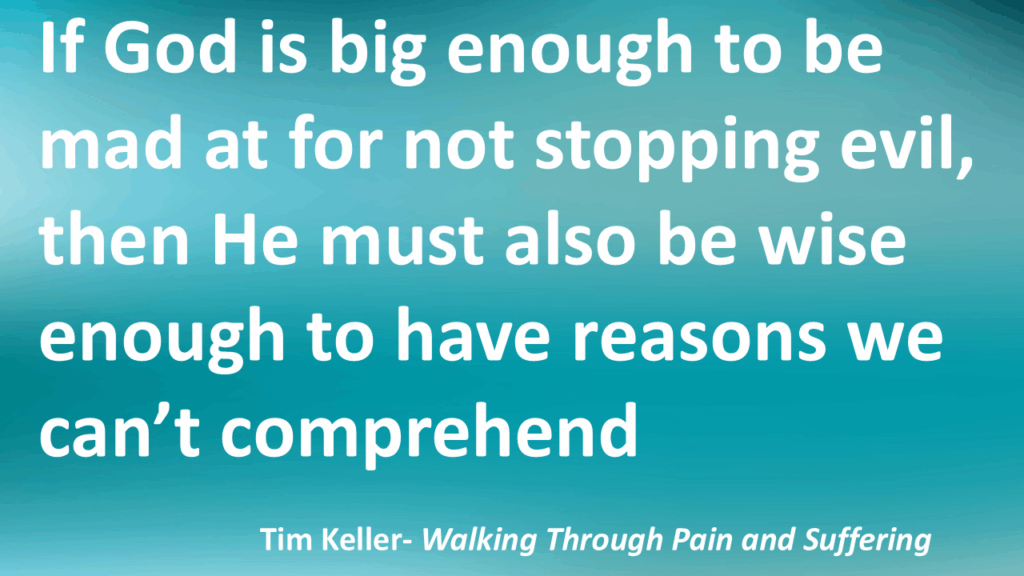
In fact, if we could fully grasp all of God’s reasons, He would cease to be transcendent. A God whose plans and purposes are always immediately understandable would simply be a projection of ourselves—not the infinite Creator Scripture describes. Rather than disproving God’s existence or goodness, our struggle to understand suffering may actually affirm His greatness. A God big enough to be blamed for the world’s pain must also be big enough to have reasons that we, as limited beings, cannot yet perceive.
Blaise Pascal, one of history’s most brilliant minds and a mathematical savant, offered a striking analogy to illustrate the vast difference between human and divine intelligence.
He suggested that the best way to grasp the disparity is to consider the amount of physical space your own body occupies within the entire universe. That minuscule footprint represents the amount of intellectual “space” the most intelligent human being occupies in comparison to the infinite knowledge of an all-knowing God.
In other words, even the brightest among us barely registers in the grand expanse of divine understanding.
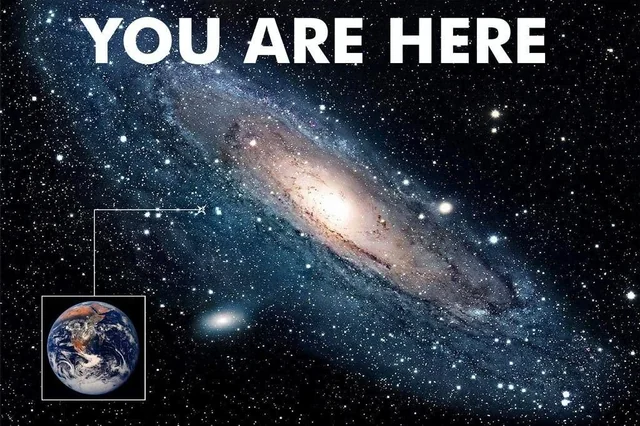
Just as adolescent children often cannot grasp why certain things are good for them and others are harmful—because their understanding is limited compared to their parents—so we, as finite creatures, should not expect to comprehend all of God’s purposes. When we consider the sheer scale and complexity of creation—nature, the universe, the laws of physics—it becomes clear that God’s wisdom and knowledge are infinitely beyond ours. It follows, then, that whatever He allows in the universe likely serves purposes that far exceed our comprehension. To assume that God has no constructive reason for allowing evil—even though He neither creates nor condones it—is like a blind man trying to explain sight. We simply cannot see what God sees or know what He knows.
Challenge Question: If we acknowledge how limited human understanding is—especially compared to the vastness of the universe—on what basis do we assume that a good God could not have morally sufficient reasons for allowing suffering, even if we can’t immediately perceive them?
Premise 3: Without Evil We Would Not Know God’s Justice And Mercy
One of the most challenging aspects of the problem of evil is reconciling it with the belief in a good and just God. Skeptics often ask, “If God is loving and powerful, why allow evil at all?” It’s a profound question—but perhaps an even more profound response is this: Without the existence of evil, we would never come to know some of God’s most powerful and beautiful attributes—His justice and His mercy.
Justice and mercy are not only attributes of a holy and righteous God—they are also divine responses to the reality of human sin and the moral consequences of free will. In a world where people often choose evil over good, these two qualities reveal the heart of God: His commitment to moral order on one hand, and His compassion toward the guilty on the other.
There are two central reasons why God’s justice and mercy are powerfully on display in a fallen world:
- They reveal the glory of God’s character. His justice reflects His holiness—His absolute purity, moral perfection, and intolerance of evil. His mercy reflects His love—His willingness to forgive, restore, and redeem those who deserve judgment. Together, they show us a God who is not only righteous but also relational, not only a Judge but also a Savior.
- They provide essential hope and healing for humanity. Justice ensures that evil will not go unanswered; it offers victims the assurance that wrongdoing matters. Mercy ensures that even the guilty are not beyond redemption; it offers grace to those who turn back to God. In this way, both justice and mercy are acts of divine love—meeting the deep moral and spiritual needs of a sinful world.
Justice and Mercy Reveal The Glory of God’s Character
How God’s eternal character—marked by holiness, justice, and mercy—relates to His decision to create humanity with the freedom to choose between good and evil is a mystery known fully only to Him. Yet one thing we can know with confidence: without the existence of evil, we would never come to know two of God’s most powerful and beautiful attributes—His justice and His mercy. These are not abstract qualities; they are revealed through God’s real and active response to human sin, offering both accountability and redemption.
From this, three truths become clear:
- God has always been holy, just, and merciful.
- Mankind is truly free—and tragically sinful.
- God’s forgiveness and judgment in response to sin showcase the fullness of His character—His holiness in justice, and His love in mercy.
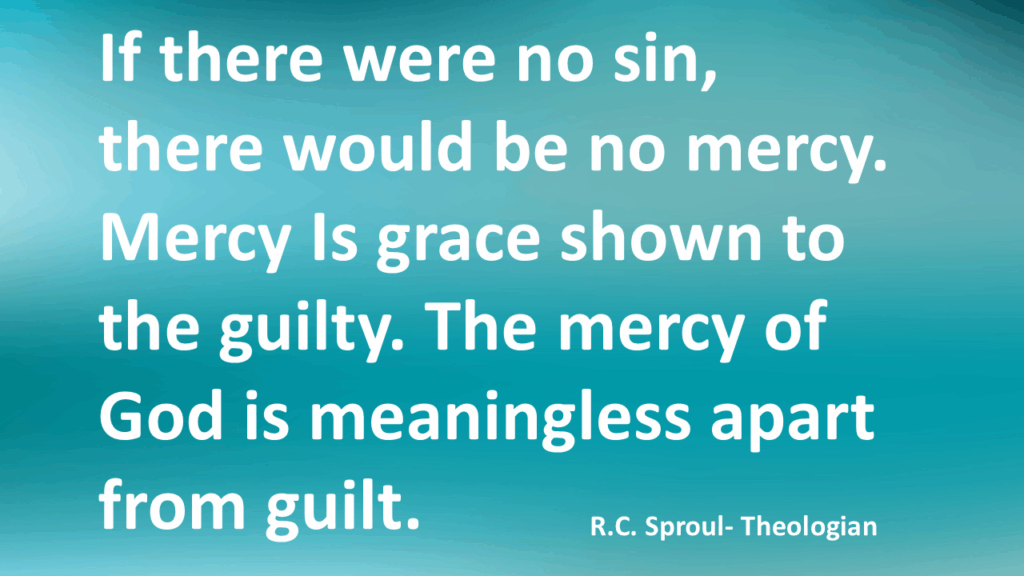
How God’s eternal character—marked by holiness, justice, and mercy—relates to His decision to create humanity with the freedom to choose between good and evil is a mystery known fully only to Him. It is a question that theologians, philosophers, and seekers have pondered for centuries. Why would a perfect God allow for the possibility of evil? Why not create a world where rebellion, suffering, and injustice were impossible? While we may never fully grasp the depths of that divine rationale, Scripture and reason do point us to one profound insight: without the presence of evil and sin, we would never come to fully experience or comprehend two of God’s most powerful and beautiful attributes—His justice and His mercy.
These are not abstract or detached qualities. God’s justice is not cold judgment, and His mercy is not blind sentiment. Both are expressed in His real, relational dealings with humanity. His justice is displayed in His unwavering commitment to righteousness and the ultimate judgment of evil. His mercy is revealed in His willingness to forgive, to restore, and to redeem even the most broken and undeserving lives. In the context of human freedom—and the real possibility of sin—God’s character is not compromised, but revealed. The darkness of evil becomes the backdrop against which His glory shines even brighter.
Sin and Evil Reveal the Necessity of God’s Justice and Mercy
First, God has always been holy, just, and merciful. These are eternal aspects of who He is—not traits He developed in response to creation or human failure, but qualities that have always existed within the divine nature. Second, mankind is both free and sinful. We were created with the ability to choose, and tragically, that freedom has often been used to rebel rather than to obey. This misuse of freedom lies at the heart of the human condition. Third, it is in God’s response to this sin—through both forgiveness and righteous judgment—that His holiness, justice, and mercy are made unmistakably clear. The cross of Christ, the call to repentance, the hope of restoration—all testify to a God who does not abandon His creation, but enters into its brokenness to bring about redemption.
God’s Justice and Mercy in Response to Sin and Evil
| Attribute | Scripture | Summary |
|---|---|---|
| Justice | Romans 2:5–6 | God “will repay each person according to what they have done.” |
| Justice | Deuteronomy 32:4 | “All His ways are justice… just and upright is He.” |
| Justice | Ecclesiastes 12:14 | God “will bring every deed into judgment, including every hidden thing.” |
| Justice & Mercy | Exodus 34:6–7 | God is “compassionate and gracious… yet He does not leave the guilty unpunished.” |
| Justice & Mercy | Psalm 103:10–12 | God does not treat us as our sins deserve, but removes our transgressions. |
| Mercy | Micah 7:18 | God delights in showing mercy and pardoning sin. |
| Mercy | Lamentations 3:22–23 | “His compassions never fail… they are new every morning.” |
| Justice & Mercy | Isaiah 30:18 | “The Lord is a God of justice. Blessed are all who wait for Him.” |
| Justice | Romans 3:23–26 | God is just and the justifier—punishing sin while offering righteousness through faith. |
| Mercy | Titus 3:5 | “He saved us, not because of righteous things we had done, but because of His mercy.” |
| Justice & Mercy | James 2:13 | “Mercy triumphs over judgment.” |
| Justice & Mercy | Psalm 89:14 | “Righteousness and justice are the foundation of Your throne; love and faithfulness go before You.” |
Far from weakening the case for God, the reality of evil can point us toward the richness of His nature. Through His justice, we are assured that evil will not go unanswered. Through His mercy, we are offered hope that even the worst among us can be forgiven. In this way, the story of human sin becomes a canvas on which the beauty of God’s character is painted in bold, unmistakable strokes.
Challenge Question: If God had created a world with no possibility of sin, would we ever truly understand His mercy, grace, or forgiveness? And if those are among the most beautiful attributes of God, could it be that allowing sin was part of revealing the fullness of who He is?
ThinkCube Truth Veracity Grid
- Have I considered the facts carefully and with an open mind?
- Is my conclusion the result of a careful examination of the facts, or is it a conclusion made in spite of the facts?
- Is my conclusion the one that makes the most sense of the evidence?