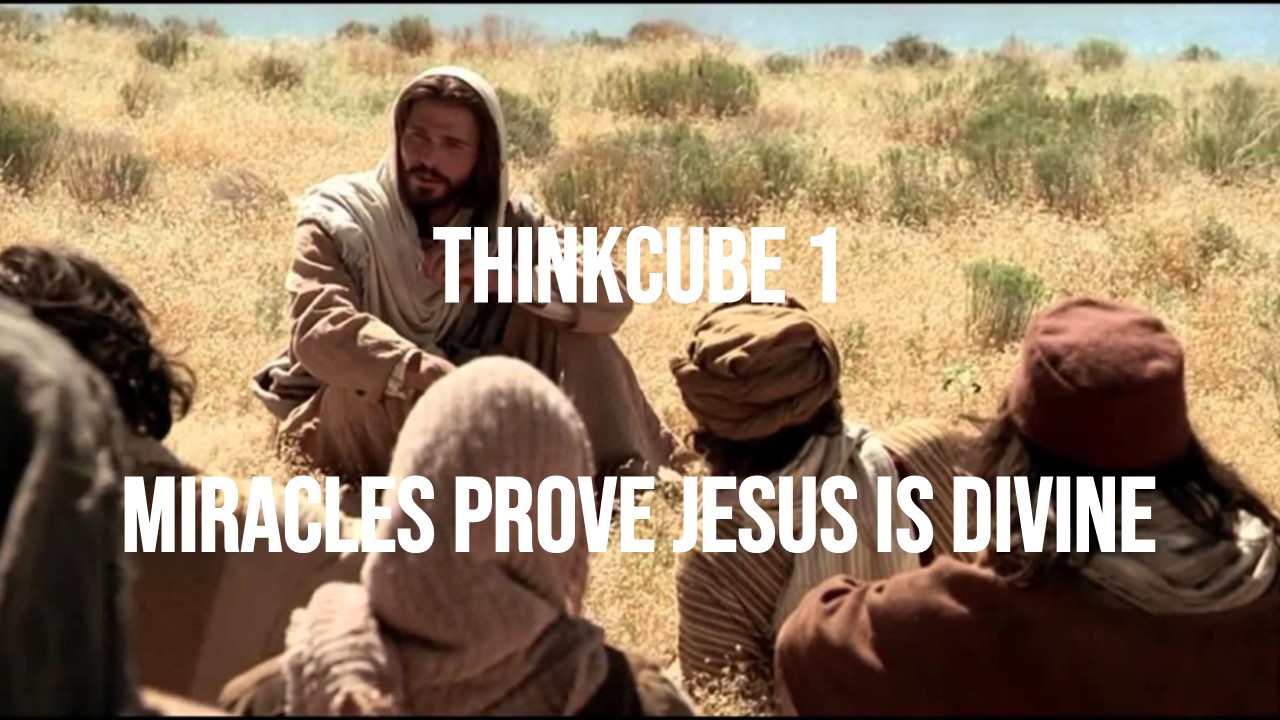
Premise 1: The Miracles Of Jesus Demonstrate His Power Over Time, Space And Matter
For someone to be considered a true moral teacher, they must exhibit certain essential qualities—honesty, enthusiasm, ambition, diligence, curiosity, and a deep sense of responsibility. By all historical accounts, Jesus not only displayed these traits but embodied them to an extraordinary degree. But there are things that a moral teacher cannot do that only God can!
su·per·nat·u·ral
/ˌso͞opərˈnaCH(ə)rəl/
1: of or relating to an order of existence beyond the visible observable universe
2. departing from what is usual or normal especially so as to appear to transcend the laws of nature
However, there are things that no mere moral teacher can do—things that only a divine being can. When we speak of divinity, we refer to a power that transcends and governs time, space, and circumstance. A truly divine being would possess authority over biology, chemistry, and the natural world. Such a being would have the capacity to suspend or override the very scientific laws that regulate gravity, motion, buoyancy, and even time itself.
Jesus’s First Miracle Provides a Vivid Example of His Power Over Chemistry
On the third day there was a wedding at Cana in Galilee, and the mother of Jesus was there. Jesus also was invited to the wedding with his disciples. When the wine ran out, the mother of Jesus said to him, “They have no wine.” And Jesus said to her, “Woman, what does this have to do with me? My hour has not yet come.” His mother said to the servants, “Do whatever he tells you.” Now there were six stone water jars there for the Jewish rites of purification, each holding twenty or thirty gallons. Jesus said to the servants, “Fill the jars with water.” And they filled them up to the brim. And he said to them, “Now draw some out and take it to the master of the feast.” So they took it. When the master of the feast tasted the water now become wine, and did not know where it came from (though the servants who had drawn the water knew), the master of the feast called the bridegroom and said to him, “Everyone serves the good wine first, and when people have drunk freely, then the poor wine. But you have kept the good wine until now.” This, the first of his signs, Jesus did at Cana in Galilee, and manifested his glory. And his disciples believed in him.
John 2:1-11
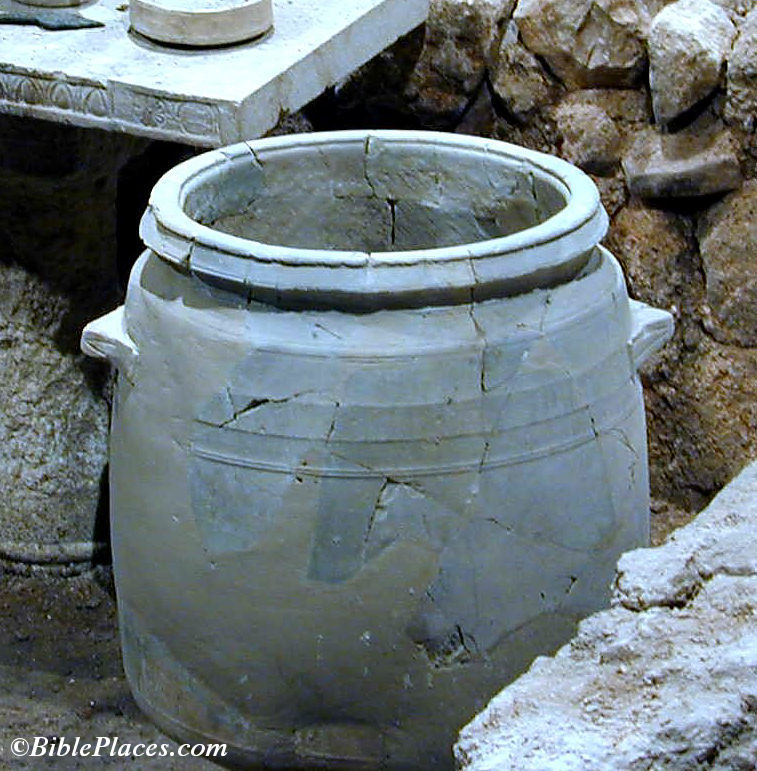
At first glance, Jesus’ first miracle—turning water into wine—might seem underwhelming. After all, it appears to be little more than changing one beverage into another. So what, we might think. But this was not simply a matter of adding flavoring to water or performing a parlor trick.
At the molecular level, this transformation is staggering. Water is composed of hydrogen and oxygen atoms (H₂O), while wine is a complex substance made up of sugars, acids, alcohol, and other organic compounds—each requiring additional elements like carbon and nitrogen, in specific configurations and ratios. In turning water into wine, Jesus wasn’t merely rearranging existing ingredients; He was exercising authority over the fundamental building blocks of matter.
This act involved the reorganization—or perhaps the instantaneous creation—of atoms and molecules that were not present in the original substance. It means hydrogen and oxygen atoms had to be disassembled and reformed into completely new molecular structures. In short, Jesus demonstrated mastery over chemistry at the atomic level.
The amount of energy it would take to perform this atomic deconstruction and reconstruction istaggering. This intermolecular energy being released is the source of energy from an atomic bomb. However, since Jesus caused the wine atoms to come back together, He would have to put this astronomical amount of energy into the atoms in order to have them reconstruct. To do so without any visible energy transformation of the liquid indicates a mastery of natural law far beyond our current comprehension—and He accomplished it without any physical exertion.
Cliff Lewis Phd—The Science of Jesus’s Miracles
Such a feat reveals more than miraculous power—it displays creative authority. The miracle at Cana was a quiet but profound declaration: the One who performed it possesses the power not only to heal and restore, but to command the very elements of nature. This is just one of the many times Jesus purposely put His divinity into action to reveal that He was more than just another rabbi, prophet, or moral teacher.
29 Miracles of Jesus Demonstrating Power Over Nature
| Miracle | Scriptures | Supernatural qualities |
|---|---|---|
| Jesus turns water into wine at the wedding in Cana | John 2:1–11 | Instantaneous control over molecular structure, chemical processes, and time |
| Jesus heals an official’s son from near death illness from a distance | John 4:43–54 | Instantaneous control over cellular health, infection and disease, time and space… did not meet the person healed face to face |
| Jesus heals Peter’s mother-in-law—sick with fever | Matt 8:14–15; Mark 1:29–31; Luke 4:38–39 | Instantaneous control over cellular biology and immediate disposal of infection |
| Jesus heals many sick and oppressed | Mark 1:32–34; Luke 4:40–41 | Instantaneous control over cellular biology and disease |
| Miraculous catch of fish on Lake Gennesarat | Luke 5:1–11 | Control of animal kingdom, time and circumstance |
| Jesus cleanses a man with leprosy | Matt 8:1–4; Mark 1:40–45; Luke 5:12–14 | Instantaneous control over cellular biology and disease |
| Jesus heals centurion’s paralyzed servant | Matt 8:5–13; Luke 7:1–10 | Instantaneous control over cellular biology, disease, neuro health, cellular reconstruction |
| Jesus heals a paralyzed man | Matt 9:1–8; Mark 2:1–12; Luke 5:17–26 | Instantaneous control over cellular biology, disease, neuro health, cellular reconstruction |
| Jesus heals a man’s withered hand | Matt 12:9–14; Mark 3:1–6; Luke 6:6–11 | Instantaneous control over cellular biology, disease, neuro health, cellular reconstruction |
| Jesus calms sea | Matt 8:23–27; Mark 4:35–41; Luke 8:22–25 | Control over nature… wind and sea |
| Jesus heals a woman with blood hemorrhaging | Matt 9:20–22; Mark 5:25–34; Luke 8:42–48 | Instantaneous control over cellular biology and circulatory system |
| Jesus heals two blind men | Matt 9:27–31 | Instantaneous cellular reconstruction of ocular system |
| Jesus heals a man who was unable to speak | Matt 9:32–34 | Instantaneous control over cellular biology, neuro synapses, reconstruction of vocal chords |
| Jesus heals invalid at Bethesda | John 5:1–15 | Instantaneous control over cellular biology, disease, neuro health, cellular reconstruction |
| Jesus heals many sick in Gennesarat | Matt 14:34–36; Mark 6:53–56 | Instantaneous control over cellular biology and disease |
| Jesus feeds 5,000 plus women and children | Matt 14:13–21; Mark 6:30–44; Luke 9:10–17; John 6:1–15 | Instantly makes cellular structure of bread and fish multiply exponentially |
| Jesus walks on water | Matt 14:22–33; Mark 6:45–52; John 6:16–21 | Control over laws of gravity and buoyancy |
| Jesus heals a deaf and dumb man | Mark 7:31–37 | Cellular and neuro reconstruction |
| Miraculous temple tax in a fish’s mouth | Matt 17:24–27 | Control over animal kingdom, time and circumstance |
| Jesus heals a man born blind | John 9:1–12 | Instantaneous cellular reconstruction of ocular system |
| Jesus heals a blind and mute man | Matt 12:22–23; Luke 11:14–23 | Instantaneous control over cellular biology, neuro synapses, reconstruction of vocal chords, ocular regeneration |
| Jesus heals cripple woman | Luke 13:10–17 | Instantaneous control over cellular biology, disease, neuro health, cellular reconstruction |
| Jesus heals man with Dropsy | Luke 14:1–6 | Instantaneous control over cellular biology, disease, neuro health, cellular reconstruction |
| Jesus heals 10 lepers on way to Jerusalem | Luke 17:11–19 | Instantaneous control over cellular biology and disease |
| Jesus heals blind Bartimaeus in Jericho | Matt 20:29; Mark 10:46; Luke 18:35–43 | Instantaneous cellular reconstruction of ocular system |
| Jesus causes fig tree to wither | Matt 21:18–22; Mark 11:12–14 | Command over biology and nature |
| Jesus heals a servant’s ear that was severed | Luke 22:50–51 | Instantaneous control over cellular biology. Nerve reconstruction |
| Miraculous catch of fish at sea of Tiberias | John 21:4–11 | Control of animal kingdom, time and circumstance |
Jesus’s Miracles Demonstrate the Same Power That Was Used to Create the World
All of Jesus’ miracles demonstrated an unmistakable command over time, space, and matter—the very same three foundational elements over which God revealed His sovereign authority in the Genesis creation account. This parallel is deeply significant, for it not only reveals Jesus’ miraculous power, but subtly—and profoundly—points to His divine identity.
In Genesis 1, God speaks and matter comes into existence: light, land, water, vegetation, celestial bodies, animals, and human life—all called into being out of nothing. He orders space by separating the heavens from the earth, the waters from the dry land, and placing the sun, moon, and stars in their positions. And He governs time by instituting days, seasons, and cycles of evening and morning, anchoring creation within a rhythm and structure.
In the Gospels, Jesus Mirrors This Creative Authority
- Over matter: He transforms water into wine (John 2), multiplies bread and fish (John 6), heals blind eyes with mud (John 9), and raises the dead (John 11)—all showing His ability to create, multiply, and restore physical substance.
- Over space: He heals people from a distance (Matthew 8), walks on water (Matthew 14), and calms storms instantly with a word (Mark 4), revealing mastery over geography, distance, and physical forces.
- Over time: He accelerates processes that normally take months or years—instantly curing long-term illnesses (Mark 5), and raising the dead when decay would have already begun (John 11). He compresses time, reverses it, or renders it irrelevant.
Each miracle, then, is not merely a compassionate act or a supernatural display—it is a deliberate echo of Genesis. Just as God’s voice brought creation into being, so Jesus’ word brings transformation. The authority He exercises over the physical world is the same authority attributed to the Creator at the beginning of time.

In this light, Jesus’ miracles are not random wonders. They are signs—purposeful demonstrations—that He is not just a moral teacher or a prophet. He is the Creator Himself, stepping into His own creation, revealing His identity through acts that only God can do.
Challenge Question: If Jesus’ miracles consistently demonstrated control over time, space, and matter—traits attributed only to a Creator in the Genesis account—what does this mean for those who say Jesus was just another religious teacher?
Premise 2: The Miracles Of Jesus Provided Eyewitness Testimony That He Was Deity
Although Jesus’ formal ministry lasted just over three years, He became remarkably well known throughout Palestine. Massive crowds followed Him—not only because of His profound and authoritative teachings, but especially because of the extraordinary miracles He performed. The Bible records 31 specific miracles, but according to the Gospel of John, these were only a fraction of the whole.
This disciple is the one who testifies to these events and has recorded them here. And we know that his account of these things is accurate. Jesus also did many other things. If they were all written down, I suppose the whole world could not contain the books that would be written.
John 21:24-25
The population of Palestine in Jesus’ day was approximately 500,000 to 600,000 (about that of Vermont, Boston, or Jerusalem today). At least 34 verses in the New Testament speak of large crowds, or multitudes following Jesus.
Jesus went throughout Galilee, teaching in their synagogues, proclaiming the good news of the kingdom, and healing every disease and sickness among the people. News about him spread all over Syria, and people brought to him all who were ill with various diseases, those suffering severe pain, the demon-possessed, those having seizures, and the paralyzed; and he healed them. Large crowds from Galilee, the Decapolis, Jerusalem, Judea and the region across the Jordan followed him
Matthew 4:23-25
The population of Palestine during Jesus’ time is estimated to have been around 500,000 to 600,000 people—roughly equivalent to the current population of Vermont, the city of Boston, or modern-day Jerusalem. Within this relatively small geographic and demographic context, Jesus quickly rose to unprecedented prominence.
At least 34 passages in the New Testament explicitly mention “large crowds” or “multitudes” following Him. These were not small gatherings, but often groups numbering in the thousands. People flocked to Him from villages, cities, and surrounding regions, sometimes traveling long distances on foot.
One major reason for this immense public interest was the absence of modern medicine. Illnesses, injuries, and disabilities were often lifelong conditions with little hope of improvement. Yet Jesus healed people instantly—restoring sight to the blind, mobility to the paralyzed, hearing to the deaf, and even life to the dead. These weren’t gradual or symbolic healings; they were immediate, public, and undeniable. Even the famous non-Christian historian Josephus wrote about Jesus’s as a renowned worker of miracles.
About this time there lived Jesus, a wise man, if indeed one ought to call him a man. For he … wrought surprising feats…. He was the Christ. When Pilate …condemned him to be crucified, those who had . . . come to love him did not give up their affection for him. On the third day he appeared restored to life…. And the tribe of Christians has not disappeared.
Josephus; first century Romano-Jewish historian and military leader
Jesus’ miracles were not performed in secret or in isolation—they were done publicly, in towns, villages, marketplaces, synagogues, and even in front of large crowds numbering in the thousands. These were not vague, unverifiable events; they were witnessed by countless people, including skeptics, religious leaders, and ordinary citizens.
Importantly, many of those eyewitnesses would still have been alive when the Gospels were written—within a few decades of the events themselves. If the accounts of miraculous healings, exorcisms, nature-defying acts, or even the resurrection had been fabricated or grossly exaggerated, there would have been ample opportunity for contemporaries to challenge or discredit them. But we find no such widespread refutation in the historical record.
Instead, the early church grew rapidly in the very regions where these miracles were said to have occurred—suggesting that people who were there, or who knew those who were, found the reports credible and compelling. The public nature of Jesus’ miracles and the living memory of His acts lend significant historical weight to the reliability of the Gospel accounts.
The Primary Purposes For Miracles Was To Demonstrate That Jesus Was More Than Just a Teacher
The primary purpose of Jesus’ miracles was not simply to display compassion or meet physical needs—though He certainly did both—but to reveal that He was far more than just a teacher or moral leader. His miracles were divine signs, pointing to His true identity as the Son of God.
What about the one whom the Father set apart as his very own and sent into the world? Why then
John 10:36-38
do you accuse me of blasphemy because I said, ‘I am God’s Son’? Do not believe me unless I do the works of my Father. But if I do them, even though you do not believe me, believe the works, that you may know and understand that the Father is in me, and I in the Father.”
Jesus healed the sick, restored sight to the blind, opened the ears of the deaf, and even created food out of nothing to feed thousands at once. These acts demonstrated His deep care for individuals and His willingness to meet them in their suffering. But while His compassion was genuine and personal, it was never the central reason for His miraculous works.
Throughout the text of John’s gospel, we repeatedly discover that the intention of everything that he records is to demonstrate the deity of Christ and that pointing to His works are the proof:
If I were to testify on my own behalf, my testimony would not be valid. But someone else is also testifying about me, and I assure you that everything he says about me is true. In fact, you sent investigators to listen to John the Baptist, and his testimony about me was true. Of course, I have no need of human witnesses, but I say these things so you might be saved. John was like a burning and shining lamp, and you were excited for a while about his message. But I have a greater witness than John—my teachings and my miracles. The Father gave me these works to accomplish, and they prove that He sent me
John 5:31-36
The deeper purpose of Jesus’s miracles was to authenticate His divine authority—to show that He had power not just over sickness and nature, but over sin and death itself. Each miracle was a signpost pointing to His identity as the promised Messiah, the very Son of God sent into the world to redeem it.
Challenge Question: If Jesus pointed to His miracles and teachings as evidence that He was sent by God, and those claims were made publicly in front of many eyewitnesses, how do you account for the fact that these claims were preserved, believed, and spread rapidly—often at great personal cost—by people in the very regions where the events allegedly occurred?
Premise 3: The Miracles Of Jesus Demonstrate His Power Over Death
There are over 37 distinct miracles of Jesus recorded in the Bible, and while every single one of them would still be absolutely mind-blowing if witnessed today—none had the emotional, theological, and cultural impact that the three instances where Jesus raised people from the dead had.
Healing the sick, giving sight to the blind, calming storms, or turning water into wine were astonishing demonstrations of divine authority, and they drew large crowds in awe. But raising the dead went a step further—it confronted humanity’s greatest and most inescapable fear: death itself.
Jesus didn’t just delay death or provide temporary relief—He reversed it. He raised Jairus’s daughter (Luke 8:49–56), the widow’s son at Nain (Luke 7:11–17), and most dramatically, Lazarus, who had been dead and buried for four days (John 11:1–44). These were not resuscitations of someone who had just collapsed; they were resurrections that defied time, decay, and all natural explanations.
Soon afterward Jesus went with his disciples to the village of Nain, and a large crowd followed him. A funeral procession was coming out as he approached the village gate. The young man who had died was a widow’s only son, and a large crowd from the village was with her. When the Lord saw her, his heart overflowed with compassion. “Don’t cry!” he said. Then he walked over to the coffin and touched it, and the bearers stopped. “Young man,” he said, “I tell you, get up.” Then the dead boy sat up and began to talk! And Jesus gave him back to his mother. Great fear swept the crowd, and they praised God, saying, “A mighty prophet has risen among us,” and “God has visited his people today.”
Luke 7:11-17
Each of these miracles deeply moved the crowds and stirred widespread reports throughout the region. But more than that, they were clear signposts pointing to Jesus’ divine identity as the one who holds power over life and death. Ultimately, these resurrection miracles foreshadowed the greatest miracle of all—Jesus’ own resurrection, which validated every claim He made and remains the central foundation of Christian faith.
The Resurrection of Lazarus Provided Eyewitness Testimony of Jesus’ Power Over Death
“Roll the stone aside,” Jesus told them. But Martha, the dead man’s sister, protested, “Lord, he has been dead for four days. The smell will be terrible.”Jesus responded, “Didn’t I tell you that you would see God’s glory if you believe?” So they rolled the stone aside. Then Jesus looked up to heaven and said, “Father, thank you for hearing me. You always hear me, but I said it out loud for the sake of all these people standing here, so that they will believe you sent me.” Then Jesus shouted, “Lazarus, come out!” and the dead man came out, his hands and feet bound in graveclothes, his face wrapped in a headcloth. Jesus told them, “Unwrap him and let him go!”
John Chapter 11
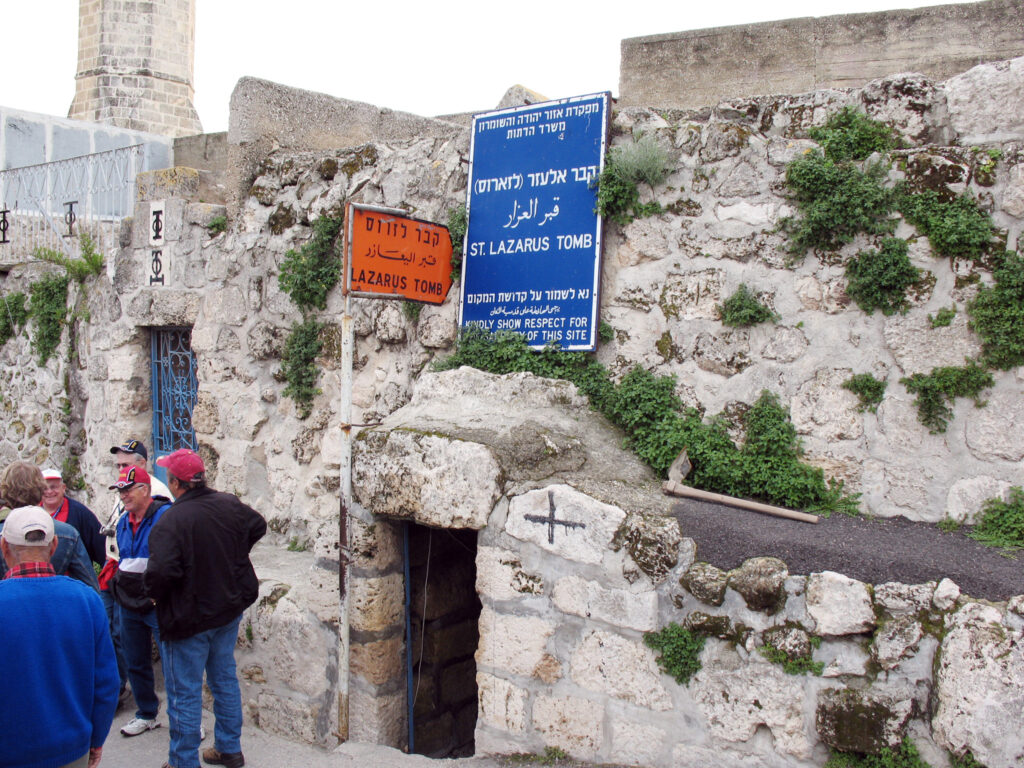
This was not a typical near-death experience or a case of clinical death reversed by CPR, as we sometimes hear about today. Lazarus had been dead and buried for four days—his body already in a state of decomposition. The miracle of his resurrection wasn’t a medical revival; it was a complete and supernatural re-creation of life. Just consider the staggering implications of what had to occur to bring him back:
- The regeneration or recreation of cells, tissues, and organs that had already begun to break down
- The restoration of the circulatory system, including the heart, veins, arteries, blood cells, plasma, and hemoglobin—all of which had ceased to function
- The reconstruction of brain cells, synapses, and the entire nervous system, and the instantaneous restarting of complex neurological functions
- The reuniting of a soul with a lifeless, decaying body, reversing death itself and restoring full consciousness
This was not a symbolic act—it was a complete reversal of the physical and spiritual effects of death. The raising of Lazarus stands as one of the most extraordinary miracles recorded in Scripture, offering a clear and undeniable display of divine power over life and death.
When Jesus arrived and his sister told Jesus that if he had been there when her brother got sick he would have been able to keep him from dying. Jesus replied with one of the most emphatic statements he ever uttered in his three and a half year ministry:
“I am the resurrection and the life. Anyone who believes in me will live, even after dying.
John Chapter 11
Everyone who lives in me and believes in me will never ever die“
The raising of Lazarus was not just a miracle—it was a turning point. When Jesus called Lazarus out of the tomb after four days of death and decay (John 11:38–44), it wasn’t a private act; it was witnessed by many people from the nearby town of Bethany, just two miles from Jerusalem. The news spread rapidly, and the impact was immediate.
Many who saw what happened believed in Jesus—but not everyone was pleased. The religious leaders, particularly the Pharisees and chief priests, realized that this miracle was too public, too undeniable, and too threatening to their authority. As John 11:48 records, they feared that “everyone will believe in him,” and that their influence over the people—and the delicate political balance with the Roman authorities—would collapse.
From that moment on, they actively plotted to kill Jesus. The resurrection of Lazarus was the final straw—it proved that Jesus had power not only over sickness or storms, but over death itself. His enemies could not refute the miracle, so instead they resolved to eliminate the Miracle-Worker. Ironically, the very act that most clearly displayed Jesus’ divine power became the catalyst for the events that led to His crucifixion.
Challenge Question: Neither Muhammad, Buddha, nor Confucius ever claimed to possess supernatural powers, nor is there any documented instance of them performing miracles. Given that Jesus not only claimed divine authority but also demonstrated supernatural power—publicly and repeatedly—should He be placed in the same category as these other historical teachers, or does the evidence suggest He belongs in a category of His own?
ThinkCube Truth Veracity Grid
- Have I considered the facts carefully and with an open mind?
- Is my conclusion the result of a careful examination of the facts, or is it a conclusion made in spite of the facts?
- Is my conclusion the one that makes the most sense of the evidence?