Premise 1: Ancient Scribes Considered The Bible Sacred And Imposed The Strictest Safeguards
The word Bible is derived from the Latin word “biblia” which literally means “the books”. The Bible is a collection of 66 books written by an estimated 40 authors from different backgrounds, with different writing styles over a period of about 2,000 years.
Since there was no printing press in ancient times the books of the Bible were hand written on scrolls made of papyrus, parchment, leather, or vellum. The famous Dead Sea Scrolls are a collection of 15,000 of these scrolls written on these various materials—some copied as early as 250 B.C. These scrolls along the 51,000 other ancient manuscripts of the Bible were mostly copied by Scribes which was a trained “copyist“.

A scribe was a member of a learned class in ancient Israel whose professional occupation was to study, copy, and edit Scripture. They were highly trained in the meticulous transmission of biblical texts, often memorizing large portions and following strict guidelines to ensure accuracy. Scribes played a crucial role in preserving the integrity of God’s Word across generations.
The two central objectives for scribes were to:
- Copy Sacred Scripture on scrolls to be read in synagogues and churches, and to be preserved for posterity.
- Preserve the integrity of Sacred Text and protect it against corruption, additions, or deletions.
It is scarcely possible to overstate the importance of early scribes. Scribes were usually skilled professionals valued because they could read and write, and edit which were not common skills in the ancient world. The term sopher used 64 times in the Bible was given to Bible scribes meaning “Scripture Specialist“. Those who were responsible for the normal transmission of the sacred documents were the ones who knew the Scriptures by heart due to their education and the frequency of writing the same books repeatedly.
A scribe was a rigorously trained, and highly skilled, a respected religious scholar in his community. To be certified as a scribe, this professional scribe had to memorize 4,000 different laws and principles dictating how to copy Scripture.
josh.org
The Scribes As Professionals And Their Dedication To Sacred Scripture
Many scribes worked in “scriptoriums,” professional spaces dedicated to the art of manuscript copying, often from oral dictation. Jewish scribes, in particular, were among the most skilled in the ancient world—renowned for their rigorous training, strict transmission rules, and deep reverence for the sacred text.
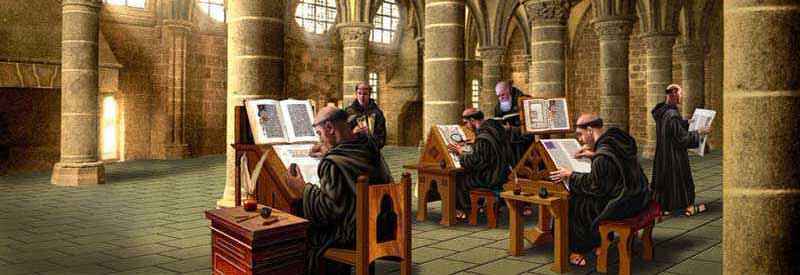
Jewish scribes would say they felt the “weight of heaven” when copying the Bible, because it contained the sacred “Torah” or Law of God. One of the books they copied the most was Deuteronomy which literally means “Copy or Repeated Law” which contains this passage that they would have transcribed countless times:
You shall not add to the word which I am commanding you, nor take away from it, so that you may keep the commandments of the Lord your God which I am commanding you.
Deuteronomy 4:2
Most scribes felt that the severest judgment of God would befall anyone who misquoted, added to, or subtracted from the “Law of God” and believed that God Himself was watching over their shoulders as they transcribed it. Here is a fragment found with the Dead Sea Scrolls written by a scribal elder to his apprentice:
“My son, be careful, because your work is the work of heaven; should you
omit one letter or add one letter, the whole world would be destroyed”
Ironically, scribes were continually copying sober warnings from God Himself regarding the mishandling of His Holy Word. Throughout Scripture, there are direct cautions against adding to, taking away from, distorting, or treating lightly the divine message. These warnings reflect the sacredness and authority of God’s revelation, and they underscore the serious responsibility of those who read, teach, and especially those who transmit it.
Biblical Warnings Against Mishandling God’s Word
| Reference | Warning |
|---|---|
| Deuteronomy 4:2 | “You shall not add to the word that I command you, nor take from it, that you may keep the commandments of the Lord your God that I command you.” |
| Deuteronomy 12:32 | “Everything that I command you, you shall be careful to do. You shall not add to it or take from it.” |
| Proverbs 30:5–6 | “Every word of God proves true; he is a shield to those who take refuge in him. Do not add to his words, lest he rebuke you and you be found a liar.” |
| Jeremiah 23:36 | “But ‘the burden of the Lord’ you shall mention no more, for the burden is every man’s own word, and you pervert the words of the living God, the Lord of hosts, our God.” |
| Jeremiah 26:2 | “Thus says the Lord: Stand in the court of the Lord’s house, and speak to all the cities of Judah that come to worship in the house of the Lord all the words that I command you to speak to them; do not hold back a word.” |
| Ezekiel 13:6 | “They have seen false visions and lying divinations. They say, ‘Declares the Lord,’ when the Lord has not sent them, and yet they expect him to fulfill their word.” |
| Matthew 5:19 | “Therefore whoever relaxes one of the least of these commandments and teaches others to do the same will be called least in the kingdom of heaven, but whoever does them and teaches them will be called great in the kingdom of heaven.” |
| Galatians 1:8–9 | “But even if we or an angel from heaven should preach to you a gospel contrary to the one we preached to you, let him be accursed. As we have said before, so now I say again: If anyone is preaching to you a gospel contrary to the one you received, let him be accursed.” |
| 2 Timothy 2:15 | “Do your best to present yourself to God as one approved, a worker who has no need to be ashamed, rightly handling the word of truth.” |
| Revelation 22:18–19 | “I warn everyone who hears the words of the prophecy of this book: if anyone adds to them, God will add to him the plagues described in this book, and if anyone takes away from the words of the book of this prophecy, God will take away his share in the tree of life and in the holy city, which are described in this book.” |
Copying was tedious work done with a qualified system developed to preserve ancient textual accuracy with precision, and accountability. Copies were usually signed in colophons which was a note placed at the end of a book or manuscript that provides information about its production. Therefore a signed copy could be traced to its writer for credit or reproof, or to check a source.
Scribes were so meticulous that they counted all the paragraphs, words and letters in order to know because by auditing upon completion they would know if a single letter, or word had been added or deleted. They knew the middle letter of each book so they could count back and see if they had missed anything.
Stringent rabbinic rules regarding transmission procedures such as the selection of writing materials, preparation of leather, error correction, transcribing of divine names, storage and reading of scrolls, and measurements of sheets, columns, and margins all reveal the reverence with which rabbinic scribes approached the biblical text.
Josh McDowell, Sean McDowell; Evidence That Demands a Verdict (p. 97). Thomas Nelson
Standards That Were Considered Absolutely Mandatory:
- They could only use clean animal skins, both to write on, and even to bind manuscripts
- Each column of writing could have no less than forty-eight, and no more than sixty lines
- The ink must be black, and of a special recipe
- They must verbalize each word aloud while they were writing
- They must wipe the pen and wash their entire bodies before writing the word “Jehovah,” every time they wrote it
- There must be a review within thirty days, and if as many as three pages required corrections, the entire manuscript had to be redone
- The letters, words, and paragraphs had to be counted, and the document became invalid if two letters touched each other.
- The documents could only be stored in sacred places (synagogues, etc)
- As no document containing God’s Word could be destroyed, they were stored, or buried, in a genizah-a Hebrew term meaning “hiding place.” These were usually kept in a synagogue or sometimes in a Jewish cemetery.
Rules for Copying Hebrew Scriptures
Preparation of the Scribe and Materials
- Ritual Purity – Scribes had to be ceremonially clean before beginning their work. Some would bathe and put on clean garments.
- Qualified Training – A scribe had to be formally trained and recognized; not just anyone could attempt copying sacred texts.
- Special Materials – The scroll had to be written on parchment made from the hide of a ritually clean animal.
- Ink Requirements – Ink had to be prepared according to a special recipe, never using everyday or common ink.
- Writing Instrument – A scribe’s pen (reed or quill) was cut to a precise shape and reserved for Scripture writing.
Rules Regarding the Text
- Copy Only from an Authentic Source – A scribe could not copy from memory; he must always work from an approved manuscript.
- No Guesswork – If a word was illegible in the exemplar, the scribe could not write it until he consulted another correct text.
- Each Word Read Aloud – Before writing a word, scribes were to pronounce it aloud, ensuring attentiveness and accuracy.
- Letter by Letter Copying – Every letter had to be copied individually; no word or phrase could be written as a whole by memory.
- Spacing Between Letters and Words – There had to be a precise space between each letter, and a wider space between words.
- Spacing Between Books – A new book of the Bible required a set number of blank lines (often three to four) before beginning.
- Exact Form of Letters – Each Hebrew letter had to be written in a specific shape and size; ornamental “crowns” (taggin) were added to certain letters.
- Columns and Line Length – The scroll had to be divided into uniform columns, with a set number of lines (commonly 48–60).
Rules for the Divine Name (YHWH)
- Purification Before Writing – Before writing the divine name (YHWH), scribes often washed their hands or even immersed in a mikveh (ritual bath).
- Special Pen/Brush – A separate pen was sometimes used exclusively for writing the covenant name.
- No Corrections Allowed – If a mistake was made in writing YHWH, the sheet could not be corrected — it was invalid and had to be set aside.
Checking and Verification
- Word Counting – Scribes counted every word in a book and compared it with the master copy.
- Letter Counting – They also counted every letter, noting the middle letter of the Torah and of each book.
- Margin Notes (Masora) – The Masoretes added notes in the margins giving counts of words, unusual spellings, and rare forms to preserve tradition.
- Exact Middle Checks – For example, Leviticus 11:42 was known to contain the “middle letter” of the Torah, which scribes used as a checkpoint.
- Peer Review – After completion, another scribe or proofreader had to carefully check the manuscript against the exemplar.
- Discard if Too Many Errors – If more than three mistakes were found on a single sheet, the whole sheet was discarded.
Rules for Handling the Scroll
- Sacred Storage – Scrolls had to be kept in a synagogue ark or other protected, sacred space.
- Worn Copies – Old, damaged, or worn-out scrolls could not simply be thrown away; they were placed in a genizah (storage) or buried.
- No Casual Handling – Sacred scrolls were not to be touched directly by hands, but with a pointer (yad) when read publicly.
Masoretic Refinements (6th–10th Centuries AD)
- Vowel Points and Accents – The Masoretes added a precise system of vowel markings and cantillation marks to preserve pronunciation.
- Cross-Checks – They compiled lists of every time a word appeared, ensuring no variation slipped in.
- Masorah Parva & Masorah Magna – Marginal notes that recorded unusual spellings, exact counts, and warnings against alterations.
- Standardization – By the 10th century, the Aleppo Codex and Leningrad Codex set the “gold standard” for the Hebrew Bible.
The scribes had to not only take meticulous pains to be accurate, but they had to make sure to copy every one of the 304,805 letters of the Torah were copied perfectly and clearly in order to be counted and tested for accuracy. In order to do this a scribe would use threads a guides and score the surface of writing materials horizontally to form a cross-pattern grid on which to copy each and every letter of God’s written word.
When finally finished, the scribe’s manuscript had to be certified as having been transcribed correctly. Some traditions required three separate rabbis to check the accuracy! This meant these persons had to completely unroll this 72-foot scroll to check and count every single word and all 304,805 of the letters. They had to be sure there was the same number of letters in this scroll compared to the Torah from which it was copied.
josh.org
Not only that, but Rabbi’s knew that when they counted the words that the center word was found in Leviticus 13:33. If the center word of the new scroll did not fall exactly within verse 33, it could not be certified.
The scribes and Masoretes applied the strictest rules known in ancient literary culture. From ritual purity, to exact letter-formation, to numerical verification of every line, their system ensured that the Hebrew Bible was copied with extraordinary precision. Scholars like Bruce Metzger, Paul Kahle, and Emanuel Tov have noted that no other ancient text — whether Homer, Plato, or Virgil — was transmitted with such meticulous care.
It is safe to say that the accurate preservation of the Hebrew Scriptures involved far more than simply meeting the cultural demand for religious texts. This meticulous and disciplined transmission process was driven by a profound reverence for the Torah and a deep conviction that the words it contained were sacred and divinely inspired. Jewish scribes understood their task not merely as copyists, but as guardians of God’s Word—charged with the holy responsibility of providing Israel with accurate, uncorrupted copies of the Law. Their unwavering devotion to precision was an act of worship, ensuring that every generation had faithful access to the covenantal truths entrusted to their care.
Challenge Question : How does the deep reverence and meticulous care shown by Jewish scribes in preserving the Hebrew Scriptures challenge modern assumptions about the Bible’s reliability and accuracy?
Premise 2: Most Errors Involve Spelling, Grammar, And Do Not Impact Literary Accuracy
The Bible is an ancient text. Like every other ancient text, the originals have not survived the ravages of time. All that exists are copies of the original which date to hundreds of years after their composition which is typical for ancient texts. For example, Julius Caesar chronicled his conquest of Gaul in his work On The Gallic War in the first century B.C. yet the earliest manuscript in existence dates to the 8th century AD, some 900 years later.
There are no original manuscripts of any ancient text. Not so much as a couplet written in Shakespeare’s own hand has been proven to exist. In fact, there’s no hard evidence that Will Shakespeare revered as the greatest author in the English language, could even write a complete sentence.
Smithsonian Magazine: Doug Stewart; To Be Or Not To Be Shakespeare
All we have of ancient books are copies made by hand including the manuscripts of the Bible. Since no human hand is so exact or eye so sharp as to preclude the possibility of error—ancient manuscript copies of Shakespeare, Aristotle, Plato, Julius Caesar etc and the Bible sometimes contain errors or what textual critics call “variants”. A variant is any detail in a textual source that differs from another manuscripts. Thus differences in consonants and in complete words, as well as omissions, additions, and transpositions are all variants.
Since the Old and New Testaments combined have over 66,000 ancient manuscripts and fragments available for comparison, textual critics and paleographers have had an unprecedented wealth of data to examine. This vast manuscript evidence has allowed them to identify and analyze copying variants with great precision. Remarkably, the small percentage of differences—roughly 5% or less—consists primarily of minor scribal errors, such as slips of the pen or spelling variations that do not affect meaning. As a result, scholars estimate that the biblical text is 95–98% textually accurate across all manuscripts, with no essential doctrine or historical event compromised by the remaining variations.
The Bible’s 99.5% textual accuracy far surpasses that of any other ancient work in both scale and reliability. Here’s how it compares:
| Ancient Work | Number of Manuscripts | Time Gap from Original to Earliest Copy | Textual Accuracy |
|---|---|---|---|
| New Testament (Greek) | ca. 5,800 Greek manuscripts (24,000+ total including ancient translations) | ca. 50–300 years | 99.5%+ |
| Homer’s Iliad | ca. 1,800 | ca. 400 years | ca. 95% |
| Plato | ca. 210 | ca. 1,200 years | Not reliably measured |
| Herodotus’ Histories | ca. 100 | ca. 1,300 years | Not reliably measured |
| Caesar’s Gallic Wars | ca. 10 | ca. 950 years | Not reliably measured |
| Tacitus’ Annals | ca. 20 | ca. 800–1,000 years | Not reliably measured |
This level of preservation is unprecedented and puts the Bible in a category of its own in terms of textual integrity. While other ancient works are accepted with limited evidence and greater textual uncertainty, the Bible’s accuracy is affirmed by an overwhelming quantity and quality of manuscript data.
The Discovery of Dead Sea Scrolls and Ketef Hinnom Scrolls are Evidence of Accurate Transmission
The Masoretic Text is the traditional Hebrew text of the Old Testament, carefully preserved by Jewish scribes known as the Masoretes between the 7th and 10th centuries A.D. The oldest complete Masoretic manuscripts, such as the Leningrad Codex (A.D. 1008), date from this period.
In 1948, a monumental discovery was made: the Dead Sea Scrolls, a collection of over 900 manuscripts, including nearly every book of the Old Testament (except Esther), dating from around 250 B.C. to A.D. 70. These scrolls predate the Masoretic Text by approximately 1,000 years. Their discovery created an unprecedented opportunity to compare two extensive and independent manuscript traditions separated by a millennium.
What makes this comparison so remarkable is that these manuscripts did not descend from a single surviving copy. For nearly 1,000 years, the Dead Sea Scrolls lay undisturbed in caves at Qumran while the Masoretic Text was independently copied and preserved by generations of Jewish scribes. When the two traditions were finally compared in the twentieth century, they demonstrated an extraordinary degree of agreement, providing powerful evidence for the faithful preservation of the Old Testament text.
Textual scholars and paleographers have used this treasure trove to analyze the continuity of the biblical text. Remarkably, these comparisons revealed a 95–98% textual agreement between the Dead Sea Scrolls and the Masoretic Text—affirming the astonishing accuracy with which the Scriptures were transmitted over centuries.
Today, Artificial Intelligence is advancing this research even further. AI tools can now identify which of the 15,000 Dead Sea Scroll fragments were written by the same scribe, based on handwriting analysis and pattern recognition. These breakthroughs have confirmed what generations of scribes and scholars sought to protect: the faithful and precise preservation of the Hebrew Scriptures across more than a thousand years.
The Ketef Hinnom Scrolls
The oldest known copies of biblical passages in the world are the Ketef Hinnom Silver Scrolls, discovered by archaeologists in Jerusalem in 1979. These two small silver amulets, dating to the 7th century B.C., contain portions of the priestly blessing from Numbers 6:24–26 and are written in ancient Hebrew script. Remarkably, they predate the Dead Sea Scrolls by approximately 400 years, making them the earliest known artifacts containing text from the Hebrew Bible.
The oldest known copies of biblical passages in the world are the Ketef Hinnom Silver Scrolls, discovered by archaeologists in Jerusalem in 1979. These two small silver amulets were made around 600 B.C. and contain part of the priestly blessing found in Numbers 6:24–26. Written in ancient Hebrew, they are the oldest known artifacts containing text from the Old Testament. They were created about 600 years before the time of Jesus and about 400 years before the Dead Sea Scrolls, making them the earliest surviving copies of any biblical text.
Research Proves The New Testament Is Textually Accurate
In 1881 B. F. Westcott and F. J. A. Hort produced a Greek New Testament from New Testament manuscripts which is considered a landmark in textual criticism. They both were absolutely astonished to find out how accurately ancient manuscripts were transcribed and preserved.
The amount of what can in any sense be called substantial variation is but a small fraction of the whole residuary variation and can hardly form more than a thousandth part of the entire text of the New Testament.
B.F Westcott and F.J.A. Hort: The New Testament in the Origianl Greek, Macmillan, 1881, vol 1 p.2
This accuracy is a clear result of the the standardized system and tradition of copying which was employed well before the time of Christ and grew more precise over the centuries.
We desire to make it clearly understood beforehand how much of the New Testament stands in no need of a textual critic’s labors.
B.F Westcott and F.J.A. Hort: The New Testament in the Origianl Greek, Macmillan, 1881, vol 1 p.2
Modern, computerized textual analysis of the Masoretic Text, the Dead Sea Scrolls, and thousands of other ancient manuscripts has confirmed that the transmission of the biblical text has been remarkably accurate. Sophisticated digital tools and algorithms are now able to compare massive volumes of manuscript data with unprecedented speed and precision.
These methods have shown that the core text has been preserved with textual consistency of 95–98%, with most differences being minor variations in spelling or grammar that do not affect meaning. Such findings reinforce the conclusion that the Bible has been faithfully transmitted through centuries of careful copying, even across widely separated regions and time periods.
Challenge Question : How does the high degree of textual consistency confirmed by modern computerized analysis of ancient manuscripts impact your view of the Bible’s reliability and historical preservation?
Premise 3: Modern Bible Translations Are The Result Of Meticulous Care And Effort
The Bible is the most translated book in human history. Today, the entire Bible is available in over 700 languages, and the New Testament alone has been translated into more than 1,500 languages, making it accessible to the vast majority of the world’s population. One of the most common critiques of Scripture is the claim that the biblical text has been consistently altered over time. However, more than 150 years of modern textual criticism has brought increasing clarity and confidence in the Bible’s accuracy. With each new literal translation built on this foundation—done with scholarly integrity and transparency—the result is an increasingly precise reflection of the original texts.
Modern Bible translations are among the most accurate literary works in the world. They are produced by international teams of top textual and linguistic scholars who are committed to word-for-word accuracy. These experts use state-of-the-art tools, including artificial intelligence and advanced software, to access, analyze, and compare thousands of manuscripts. This powerful combination of scholarly expertise and modern technology enables translators to filter out variants and preserve the original meaning with remarkable precision.
The painstaking care and analysis done by modern translation committess is not bring us further away from the original text—but closer to it!
Wes Huff—Ph.D New Testament, Vice President of Apologetics Canada
Most Well Know Bible Translations are Word-for-word Translations
A word-for-word translation, also known as formal equivalence, aims to preserve the exact wording and structure of the original Hebrew, Aramaic, and Greek texts as closely as possible. Rather than interpreting the meaning or paraphrasing phrases, translators focus on accuracy to the original words, grammar, and sentence construction—even if that results in a more formal or less conversational English style. Here are four of the most used Bibles and the ways they were codified:
NASB (New American Standard Bible) The New American Standard Bible (NASB) is an English translation of the Bible published by the Lockman Foundation in 1971 and revised in 1995, and most recently revised in 2020.
- More than 80 biblical scholars collaborated, most of which held doctoral degrees in biblical languages and literature and had devoted their lives to the study of the biblical text.
- The NASB is extremely literal in its rendering of the Greek and Hebrew manuscripts. Some have even claimed it is unequaled in its faithfulness to the Greek and Hebrew texts. As a result of the effort to translate the original as literally as possible, the NASB is almost completely free from “paraphrasing tendencies” (Dr. Jack P. Lewis).
- The NASB has kept the original word order of the Greek and Hebrew wherever possible, as they believed this was “a means the writer used to accent and emphasize what he deemed most important.”
NIV (New International Version) In 1965, a cross-denominational gathering of evangelical scholars met near Chicago and agreed to start work on the New International Version. Instead of just updating an existing translation like the KJV, they chose to start from scratch, using the very best manuscripts available in the original Greek, Hebrew, and Aramaic of the Bible.
- Translated by over a hundred scholars working directly from the best available Hebrew, Aramaic and Greek texts. This group, though not made up of official church representatives was trans-denominational.
- Translators from the United States, Great Britain, Canada, Australia and New Zealand worked together gave the project its international scope. They were chosen from many denominations—including Anglican, Assemblies of God, Baptist, Brethren, Christian Reformed, Church of Christ, Evangelical Free, Lutheran, Mennonite, Methodist, Nazarene, Presbyterian, Wesleyan and other churches—which helped to safeguard the translation from sectarian bias.
- After review and revisions in 1973 and 1978 the translation was concluded and was endorsed by leaders of most major denominations.
ESV (English Standard Version) every word and phrase in the ESV was carefully weighed against the original Hebrew, Aramaic, and Greek, to ensure the fullest accuracy and clarity and to avoid under-translating or overlooking any nuance of the original text.
- The ESV publishing team included more than a hundred biblical scholars.
- The fourteen-member Translation Oversight Committee benefited from the work of more than fifty biblical experts serving as Translation Review Scholars and from the comments of the more than fifty members of the Advisory Council.
- Translation was carried out under the scrutiny of the 100 member Crossway Board of Directors which was international in scope, including leaders in many denominations.
NKJV (New King James Version) In 1975 a 130-person team of Greek, Hebrew, and English scholars, editors, church leaders, and Christian laity Thomas Nelson Publishers sought to preserve the accuracy and poetry of the King James Version, but in a language that the everyday person could understand.
- The NKJV translates from the traditional texts of the Hebrew and Aramaic Old Testament and the Greek New Testament, and it has footnotes wherever variations are found in critical texts that would affect the wording of the English translation.
- The translation method is “complete equivalence,” which is sometimes known as formal equivalence. It gives the meaning clearly in natural English while maintaining as much of the wording and grammar of the original languages as possible. Therefore, the match between the original language and the English translation is as complete as can be.
- The NKJV was created using a painstaking translation and review process involving scholars in countries around the world.
Here is a John 5:39 quote by Jesus from the NIV Compared With The 8 Other Most Used Versions Of The Bible—This chart shows how they compare side by side.
“You study the Scriptures diligently because you think in them you have eternal life. These are the very Scriptures that testify about Me”
John 5:39
| Translation | Rendering |
|---|---|
| NIV (Dynamic‑equivalence) | “You study the Scriptures diligently because you think that in them you have eternal life. These are the very Scriptures that testify about me.” |
| ESV (Word‑for‑word) | “You search the Scriptures because you think that in them you have eternal life; and it is they that testify on my behalf.” |
| NLT (Dynamic‑equivalence) | “You search the Scriptures because you think they give you eternal life. But the Scriptures point to me!” |
| CSB (Balanced) | “You pore over the Scriptures because you think you have eternal life in them, and yet they testify about me.” |
| KJV (Word‑for‑word) | “Search the scriptures; for in them ye think ye have eternal life: and they are they which testify of me.” |
| NKJV (Word‑for‑word) | “You search the Scriptures, for in them you think you have eternal life; and these are they which testify of Me.” |
| NASB (Word‑for‑word) | “You search the Scriptures because you think that in them you have eternal life; and it is these that testify about Me.” |
| NIV (Simplified NIV) | “You study the Scriptures carefully. You study them because you think they will give you eternal life. The Scriptures you study give witness about me.” |
The remarkable similarity of John 5:39 across all major Bible translations—despite differences in translation philosophy—demonstrates a shared commitment among every translation team to faithfully represent the original manuscripts. This consistency across such a diverse range of translations is strong evidence that the scholars involved, regardless of denomination or methodology, worked with great care, reverence, and scholarly integrity to preserve the message and intent of the original biblical texts.
People are usually unaware that the scrupulous scholarly work achieved by modern biblical criticism represented by scrupulous academic work over about 300 years belongs among the greatest intellectual achievements of the human race. Has any of the great world religions outside of the Jewish-Christian tradition investigated its own foundations and its own history so thoroughly and impartially? None of them has remotely approached this. The Bible is far and away the most studied book in world literature.
Hans Kung— President of the Foundation for a Global Ethic
One of the strengths of modern Bible translations is their transparency. Nearly all major translations—including the ESV, NIV, NASB, CSB, NKJV, and NRSV—include footnotes identifying significant textual variants or noting when a word, phrase, or passage is absent from some early manuscripts. Rather than hiding these differences, translation committees openly document them, allowing readers to see the evidence for themselves. This level of transparency demonstrates the integrity of the translation process and gives readers confidence that the biblical text is being handled honestly and carefully.
Many people assume that, because the Bible is centuries old, it couldn’t have been translated accurately. However, a closer look reveals the opposite to be true. With tens of thousands of ancient manuscripts, cutting-edge textual analysis, and the work of hundreds of highly qualified scholars dedicated to word-for-word precision, the Bible stands as the most accurately translated and textually verified book of the ancient world. Far from being unreliable, its transmission and translation history reflect a level of care, consistency, and scholarly rigor unmatched by any other text from antiquity.
Challenge Question : How does the overwhelming manuscript evidence and scholarly dedication behind modern Bible translations challenge the common assumption that the Bible has been inaccurately passed down through history?
ThinkCube Truth Veracity Grid
- Have I considered the facts carefully and with an open mind?
- Is my conclusion the result of a careful examination of the facts, or is it a conclusion made in spite of the facts?
- Is my conclusion the one that makes the most sense of the evidence?