Premise 1: Christianity Is Unlike Any Other Religion
Christianity stands apart from all other world religions in several foundational ways. Unlike belief systems that emphasize human effort, moral achievement, enlightenment, or strict adherence to laws and rituals, Christianity is centered on a personal relationship with a living God who has revealed Himself in history. It is not primarily a philosophy or a moral code, but a faith rooted in the person and finished work of Jesus Christ.
Now I would remind you, brothers, of the gospel I preached to you, which you received, in which you stand, and by which you are being saved, if you hold fast to the word I preached to you—unless you believed in vain. For I delivered to you as of first importance what I also received: that Christ died for our sins in accordance with the Scriptures, that he was buried, that he was raised on the third day in accordance with the Scriptures,
1 Corinthians 15:1-4
Christianity teaches that the Son of God entered human history, lived a perfectly righteous life, and willingly died on the cross to pay the penalty for sin on behalf of all who would believe in Him. His resurrection from the dead confirmed His divine identity and demonstrated His authority over sin and death, as well as His power to forgive. Salvation, therefore, is not earned through human effort but received by faith alone in what Christ has already accomplished. In this respect, Christianity stands in direct contrast to every other belief system in the world.
Christianity is also unique in its view of God as triune—Father, Son, and Holy Spirit—and in its emphasis on divine revelation through Scripture. From its understanding of human nature to its view of history, truth, and eternity, Christianity offers a distinct worldview that cannot simply be placed alongside other religions as one option among many. Its claims are exclusive, but they are also deeply personal and transformative.
The Ways Christianity Sets Itself Apart
| Category | Christianity | Other Major Religions |
|---|---|---|
| View of God | One personal, eternal God; Trinity: Father, Son, Holy Spirit | Typically monotheistic (Islam, Judaism), polytheistic (Hinduism), or impersonal force (Buddhism, Taoism) |
| Path to Salvation | Salvation through faith in Jesus Christ alone | Salvation or enlightenment achieved through works, rituals, moral discipline, or spiritual progress |
| Source of Authority | The Bible as the inspired, infallible Word of God | Sacred texts vary: Qur’an, Vedas, Tripitaka, Guru Granth Sahib, etc. – not unified or written over 1,500+ years |
| Role of Jesus | Jesus is God incarnate, Savior, and risen Lord | Islam: prophet only; Hinduism: enlightened teacher or avatar; Buddhism: not central; Judaism: not Messiah |
| View of Humanity | Humans are created in God’s image, fallen and in need of redemption | Humanity seen as inherently good (New Age, Buddhism) or neutral with potential to evolve or improve |
| Means of Forgiveness | Forgiveness through Jesus’ atoning sacrifice | Forgiveness through good deeds, rituals, or penance |
| Nature of God’s Revelation | God reveals Himself personally and progressively through history and Scripture | God is distant, unknowable, or only partially revealed through prophets or mystical insight |
| Afterlife | Eternal life with God or separation from Him (Heaven or Hell) | Concepts vary: paradise (Islam), reincarnation (Hinduism, Buddhism), Sheol (Judaism), or spiritual oblivion |
| Central Message | God seeks and saves the lost | Man must seek truth, self-realization, or divine favor |
| Founding Event | The resurrection of Jesus Christ—a historical, public event | No other religion claims a bodily resurrection of its founder as the foundation of its faith |
While many religions focus on man’s search for the divine, Christianity declares that God came searching for man. At its core, Christianity is not merely a moral code or mystical philosophy—it is a relationship with a living Savior, grounded in historical events and distinct truth claims. Its message is centered not on what humanity must do to reach God, but on what God has done to reach humanity. Christianity is radically different from every other religion—so much so, that its very uniqueness points to the reality that it could not have been invented by man.
The Radical Ways Christianity Is Different
- Christianity is the only religion where you don’t have to earn your salvation
- Christianity is the only religion whose founder comes back from the dead
- Christianity is the only religion that makes you family
- Christianity is the only religion that provides instant access to God
Christianity stands alone in its core claims and spiritual realities. It is not merely another path among many—it presents a completely different way of relating to God, grounded not in human effort but in divine grace. From how salvation is received to how God reveals Himself and relates to His people, Christianity offers a unique and unmatched invitation that sets it apart from all others.
Christianity Is the True Diamond in the Rough
Imagine standing on a beach scattered with thousands of stones—each one different in shape, size, and shade, yet all made of the same material. They represent the world’s religions, each offering a variation of the same message: “Try harder. Do more. Climb to God.”
But then, among all those stones, one stands out—not because it’s flashier, but because it’s made of something entirely different. It’s not worn by the tide, shaped by human hands, or chipped by effort. It’s as if it were placed there intentionally, not formed like the others. That stone is Christianity.
Christianity is the true diamond in the rough—unlike anything man could invent, shaped not by human hands but by divine intention. In a world filled with spiritual imitations and man-made paths, it shines with unmatched clarity, truth, and grace. It doesn’t call us to climb our way up to God, but reveals a God who came down to rescue us. Among thousands of religious voices, only one speaks with the authority of heaven—and offers not just a way to live, but a way to live forever.
Challenge Question: If mankind has invented thousands of religions, why do you think Christianity stands out so dramatically in both message and structure?
Premise 2: Christianity Is The Only Religion Where Man Doesn’t Earn His Salvation
grace
/ɡrās/
The unmerited favor of God by which He freely gives salvation
to undeserving sinners through the finished work of Jesus Christ
While most belief systems emphasize human effort to reach the divine, Christianity proclaims that God reached down to humanity. Its core message is not about what we must do to earn God’s favor, but about what God has already done to save us through Jesus Christ. This distinction shapes everything—from the way salvation is understood to the nature of grace, faith, and relationship with God.
Nearly all of the world’s religions share a common theme: that human beings can earn their way into the presence of the divine through moral effort, ritual observance, or personal improvement. Whether through good deeds, religious duties, or acts of devotion, these belief systems proclaim a similar message—**that you, as a finite human, can contribute to or control your own eternal destiny.
Christianity, however, stands in stark contrast. It is not a “do something for God” religion—it is the announcement of what God has done for you. At the heart of the gospel is not human achievement but divine grace. The message is not, “Try harder and maybe you’ll reach God,” but, “God has come down to rescue you, because you never could reach Him on your own.“
In Christianity, salvation is not earned; it is received. It is not a reward for the righteous but a gift to the undeserving, accomplished fully through the life, death, and resurrection of Jesus Christ. While religion says, “Do,” the gospel says, “Done.”
Works-Based Salvation In World Religions
| Religion | Way to Salvation or Enlightenment |
|---|---|
| Judaism | Obey the Ten Commandments and Mosaic Law |
| Islam | Follow the Five Pillars of Islam and live a righteous life |
| Buddhism | Practice the Four Noble Truths and follow the Eightfold Path to attain Nirvana |
| Hinduism | Pursue salvation through Karma Yoga (good deeds), Jnana Yoga (knowledge), and Bhakti Yoga (devotion) |
| Baha’i | Keep Baha’i laws and pursue spiritual and moral development |
| Jehovah’s Witness | Do good works and actively participate in evangelism to fulfill God’s will |
| Scientology | Progress through auditing and training to attain spiritual enlightenment and harmony with the universe |
| Mormonism (LDS) | Obey the Ten Commandments, Jesus’ teachings, and all revelations of Mormon prophets |
| Sikhism | Practice selfless service, meditate on God’s name, and live an honest life |
| Taoism | Align with the Tao (the Way) through self-discipline, simplicity, and harmony with nature |
Unlike all other major religions, Christianity teaches that salvation cannot be earned through the efforts of men. No amount of good deeds, moral discipline, religious rituals, or spiritual striving can make a person right with God. Human effort, no matter how sincere or intense, falls short of God’s perfect standard.
No amount of good deeds, moral discipline, religious rituals, or spiritual striving can make a person right with God. Even the best human efforts—no matter how sincere, passionate, or consistent—are tainted by imperfection. Scripture makes it clear that “all our righteous acts are like filthy rags” (Isaiah 64:6) when measured against the perfect holiness of God.
For all have sinned and fall short of the Glory of God
Romans 3:23
God’s standard is not “good enough”—it is absolute perfection. He is utterly holy, just, and pure. To dwell in His presence, one must be without sin. But every human being is born into sin and continues in it, falling short of God’s glory (Romans 3:23). Even our noblest deeds are not sufficient to bridge the chasm between sinful man and a holy God.
Amazing Grace The Bridge To God
Religious rituals, acts of charity, disciplined living, and spiritual sincerity may have value in a moral or societal sense—but they cannot erase guilt, remove sin, or restore the broken relationship with the Creator. Salvation is not a matter of doing more good than bad; it is about being made spiritually alive—something only God can do through His grace.
Christianity declares that salvation is a gift of grace, offered freely by God and received through faith in the finished work of Jesus Christ. It is not a reward for the righteous, but a rescue for the guilty. Christianity flips the works salvation paradigm entirely. It teaches that humanity is incapable of earning salvation because the problem is not merely lack of effort—it’s the depth of human sin.
“For by grace you have been saved through faith. And this is not your own doing; it is the gift of God, not a result of works, so that no one may boast.
Ephesians 2:8-9
This makes Christianity utterly unique. It is not a religion of self-improvement, but a relationship based on divine intervention. God Himself takes the initiative, bears the cost, and provides the righteousness we could never earn on our own.
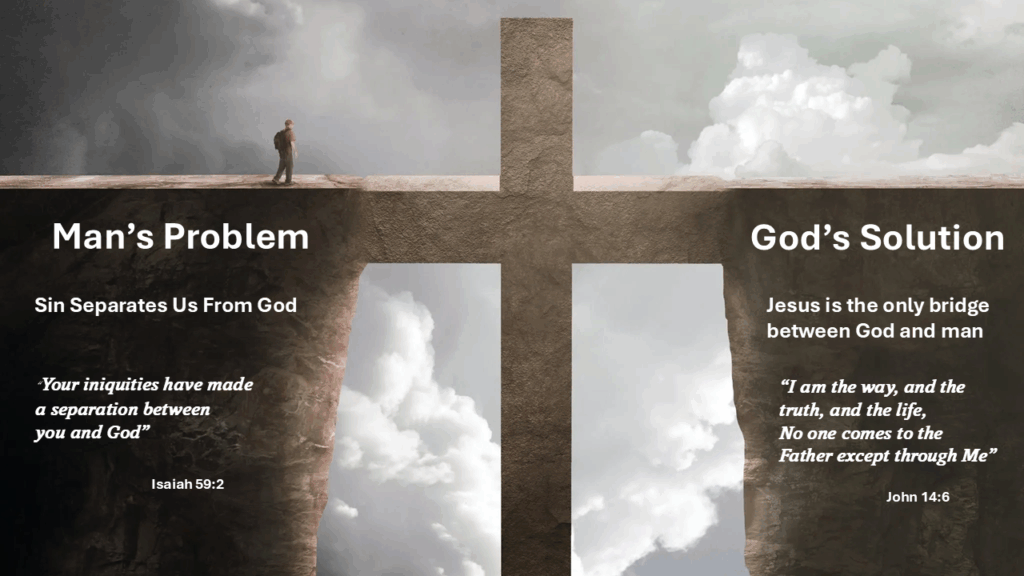
The Bridge Gospel illustration powerfully depicts the insurmountable gulf that exists between sinful man and a holy God. This separation is not symbolic—it is real, and according to Scripture, it is the direct result of humanity’s rebellion against God. Rather than submitting to God’s authority, mankind has consistently chosen to replace Him, seeking to be the moral arbiter of right and wrong. This self-exalting rejection of the Creator has created a chasm that no amount of good works, religion, or effort can bridge. The Bible is clear: “The wages of sin is death” (Romans 6:23). This death is not only physical but spiritual—eternal separation from God. Only through Jesus Christ—the one true bridge—can that gulf be crossed, and the relationship restored.
The Bridge Illustration Explained
1. GOD’S DESIGN
- God is holy, loving, and desires a relationship with us.
- He created us to know Him and enjoy eternal life with Him.
- “For the wages of sin is death, but the gift of God is eternal life in Christ Jesus our Lord.” —Romans 6:23
“Now this is eternal life: that they know You, the only true God, and Jesus Christ, whom You have sent.” —John 17:3
2. MAN’S PROBLEM
- Sin separates us from God.
- All people have sinned and cannot reach God on their own.
- “For all have sinned and fall short of the glory of God.” —Romans 3:23
“Your iniquities have made a separation between you and your God.” —Isaiah 59:2
3. ATTEMPTS TO BRIDGE THE GAP
- People try religion, morality, good works, philosophy—but all fall short.
- “There is a way that seems right to a man, but its end is the way to death.” —Proverbs 14:12
4. GOD’S SOLUTION: THE CROSS
- Jesus Christ is the only bridge between man and God.
- He lived a sinless life, died in our place, and rose again.
- “For Christ also suffered once for sins, the righteous for the unrighteous, that He might bring us to God.” —1 Peter 3:18
“I am the way, and the truth, and the life. No one comes to the Father except through me.” —John 14:6
5. MAN’S RESPONSE
- Salvation is a gift—receive it by grace through faith.
- We must repent and place our trust in Christ alone to be saved.
- “For by grace you have been saved through faith… it is the gift of God, not a result of works.” —Ephesians 2:8–9
“To all who did receive Him, who believed in His name, He gave the right to become children of God.” —John 1:12
6. THE RESULT
- Restored relationship with God, forgiveness of sin, eternal life.
- “Therefore, since we have been justified by faith, we have peace with God through our Lord Jesus Christ.” —Romans 5:1
“Truly, truly, I say to you, whoever hears my word and believes… has eternal life.” —John 5:24
World Religions Attempts To Bridge The Gap On His Own Merit
“There is a way that seems right to a man, but its end is the way to death.”
Proverbs 14:12
From the beginning of history, mankind has sensed that something is wrong—that there is a gap between us and God, between the way things are and the way they were meant to be. This gap, created by sin, has left humanity separated from its Creator, spiritually dead, and in need of reconciliation. But rather than turn to God on His terms, humanity has consistently tried to build its own bridges across the divide.
People Attempt To Bridge This Gap In Countless Ways:
- Through religion, trying to earn divine favor by rituals, laws, or spiritual practices.
- Through morality, hoping that being “good enough” will outweigh their sins.
- Through philosophy, reasoning their way to truth while denying divine revelation.
- Through spirituality, pursuing mystical experiences without submitting to God.
- Through charity or activism, using good deeds as a substitute for repentance.
Despite their variety, these attempts share one thing in common: they are man-centered and insufficient. They may provide temporary comfort or a false sense of progress, but they can never overcome the infinite moral gap between a holy God and sinful man.
All of mankind’s attempts to reach God—through religion, morality, or good works—are like trying to throw a stone across the Grand Canyon. Some may throw farther than others, but in the end, they all fall hopelessly short of the other side. Only the cross of Christ bridges the gap.
Christianity is the Only Religion with a Self-Sacrificing Savior
Christianity is the only religion with a Self-Sacrificing Savior. In every other belief system, man is called to make sacrifices in order to reach God—through works, rituals, self-denial, or enlightenment. But in Christianity, it is God who sacrifices Himself to reach man. At the center of the Christian faith is not a demand for human achievement, but a declaration of divine love: that Jesus Christ, fully God and fully man, willingly laid down His life to pay the penalty for our sins.
The concept of substitution may be said, then, to lie at the heart of both sin and salvation. For the essence of sin is man substituting himself for God, while the essence of salvation is God substituting Himself for man.
John Stott—The Cross of Christ
The word gospel means “good news,” and at the heart of Christianity is the greatest news ever told: that God Himself intervened to rescue a world that could not save itself.
From the beginning, humanity was created to live in fellowship with God. But through sin, mankind broke that relationship, bringing spiritual death, guilt, and separation from the holy Creator. Sin is not just bad behavior—it is rebellion against God’s authority and a corruption of our very nature. And because God is perfectly just, He cannot overlook sin or let it go unpunished. But God, in His perfect love, did not abandon us.
The gospel is the stunning truth that God took the initiative to restore what we had destroyed. He sent His Son, Jesus Christ—fully God and fully man—into our world to live the sinless life we could never live and to die the death we deserved.
This is what sets Christianity apart. It doesn’t offer steps to earn salvation—it proclaims that the work is already finished. The cross is not a symbol of human striving, but of God’s humility, mercy, and grace. No other religion dares to suggest that the eternal, all-powerful Creator would take on flesh, suffer, and die for those who rebelled against Him. Only in Christianity do we find a God who doesn’t just call us to Himself—but comes to us, carries our burden, and dies in our place so we can live.
For Christ also suffered once for sins, the righteous for the unrighteous, that he might bring us to God
1 Peter 3:18
This is not man-made religion. This is divine rescue.
Challenge Question: If every religion tells us what we must do to reach God, but Christianity alone tells us what God has done to reach us—why would we reject the only message where God Himself bears the cost for our salvation?
Premise 3: Christianity’s Founder Is Not Dead
Christianity stands utterly unique among the world’s religions for one astonishing reason: its founder did not remain in the grave. While every religious leader—from Muhammad to Buddha to Confucius—lived, taught, and died, only Jesus Christ rose from the dead, conquering sin and death, and appearing to hundreds of eyewitnesses (1 Corinthians 15:3–8). His resurrection is not a myth or metaphor—it is a historical claim central to the Christian faith.
“If Christ has not been raised, your faith is futile; you are still in your sins.”
1 Corinthians 15:17
The resurrection is not an optional belief for Christians—it is the very foundation of the gospel. It proves that:
- Jesus is who He claimed to be—the Son of God.
- Sin has been defeated, and the sacrifice on the cross was accepted by God.
- Eternal life is real, and available to all who trust in Him.
No other religion even attempts to claim a historically verifiable, bodily resurrection of its founder. Only Christianity dares to base everything on an event that either happened or didn’t. And because Jesus is alive, Christianity is not a memory or a moral code—it is a living relationship with a risen Savior.
The empty tomb changes everything. It transforms Christianity from a religion of rules into a message of hope. It is the ultimate evidence that God has intervened in human history—not just to instruct us, but to save us.
The Founder Of Every Other Major Religion Is Still In Their Grave
Throughout history, every major religion has been founded by a central figure—whether prophet, teacher, philosopher, or spiritual leader—whose teachings shaped the beliefs of millions. In nearly every case, the founder lived, died, and remains buried, with tombs or shrines that can still be visited today. These burial sites are revered, historically verified, and contain the physical remains of the individual.
Muhammad—Founder of Islam
In 610, in a cave in Mount Hira north of Mecca, Muhammad said he had a vision in which he heard God, speaking through the angel Gabriel, command him to become the Arab prophet of the “true religion.” Thus began a lifetime of religious revelations, which he and others collected as the Qur’an.On June 8, 632 Muhammad the founder of Islam died after a brief illness. He is buried in the mosque in Medina.

Siddhartha Gautama—Founder of Buddhism
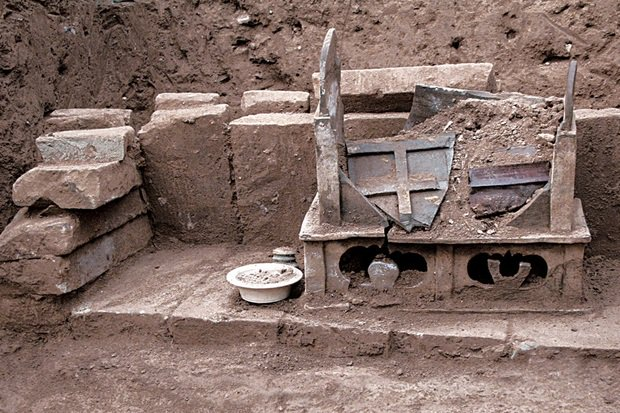
Siddhartha Gautama died of an unknown illness between 483 BC and 400 BC. The cremated remains of what an inscription says is the Buddha, also called Siddhārtha Gautama, have been discovered in a box in Jingchuan County, China.
Joseph Smith—Founder of Mormonism
Joseph Smith said he experienced a series of visions, including one in 1820, and another in 1823 in which he said an angel directed him to a buried book of golden plates which he translated into the Book of Mormon in 1830. He died of a gunshot wound in Carthage, Illinois. He is buried in the family cemetery in Nauvoo, Illinois.

Confucious—Founder of Confucianism
Confucius, a Chinese philosopher who lived from 551 to 479 BC, founded Confucianism by teaching a system of ethics focused on virtue, family loyalty, social harmony, and respect for tradition. Rather than starting a religion in the traditional sense, he emphasized moral principles and proper behavior, which later developed into a guiding philosophy for Chinese society.

Founders of Major World Religions and Their Burial Locations
| Religion–Founder | Approx. Date | Tomb / Burial Location |
|---|---|---|
| Christianity—Jesus | c. 4 BC – AD 30 | Empty tomb, Jerusalem (Church of the Holy Sepulchre or Garden Tomb) |
| Islam—Muhammad | AD 570–632 | Green Dome, Al-Masjid an-Nabawi, Medina, Saudi Arabia |
| Judaism—Abraham/Moses | c. 2000 BC / c. 1400 BC | Abraham: Cave of the Patriarchs, Hebron; Moses: Mount Nebo or unknown |
| Hinduism—No Single Founder | c. 1500 BC and earlier | No specific founder or tomb |
| Buddhism—Siddhartha Gautama (Buddha) | c. 563–483 BC | Mahaparinirvana Temple, Kushinagar, India (traditional site) |
| Sikhism—Guru Nanak | AD 1469–1539 | Gurdwara Darbar Sahib, Kartarpur, Pakistan |
| Taoism—Lao Tzu | c. 6th century BC (legendary) | Unknown; legends associate with White Horse Temple, Luoyang, China |
| Confucianism—Confucious (Kong Fuzi) | 551–479 BC | Cemetery of Kong Lin, Qufu, China |
| Jainism—Mahavira | c. 599–527 BC | Pawapuri, Bihar, India |
| Baha’i Faith—Bahá’u’lláh | 1817–1892 | Shrine of Bahá’u’lláh, Bahjí, Acre, Israel |
| Mormonism (LDS)— Joseph Smith | 1805–1844 | Smith Family Cemetery, Nauvoo, Illinois, USA |
| Jehovah’s Witnesses—Charles Russell | 1852–1916 | Rosemont United Cemetery, Pittsburgh, Pennsylvania, USA |
| Zoroastrianism—Zoroaster | c. 1200–1000 BC (disputed) | Tomb location unknown/disputed (claimed sites in Iran and Central Asia) |
| Scientology—L. Ron Hubbard | 1911–1986 | Cremated; ashes scattered in the Pacific Ocean |
Every founder of the world’s major religions died, was buried or cremated, and that was the end of their story. Not so with Jesus. His tomb is empty because He rose from the dead, just as He said He would. Unlike any other, His resurrection is a verified event that confirms His identity, His authority, and His power to give eternal life.
Jesus’s tomb is the only one that is empty—and that changes everything. Every other religious leader in history lived, died, and remains buried. Their graves may be visited, honored, and memorialized—but they are still occupied. In stark contrast, Christianity points to an empty tomb, not as a symbol, but as the central evidence of its truth. The resurrection of Jesus is not a peripheral detail; it is the defining event that validates His claims, proves His divinity, and confirms that His sacrifice was accepted by God. Without the empty tomb, Christianity collapses. But with it, it stands alone in history as a faith built not on speculation or legend, but on a living Savior who defeated death.
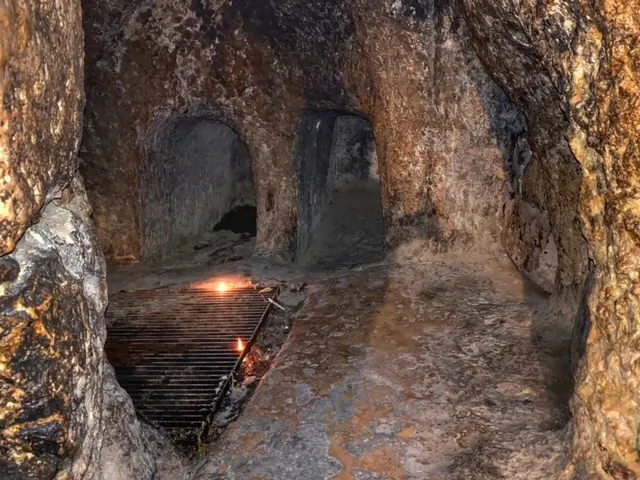
The Resurrection of Jesus is What Made the Disciples Go and Turn the World Upside Down
At the heart of Christianity is a claim so bold and so unique that it separates it entirely from every other world religion: Jesus Christ not only died—He rose from the dead. This is not presented as a metaphor or spiritual idea, but as a real, historical event witnessed by hundreds of people (1 Corinthians 15:3–8). No other religion makes such a claim about its founder.
Before the resurrection, Jesus’ disciples were disillusioned, fearful, and hiding behind locked doors. They had followed Him for three years, expecting a political kingdom, but watched in shock as He was arrested, crucified, and buried. Their hopes seemed crushed, their mission defeated.
But everything changed after the resurrection.
When Jesus rose from the dead and appeared to them physically—eating with them, teaching them, showing His scars—it transformed their understanding and ignited unstoppable courage. They realized He had not come to conquer Rome but to conquer death, sin, and hell itself. The resurrection was not just a miracle; it was a commissioning. It validated everything Jesus said about Himself, proving He truly was the Son of God and the Savior of the world.
“The resurrection is not a strange event within the world as it is, but the symbol and starting point of the world as it will be. It is the single best explanation for the rise of Christianity.”
N.T Wright—New Testament Scholar; Surprised By Hope
What Makes the Resurrection of Christ Historically Plausible
- Early Eyewitness Testimony
The accounts of Jesus’ resurrection were circulated within decades—or even years—of the event, not centuries later. Paul’s summary in 1 Corinthians 15:3–8 includes a list of eyewitnesses and is dated by scholars as early as AD 33–36, making it one of the earliest Christian creeds. - Empty Tomb
Jesus’ burial site was known (Joseph of Arimathea’s tomb), and yet no body was ever produced. Even the earliest opponents of Christianity admitted the tomb was empty—they just claimed the disciples stole the body (Matthew 28:13), unintentionally confirming the tomb was found vacant. - Multiple Independent Sources
The resurrection is documented in multiple early, independent sources (e.g., the four Gospels, Acts, Pauline letters), which strengthens its historical credibility based on principles of historiography. - Transformation of the Disciples
The same followers who fled in fear during Jesus’ crucifixion boldly proclaimed His resurrection just weeks later—facing torture and martyrdom without recanting. It’s unlikely they would willingly die for what they knew to be a lie. - Enemy and Skeptic Conversions
Key figures like Paul, a former persecutor of Christians, and James, the skeptical brother of Jesus, became convinced Jesus rose after personal post-resurrection encounters (1 Corinthians 15:7–8). - The Rise of the Early Church in Jerusalem
The Christian faith began and grew in Jerusalem, the very place Jesus was crucified and buried. If the resurrection were a fabrication, it could have been easily disproven by presenting His body. - Lack of Legendary Development
The Gospel accounts lack the embellishments typical of legends and instead include embarrassing and unexpected details (e.g., women as the first witnesses) that argue for authenticity rather than myth.
Fueled by the certainty of the risen Christ, the same disciples who once cowered in fear boldly proclaimed the gospel, even in the face of arrest, persecution, and martyrdom. Acts 17:6 records that opponents of the early church exclaimed, “These men who have turned the world upside down have come here also.” The resurrection turned timid followers into fearless messengers.
It was not just an event—it was a revolution that launched a global movement. The resurrection gave the disciples a message worth dying for, and more importantly, a living Savior worth living for.
While the leaders of other religions died and remained in their tombs, Jesus alone overcame death, leaving behind an empty grave as proof of His identity and mission. The resurrection validates that Jesus was not merely a prophet or moral teacher, but the Son of God, with authority over life, death, and sin. It confirms that His death on the cross was not a tragedy, but a victory—a divine exchange where He bore the penalty of human sin to offer eternal life to all who believe.
Challenge Discussion: If the resurrection of Jesus is a historically supported, eyewitness-confirmed event—what does that mean for the truth claims of Christianity, and how should that shape our response compared to every other religion?
Premise 4: Christianity Is The Only Religion That Makes You Family
But to all who believed him and accepted him, He gave the right to become children of God.
John 1:12
This verse highlights the incredible truth that salvation is not just forgiveness—it’s adoption. Through faith in Jesus Christ, we don’t just become followers or subjects; we become sons and daughters of God. Christianity is not merely a religion of moral improvement—it’s a relationship initiated by God, sealed through Christ, and made personal through the Spirit.
Christianity is the only faith in which salvation is not just a transaction—it’s an adoption. While other religions may offer a way to appease or serve a distant deity, only Christianity invites you into the family of God. Through faith in Jesus Christ, you are not merely forgiven or accepted—you are welcomed as a son or daughter of the Most High.
This divine adoption means believers become heirs of God and co-heirs with Christ (Romans 8:17). They are given full access to God’s presence, a new identity, and an eternal inheritance. No longer outsiders or spiritual orphans, Christians are brought into the very household of God—not because of merit, but because of grace.
Christianity doesn’t just make you a follower. It makes you family.
When the Bible says that believers are adopted as children of God, it is declaring far more than a legal change in status—it is describing a profound transformation of identity, relationship, and destiny. Adoption is one of the most intimate and life-altering doctrines in all of Scripture. It means that through faith in Jesus Christ, we are not only forgiven, but welcomed into God’s family as beloved sons and daughters. The chart below outlines the rich spiritual blessings that flow from this truth and how it shapes the life of every believer.
Spiritual Implications of Being Adopted as Children of God
| Implication | Description | Scripture Reference |
|---|---|---|
| New Identity | We are no longer slaves to sin or fear, but are known by God as His children. | Romans 8:15–16; Galatians 4:6–7 |
| Intimate Access to God | We can approach God as a loving Father, not as a distant deity. | Hebrews 4:16; Matthew 6:9 |
| Full Inheritance | We are co-heirs with Christ, promised eternal life and spiritual riches. | Romans 8:17; Ephesians 1:11–14 |
| Unconditional Acceptance | We are fully loved and accepted—not based on performance, but on grace through Christ. | Ephesians 1:5–6 |
| Permanent Security | Our position as God’s children is sealed and unchangeable. | John 10:28–29; 1 Peter 1:3–5 |
| Discipline with Love | God disciplines us not out of wrath, but out of love as a perfect Father. | Hebrews 12:6–10 |
| Family of Believers | We are united with other believers as spiritual brothers and sisters in God’s household. | Ephesians 2:19; Galatians 6:10 |
| Transformation and Growth | As His children, we grow in holiness and begin to reflect our Father’s character. | 1 John 3:1–3; Romans 8:29 |
| Witness to the World | Our status as children of God is a visible testimony of God’s grace to the world. | Matthew 5:14–16; Philippians 2:15 |
Christian Salvation Enables Us To Share The Same Kind Of Relationship That Jesus Enjoys With The Father
And because we are his children, God has sent the Spirit of His
Galatians 4:6
Son into our hearts, prompting us to call out, “Abba, Father.”
“Abba” is a tender, childlike word in Aramaic that means “Father,” similar to how a small child might say “Daddy” or “Papa.” It expresses closeness, trust, and deep affection. Through the Holy Spirit, believers are not just allowed—but invited—into this kind of personal and intimate relationship with God. We don’t approach Him as distant or unapproachable, but as a loving Father who welcomes us into His presence at any time, in any situation. Because we belong to Him as His children, He hears us, sees us, and deeply cares for us—not out of obligation, but out of perfect, fatherly love. Abba is the same title Jesus used of God:
Abba Father, he cried out, “everything is possible for you. Please take this cup of suffering away”
Mark 14:36
This moment occurs in the Garden of Gethsemane, just before Jesus’ arrest. It shows His deep intimacy with the Father, even as He faces immense suffering. By using “Abba,” Jesus expresses both trust and submission—a model of how we, too, can approach God as beloved children.
Jesus’ Sonship and Believers’ Adoption
| Aspect | Jesus, the Eternal Son | Believers, Adopted Children |
|---|---|---|
| Nature of Sonship | Eternal, divine Son by nature (John 1:1; 3:16) | Adopted into God’s family through faith (Galatians 4:4–7; John 1:12) |
| Intimacy with the Father | Perfect, eternal union with the Father (John 10:30) | Real, personal relationship through the Spirit (Romans 8:15) |
| Access to the Father | Constant, divine communion (John 17:5) | Bold access through Christ (Hebrews 4:16; Ephesians 2:18) |
| Heirship | Heir of all things by divine right (Hebrews 1:2) | Co-heirs with Christ by grace (Romans 8:17) |
| Use of “Abba” | Called God “Abba” in Gethsemane (Mark 14:36) | We cry “Abba, Father” through the Spirit (Galatians 4:6; Romans 8:15) |
| Obedience | Perfect, sinless obedience (Hebrews 5:8) | Called to grow in obedience and holiness (Romans 8:14; 1 John 3:1–3) |
| Security of Relationship | Unbreakable unity with the Father (John 17:21–24) | Secure adoption sealed by the Spirit (Ephesians 1:13–14) |
And because you are Children, God has sent forth the Spirit of His Son into our hearts …
God confirms that believers are truly His adopted children by giving us the Holy Spirit—the very Spirit of His Son. So they don’t just know we’re His children because the Bible says it, they can actually experience it because His Spirit lives in them. Unlike a human father, who can adopt a child but can’t share his nature, God not only adopts believers—He places His own Spirit within them, making them His in the deepest and most personal way possible.
This comparison highlights the wonder of the gospel: that through Jesus Christ, we are invited to share in a relationship with God that mirrors His own perfect fellowship with the Father. Though Jesus is the eternal Son by nature and we are children by adoption, we are brought into the same household, given the same access, and loved with the same steadfast affection. Our adoption is not symbolic—it is real, personal, and eternally secure. This is the heart of the Christian faith: not just pardon, but belonging.
Challenge Question: If Christianity uniquely offers a relationship with God where He is not just Judge or Creator, but a loving Father who adopts you as His own child—how does that compare to other belief systems you’re familiar with, and what would it mean if that offer were true?
ThinkCube Truth Veracity Grid
- Have I considered the facts carefully and with an open mind?
- Is my conclusion the result of a careful examination of the facts, or is it a conclusion made in spite of the facts?
- Is my conclusion the one that makes the most sense of the evidence?