
Premise 1: Friends Who Saw The Risen Jesus
The first people to claim they saw the risen Jesus were His closest followers—those who had known Him intimately, traveled with Him, and witnessed His crucifixion. These were not strangers susceptible to deception, but friends who knew His voice, mannerisms, and character. Their testimonies form the bedrock of the Christian resurrection claim.
After Jesus’ death, His disciples were devastated, scattered, and fearful. But something changed them almost overnight. According to multiple accounts, they encountered Jesus alive—physically, tangibly, and repeatedly. He spoke with them, walked with them, ate with them, and even invited them to touch His wounds (Luke 24:36–43; John 20:19–29). These appearances weren’t fleeting visions or dreams; they were real encounters with a person they knew.
Friends Who Saw the Risen Jesus
| Name(s) | Scripture Reference | Description of the Encounter |
|---|---|---|
| Mary Magdalene | John 20:11–18 | Jesus appears to her at the tomb; she recognizes Him when He calls her by name. |
| The Other Women (Mary mother of James, Salome, Joanna, etc.) | Matthew 28:1–10; Luke 24:1–10 | They find the tomb empty, see angels, and Jesus appears to them as they run to tell the disciples. |
| Peter (Simon) | Luke 24:34; 1 Corinthians 15:5 | Jesus appeared privately to Peter on the day of resurrection (details not recorded, but affirmed in two sources). |
| Two Disciples on the Road to Emmaus | Luke 24:13–35 | Jesus walks and talks with them; they recognize Him when He breaks bread. |
| The Ten Disciples (excluding Thomas) | John 20:19–23; Luke 24:36–49 | Jesus appears in a locked room, shows them His wounds, and gives them peace and the Holy Spirit. |
| The Eleven Disciples (including Thomas) | John 20:24–29 | Jesus appears again; Thomas touches His wounds and confesses, “My Lord and my God!” |
| Seven Disciples by the Sea of Galilee | John 21:1–14 | Jesus appears while they are fishing; performs a miracle and eats breakfast with them. |
| The Disciples on the Mountain in Galilee | Matthew 28:16–20 | Jesus gives the Great Commission to His followers before His ascension. |
| Over 500 Brothers and Sisters | 1 Corinthians 15:6 | Paul mentions a mass appearance of the risen Christ to over 500 people at one time, most of whom were still alive. |
These appearances were not isolated or private; they occurred to individuals and to groups, in various locations, at different times, and under unexpected circumstances. The disciples touched Him, spoke with Him, walked with Him, and shared meals with Him—experiences that cannot be reduced to visions or dreams. Even more compelling, these encounters transformed the disciples from fearful, scattered deserters into bold public witnesses who willingly suffered imprisonment, beatings, and death because they were convinced they had truly seen the risen Jesus.
Key Takeaways:
- These friends and followers knew Jesus personally before His death, making them unlikely to mistake His identity.
- Their experiences occurred in various places, at different times, and to both individuals and groups.
- Their unified testimony, despite fear and initial doubt, became the foundation of the Christian faith.
These appearances were not fleeting visions or emotional illusions—they were consistent, physical encounters experienced by those who knew Jesus best. His friends, who had every reason to grieve and doubt, became bold and unshakable witnesses because they were utterly convinced they had seen Him alive. They spoke with Him, touched His wounds, and shared meals with Him. Their testimonies were rooted not in hope or hearsay, but in firsthand experience. And from these transformed witnesses, the Christian faith was born—not from legend, but from lives forever changed by the undeniable reality of a risen Savior.
Peter, who had denied Jesus three times out of fear, later preached boldly in Jerusalem, declaring that God had raised Jesus from the dead (Acts 2:32). Thomas, who had doubted the reports, confessed “My Lord and my God” after seeing and touching Jesus (John 20:28). The disciples went from fearful deserters to bold proclaimers—willing to suffer, be imprisoned, and die for what they knew they had seen.
The disciples were not prepared for what happened. They were not in a frame of mind to hallucinate a risen Jesus. Yet they all insisted they saw Him alive again in bodily form—and this belief transformed them from a frightened group into bold proclaimers of a risen Lord
N.T. Wright—The Resurrection of the Son of God
Their transformation is hard to explain apart from the resurrection. People don’t give their lives for what they know is a lie. The friends of Jesus were not reporting hearsay—they were firsthand witnesses, and their consistent testimony continues to stand as one of the most compelling evidences for the resurrection.
Challenge Question: If Jesus’ closest friends—who knew Him best and had fled in fear—later claimed they saw Him alive and were willing to suffer and die for that claim, what would most reasonably explain their transformation if the resurrection never happened?
Premise 2: The Four Gospels Provide Distinct Eyewitness Perspectives
The four Gospels—Matthew, Mark, Luke, and John—offer unique and complementary portraits of the life, death, and resurrection of Jesus. Rather than being identical or formulaic, each Gospel reflects the distinct perspective, purpose, and background of its writer, much like four eyewitnesses describing the same event from different vantage points. Together, they form a rich, multidimensional account of Jesus’ life that is both historically grounded and theologically profound.
Matthew
Written by a former tax collector and one of Jesus’ twelve disciples, Matthew provides an independent account of the resurrection grounded in Jewish expectation and prophecy. His Gospel emphasizes Jesus as the long-awaited Messiah, and his resurrection narrative includes unique details—such as the earthquake, angelic appearance, and guards at the tomb—underscoring Jesus’ divine authority and fulfillment of Scripture.
Mark
Mark, likely documenting the memories of the Apostle Peter, delivers the earliest and most concise resurrection account, marked by eyewitness urgency and vivid action. His Gospel highlights the astonishment and fear of the women who discovered the empty tomb, reinforcing the unexpected, historical nature of the event. Mark’s brevity adds authenticity, reflecting the rawness of early testimony before theological reflection had time to mature.
Luke
Luke, a physician and historian, offers a carefully researched and independently sourced account of Jesus’ life, death, and resurrection. Writing for a Gentile audience, he includes detailed resurrection appearances, such as the road to Emmaus and the ascension, providing historical and emotional depth. His focus on eyewitness interviews (Luke 1:1–4) lends credibility to the rich detail of his resurrection narrative.
John
John, “the disciple whom Jesus loved,” writes a theologically reflective but historically grounded Gospel, offering firsthand testimony of the risen Jesus. His account includes unique post-resurrection encounters, such as Jesus’ appearance to Mary Magdalene, Thomas’ declaration, and the miraculous breakfast by the sea. John’s resurrection narrative emphasizes personal transformation and the divine identity of Christ, offering an intimate perspective distinct from the Synoptics.
Why This Matters
Skeptics sometimes question why the Gospels aren’t word-for-word identical. But historians view variations in honest eyewitness accounts as a sign of authenticity—not fabrication. If the Gospels were perfectly identical, it would suggest collusion. Instead, their differences reflect genuine eyewitness diversity, while their agreement on the core facts—Jesus’ miracles, teachings, crucifixion, and resurrection—offers a powerful, unified testimony.
Together, the four Gospels provide multiple, independent attestations of the resurrection, each rich with unique detail and perspective. Their consistency on the core facts—an empty tomb, eyewitness encounters, and a risen Christ—while differing in emphasis and presentation, makes their collective testimony a powerful case for the historical reliability of the resurrection.
Four Separate Eyewitness Accounts Meets the Gold Standard for Historical Verification
When evaluating historical events, one of the most important criteria is the presence of multiple, independent eyewitness sources. The life, death, and resurrection of Jesus Christ are not based on a single anonymous account, but on four distinct narratives—Matthew, Mark, Luke, and John—each written by or informed directly by eyewitnesses or close associates. These Gospels were composed within the lifetime of other eyewitnesses who could verify or challenge their claims, and they show clear signs of independent perspective rather than collusion. Though they vary in detail and emphasis, they consistently affirm the core facts: Jesus lived, taught with authority, performed miracles, was crucified under Pontius Pilate, and was seen alive after His death.
Historians value such independent corroboration highly. In fact, when multiple firsthand sources agree on key events—while preserving differences in minor details—it meets what many call the “gold standard” of historical verification. If such standards apply to other ancient events and figures, then by all historical measures, the Gospel accounts of Jesus should be regarded as exceptionally credible sources. Rather than weakening the case, the diversity of voices in the Gospels strengthens it—showing that Christianity rests not on legend or hearsay, but on solid, eyewitness testimony.
Eyewitness testimony, especially when independent and consistent, is among the most valuable types of evidence a historian can use. When multiple sources report similar events independently, the likelihood of those events being accurate increases significantly.
Michael R. Marrus—Expert on Holocaust and Modern European History
This principle—valuing independent and consistent eyewitness testimony—is exactly what gives the Gospel accounts their compelling historical weight. The resurrection of Jesus is not based on a single report or a vague legend, but on multiple, independent narratives written by those who either witnessed the events firsthand or recorded the accounts of those who did. Each Gospel offers unique details while consistently affirming the same core reality: the tomb was empty, and Jesus appeared alive to many. In historical investigation, when separate sources converge on the same extraordinary claim, the credibility of that claim strengthens dramatically. That’s why, even centuries later, the resurrection remains not just a matter of faith, but one of profound historical force.
Challenge Question: If multiple independent eyewitness testimonies are considered one of the strongest forms of historical evidence, why would the consistent resurrection accounts in all four Gospels not be given the same serious consideration as other well-accepted historical events?
Premise 3: Skeptics And Enemies Who Saw The Risen Jesus
One of the most striking features of the resurrection accounts is not merely that Jesus appeared to His followers, but that He also appeared to skeptics and outright enemies—individuals who had no reason to fabricate or embrace such a claim. These encounters are some of the most compelling pieces of historical evidence for the resurrection, because they involve people who were not predisposed to believe, yet became transformed by what they experienced.
James: From Unbelieving Brother to Church Leader
Jesus’ own brother, James, is a prime example of a skeptic turned believer. During Jesus’ public ministry, James did not believe in Him. In fact, John 7:5 plainly states, “For even his own brothers did not believe in him.” As a close relative, James had grown up with Jesus, and like many family members confronted with extraordinary claims, he was likely skeptical, even dismissive.
Yet after the resurrection, something radically changed. According to 1 Corinthians 15:7, Paul records that Jesus “appeared to James,” a private encounter mentioned among other post-resurrection appearances. Following this, James becomes a key leader of the early Jerusalem church (Acts 15), is referred to as an apostle (Galatians 1:19), and is eventually martyred for his faith. It’s hard to account for this transformation unless James truly encountered the risen Christ. Family skepticism turning into fearless leadership is not easily explained by hallucination or group hysteria.
Paul: From Violent Persecutor to Apostle
Perhaps the most dramatic conversion in all of Christian history is that of Saul of Tarsus, later known as the Apostle Paul. A Pharisee deeply committed to Judaism, Paul viewed the early Christian movement as a dangerous heresy. He actively persecuted Christians, approved of their imprisonment and execution (Acts 8:1–3), and sought to extinguish their message.
But something happened on the road to Damascus that completely changed his life. As Paul later wrote in 1 Corinthians 15:8, “Last of all… he appeared to me also.” The risen Jesus personally confronted Paul, and the encounter was so overwhelming that it turned a fierce opponent into one of Christianity’s greatest advocates. Paul abandoned his status, safety, and career for the sake of proclaiming the resurrection he had once denied. He endured beatings, imprisonment, shipwrecks, and ultimately martyrdom—because, as he said, “Christ has indeed been raised from the dead” (1 Corinthians 15:20).
Why This Matters
In evaluating historical claims, transformation under pressure matters. People may die for what they believe to be true, but they don’t die for what they know is a lie. James and Paul weren’t predisposed to believe in Jesus’ resurrection—James had rejected Him during His life, and Paul had persecuted His followers. Yet both independently claimed to have seen the risen Jesus and devoted the rest of their lives to proclaiming that truth, even unto death.
For skeptics today, these two figures pose a critical question: What could account for their complete reversal if not an actual encounter with the risen Christ? Their testimonies are not easily dismissed as legend, delusion, or wishful thinking. Instead, they stand as compelling historical witnesses to the truth of the resurrection—men who had every reason to disbelieve, yet couldn’t deny what they had seen.
When a person goes from being an opponent or critic to a believer in a particular event or idea—especially when that shift is against their own prior interests—it carries more evidentiary weight. Cognitive dissonance alone doesn’t usually account for a complete reversal unless the individual is confronted with strong, often undeniable evidence.”
Dr. Michael Shermer—Why People Believe Weird Things
This principle strikes at the heart of why conversions like those of Paul and James are so historically powerful. When individuals move from hostility or skepticism to wholehearted belief, especially at great personal cost, it signals that they encountered something potent enough to override prior convictions, reputational risk, and even self-preservation. As secular scholars have noted, such transformations are not easily explained by wishful thinking or psychological pressure. Cognitive dissonance may adjust beliefs, but it rarely results in total life reversal unless the evidence is overwhelming. In historical terms, testimony from a former enemy is among the strongest types of evidence—because it suggests that the person wasn’t persuaded by bias or groupthink, but by an experience they could not deny.
Challenge Question: If people are unlikely to completely reverse deeply held beliefs—especially when such a reversal brings suffering, rejection, or death—what could realistically explain why known skeptics and enemies of early Christianity (like Paul and James) became its most committed advocates?
Premise 4: The Widespread And Varied Appearances Of The Risen Jesus
The resurrection of Jesus Christ is not presented in the New Testament as a vague spiritual impression or private mystical experience. Instead, it is described as a series of concrete, bodily appearances that took place in multiple settings, were witnessed by various individuals and groups, and occurred over an extended period of time. This breadth and diversity of testimony gives the resurrection a unique historical weight and makes it much harder to dismiss as hallucination, myth, or legend.
The Credal Foundation: 1 Corinthians 15:3–8
The Apostle Paul, writing to the church in Corinth around AD 54–55, records a statement of belief that most scholars—both Christian and secular—consider to be one of the earliest creeds of Christianity. It predates Paul’s letter and likely originated within just a few years of Jesus’ death, possibly within months. Here’s what Paul writes:
“For I delivered to you as of first importance what I also received: that Christ died for our sins according to the Scriptures, that he was buried, that he was raised on the third day according to the Scriptures, and that he appeared to Cephas, then to the Twelve. After that, he appeared to more than five hundred of the brothers and sisters at one time, most of whom are still living, though some have fallen asleep. Then he appeared to James, then to all the apostles, and last of all he appeared to me also, as to one abnormally born.”
1 Corinthians 15:3–8
This list represents a structured catalog of resurrection appearances, and each detail has immense evidentiary value.
1. Appearances to Individuals
- Peter (Cephas): Jesus first appeared to Peter (1 Cor. 15:5; Luke 24:34), which is significant because Peter had denied Him days earlier. His transformation into the bold preacher at Pentecost speaks volumes about the reality of this encounter.
- James: As previously discussed, Jesus’ brother James was a skeptic during His ministry (John 7:5), but later became a pillar of the church in Jerusalem. Paul’s mention of James’ private appearance (v. 7) is crucial—it reflects a deeply personal moment of transformation for someone who had previously rejected Him.
- Paul: Perhaps the most compelling case is Paul himself. As a violent persecutor of Christians, he had every reason to oppose the resurrection story. Yet he describes a personal encounter with the risen Christ (v. 8), which he says was as real and undeniable as the appearances to the others.
2. Appearances to Groups
- The Twelve: This group of core disciples saw Jesus together. Group experiences are much harder to dismiss as hallucinations, which are generally private and subjective.
- More than 500 People: Paul refers to a massive appearance, likely in Galilee (see Matthew 28:16–20), where Jesus was seen by more than 500 believers at once. He even adds that “most of whom are still living”—a clear invitation for skeptics of his time to investigate the claims for themselves.
- All the Apostles: Distinct from “the Twelve,” this may refer to a broader group of messengers commissioned by Jesus, reinforcing that the appearances were not confined to a few inner-circle followers.
3. Appearances Over Time
The resurrection encounters didn’t all happen on a single day or in a single location. They occurred over the span of at least 40 days (Acts 1:3), during which Jesus taught, ate, and interacted with His disciples in various places—Jerusalem, Galilee, and the Mount of Olives. This variety in time and setting adds significant weight to the claims. It’s not the pattern of a fleeting myth but of a sustained and public phenomenon.
Why This Matters
If someone today claimed to have seen a resurrected person, we would naturally ask: When? Where? Who else saw it? How long did it last? The New Testament anticipates these kinds of questions and answers them in detail. The appearances were not confined to a dark corner of history or a solitary vision. They were spread out, diverse, and verifiable at the time of writing. These are the very elements historians look for when assessing the reliability of ancient events.
Far from being a legend that evolved over time, the resurrection appearances of Jesus are presented as well-attested, multi-faceted events, grounded in real history and witnessed by a wide range of people. Whether to a single skeptic like James, a persecutor like Paul, or crowds of hundreds, these appearances had one consistent effect: they transformed ordinary people into bold, world-changing witnesses. For anyone investigating the resurrection seriously, this pattern of multiple, independent, and enduring testimonies demands honest consideration.
The Resurrection Witnesses Were Alive to Be Questioned
He appeared to more than five hundred of the brothers and sisters at one time,
1 Corinthians 15:3-8
most of whom are still living.
One of the most compelling arguments for the historical credibility of the resurrection is that the eyewitnesses were still alive when the claims were first publicly circulated. Paul’s letter in 1 Corinthians 15, written roughly 20–25 years after Jesus’ death, explicitly states that many of the more than 500 people who saw the risen Christ were “still living”. This wasn’t a secret tradition passed along generations later, but a bold proclamation made within the lifetime of those who were there. In the ancient world—just as today—claims that could be easily disputed by living witnesses would not have survived public scrutiny unless they were widely confirmed.
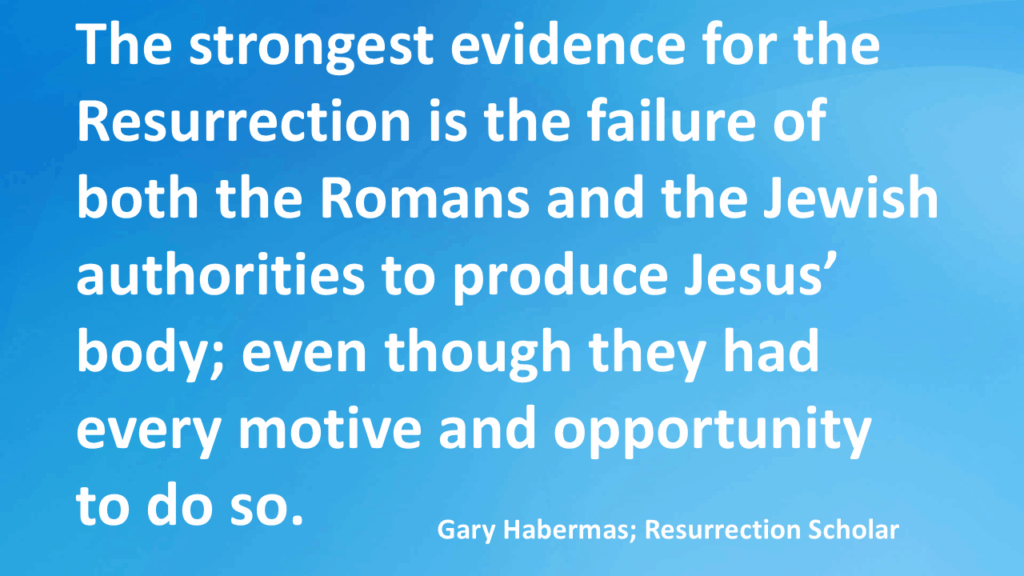
The early Christian message invited investigation, not blind belief. It spread in the very places where the events occurred, among people who had every opportunity to question, verify, or refute the accounts. That the resurrection claim persisted—and grew rapidly—suggests that these eyewitnesses not only remained unshaken, but stood as living confirmation of the most extraordinary event in history.
Challenge Question: Paul openly invited people in his generation to verify the resurrection by speaking with living eyewitnesses—and no credible refutation ever surfaced—what would have prevented skeptics at the time from exposing it as a fraud if it weren’t true?
ThinkCube Truth Veracity Grid
- Have I considered the facts carefully and with an open mind?
- Is my conclusion the result of a careful examination of the facts, or is it a conclusion made in spite of the facts?
- Is my conclusion the one that makes the most sense of the evidence?