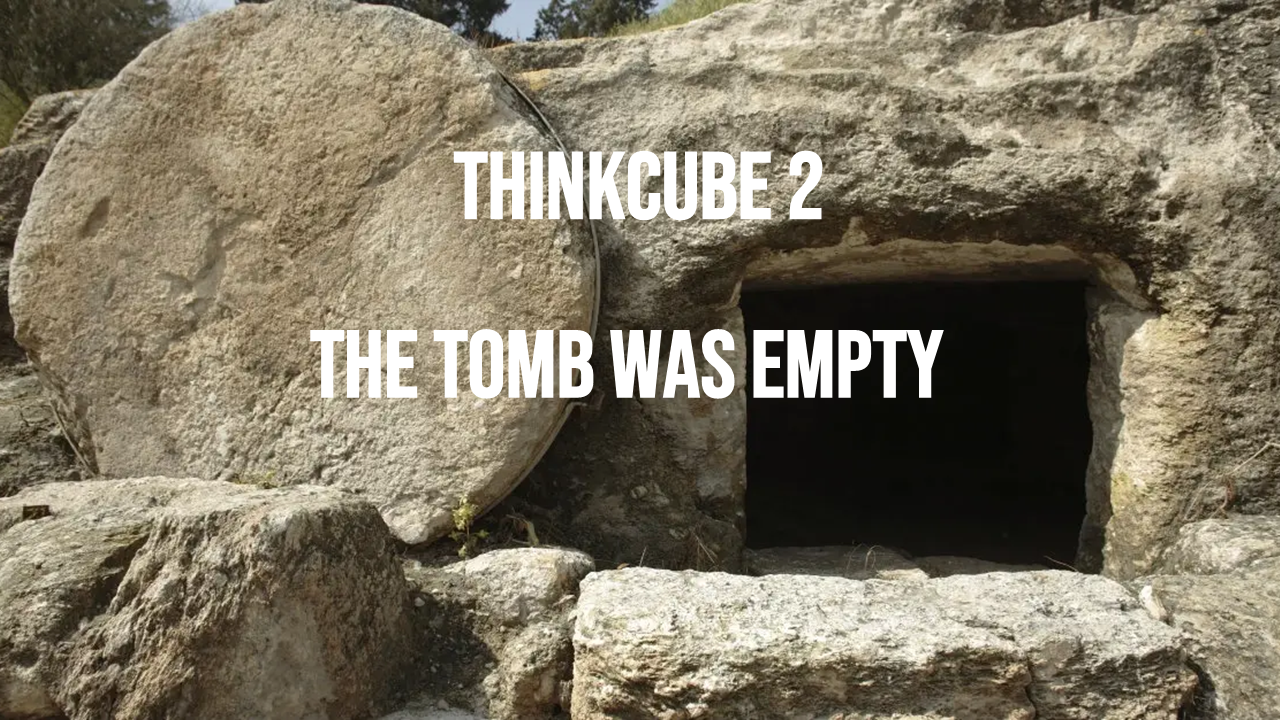
Premise 1: Multiple Sources Report An Empty Tomb
One of the strongest historical claims surrounding the resurrection of Jesus is the empty tomb, and this is affirmed by multiple, independent sources within the New Testament—most notably the Gospels of Mark, Matthew, Luke, and John. Though each Gospel presents the event with its own perspective and unique details, they all agree on the central fact: the tomb in which Jesus was buried was found empty on the third day.
Mark – Earliest Gospel Account
Mark’s Gospel, widely regarded as the earliest written account, describes a group of women—Mary Magdalene, Mary the mother of James, and Salome—discovering the empty tomb (Mark 16:1–8). They find the stone rolled away and a young man in white (interpreted as an angel) telling them that Jesus has risen. This is significant because women’s testimony was not highly regarded in 1st-century Jewish culture, suggesting this account is unlikely to be fabricated and adds historical authenticity.
Matthew – Roman Guard & Cover Story
Matthew includes additional details, such as the presence of Roman guards at the tomb and an official explanation circulated by the Jewish authorities that the disciples had stolen the body (Matthew 28:11–15). This narrative is important because it acknowledges the empty tomb from the standpoint of Jesus’ opponents, indirectly confirming that the body was missing and could not be produced.
Luke – Broader Witness Testimony
Luke affirms the testimony of the women and expands the narrative to include Peter’s inspection of the tomb, where he sees the linen strips lying by themselves (Luke 24:12). Luke also includes post-resurrection appearances, reinforcing the empty tomb’s significance as the foundation of early Christian belief.
John – Eyewitness Detail
John provides even more intimate detail, describing how Mary Magdalene ran to tell Peter and the “beloved disciple” (traditionally John), who then ran to the tomb and found it empty (John 20:1–9). The language suggests eyewitness testimony, especially in John’s reference to seeing the grave clothes folded and lying separately, implying the body was not stolen in haste.
The Gospel Accounts are Independent and Complementary
Although these Gospel accounts differ in secondary details—such as which women went first or how many angels appeared—their core agreement about the empty tomb is strong evidence of independent attestation. In historical methodology, when multiple sources with varying perspectives confirm the same core event, the credibility of that event is significantly strengthened.
Moreover, the early Christian preaching in Acts and the creedal tradition in 1 Corinthians 15 (which predates the Gospels) also implies an empty tomb, as it centers on a physical resurrection and the burial and rising of Jesus “on the third day.”
The Gospel Authors Appear To Be Honest People Incapable Of A Massive Fraud
The Gospel authors present themselves, and the earliest disciples, as remarkably ordinary—and often deeply flawed—people. On the surface, they do not read like architects of a calculated religious fraud. The accounts are told plainly, without embellishment, and the writers consistently portray themselves not as heroes but as confused, fearful, and slow to grasp what was unfolding before them.
Most strikingly, when Jesus repeatedly told them that He would be betrayed, crucified, and then rise again, none of them understood or believed Him. Some even attempted to dissuade Him from this course altogether. These admissions are not buried or softened; they are openly acknowledged across all four Gospel accounts. Rather than enhancing their credibility or authority, such details expose their misunderstanding and resistance—an unlikely feature of legend-making, but a natural mark of honest testimony.
Disciples’ Unbelief, Misunderstanding, and Failure in the Gospels
| Gospel Account | What the Disciples Did | Why This Undermines Legend-Making |
|---|---|---|
| Peter rebukes Jesus for predicting His death (Matt. 16:21–23) | Peter openly contradicts Jesus and is sharply corrected | A legendary founder would not depict his chief apostle as opposing God’s plan |
| Disciples fail to understand Jesus’ parables (Mark 4:10–13) | They admit confusion and require private explanations | Legends portray insiders as enlightened, not consistently clueless |
| Disciples argue over who is greatest (Luke 22:24) | They quarrel about status on the eve of Jesus’ arrest | Self-promotion conflicts with idealized heroic portrayals |
| All disciples flee at Jesus’ arrest (Mark 14:50) | They abandon Him entirely in His moment of need | Cowardice is not a trait invented to glorify founders |
| Peter denies Jesus three times (Luke 22:54–62) | Peter publicly disowns Jesus under pressure | Including this damages apostolic authority rather than enhancing it |
| Women report the empty tomb; disciples dismiss it (Luke 24:11) | The disciples initially reject the resurrection testimony | Legends would portray immediate belief, not skepticism |
| Thomas refuses to believe without physical proof (John 20:24–25) | One disciple openly doubts resurrection claims | Fabricated stories rarely spotlight named doubters among leaders |
| Disciples fail to recognize the risen Jesus (Luke 24:13–16) | They walk and talk with Him without realizing who He is | This undercuts triumphalist storytelling |
| Disciples return to fishing after the resurrection (John 21:2–3) | They appear uncertain and directionless after Easter | Inconsistent with a movement built on confident invention |
| Great Commission follows persistent doubt (Matt. 28:17) | Some disciples still doubt even after seeing Jesus alive | Legends erase lingering doubt; the Gospels preserve it |
Strikingly, every Gospel includes accounts of the disciples’ own unbelief, misunderstanding, and failure. They doubt Jesus’ identity, misunderstand His mission, argue over status, abandon Him at His arrest, and initially disbelieve the resurrection reports. Peter, one of the central figures, is shown publicly denying Jesus under pressure. None of these details advance the credibility or authority of the movement’s leaders—yet they are preserved without excuse or softening.
This pattern runs counter to how legends and propaganda are formed. Legendary accounts typically elevate founders, suppress embarrassing details, and portray insiders as insightful and heroic. The Gospels do the opposite. They openly record the authors’ ignorance, fear, and resistance—even after years with Jesus. Such self-incriminating material strongly suggests that the writers were committed to reporting what they believed actually happened rather than crafting a persuasive myth.
In historical analysis, this is known as the criterion of embarrassment: details that undermine the credibility of the witnesses are unlikely to be invented. The Gospel authors include them anyway. Far from reading like a coordinated fraud or gradually embellished legend, the texts bear the marks of honest testimony—preserved despite personal cost, not shaped to protect reputation.
The unanimous testimony of the four Gospels—diverse in voice but united in content—along with corroborating early Christian sources, confirms that the early followers of Jesus were utterly convinced the tomb was empty. Given the cultural, religious, and political hostility toward the early church, it’s highly unlikely they could have advanced such a claim in Jerusalem if the body were still in the tomb. The multiple, independent sources offer compelling historical weight to the claim that something remarkable happened—and that the tomb was, indeed, empty.
Challenge Question: If multiple independent sources—some of them written within decades of the event—consistently report that Jesus’ tomb was found empty, and neither Roman nor Jewish authorities could produce His body, what historically plausible explanation best accounts for this fact without appealing to legend or fabrication?
Premise 2: The Earliest Witnesses To The Empty Tomb Were Women
One of the most striking and historically significant features of the resurrection accounts in the Gospels is that the first witnesses to the empty tomb were women—specifically Mary Magdalene, Mary the mother of James, Salome, Joanna, and others, depending on the account (Mark 16:1; Matthew 28:1; Luke 24:10; John 20:1). In the cultural context of first-century Jewish and Greco-Roman society, this detail is profoundly important. Women in that era were generally not considered reliable witnesses in legal or public matters, and their testimony was often discounted or disregarded entirely. If the Gospel writers were fabricating a resurrection narrative to gain credibility or convince skeptics, they would have been unlikely to invent a story where women were the first and primary witnesses to the most crucial event in Christian faith.
The inclusion of female witnesses—especially given their marginalized status—argues strongly for the authenticity of the accounts. It suggests that the Gospel writers were more interested in faithfully reporting what actually happened than in crafting a story tailored to cultural expectations or societal norms. This countercultural detail adds weight to the credibility of the resurrection narratives and provides a compelling example of how the earliest Christians preserved truth, even at the cost of social acceptance. Here are the reasons women would not have been chosen as eyewitnesses if the empty tomb was narrative was a made up one:
1. Women’s Testimony Was Considered Unreliable
In the ancient world, women were not regarded as credible legal witnesses. According to Josephus, a first-century Jewish historian:
“Let not the testimony of women be admitted, on account of the levity and boldness of their sex.”
— Antiquities of the Jews, 4.8.15
This cultural bias meant that if the Gospel writers were fabricating the resurrection story, they would not have chosen women to be the first and primary witnesses to the empty tomb. Instead, they would have selected respected male disciples like Peter or John to lend credibility to their claims.
2. Embarrassment Principle in Historical Methodology
Historians use what is called the “criterion of embarrassment” to help determine the authenticity of ancient claims. If a detail is potentially embarrassing or counterproductive to the author’s agenda and yet is still included, it is more likely to be true.
Having women, whose testimony carried little weight in the culture, serve as the first and boldest witnesses to the resurrection would be counterintuitive—unless that’s what actually happened.
As New Testament scholar N.T. Wright explains:
“If these stories had been made up, women would never have been presented as the first witnesses. It would have been far too counterproductive.”
— The Resurrection of the Son of God
3. All Four Gospels Retain the Detail
Despite their differences in perspective and emphasis, all four Gospels unanimously preserve the testimony of women as the first to discover the empty tomb. This consistency across multiple independent sources strengthens the claim’s authenticity and historical value.
The fact that women were the first witnesses to the empty tomb—despite cultural prejudices that would have made their testimony seem weak or inadmissible—is a powerful indicator that the Gospel writers were committed to reporting what actually happened, not what would have made their message more palatable. This feature of the resurrection narrative is difficult to explain away as invention and instead provides strong internal evidence that the empty tomb story is grounded in historical reality.
Women Would Be the Last Choice for Witnesses—Unless It Actually Happened
If the story of the resurrection were a fabrication designed to convince people of a lie, women would have been the last choice as primary witnesses—especially in a first-century Jewish and Greco-Roman context. At that time, women were widely viewed as unreliable and socially inferior when it came to public or legal testimony. In Jewish courts, a woman’s testimony was often not even admissible, and culturally, their words held little weight in matters of serious importance.
And yet, in all four Gospels, women are not only included—they are the first and central witnesses to the empty tomb. They are the ones who saw the stone rolled away, who encountered the angels, who discovered the burial clothes, and who first heard and carried the message of the risen Christ. It was Mary Magdalene, not Peter or John or even Jesus’ own brother James, who was the first to see the risen Lord (John 20:11–18).
Women as the First Witnesses to the Empty Tomb
| Scripture Reference | Women Named | Full Scripture (ESV) | What They Witnessed |
|---|---|---|---|
| Matthew 28:1–10 | Mary Magdalene, “the other Mary” | “Now after the Sabbath, toward the dawn of the first day of the week, Mary Magdalene and the other Mary went to see the tomb…” (v.1) “He is not here, for he has risen, as he said.” (v.6) | Saw the stone rolled away, encountered an angel, heard the resurrection message, saw and worshiped Jesus |
| Mark 16:1–8 | Mary Magdalene, Mary the mother of James, Salome | “When the Sabbath was past… they went to the tomb… and looking up, they saw that the stone had been rolled back…” (vv.1–4) “He has risen; he is not here.” (v.6) | Found the stone rolled away, saw an angel (young man), were told Jesus had risen, fled in awe and fear |
| Luke 24:1–10 | Mary Magdalene, Joanna, Mary mother of James, and others | “On the first day of the week, at early dawn, they went to the tomb… they found the stone rolled away… two men stood by them in dazzling apparel…” (vv.1–4) “Why do you seek the living among the dead? He is not here, but has risen.” (vv.5–6) | Found the tomb open, saw two angels, received the resurrection message, reported it to the apostles |
| John 20:1–18 | Mary Magdalene | “Now on the first day of the week Mary Magdalene came to the tomb early… and saw that the stone had been taken away…” (v.1) Jesus said to her, ‘Mary.’ She turned and said… ‘Rabboni!’” (v.16) | Saw the stone rolled away, told Peter and John, later encountered and spoke with the risen Jesus personally |
If the early Christian movement were inventing a story to gain credibility or to impress skeptical audiences, it would have made far more sense to place respected male disciples at the center of the discovery. Someone like Peter, the outspoken leader of the Twelve, or John, the beloved disciple, or James, Jesus’ own brother, would have been far more effective in lending credibility to the resurrection account. Instead, the Gospel writers preserved a detail that would have made their story harder to believe, not easier—unless they were committed to telling the truth.
This detail is not only unexpected—it’s historically inconvenient in that culture. Which is precisely why it’s so compelling. The only logical explanation for why women were portrayed as the first witnesses in a male-dominated world is that they really were. The early Christians weren’t shaping a story to suit their culture—they were reporting what actually happened, no matter how countercultural or “unbelievable” it may have seemed at the time.
Challenge Question: If women were considered unreliable witnesses in first-century culture, why would all four Gospels consistently present them as the first to discover the empty tomb—unless the writers were committed to reporting what actually happened, even if it hurt their credibility?
Premise 3: Even Jesus’s Enemies Admitted The Tomb Was Empty
One of the most compelling aspects of the resurrection account is that even Jesus’s enemies never denied the tomb was empty. Instead of refuting the claim by presenting a body—which would have immediately silenced the early Christian movement—they crafted a counter-narrative that, ironically, confirmed the very thing they hoped to deny: that the tomb was truly vacant. According to Matthew 28:11–15, the Jewish leaders paid off the Roman guards to spread the story that Jesus’s disciples had stolen the body while the soldiers were asleep. This explanation not only lacks credibility (since sleeping guards cannot testify to who stole a body), but it also inadvertently affirms the central fact—that the body was gone.
Even before this cover story, the Jewish leaders had taken extraordinary steps to prevent such a situation. After Jesus was crucified, Joseph of Arimathea, a respected member of the Jewish council who had become a secret follower of Jesus, offered his own family tomb for Jesus’ burial (Matthew 27:57–60). This was highly unusual, as crucified criminals were typically given shallow, dishonorable graves. But Jesus was instead laid in a new, rock-hewn tomb, an expensive and prominent resting place that would have been easy to identify and verify.
To ensure that the tomb remained sealed, the Jewish authorities—knowing that Jesus had predicted His resurrection—approached Pontius Pilate, the Roman prefect who had sentenced Jesus to death. They requested that guards be placed at the tomb to prevent His disciples from stealing the body and faking a resurrection.
The next day, that is, after the day of Preparation, the chief priests and the Pharisees gathered before Pilate and said, “Sir, we remember how that impostor said, while he was still alive, ‘After three days I will rise.’ Therefore order the tomb to be made secure until the third day, lest his disciples go and steal him away and tell the people, ‘He has risen from the dead,’ and the last fraud will be worse than the first.” Pilate said to them, “You have a guard of soldiers. Go, make it as secure as you can.”
Matthew 27:62-66
So they went and made the tomb secure by sealing the stone and setting a guard.
This wasn’t just symbolic. Roman military guards were trained professionals who faced severe consequences—even execution—if they failed in their duty. The tomb itself was sealed with a large stone, likely weighing over a ton, which had been rolled downhill into place and would have required significant manpower to move.
Security Measures at Jesus’ Tomb
| Security Element | Description | Historical and Practical Significance |
|---|---|---|
| The Stone | A large, round stone rolled in front of the tomb entrance (Matthew 27:60) | Estimated to weigh 1–2 tons. Likely placed in a grooved track sloped downward, requiring multiple men to move. Rolling it back up to open the tomb would have been extremely difficult. |
| The Seal | An official Roman seal affixed to the stone (Matthew 27:66) | Made with clay and rope across the stone. Breaking the seal was a capital offense, punishable by death under Roman law. The seal made unauthorized access illegal and obvious. |
| The Guards | A Roman guard unit placed at the tomb (Matthew 27:65–66) | Likely 4 to 16 soldiers, heavily armed and trained. Roman military guards faced execution if they failed their duty. Not temple guards, but elite professionals. |
| Guard Rotation | Roman guards rotated in shifts, with some standing watch while others rested, ensuring 24-hour coverage | This made it virtually impossible for anyone to approach or tamper with the tomb unnoticed. |
| Punishment for Failure | Guards who failed to protect their post were subject to severe punishment, including death | This created a high motivation to stay alert and truthful about what happened—further discrediting the idea they all simply “fell asleep.” |
| Tomb Location | Joseph of Arimathea’s tomb, new and well-known, carved from solid rock (Matthew 27:60) | Not a mass grave or hidden site; it was accessible, verifiable, and known to both Jesus’ followers and enemies. |
These precautions make the empty tomb all the more difficult to explain through natural means. The guards, the seal, the heavy stone, and the hostile intent of both Roman and Jewish leaders all stand as barriers to theft or deception. And yet, despite all these measures, the tomb was empty—and the soldiers themselves were the first to witness the supernatural event they were assigned to prevent.
“To steal the body of Jesus would have required overpowering a Roman guard, breaking a Roman seal, moving a massive stone, and then maintaining a lie in the face of persecution and death. This scenario strains credulity at every point.”
Michael Brown—Jewish Historian
The Cover Up Begins
One of the most telling aspects of the resurrection narrative is that from the very beginning, those who had the most to lose from its truth tried to cover it up. Rather than deny that Jesus’ body was missing from the tomb, the religious leaders—who had orchestrated His crucifixion—created a cover story to explain away the empty tomb, despite the overwhelming safeguards they had put in place to prevent any such situation.
While they were going, behold, some of the guard went into the city and told the chief priests all that had taken place. And when they had assembled with the elders and taken counsel, they gave a sufficient sum of money to the soldiers and said, “Tell people, ‘His disciples came by night and stole him away while we were asleep.’ And if this comes to the governor’s ears, we will satisfy him and keep you out of trouble.” So they took the money and did as they were directed. And this story has been spread among the Jews to this day.
Matthew 28:11-15
Their goal was simple: control the narrative before the truth spread. They feared that belief in Jesus’ resurrection would legitimize His claim to be the Messiah and undermine their religious authority. Ironically, in trying to contain the story, they validated it, acknowledging the tomb was indeed empty.
How The Cover Up Story By The Enemies of Jesus Confirm The Resurrection
The fact that Jesus’s enemies never denied the tomb was empty is historically and logically significant. The Jewish leaders didn’t produce a body; they produced a narrative to explain its absence. And in doing so, they inadvertently confirmed what the earliest Christians proclaimed with boldness: Jesus Christ had risen from the dead. Here is how this fabricated narrative helps confirm the resurrection:
The Guards and the Chief Priests: A Cover Story Acknowledges the Empty Tomb
In Matthew 28:11–15, we find one of the most remarkable and revealing accounts in the Gospels. After the resurrection, some of the Roman guards who had been stationed at Jesus’ tomb reported the events to the Jewish chief priests. Rather than deny the tomb was empty, the religious leaders bribed the soldiers and instructed them to say:
“Tell people, ‘His disciples came by night and stole him away while we were asleep.’” (Matthew 28:13)
This cover story is significant for two reasons:
- It admits the tomb was indeed empty—otherwise there would have been no need for an explanation.
- It creates a self-defeating defense: If the guards were asleep, how could they possibly know who stole the body?
This attempted cover-up is one of the earliest pieces of anti-resurrection propaganda, and ironically, it validates the Christian claim that Jesus’ body could not be found.
No Competing Story Produced a Body
Throughout the New Testament and into the writings of the early church, no record exists of any group—Roman, Jewish, or otherwise—producing the body of Jesus, despite the explosive spread of the resurrection message in Jerusalem, the very city where Jesus had been buried. If the body had been in the tomb—or relocated—it could have instantly discredited the resurrection claim and crushed the early Christian movement before it began.
Instead, the authorities never denied the tomb was empty, only that the disciples’ explanation—that Jesus rose from the dead—was false. But this objection only underscores the central problem for skeptics: no one could account for the missing body.
A Tacit Admission from Opponents
In historical analysis, an admission by one’s enemies is considered particularly valuable. If those who opposed a movement inadvertently confirm a core claim—like the absence of Jesus’ body—it lends strong support to its authenticity. The religious leaders’ story, meant to suppress belief in the resurrection, actually corroborates the early Christian proclamation in a backhanded way.
The cover-up was not born out of confusion—it was a deliberate and desperate attempt to suppress a truth that was too powerful to contain. Rather than disproving the resurrection, the actions of Jesus’ enemies further support it. Their bribe, their fabricated story, and their failure to produce a body all point to one unavoidable reality: the tomb was empty, and they had no natural explanation. The cover-up, intended to discredit the resurrection, instead highlights the very thing it sought to hide—that something supernatural had occurred.
Challenge Question: If Jesus’s body was still in the tomb or had been moved by someone, why would His enemies need to invent and fund a cover story?
Premise 4: Neither The Romans Or The Jews Could Produce The Body
Just as there was no shortage of effort or resources used to secure Jesus’ tomb—including a sealed stone, armed guards, and official Roman oversight—you can be certain there was also no shortage of effort to produce a corpse once the tomb was found empty. The resurrection wasn’t a peripheral claim of Christianity; it was—and still is—the foundation. If Jesus truly rose from the dead, it confirmed His identity as the Son of God and the Savior of the world. But if it could be proven false, the entire Christian movement would collapse. Even the Apostle Paul recognized this, boldly stating:
And if Christ has not been raised, then your faith is useless and you are still guilty of your sins. In that case, all who have died believing in Christ are lost! And if our hope in Christ is only for this life, we are more to be pitied than anyone in the world.
1 Corinthians 15:17-19
In other words, everything hinges on the resurrection. The religious and political leaders of the time had every motivation to disprove it. And yet, no body was ever produced. Instead, what emerged was a global movement, rooted in the unwavering testimony that the tomb was empty—not because of theft or myth, but because Jesus was alive.
If the Resurrection was Faked the Body Should Be Easy To Find
If the resurrection of Jesus were merely a fabrication or a case of mistaken identity, then the simplest and most effective way to disprove it would have been to produce the body. Jesus was buried in a known, accessible tomb owned by Joseph of Arimathea, a prominent member of the Jewish council. The location wasn’t obscure or secret—it was public and verified by both His followers and His enemies. Given the high stakes—where the entire Christian movement hinged on the claim that Jesus had risen—His opponents had every reason to locate and display the corpse. And yet, despite the tomb being sealed, guarded, and heavily scrutinized, no body was ever found. Here are reasons the body of Jesus should have been easy to produce if the resurrection was a false narrative:
| Reason | Explanation | Significance |
|---|---|---|
| 1. Known Burial Location | Jesus was buried in Joseph of Arimathea’s tomb, a public figure and member of the Sanhedrin (Mark 15:43–46). | The tomb was not anonymous or obscure—both supporters and enemies knew exactly where it was. |
| 2. Tomb Was Close to the City | The tomb was located just outside Jerusalem, easily accessible to Roman and Jewish authorities (John 19:41–42). | Authorities could easily investigate the tomb within hours or days after the resurrection claim spread. |
| 3. Roman Military Involvement | Pilate gave permission to station guards and seal the tomb (Matthew 27:65–66). | Roman guards were highly trained and operated under strict punishment—failure was not tolerated. |
| 4. Official Roman Seal | The tomb was sealed with a Roman mark, which made unauthorized access illegal (Matthew 27:66). | Any tampering would be immediately noticed and criminally punishable, making grave theft unlikely. |
| 5. Jewish Leadership’s Motivation | The Jewish leaders had publicly condemned Jesus as a false messiah and feared His influence (John 11:48). | They were highly motivated to disprove the resurrection to protect their authority and religious credibility. |
| 6. High Political Stakes | A resurrection would undermine Roman authority and embolden rebellion from Jewish factions. | Both Romans and Jewish leaders had national, political, and religious reasons to discredit the event. |
| 7. Ample Resources and Power | Both Roman and Jewish leaders had access to soldiers, investigators, and legal power. | They had everything needed to search, interrogate, and locate a missing body—yet failed to do so. |
| 8. Immediate Public Claims of Resurrection | The disciples began preaching Jesus’ resurrection in Jerusalem within weeks (Acts 2:22–24). | The resurrection message began in the very city where Jesus was crucified and buried—easy to refute if false. |
Finding Jesus’ body would have been far easier than a typical missing person case. In most modern searches, authorities start with limited information—uncertain locations, vague timelines, and unknown motives. But in Jesus’ case, His burial site was public, recently used, and officially guarded. The tomb was owned by a known figure (Joseph of Arimathea), sealed with Roman authority, and located just outside Jerusalem—a city filled with both witnesses and officials eager to shut down any resurrection claims.
Unlike the uncertainty of most missing persons investigations, everything about Jesus’ burial was traceable and verifiable—making the fact that His body was never found all the more remarkable. If the resurrection were fake, the body should have been easy to produce. The fact that it wasn’t remains one of the strongest evidences that the tomb was not just empty—it was empty because Jesus had risen.
With access to the known tomb location, elite Roman guards, and the legal power to interrogate, search, and seize, both Roman and Jewish authorities were fully equipped to conduct a swift and thorough investigation. They also had enormous incentive—religious, political, and social pressure—to disprove the resurrection by producing Jesus’ body. Such a discovery would have immediately silenced the apostles, crushed the early Christian movement, and preserved their authority. And yet, despite all this, they couldn’t produce a body.
The Romans Had A Stake In Disproving An Empty Tomb
If the Romans had thought the body could be found you can bet they had the incentive and resources to find the corpse if it had indeed not been resurrected. The Romans provided the guard—men who faced the penalty of death if they failed in their duty—and effectively staked their reputation on their promise to the Jewish leaders. As the occupying force overseeing Judea, they had every incentive to locate Jesus’ body if possible—not only to quash resurrection claims, but to preserve their image as a disciplined and effective occupying power.
If the Romans believed Jesus’ body had been stolen and wanted to recover it to quash the resurrection claim, they would have utilized their resources in the following strategic and forceful ways:
1. Immediate Deployment of Troops
The Romans would have dispatched soldiers to search the tomb, surrounding areas, and known locations associated with Jesus’ followers. Their military presence was strong in Jerusalem—especially during Passover—so they had the manpower to act swiftly.
2. Interrogation and Coercion
Rome was known for its brutal and effective interrogation techniques. The disciples and known followers of Jesus could have been arrested, threatened, or tortured to extract the location of the body—if it had been hidden. Yet no such evidence or confession ever surfaced.
3. Surveillance and Informants
Romans often employed local informants and spies to gather intelligence. Given the rising popularity of Jesus and His followers, the Romans could have infiltrated early Christian gatherings or leveraged the cooperation of Jewish leaders to track down any movement or attempt to relocate the body.
4. Legal Authority to Search and Seize
Pilate and his officials had full legal jurisdiction over Jerusalem and the power to search homes, tombs, or gathering places without warrant. If the body had been hidden anywhere nearby, Roman investigators could have legally and forcefully retrieved it.
5. Public Display of the Body
Had they recovered the body, the Romans would likely have publicly displayed it—as they did with other rebel leaders—to humiliate the disciples and crush the resurrection message before it spread. Instead, they allowed a counter-narrative (theft) to circulate, which ironically confirms the body was missing.
With their military, legal, and intelligence resources, the Romans were fully capable of locating and producing Jesus’ body—if it still existed. That they never did, despite enormous motivation and public pressure, strongly supports the claim that the tomb was empty for a reason they could not control or explain.
Challenge Question: If the Roman and Jewish authorities had full access to the tomb, legal and military power, and every incentive to crush the resurrection claim by simply producing Jesus’ body—yet failed to do so—what is the most reasonable explanation for why the tomb was empty?
ThinkCube Truth Veracity Grid
- Have I considered the facts carefully and with an open mind?
- Is my conclusion the result of a careful examination of the facts, or is it a conclusion made in spite of the facts?
- Is my conclusion the one that makes the most sense of the evidence?