Premise 1: DNA Keeps Organisms From Evolving Into Different Species
On February 28, 1953 Cambridge University scientists James D. Watson and Francis Crick announced the double helix structure of DNA, the molecule containing human genes. James Watson in his book “The Double Helix” claimed that Crick announced the discovery by walking into the nearby Eagle Pub and blurting out: “We Have Found the Secret of Life”.
“The truth of that statement wasn’t far off, as Watson and Crick had solved a fundamental mystery of science—how it was possible for genetic instructions to be held inside organisms and passed down from generation to generation.”
History.com
What does a human, an orchid, and an amoeba have in common? Each—like all living organisms on Earth—possess DNA, a molecule rich in information and essential for life. Encoded within DNA are the instructions for traits as varied as a person’s eye color, the fragrance of an orchid, and the method by which a bacterium infects the lungs. Found in every living cell, this precise genetic code suggests an inherent mapping and design underlying all life.
National Human Genome Research Institute
Deoxyribonucleic acid (DNA) is a molecule that contains the biological instructions that make each species unique.
DNA is a highly specific code containing the instructions to build, maintain, and repair an organism. These genetic instructions set boundaries on what a living thing can be or do.The amount of information contained in a strand of DNA is staggering. DNA is not just chemistry—it functions like a digital code, storing precise instructions needed to build and maintain life. Even the simplest organisms contain enormous amounts of encoded biological information, while more complex organisms contain genetic “libraries” far beyond anything humans have ever produced naturally.
Approximate Genetic Information Contained In Different Organisms
| Organism | Approximate Genome Size | Approximate Information Equivalent |
|---|---|---|
| Amoeba | ca. 670 billion DNA base pairs | ca. 160 gigabytes |
| E. coli Bacterium | ca. 4.6 million DNA base pairs | ca. 1.1 megabytes |
| Yeast Cell | ca. 12 million DNA base pairs | ca. 3 megabytes |
| Fruit Fly | ca. 180 million DNA base pairs | ca. 45 megabytes |
| Mouse | ca. 2.7 billion DNA base pairs | ca. 675 megabytes |
| Human | ca. 3.2 billion DNA base pairs | ca. 800 megabytes |
| Lungfish | ca. 130 billion DNA base pairs | ca. 32 gigabytes |
| Paris japonica (Flowering Plant) | ca. 150 billion DNA base pairs | ca. 37 gigabytes |
DNA is a highly ordered and constrained code that typically undergoes limited changes such as mutations, deletions, or rearrangements. These changes often degrade or modify existing information rather than create entirely new, functional code. While mutations can introduce small changes, DNA is not an unlimited or open-ended code capable of rewriting itself into entirely new species. For evolution to explain the rise of new complex features or organisms, it would require a mechanism for introducing large amounts of new, functional information—something that random mutations and natural selection have not ever conclusively demonstrated.
Why Haven’t Modern Geneticists Been Able to Create New Species?
Modern genetic research and reproductive science have demonstrated that attempts to add new information into a species’ DNA typically result in system failure. This is why, despite decades of effort, scientists have not been able to create entirely new species. At best, they have only managed to modify or alter existing ones. Even with advanced technology, vast resources, and intelligent direction, every attempt has underscored the inherent limits of genetic manipulation.
While evolutionary theory claims that new species arise naturally over vast time spans, modern genetic science has not been able to artificially replicate this process. Instead, scientists have only been able to alter or enhance existing species, not generate entirely new ones. Here are the reasons why:
1. Complexity of Genetic Systems
DNA is an intricately designed system with tightly integrated functions. Even small changes can disrupt essential biological processes. Creating a new species from scratch would require introducing large amounts of coordinated, functional, and new genetic information.
2. Genetic Boundaries Are Real
Each species has a built-in genetic framework with defined boundaries for variation and reproduction. While genetic manipulation can produce:
- New traits (e.g., glowing mice, disease-resistant crops)
- Hybrids (e.g., mules from horses and donkeys)
Genetic changes can produce new traits and, in some cases, reproductively isolated populations. However, producing an entirely new biological structure or body plan raises additional questions about the origin of the genetic information required.
- Reproductive isolation: A population may become unable to breed successfully with its ancestors. However, reproductive isolation alone does not demonstrate the development of fundamentally new organs or body plans.
- New genetic information: Genetic changes typically modify, duplicate, rearrange, or repurpose existing DNA. The larger question is how these processes produce the coordinated genetic instructions necessary for fundamentally new biological structures.
- New organs, functions, or body plans: Changing an organism’s size, color, or other existing characteristics is different from developing an entirely new organ or body structure. Such innovations require multiple biological systems to develop and function together.
3. Mutation and Artificial Selection Are Limited
- Mutations often cause loss of function, not gain.
- Artificial selection works only within existing genetic material—it can rearrange, but not invent.
- No experiment has shown a mutation producing new, functional, and heritable genetic information sufficient to leap from one species to another.
4. Limits of Mutation and Genetic Engineering
Geneticists Can:
- Rearrange existing genes
- Delete certain traits
- Insert foreign genes (e.g., glow-in-the-dark proteins in animals)
But even guided Genetic Engineering can only modify or rearrange existing genetic information—not create entirely new biological systems.
3. No Proven Mechanism for Creating Functional Information
Evolutionary theory assumes that random mutations plus natural selection can eventually lead to new species. However, no one has demonstrated a reliable process for how new, functionally integrated information arises spontaneously. Most mutations are neutral or harmful; beneficial ones rarely add complexity.
But these are modifications of what already exists. Such changes do not result in a new species only an altered existing species. This gives rise to the question; if Geneticists are not able to reproduce evolution’s proposed results in the laboratory…How then are we to believe it can happen randomly and at just the right time to create new species, or organs, wings, or eyes?
4. True Speciation Takes Information, Not Just Time
If species are to evolve from one form to a radically different one (e.g., fish to amphibian), that requires:
- New organs
- New body plans
- New regulatory systems
This would require new, functional genetic code, and no experiment has ever shown how random mutations and selection could produce such innovation.
Geneticist can Modify Traits Within a Species but Cannot Create New Species
Geneticists can modify traits within a species because they are working within an existing biological framework. Creating a new species, however, would require constructing entirely new systems of biological information—something that has never been observed or achieved. This creates enormous tension to the notion that random natural processes are sufficient to account for the origin and diversity of life, including the intricate complexity of genomes, molecular systems, and biological structures.
Genetic research has revealed that DNA not only contains the precise instructions that define a species, but also includes built-in restraints that preserve its identity. These genetic boundaries prevent crossbreeding between unrelated species and block transformation into entirely different kinds. Such limitations are essential to maintaining order in nature.
If DNA functioned as an open-access code—allowing random additions and deletions over time—we would expect to see countless transitional species in a state of becoming something they are not. This would blur the boundaries between species, making biological classification impossible. Worse still, it would disrupt the delicate balance of nature’s ecosystems, collapsing food chains and destabilizing the interdependent systems that sustain life.
Yet this is the opposite of what we observe in the natural world, where the taxonomy of plants, animals, fungi, and insects reflects remarkable order, stability, and clear distinctions between kinds. This observable order and stability in DNA, species boundaries, and ecosystems aligns powerfully with the theological truth revealed in Genesis: that God created living creatures “according to their kinds” (Genesis 1:11–25).
Evolutionists claim that single-celled organisms like amoebas gradually evolved into complex life forms such as mammals, primates, octopuses, and bees. However, cyanobacteria—the oldest known living fossil (A living fossil is an organism that has changed very little over long periods of time and closely matches ancient fossils) dated at 3.5 billion years old—still exhibits identical DNA to its modern counterparts. Likewise, numerous “living fossils” such as turtles, aardvarks, horseshoe crabs, nautiluses, and elephant sharks appear in the fossil record virtually unchanged from how they exist today, suggesting that their DNA has remained stable over vast spans of time.
The precision and permanence of biological categories reflect not random evolution, but the intentional design of a Creator who established life with purpose, structure, and interdependence. Far from being an accident of chance, the fixed nature of genetic boundaries points to a divine architect who upholds creation with wisdom, ensuring that life on Earth remains coherent, sustainable, and beautifully interwoven.
Challenge Question: If species truly evolved through random genetic changes over time, why does the natural world show such clear, stable boundaries between distinct “kinds”—and how might this consistency point to intentional design rather than undirected processes?
Premise 2: Can Mutations Produce Entirely New Biological Systems?
DNA contains the genetic instructions that help build, maintain, and reproduce living organisms. Mutations are changes to those instructions. They may involve replacing a single DNA letter, deleting a section, or duplicating an entire sequence.
Darwinian evolution proposes that mutations, combined with natural selection and other genetic processes, can accumulate over generations and eventually produce new biological structures and functions.
However, modern genetics paints a very different picture. Research consistently shows that mutations are overwhelmingly neutral or harmful, not constructive. They tend to break, damage, or degrade existing systems rather than generate new ones. Instead of writing new instructions into DNA, mutations typically scramble or erase the information that is already there. Far from being a creative force capable of generating new species, mutations act more like glitches in a program—small errors that, when accumulated, lead to breakdown, not innovation.
Imagine DNA as a complex instruction manual.
Think of DNA as an enormous instruction manual. A mutation is like an edit to that manual. Some edits have little effect, some damage important instructions, and others produce changes that help an organism survive.
- A mutation is like a typo.
- Some typos are harmless, others break the instructions, and very rarely, a typo might accidentally improve a sentence.
But adding whole new chapters (like entirely new organs or species) requires more than just typos—it requires purposeful authorship or design.
When a mutation occurs, it alters genetic instructions but does not create new instructions.
Mutations do not change the nature or the kind of any living organism. They can’t make it anything other than it is. What mutations involve is always a loss or mixing of existing information. There is never a gain of information. Macroevolution (origin of entirely new species or organs) would require mutations to build new, functional genetic information, something mutations cannot accomplish.
Mutations never add new genetic information; therefore mutations do not work toward an upward evolutionary process, therefore they cannot be the mechanism for evolution.
Dr. Werner Gitt—Director of German Federal Institute of Physics and Technology
Limits of Mutation and Genetic Engineering — What Geneticists Cannot Do:
- Create entirely new genes from scratch with novel functions
Despite advancements, scientists cannot invent genuinely new genes that code for complex, functional biological systems not already present in nature. - Generate life from non-living matter (Abiogenesis)
No laboratory has ever succeeded in producing a living organism from inert chemicals alone—life still only comes from preexisting life. - Rewrite the entire genome to produce a new species
While gene editing can modify traits within a species, it cannot reprogram the full genomic architecture to create a fundamentally new organism. - Overcome the boundaries of genetic “kinds”
There are natural genetic barriers that prevent the crossing of distinct biological categories (e.g., turning a bird into a mammal), limiting how far traits can be engineered. - Precisely predict long-term outcomes of mutations
The complexity of genetic interactions makes it nearly impossible to foresee how one change will ripple across an organism over time. - Engineer upward evolutionary complexity through random mutations
Random mutations typically degrade or neutralize existing functions rather than build new, information-rich structures required for major biological innovation. - Create new genetic information through mutation alone
Mutations can shuffle or break existing sequences, but they do not generate entirely new, functional genetic information with purposeful design. - Simulate the integrated complexity of living systems
Life involves not just DNA, but coordinated systems (epigenetics, protein folding, cellular machinery, etc.) that work in harmony—something genetic engineering cannot replicate in full. - Bypass the limits of protein folding and functional sequence space
Most random changes to protein-coding genes result in non-functional sequences; viable, functional proteins occupy an incredibly small fraction of possible genetic combinations.
The Vast Majority of Mutations Harm and Organisms Fitness
Approximately 70% to 90% of mutations are deleterious, meaning they harm the organism by disrupting gene function, damaging regulatory processes, or reducing overall fitness.
This high rate of harmful mutations highlights a critical limitation of relying solely on random mutation as a creative force in evolution. Without an intelligent filtering or correcting mechanism—such as DNA repair systems or the selective pressures of natural selection—these mutations would accumulate and degrade genetic information over time. Instead of building complexity, the overwhelming trend would be toward genetic deterioration. This reinforces the idea that some form of guidance, oversight, or purposeful design is necessary to preserve and enhance the delicate and highly ordered information encoded in DNA.
Estimated Mutation Impact
| Type of Mutation | Estimated Percentage | Description |
|---|---|---|
| Deleterious (harmful) | Greater than 70–90% | Reduces fitness; disrupts gene function or regulation |
| Neutral | Greater than 5–25% | No significant effect on fitness; often occurs in non-coding or redundant DNA |
| Beneficial | Less than 1–5% | Improves fitness; extremely rare, especially in complex organisms |
Scientific Research Has Confirmed The Limitations of Mutations
The Lenski experiment is an ongoing study in experimental evolution initiated by Richard Lenski at the University of California, Irvine, in collaboration with Michigan State University and currently overseen by Jeff Barrick at the University of Texas. It tracks over 60,000 generations of E. coli bacteria—equivalent to approximately 1.5 million years of evolutionary time. Despite the thousands of observed mutations, no new biological structures or functions have emerged; the bacteria remain E. coli, showing variation within the species but no transformation into a fundamentally new organism.
The Lenski experiment, while demonstrating the adaptability and microevolutionary changes of E. coli over tens of thousands of generations, ultimately reinforces the stability of species boundaries. Despite extensive mutation and selection, no fundamentally new structures or species have emerged, highlighting the limits of evolutionary change within observed parameters and raising questions about the mechanisms required for macroevolutionary transitions.
Comments On The Lenski Experiment and the Limits of Mutations
- Michael Behe (biochemist, Lehigh University):
“After tens of thousands of generations, some beneficial mutations have appeared, yet the most interesting ones break genes or degrade molecular machinery. Darwinian evolution tends to tear things down, not build them up.”
(The Edge of Evolution, 2007) - Scott Minnich (microbiologist, University of Idaho):
“What Lenski’s long-term E. coli experiment has shown is not the arrival of new complex systems, but the modification and streamlining of existing ones. Nothing fundamentally new has been built.”
(Conference presentation, Intelligent Design Symposium, 2010) - Richard Lenski (evolutionary biologist, founder of LTEE):
“The most interesting changes are often loss-of-function mutations, where a gene is knocked out and the cell actually does better in that environment.”
(Annual Review of Microbiology, 2017) - Douglas Axe (molecular biologist, Biologic Institute):
“The lesson of the Lenski experiment is clear: evolution can modify what exists, but we have no evidence that it can invent fundamentally new structures or systems.”
(Undeniable, 2016)
At the time of his theory Charles Darwin had never even heard of Deoxyribonucleic Acid or that genes even existed much less that genes limit a species to it’s own precise instructions. Charles Darwin had based the potential of mutational evolution on his study of different animal and plant breeder’s ability manipulate physical and behavioral aspects of plants and animals by cross breeding groups within a species. If Charles Darwin had access to the modern research of mutations such as the Lenski Experiment he likely would have abandoned his own theory.
The remarkable stability of living forms across millennia, and the genetic boundaries that prevent cross-speciation all point to a purposeful Designer—one who created life with wisdom, foresight, and intentional order to preserve creation as it was originally made.
Challenge Question : If mutations can only modify existing genetic information within a species, how can they adequately explain the origin of the entirely new genetic instructions, complex body plans, and coordinated biological systems required to account for the extraordinary diversity of life on Earth?
Premise 3: The Improbability Of Coordinated Mutations
Charles Darwin’s theory of evolution rests on the idea that countless favorable micro-mutations occur precisely when and where needed to gradually produce complex organs and organisms. Evolutionists argue that, because living organisms have the capacity to mutate, they can eventually evolve into more complex forms over vast periods of time.
Micromutational evolution is the idea that tiny changes in an organism’s DNA—called mutations—can slowly build up over many generations. These small changes happen by chance, like typos in a written sentence, and sometimes they help the organism survive better in its environment.
Evolutionist believe that if a mutation is helpful, it may get passed on to the next generation. Over a long period of time—millions of years—evolutionists believe these tiny changes can eventually add up to create new features, like an eye, a wing, or even a brand-new species.
One major challenge to evolutionary theory is the issue of timing and coordination.
For complex biological systems to emerge—such as the heart, eye, or whale sonar—many specific mutations would need to occur not only by chance, but also in the right sequence and at the right time.
Random mutations, however, do not coordinate their effects across multiple systems, making it extremely unlikely that the necessary changes would align to gradually build fully functional structures. Closely related to this is the problem of functional intermediates (a partial or unfinished structure that would need to remain useful while gradually developing into a fully working system.) Most organs and systems can only work when all of their essential parts are present and integrated.
For example Evolutionists believe that whales evolved from a land-dwelling, hoofed mammal (like Pakicetus) into fully aquatic creatures like modern whales (Balaenoptera) through a long series of tiny mutations and adaptations. This transformation supposedly happened through a gradual accumulation of small, beneficial changes—such as nostrils shifting upward into blowholes, limbs turning into flippers, and tails developing flukes for swimming.
The unanswered question is how did the whale survive while these essential components were in process?
Three Major Challenges For The Micro-Mutational Whale Example
1. Timing and Coordination
Challenge: The transformation from a land-dwelling animal to a fully aquatic whale involves numerous interdependent changes—including nostril repositioning, fluke development, ear structure redesign, modified lungs, loss of hind limbs, and changes in birthing methods (e.g., tail-first delivery in water).
Why This Is a Problem: Random mutations would have to occur in the right organs, in the right order, at the right time, with each stage remaining viable for survival. The odds of this happening gradually without a guiding mechanism are astronomically low.
2. Functional Intermediates
Challenge: Complex traits like a blowhole, sonar-based hearing, or aquatic birthing systems are useless unless fully functional.
Why This Is a Problem: A partially migrated nostril, for instance, doesn’t help the animal breathe better—it may actually hinder function or survival. Similarly, partially formed flukes or ear bones adapted for land but not sea would offer no clear selective advantage, meaning natural selection would not preserve or favor them. Without fully integrated systems, transitional forms would likely be less fit, not more.
3. Genetic Limits
Challenge: Most observed mutations are neutral or harmful, and rarely—if ever—do they generate new, highly organized information needed to build new organs or systems.
Why This Is a Problem: To turn a land mammal into a whale would require not just modifying existing genes but creating entirely new genetic instructions for things like echolocation, tail flukes, and underwater respiration. There is no evidence that mutations can generate this level of novel, functional information, especially in a coordinated fashion. In fact, the known behavior of mutations suggests they tend to break or degrade genes—not invent new ones from scratch.
When viewed through the lens of these three challenges, the whale evolution story faces major biological and mathematical obstacles. It’s not just a question of time—it’s a question of whether such a coordinated, multi-system transformation is even mechanistically possible through random micromutations and unguided selection.
According to evolutionary theory, this same process of random micromutations filtered by natural selection is believed to be the driving force behind the development of all complex species—from bacteria to birds, from fish to humans. The claim is that, over billions of years, countless small genetic changes gradually accumulated to build the rich diversity of life we see today. However, the very challenges posed by timing, coordination, and the need for fully functional intermediates are not limited to any single example like whales—they are embedded throughout the entire evolutionary chain.
Survivability Challenges For Transitional Evolution
| Evolutionary Leap | Essential New Feature(s) | (Est) Time Evolutionist Say Was Needed for Micromutations | Why Survival Would Fail Without Fully Formed Features |
|---|---|---|---|
| Land Mammal → Whale | Blowhole, flippers, blubber, underwater hearing | Millions of years | A half-formed blowhole on the snout would drown the creature; legs not yet flippers make swimming inefficient; no blubber = freezing in cold seas. |
| Fish → Amphibian (Tetrapod) | Lungs, weight-bearing legs, skin for land | 10+ million years | Gills that don’t fully work + lungs that don’t yet work = suffocation; half-legs too weak for land but too awkward for swimming. |
| Reptile → Bird | Feathers, wings, flight muscles, hollow bones | 20–50 million years | Half-feathers don’t provide flight; wings not yet capable of flight reduce running ability; incomplete lung/air sac system = no oxygen efficiency. |
| Small Mammal → Bat | Wings (skin membrane), sonar, night vision | 10–20 million years | Half-wings make gliding/flying impossible and running harder; sonar that’s not yet precise = crash landings and starvation. |
| Ape → Human | Upright walking, language, large brain | 6–8 million years | Human brain requires larger birth canal than apes, halfway forms would have pelvis to narrow for birth. |
| Reptile → Mammal | Warm-bloodedness, fur, mammary glands, jaw/ear bones | 50+ million years | Partially warm-blooded = unstable body temperature; half-developed jaw/ear = neither good hearing nor good chewing. |
| Single Cell → Multicellular Organism | Cell specialization, communication, reproduction system | Hundreds of millions of years | Half-coordinated cells = no survival advantage; incomplete differentiation = chaos instead of functioning tissues. |
When we look at things like flight, eyesight, sonar, or even the organs inside our bodies, each of these systems only works if many parts are in place and working together. But random mutations don’t come with a plan to make sure the right changes happen in the right order. Without all the parts fitting together, the system doesn’t work at all.
Imagine trying to start a car with only half an engine, or trying to fly a plane with wings that are only halfway built—it simply wouldn’t work. The same is true in everyday life: a half-shaped key won’t open a lock, and a cake baked with only half the ingredients will turn out a disaster. In the same way, living systems like eyes, wings, or organs can’t function in “halfway” form; they only work when all the necessary parts are fully in place and working together.
Creationism Offers a Coherent and Plausible Explanation
When we look at how life is supposed to have evolved, there are some big problems. Random mutations don’t have a way to line up in just the right order to build new features. Half-formed systems wouldn’t work long enough for survival. And small random changes don’t explain where brand-new, organized information comes from in the first place. These challenges aren’t just rare exceptions—they show up again and again in the story of evolution for every kind of living thing.
Dr. John C. Sanford, a respected geneticist and inventor of the gene gun, spent much of his career as a proponent of Darwinian evolution. However, after decades of research in genetics, he came to the conclusion that evolutionary theory could not adequately explain the origin or preservation of genetic information. His findings led him to embrace creation as a more scientifically sound and intellectually honest framework for understanding life. As he puts it:
“Creation is not a scientific embarrassment; it is an intellectually robust alternative that accounts for the observable design, order, and information in life far better than undirected evolutionary processes.”
Dr. John C. Sanford—Geneticist, Inventor of the Gene Gun
In contrast to scientifically implausible micro-mutational evolution, creationism offers a coherent and plausible alternative: that life, in all its intricacy, interdependence, and information-rich design, was the result of an intelligent Creator. Rather than relying on chance to assemble complex systems over vast stretches of time, creationism holds that fully functional organisms were designed with purpose from the beginning—each “kind” created with the ability to adapt within limits but not to evolve into entirely different forms. This view not only aligns with what we observe in the fossil record and in living systems, but also explains the high degree of order, precision, and intentionality found in nature—something random mutation alone fails to do.
Challenge Question: If complex biological systems require precise coordination, functional completeness, and new genetic information to arise, is it more reasonable to believe they originated through undirected mutations over millions of years—or through intelligent design by a Creator? Why?
Premise 4: Complex Design Cannot Occur Randomly
ran·dom
/ˈrandəm/
made, done, happening, or chosen without method or conscious decision
While Charles Darwin was considered an expert in microscopy in his era, his achromatic microscope only had the power to examine specimens such as barnacles, plants, insects and their body parts. He had extremely limited knowledge of the cell and it’s components, and no knowledge of DNA. Throughout the 1800’s and even the early 1900’s cellular and organismic systems were considered simple biological systems that were for the most part fully understood.
Darwin did not know that genes existed, much less that genes are the mechanism by which an organism’s or plants traits, appearance, instincts and behaviors are passed on within a species.
Livescience.com (What is Darwin’s Theory of Evolution?)
Before the invention of the electron microscope the complexity of cells, DNA, molecules, and enzymes could not be observed or documented. Modern microbiology has revealed that cellular systems, while infinitesimally small, are astonishingly intricate and precisely ordered. Within each cell, vast networks of molecular machines operate with purpose and coordination—processing information, repairing damage, generating energy, and regulating life functions. These discoveries have unveiled a level of complexity that rivals, and often surpasses, man-made technology, prompting many to see in them the unmistakable fingerprints of intelligent design.
To recognize whether something is truly complex, we can ask three straightforward questions that reveal how detailed, difficult, and organized it really is:
1. How difficult is it to describe?
Explaining a paperclip takes seconds, but explaining how a jet engine works could take days—that’s the difference complexity makes.
2. How difficult is it to create?
Anyone can stack Lego blocks into a tower, but building a working smartphone requires teams of experts and precise planning.
3. How organized is its structure?
A junk drawer has lots of parts but no clear order, while a wristwatch has every gear in its exact place—organization shows true complexity.
Molecular biology has revealed that even the tiniest living cell is a masterpiece of engineering on a scale we can barely imagine. Inside, countless molecular machines carry out precise tasks—processing energy, copying information, repairing damage, and coordinating signals—all with a level of accuracy and efficiency far beyond anything humans have built. It’s like an entire city of factories, power plants, and communication networks, all miniaturized into a space invisible to the naked eye.
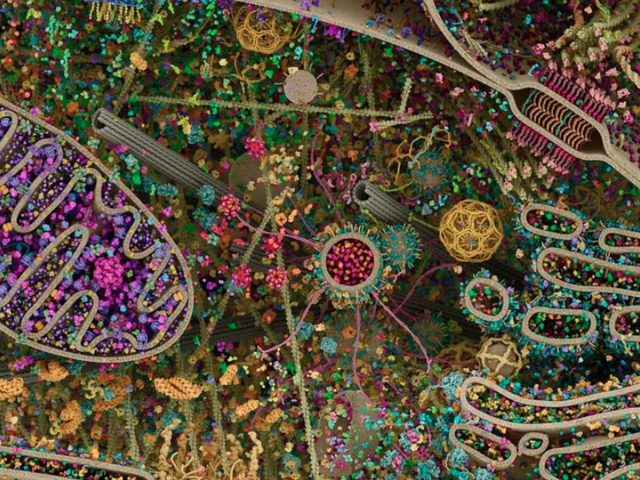
Cells and molecules operate with a degree of precision and complexity that closely mirrors the design and function of finely tuned machines—systems engineered for specific tasks, interlocking purposes, and harmonious coordination.
Precision Engineering at the Molecular Level
Molecules like proteins and enzymes act like microscopic machines with precise shapes and functions. These molecules are not randomly formed blobs; they are intricately folded chains of amino acids, each fold and bond carefully structured to allow the molecule to perform a highly specific task—whether catalyzing a chemical reaction, transporting oxygen, or repairing DNA. Even a minor alteration in the structure can render the “machine” dysfunctional, similar to how a misaligned gear can ruin an engine.
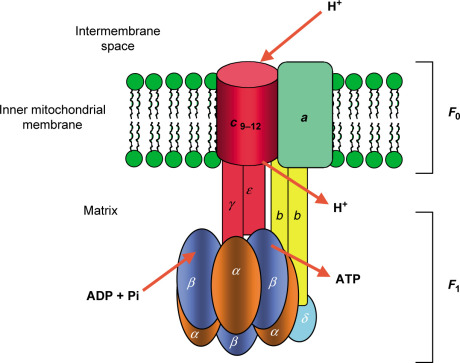
Example: ATP synthase is a molecular motor found in mitochondria. It rotates like a turbine to produce ATP, the energy currency of the cell, from ADP and phosphate—functioning with nanomechanical precision.
Even the smallest bacterial cell, which weighs less than a trillionth of a gram, is “a veritable microminiaturized factory” containing thousands of exquisitely designed pieces of intricate molecular machinery, made up altogether of 100 thousand million atoms, far more complicated than any machine built by man and absolutely without parallel in the non-living world.
Micheal Denton, Evolution: A Theory in Crisis. Biochemistry Phd, King’s College London
Nearly every feature of our own advanced technology can be found in the cell.
Interdependent Parts and Systems
Just as machines consist of multiple parts working together—gears, pistons, wires—cells rely on complex interactions between various organelles and molecular structures. Each component has a unique function but is also dependent on others for the whole system to operate. This interdependence mirrors the irreducible complexity seen in machines.
A minimal cell requires several hundred complex proteins, all functioning together simultaneously, for the cell to survive even a single second. Each of these cells contains a strand of DNA that stores vast amounts of information essential to its function and survival. If evolution were true, this DNA—along with all the necessary proteins—would have had to appear randomly, fully intact and operational, for even the simplest one-celled organism to survive it’s first second of life.
Example: The process of cellular respiration involves multiple protein complexes embedded in the mitochondrial membrane. They pass electrons and pump protons in a tightly choreographed sequence that culminates in ATP production. Disruption at any point can halt the entire process.
Information-Guided Assembly and Operation
Machines require blueprints, codes, and instructions to be assembled and operated. Similarly, the cell uses DNA as an instructional code—a form of digital information—to manufacture all its components. This genetic information dictates the precise order of amino acids in proteins and regulates when, where, and how much of a molecule should be produced.
Life is based on machines—machines made of molecules! Molecular machines haul cargo from one place in the cell to another along “highways” made of other molecules, while still others act as cables, ropes, and pulleys to hold the cell in shape. Machines turn cellular switches on and off, sometimes killing the cell or causing it to grow. Solar-powered machines capture the energy of photons and store it in chemicals. Electrical machines allow current to flow through nerves. Manufacturing machines build other molecular machines, as well as themselves. Cells swim using machines, copy themselves with machinery, ingest food with machinery. In short, highly sophisticated molecular machines control every cellular process.
Michael Behe; Darwin’s Black Box, The Biochemical Challenge to Evolution
Thus the details of life are finely calibrated, and the machinery of life enormously complex.
Analogy: Just as a 3D printer follows a digital blueprint to build an object layer by layer, ribosomes follow the instructions in MRNA to build proteins piece by piece with remarkable precision.
Feedback and Regulation Systems
Sophisticated machines often have sensors and feedback loops to maintain function under changing conditions. Likewise, cells employ regulatory mechanisms to monitor internal and external environments and adjust their operations accordingly.
Example: Cells have signaling pathways that detect changes in nutrient levels or stress and activate genes to adapt to those conditions—akin to thermostats or control panels in engineered systems.
Repair and Maintenance Mechanisms
Unlike most human machines, cells are equipped with self-repair systems. Enzymes constantly patrol DNA for damage and correct errors. Damaged proteins are marked and recycled. Malfunctioning components are flagged and removed, preserving cellular health and function.
Example: DNA polymerase not only replicates DNA but also “proofreads” it, correcting mismatches with incredible accuracy.
Even A Single Celled Organism Such as a Amoeba Is Super Complex
Jigsaws puzzles come in boxes marked with labels such as easy, moderate, or difficult. If biological organisms were marked with the same labels then a single celled organism or amoeba which is the simplest form would be labeled “Easy” right? Think again!
Evolutionist believe the chain of life started with a single cell organism that appeared randomly, spontaneously from unliving matter fully in tact. Most people don’t realize it—but a single celled amoeba actually has on average of 100-200 times more DNA than humans do.
Comparison of Genome Size
| Organism | Genome Size (Base Pairs) | Approx. Number of Genes | Notes |
|---|---|---|---|
| Human (Homo sapiens) | Approx. 3.2 billion base pairs | Approx. 20,000–25,000 | Diploid genome (2 sets of chromosomes) |
| Amoeba dubia | Approx. 670 billion base pairs | Unknown | Among the largest genomes known |
Let’s do the math: 670 Billion base pairs (1 base pair = 2 bits) = 167.5 billion bytes of information contained in the single cell of a single celled organism. That is comparable to hundreds of thousands of full-length books of coded information packed into a single microscopic cell invisible to the naked eye.
The fact that a simple, single-celled organism like an amoeba can carry far more DNA than humans challenges the assumption that biological complexity arises through a gradual, step-by-step accumulation of genetic information.
If evolution progresses by building complexity over time, one would expect simpler organisms to have simpler, smaller genomes. Yet the amoeba’s massive DNA content defies this pattern, suggesting that genome size does not directly correlate with organismal complexity. This raises serious questions about purely naturalistic explanations and points instead to a more purposeful, non-linear design behind life’s genetic architecture.
Even a single celled organism’s machinery-like precision and interdependence point to intentional design. Just as no one assumes a car engine assembles and maintains itself, the machinery within living cells invites the inference of a Designer.
Challenge Questions:
- If life is so incredibly complex at the cellular level, how could such intricate organization arise randomly and without purpose, out of nothing?
- How can you explain the fact that every one of the 8.7 million species on earth have their own DNA super codes being the result of blind natural processes?
- If even the most advanced geneticists cannot intentionally design new species using existing genetic information, how could such complexity possibly arise randomly, without any guiding intelligence at all?
Premise 5: Irreducible Complexity Exist At Every Level Of Life
ir·re·duc·i·ble
/ˌi(r)rəˈdo͞osəb(ə)l/
not able to be reduced or simplified
Irreducible complexity is a concept in biology that refers to a system composed of multiple, well-matched parts, all of which are necessary for the system to function. If even one part is removed or fails, the entire system becomes nonfunctional. This concept is one of the most cited evidences for intelligent design because even common sense tells us that incredibly complex organs such as eyes, hearts, lungs, ….could not survive while only being partially evolved. They have to have all their parts to function.
An automobile is an example of irreducible complexity. If you remove the starter, a single spark plug, fuel pump, or radiator hose it will not function. Biological and anatomical organs, cells, blood vessels etc. are even more irreducibly complex.
Irreducible complexity exists at every level of life, both cellular and anatomical. From the coordinated operation of molecular machines within a single cell to the interdependent organs of the human body, each system relies on the simultaneous function of multiple parts. Remove or alter one component, and the entire system fails, highlighting the necessity of a fully integrated design from the start.
Here are just a few of the thousands of examples of irreducible complexity that exist in natural systems:
The Human Eye
- Contains interdependent structures: cornea, lens, retina, optic nerve, and photoreceptors.
- These components must work together for vision to occur.
- While simpler eyes exist in nature, critics of Darwinism argue that partial or uncoordinated systems would offer no functional advantage.
- Vision depends on the simultaneous presence and integration of all these parts.
The Human Heart
- Composed of cardiac muscle, valves, electrical nodes, arteries, and veins.
- All components must function in precise harmony to maintain circulation.
- A non-pumping or misfiring heart is non-functional and fatal.
- Critics argue this irreducible system could not evolve gradually without compromising survival at each step.
The Human Stomach
- Depends on acid production, digestive enzymes, mucus protection, and muscular contractions.
- Acid without mucus would destroy the stomach lining; enzymes without acid would be ineffective.
- These systems must work together from the outset for digestion to occur safely and effectively.
- Such coordination defies the gradual, trial-and-error process proposed by Darwinian mechanisms.
The Circulatory System
- Includes the heart, blood vessels (arteries, veins, capillaries), blood cells, and regulatory hormones.
- Oxygen transport, nutrient delivery, and waste removal rely on all parts working in tandem.
- Without proper blood pressure, vessel integrity, or oxygen-binding capacity, the system fails.
- The interdependence of components suggests that the system could not arise through small, functionless steps.
How Could the Human Brain Function While Still Evolving?
The human brain is the most astonishing of all biological innovations—an intricate, three-pound organ capable of abstract thought, language, creativity, emotion, memory, and self-awareness. It processes more information than the world’s most advanced supercomputers, makes split-second decisions, coordinates trillions of cellular actions, and even reflects on its own existence. No other known biological system matches its complexity, adaptability, or capacity for reason and imagination.
The mathematical probability that all essential components of the human brain arose exactly when needed through unguided microevolutionary steps astronomically low or effectively zero, based on combinatorial and systems-level reasoning. Here’s a breakdown of why:
Key Components of the Brain System
For the brain to function, numerous elements must be present and working together:
- Billions of neurons arranged in specific circuits
- Synaptic connections (estimated 100 trillion)
- Neurotransmitters with precise receptor matches
- Glial cells for support and maintenance
- Blood-brain barrier
- Integration with sensory, motor, and hormonal systems
Why the Probability Is So Low
1. Sequential Dependency Problem
Each stage of brain complexity depends on numerous prior innovations:
- A half-formed brain is non-functional and offers no survival benefit.
- If neurons, synapses, or signal regulation arrive out of order, the system fails.
Analogy: Like assembling a CPU, RAM, and power supply—but nothing works unless all are correctly wired and powered at once.
2. Combinatorial Explosion
The number of possible ways to arrange even a modest number of neurons or genes is astronomically large. The combinatorial explosion or sudden occurrence (all at once) for the brain involves:
- Approximately 20,000+ genes in coordination
- Approximately 86 billion neurons
- Approximately 100 trillion synapses
The probability estimates for such coordination happening by random mutation and selection proposed by mathematician William Dembski is 10^-150 — which is the point an event is considered effectively impossible in the history of the universe.
There are over one million species of animals whose brains function as the central control system or main command center for their bodies. From coordinating movement and processing sensory input to regulating vital functions like breathing and heart rate, the brain is indispensable for survival. No animal could function—or survive—if its brain were only partially developed. Every signal, every reflex, and every coordinated action relies on a fully formed and operational brain. Without this complex organ, even the simplest behaviors, like finding food, avoiding predators, or responding to environmental changes, would be impossible. The intricate integration of neural circuits in the brain is not a luxury—it is the foundation of life itself for these species.
Evolution Contradicts What We See Or Is Possible In Nature
The theory of evolution teaches that all living things descended from a common ancestor and gradually changed over time. According to this view, complex organs and systems—such as lungs, hearts, eyes, limbs, and wings—did not appear fully formed, but slowly developed through countless mutations over millions of years. Each part would have needed to emerge incrementally, remain functional at every stage, and coordinate perfectly with many other developing systems along the way.
Estimated Timelines For Human Systems According To Evolutionary Theory
1. The Human Eye
- Origin of light-sensitive cells (proto-eyes): More than 600 million years ago (in simple organisms like flatworms)
- Complex camera-type eyes: More than 500 million years ago (e.g., in trilobites and cephalopods)
- Vertebrate eye with retina and lens: More than 450–400 million years ago
- Human eye (with full integration): 6 million to 200,000 years ago (Hominid to Homo sapiens)
Total time estimated: 400–600 million years
2. The Human Heart
- Earliest contractile tissues (simple muscle pumps): Around 600 million years ago (in primitive bilaterians)
- Chambered heart (fish): Around 500 million years ago
- Double circulation (amphibians, reptiles): Around 350–250 million years ago
- Four-chambered heart (mammals): Around 200 million years ago
- Human heart configuration: Around 6–2 million years ago
Total time estimated: Around 400–600 million years
3. The Human Brain
- First nervous systems (nerve nets in jellyfish): Around 600 million years ago
- Central nervous system (bilaterians): Around 550 million years ago
- Primitive brains (early vertebrates): Around 500 million years ago
- Large brains (early mammals): Around 200 million years ago
- Highly developed neocortex (primates): Around 50–2 million years ago
- Modern human brain: Around 200,000 years ago
Total time estimated: Around 500–600 million years
4. The Human Stomach
- Digestive cavities (cnidarians): Around 600 million years ago
- Complete digestive tracts (bilaterians): Around 550 million years ago
- Acid-producing stomachs (vertebrates): Around 450 million years ago
- Mammalian digestive regulation: Around 200 million years ago
- Human stomach function and hormonal control: Around 6 million–200,000 years ago
Total time estimated: Around 400–600 million years
5. Circulatory System
- Simple diffusion-based transport (early animals): More than 600 million years ago
- Open circulatory systems (arthropods): Around 550 million years ago
- Closed circulatory systems (annelids, early vertebrates): Around 500 million years ago
- Double circulatory systems (amphibians to mammals): Around 350–200 million years ago
- Fully human circulatory system: Around 6 million–200,000 years ago
Total time estimated: Around 500–600 million years
The human heart as seen above has 22 major parts, not counting arterial branches, capillaries, and microscopic structures. The interdependence of these parts makes the heart a classic example of irreducible complexity. If even one valve, chamber, or electrical signal malfunctions, the entire system can fail. The heart must be fully formed and synchronized to sustain life—an astonishing feat of engineering and design.
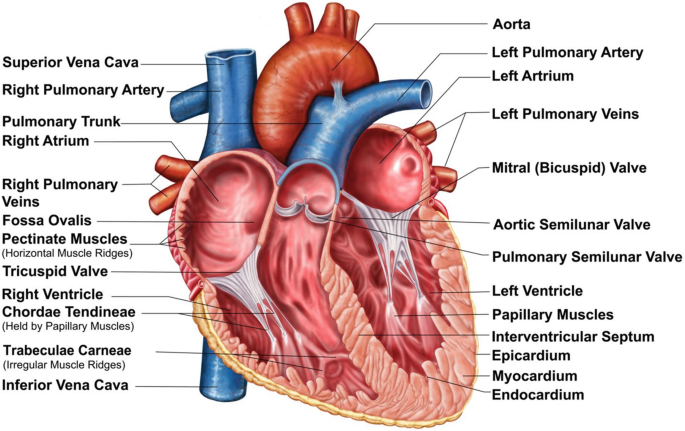
One of the more common evolutionary claims is that the heart gradually evolved from a one-chambered pump to a two-chambered heart, then to a three-chambered heart, and finally to the four-chambered heart found in all mammals. According to this view, the entire circulatory system evolved from a simple mechanism in bacteria into the complex, highly coordinated system seen in humans—driven by billions of micro-mutations naturally selected over millions of years.
However, this narrative faces a significant challenge: no heart in any species can function with only partially developed components. A heart lacking fully formed valves, ventricles, aorta, or septa would be incapable of circulating blood effectively, leading inevitably to death. Moreover, as the heart supposedly evolved step by step, the blood itself and the entire circulatory system would have needed simultaneous, coordinated advancements to accommodate a more complex organ.
What About Interdependent Systems?
Evolutionary theory does not provide a convincing explanation for how species could survive without fully functional organs—organs that, according to evolutionary models, took millions of years to develop.
This problem becomes even more challenging when considering interdependent systems—organs or structures that depend on one another to perform an essential function. For example, the heart and lungs work together to supply the body with oxygen.
This raises an important question: How could organisms survive while two or more essential, interdependent systems were still evolving into fully functional structures?
Which evolved first—the stomach or the intestine?
- The stomach digests food; the intestine absorbs nutrients.
- Without the intestine, nutrients from digestion are lost.
- Without the stomach, the intestine has nothing to absorb.
- Both are needed together to provide usable energy and sustain life.
Which evolved first—the blood or the heart?
- The heart pumps blood, but without blood, there’s nothing to pump.
- Blood is only useful if it can circulate, requiring a functioning heart.
- Both must be present and operational from the beginning for oxygen and nutrients to reach tissues.
Which evolved first—the lungs or the circulatory system?
- Lungs supply oxygen, but only if blood transports it.
- Blood requires hemoglobin and a vascular network to deliver oxygen to cells.
- Lungs without circulation = no oxygen delivery; circulation without lungs = no oxygen intake.
Which evolved first—nerves, muscles or tendons?
- Muscles contract, but need nerves to receive signals.
- Nerves serve no purpose without effectors like muscles.
- One cannot function effectively without the other.
Which evolved first—the kidney or the bladder?
- Kidneys filter blood and produce urine.
- The bladder stores and disposes of urine.
- If one evolved without the other, waste would either accumulate or be lost immediately, both of which are life-threatening.
Which evolved first—the male or the female reproductive system?
- Sexual reproduction requires fully developed, complementary systems.
- A partial male or female system is biologically useless without its counterpart.
- Both must arise together, fully functional, to achieve reproduction.
Which evolved first—the eye or the brain’s visual processing centers?
- The eye captures light, but it’s meaningless without the brain to interpret signals.
- The brain’s visual cortex needs retinal input to function.
- Vision requires both hardware and software, integrated from the start.
Which evolved first—enzymes for DNA replication or DNA itself?
- DNA needs enzymes to replicate, but the enzymes are encoded in the DNA.
- This creates a “chicken and egg” scenario—both must exist together for life to persist.
The human body contains dozens of remarkably complex, interdependent systems and subsystems. Each consists of multiple parts that must work together “all at once” to perform essential functions and sustain life. The extraordinary complexity and interdependence of these systems point directly to the intelligent Designer and Creator revealed in Genesis chapter 1.
Challenge Question: If every major human system required countless coordinated mutations over millions of years, how did all of these developing parts remain functional and survive at every incomplete stage along the way?
Premise 6: Darwin Knew Irreducible Complexity Posed Problems
Charles Darwin was well aware of the potential vulnerability in his theory of natural selection. He understood that for evolution to be plausible, complex biological structures—like the eye, heart, or wings—must have arisen through small, incremental changes over long periods of time, each step conferring some survival benefit. This is the backbone of Darwinian gradualism.
“If it could be demonstrated that any complex organ existed which could not have been formed by numerous, successive, slight modifications, then my theory would absolutely break down.
Charles Darwin; The Origin of Species , Chapter on Organs of Extreme Perfection and Complication
To suppose that the eye with all its inimitable contrivances for adjusting the focus to different distances, for admitting different amounts of light, and for the correction of spherical and chromatic aberration, could have been formed by natural selection, seems, I freely confess, absurd in the highest degree.”
“The Origin of Species” Chapter on Organs Of Extreme Perfection and Complication
” The eye to this day gives me a cold shudder”
Charles Darwin himself acknowledged a serious challenge to his theory. If an organ could be shown to require all its parts working together from the beginning, his explanation of evolution through natural selection would “absolutely break down.”
The problem is straightforward: Natural selection favors changes that provide a survival or reproductive advantage. But if an organ cannot function until all its essential parts are in place, how could it develop one small step at a time? Parts that serve no useful purpose on their own would offer no advantage for natural selection to preserve.
Darwin recognized that demonstrating such a system would present a major challenge to his theory.
Many Contemporary Scientist Agree With Darwin’s Negative Assessment
Michael Behe – Biochemist and Author of Darwin’s Black Box
- “Irreducible complexity is a problem for Darwinian evolution. Whenever we see these complex functional systems we realise that they have to be designed.”
- “In the abstract, it might be tempting to imagine that irreducible complexity simply requires multiple simultaneous mutations—that evolution might be far chancier than we thought, but still possible. Such an appeal to brute luck can never be refuted… Luck is metaphysical speculation; scientific explanations invoke causes.”
Michael Denton – Molecular Biologist
- “The complexity of the simplest known type of cell is so great that it is impossible to accept that such an object could have been thrown together suddenly by some kind of freakish, vastly improbable event. Such an occurrence would be indistinguishable from a miracle.”
Günter Bechly – Evolutionary Biologist
- “Irreducible complexity is one of the greatest challenges to evolution. Multiple inter-dependent parts that must originate simultaneously.”
Jonathan Wells – Molecular Biologist, Author
- “The concept of irreducible complexity poses a fatal challenge to the Theory of Evolution.”
Stephen Meyer – Philosopher of Science, Author
- “Irreducible complexity is a hallmark of intelligent design.”
David Berlinski – Philosopher of Science, Author
- “The argument from irreducible complexity is a powerful challenge to the theory of evolution.”
William Dembski – Mathematician, Philosopher
- “Irreducible complexity is a serious problem for the theory of evolution.”
Richard Sternberg – Evolutionary Biologist
- “The concept of irreducible complexity challenges the gradualistic framework of evolutionary theory.”
This principle of irreducible complexity presents a profound challenge to the theory of evolution. Consider the simplest known cell: it requires 20 to 30 interdependent components—including DNA, ribosomes, enzymes, and a cell membrane—all working together just to sustain life. Remove one, and the entire system collapses. Life cannot function with partially formed or missing components.
Similarly, among the roughly 70,000 known vertebrate species, every organism relies on a complex and fully functional nervous system. Brains and neural networks coordinate movement, sensory processing, and vital bodily functions; without them, the organism cannot survive. Such systems must be complete and integrated from the outset, because even the smallest gap or defect would render the organism nonviable.
Taken together, these examples illustrate that irreducible complexity cannot plausibly arise through slow, step-by-step mutations. Instead, they point toward the necessity of fully formed, functional systems from the very beginning, suggesting the hand of purposeful design in the origin of life and complex biological structures.
Challenge Question : If evolution occurs by micro-mutations (small infinitesimal changes) occurring individually and sporadically over hundreds of thousands of years. How could complex organs like hearts, lungs, and eyes be able to function only partially formed until the rest of the needed micro-mutations arrived ?
ThinkCube Truth Veracity Grid
- Have I considered the facts carefully and with an an open mind?
- Is my conclusion the result of careful examination of the facts, or is it a conclusion made in spite of the facts?
- Is my conclusion the one that makes the most sense of the evidence?