Premise 1: God Did Not Create Evil But He Created The Possibility Of Evil
The question of evil remains one of the most difficult and persistent objections to belief in God. How can a good, all-powerful Creator allow evil to exist in His world? For many skeptics, this is the central stumbling block in accepting the idea of a loving and sovereign God.
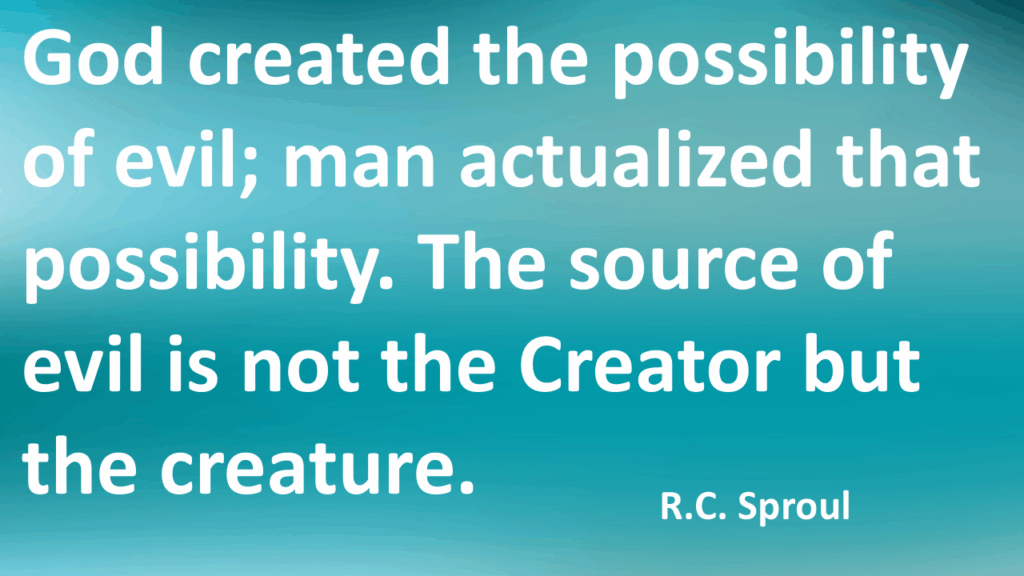
One of the most important insights into this dilemma comes from understanding the difference between creating evil and permitting its possibility. As theologian R.C. Sproul wisely puts it, God created the possibility of evil, but it was man who actualized it. That distinction is not just philosophical nuance—it’s central to a proper understanding of God’s nature, the gift of free will, and the moral responsibility of His creatures.
God Created Everything Good
The biblical record begins with a powerful affirmation: “God saw all that He had made, and it was very good.” (Genesis 1:31) There was no evil, no suffering, and no disorder in God’s original creation. Everything—light, life, nature, and humanity—reflected God’s character: holy, just, and good. Scripture makes clear that God is not the author of evil:
“God cannot be tempted with evil, and He Himself tempts no one.”
— James 1:13
“God is light, and in Him is no darkness at all.”
— 1 John 1:5
This leads us to an important conclusion: if evil now exists, it must have entered the picture through some other means—not as a created substance or force, but as a corruption of the good.
Free Will Allows For The Possibility of Love and Evil
Love, trust, and obedience have no meaning if they are forced. If God had created beings that were pre-programmed to do only what He commanded—without the freedom to choose otherwise—they would not be moral beings, but mere machines. Instead, God created angels and humans with real moral freedom—the capacity to choose between obedience and rebellion, between truth and deception, between worship and self-exaltation.
This kind of freedom necessarily carried risk: the possibility of evil. But that risk is not a flaw in God’s design. Rather, it’s what makes genuine love and moral growth possible. You can’t have meaningful relationship without the freedom to reject it.
As theologian Alvin Plantinga explains in his Free Will Defense:
“A world containing creatures who are significantly free (and freely perform more good than evil actions) is more valuable, all else being equal, than a world containing no free creatures at all.”
— God, Freedom, and Evil (1974)
In other words, God created a world in which moral freedom could lead to moral failure, but also to moral greatness. The tragic reality is that some of God’s creatures—Lucifer and his fallen angels, and later Adam and Eve—chose to rebel, and thus evil entered into creation.
Evil Is a Corruption, Not a Creation
One of the great insights from Christian thought, especially from Augustine, is that evil is not a substance or thing that God created, but rather a privation—an absence or twisting of the good. Just as darkness is the absence of light, and rust is the decay of metal, evil is what happens when something good is misused, distorted, or rejected.
This understanding aligns with Sproul’s point: God created all things good, but gave moral beings the freedom to reject that goodness. When they did, evil came into existence—not as a new “thing,” but as the loss or rebellion against what should be.
Responsibility Lies with the Creature, Not the Creator
R.C. Sproul was careful to emphasize that while God is sovereign over all things, He is not morally responsible for evil. The blame lies with the creature who turned away from the Creator:
“God is not the author of evil. He is not the cause of sin. He permits it, but it is we who sin.”
— R.C. Sproul, Chosen by God
This is crucial. In Christian theology, God permits evil for reasons that serve His greater purposes, but He does not commit or approve of it. He remains holy, just, and good in all His ways. His sovereignty includes even the actions of sinful creatures, but His moral purity remains untainted.
This misuse of freedom resulted in sin, suffering, death, and the brokenness we now see in the world. But even in allowing free will, God remains sovereign and just. He did not force evil, nor is He morally responsible for it. He permits it—for a time—for purposes we may not fully understand, but His character remains good and His ultimate plan involves the redemption and restoration of all things.
God did not create evil—but He did create beings who could freely choose to love or reject Him. In doing so, He allowed for the possibility of evil so that the beauty of real love, real obedience, and real redemption could exist. The fault for evil lies not with the Creator, but with the creature who chose to rebel.
In short, God did not create evil, but in creating creatures with moral freedom, He created the possibility of evil—because only in that kind of world can real love, real trust, and real transformation occur.
Challenge Question: If God did not create evil but allowed for moral freedom, is it possible that what we see as a flaw in creation is actually the cost of having real choice, love, and responsibility? And if we blame God for evil, are we also willing to credit Him for the good that comes from freedom—like love, justice, and courage?
Premise 2: God Could Have Created A Perfectly Moral Humanity But At Tremendous Cost
It is often asked: If God is all-powerful and all-good, why didn’t He just create human beings who never sin? Wouldn’t that have saved the world from evil, pain, and suffering?
At first glance, the idea of a perfectly moral humanity—one that never chooses evil—sounds ideal. But upon closer examination, we begin to see that such a world would come at a tremendous cost: the loss of real freedom, love, and moral responsibility.
God could have created beings who always obeyed, never lied, never harmed, and never strayed from what is right. But if those beings were programmed to behave that way—like machines running a script—they would not be moral beings in any meaningful sense. Their goodness would be automatic, not chosen. Their love would be robotic, not real. Their obedience would be compulsory, not voluntary.
For Love to Mean Anything, It Must Be Freely Given—Not Pre-Installed
Love, by its very nature, involves choice. It cannot be genuine if it is programmed, coerced, or automatic. If someone is forced to say “I love you,” we instinctively know it’s meaningless. True love requires the freedom to choose not to love, which is what makes the choice to love so powerful and beautiful. It flows from the will, not just the wiring.
God created things which had free will. That means creatures which can go wrong or right. If a thing is free to be good it’s also free to be bad. And free will is what has made evil possible. Why, then, did God give them free will? Because free will, though it makes evil possible, is also the only thing that makes possible any love or goodness or joy worth having.
C.S. Lewis—Mere Christianity
If God had created human beings as moral robots—capable only of obeying, praising, and doing good—we might never have experienced betrayal or evil. But we also would never know the joy of real relationship, the triumph of loyalty through hardship, or the beauty of someone choosing to love freely. The possibility of rejection is the cost of authentic relationship. And God, in His wisdom, deemed that cost worth bearing for the sake of true communion with His creation.
Imagine a man builds a robot that is programmed to say “I love you” every morning, bring him coffee, and smile every time he walks into the room. The robot never disobeys, never complains, and always says exactly what he wants to hear.
Now imagine he meets a real person—someone with their own thoughts, emotions, and freedom to choose. This person may disagree with him, challenge him, or even walk away. But when that person says “I love you,” it means infinitely more—because they didn’t have to say it. They could have chosen otherwise.
That’s the key: The value of love is tied to the freedom to reject it. The robot can’t break his heart—but it also can’t love him. Only the free can truly love, and with that freedom comes the risk of rejection, misunderstanding, and even betrayal.
But without that risk, love becomes an illusion—just code running on a loop, not the bond of two willing hearts.
This is why moral freedom is not a design flaw—it’s a reflection of divine love. God didn’t want puppets or pets; He wanted people—beings who could know Him, choose Him, and grow in love, trust, and obedience. The freedom to love necessarily includes the freedom not to. Without that freedom, love would be hollow—a reflex, not a relationship.
Love is not the only virtue that finds its meaning in human freedom. Courage, loyalty, perseverance, and moral conviction—all of these are birthed in the crucible of choice. To create morally perfect beings who could only ever choose rightly would not be to elevate humanity, but to strip it of the very soul that gives virtue its value. It would eliminate the depth, risk, and beauty of true love, the resolve of authentic courage, and the strength of character forged through struggle. A world without the freedom to choose wrongly is also a world without the freedom to choose nobly. And that cost would be far greater than the risk of rebellion—it would be the loss of everything that makes us truly human.
Challenge Question: If love is only meaningful when it’s freely given, would a world without the ability to reject God or choose wrongly still allow for real love—or would it simply produce programmed obedience? Can we truly call something “love” if it’s never chosen in the face of other possibilities?
Premise 4: The Potential For Evil Is What Makes Virtue Possible
We often long for a world without evil, and understandably so. But what we sometimes overlook is that many of the things we value most—virtue, heroism, integrity, compassion, and self-sacrifice—only exist because evil and hardship are possible.
Virtue is not formed in a vacuum. You cannot be courageous if there is nothing to fear. You cannot show mercy unless someone has wronged you. You cannot forgive unless you’ve been hurt. These virtues have meaning precisely because we live in a world where their opposites—cowardice, vengeance, and resentment—are also possible choices.
If there were no danger, no injustice, no temptation, no sorrow, then bravery, justice, faithfulness, and endurance would be meaningless concepts. They would never need to be exercised. It is the presence of moral risk that allows for moral greatness. A person who chooses integrity when lying would be easier, or chooses compassion when cruelty would go unnoticed, is demonstrating something profoundly valuable—something that could not exist in a world where only goodness were possible.
How the Possibility of Evil Makes Virtue Meaningful
| Moral Risk or Possibility of Evil | Potential Virtue | Why the Virtue Is Meaningful |
|---|---|---|
| The possibility of fear | Courage | Courage only exists when someone chooses to act despite fear or danger. |
| The possibility of revenge | Forgiveness | Forgiveness is only possible when someone has been wronged and could retaliate. |
| The temptation to lie | Honesty | Truthfulness has value when lying would be easier or more beneficial. |
| The inclination toward selfishness | Compassion | Compassion shines when we put others first, despite natural self-interest. |
| The option to betray or abandon | Loyalty | Loyalty is proven only when someone has the chance to walk away—but doesn’t. |
| The experience of suffering and loss | Perseverance – Hope | Perseverance has meaning only when one endures hardship instead of giving up. |
| The presence of temptation or sin | Moral integrity | Moral character is revealed when we choose what is right in the face of wrong. |
This chart shows that virtue is not the absence of evil, but the victory over it. Without the possibility of wrong, doing what is right carries no weight. The presence of evil makes possible not only failure—but also greatness of character.
The potential for evil doesn’t just explain the existence of sin—it explains the very conditions in which goodness becomes real, visible, and meaningful. A world without the possibility of evil might be safer, but it would also be empty of the noblest expressions of the human soul.
Human Freedom and Virtue in Action
The events of September 11, 2001, remain one of the darkest chapters in modern history. The terrorist attacks brought unimaginable evil—thousands of innocent lives lost, families shattered, and a nation plunged into grief. It was a moment that exposed the horrifying depths of human moral failure and the destructive power of choice when it is used for evil.
And yet, in the very same moment, we saw something else emerge—something awe-inspiring and deeply human: courage, compassion, self-sacrifice, and moral heroism. Firefighters, police officers, medical teams, and ordinary citizens ran toward the danger while others ran away. Many of them knew they might not come out alive—and yet they went in anyway.
- Firefighters climbed staircases in burning towers, fully aware that collapse was possible.
- Strangers carried the injured down dozens of flights of stairs.
- Flight 93 passengers made a collective decision to sacrifice themselves in order to stop further destruction.
- Medical workers and chaplains stayed behind to comfort the wounded and dying.
412 emergency responders died while attempting to rescue and protect others. Additionally, thousands of civilians and volunteers helped evacuate buildings, assist the injured, and provide aid—many of whom also suffered long-term health consequences or died later due to 9/11-related illnesses such as cancer and respiratory disease caused by toxic dust and debris.
9/11 Heroes Chart
| Name(s) | Location | Heroic Action |
|---|---|---|
| Rick Rescorla | World Trade Center (South Tower) | Evacuated over 2,700 Morgan Stanley employees before dying in the collapse. |
| Welles Crowther | World Trade Center | Saved at least 12 people while wearing a red bandana; died during ongoing rescue efforts. |
| Benjamin Clark | World Trade Center | Former Marine and corporate chef; saved hundreds before returning to help more and losing his life. |
| Flight 93 Passengers (Todd Beamer, Jeremy Glick, Mark Bingham, Tom Burnett) | Flight 93 (Shanksville, PA) | Fought back against hijackers, sacrificing themselves to stop the plane from hitting a major target. |
| Leonard W. Hatton Jr. | World Trade Center | FBI agent who entered the towers to help evacuate people; died when the tower collapsed. |
| Jason Thomas & Dave Karnes | World Trade Center rubble | Marine veterans who volunteered, found and rescued two trapped police officers buried in the rubble. |
| Chief Raymond Downey | World Trade Center | FDNY Rescue Chief; coordinated rescue operations before dying in the collapse of the South Tower. |
| Pentagon First Responders (Firefighters, medics, soldiers) | Pentagon | Risked their lives pulling survivors from wreckage and stabilizing the scene amid fire and structural collapse. |
| Al Suarez & Fireboat John J. Harvey Crew | New York Harbor / Hudson River | Operated historic fireboat to ferry injured people and supplies across the river when other means were shut down. |
| Port Authority Officers Dominick Pezzulo & Will Jimeno | World Trade Center | Chose to stay and help a trapped colleague; one died, the other was rescued hours later from beneath the rubble. |
These acts were not accidents, nor were they pre-programmed responses. They were the result of freely chosen, morally significant decisions, made in the face of fear, chaos, and overwhelming risk. These were not people running out of the buildings—they were running into them, for the sake of strangers they had never met. They could have chosen not to. But they did.
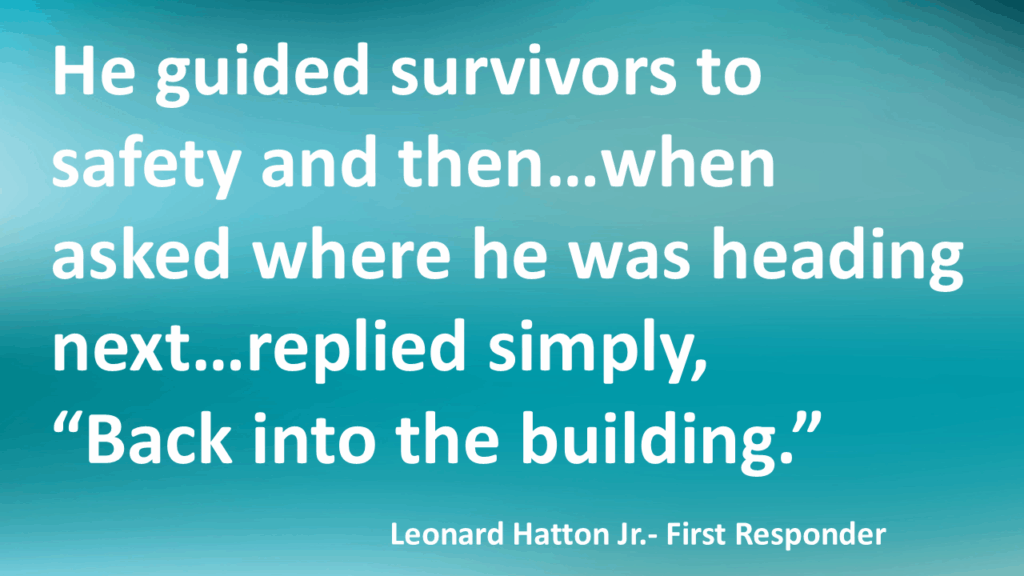
If these heroes had been forced or hardwired to act bravely, their actions would lose their moral weight. But they were not. They were free human beings—able to choose self-preservation or self-sacrifice. And in choosing the latter, they revealed something deeply good, even in the midst of horror.
This is why the potential for evil is not only what makes moral failure possible—but also what makes moral greatness possible. Without the reality of danger, injustice, and suffering, there would be no opportunity for courage, mercy, endurance, or love to manifest in any meaningful way. It is precisely because evil exists that virtue can rise to meet it.
Challenge Question: If acts of extraordinary courage—like first responders running into danger on 9/11—are rightly seen as morally heroic, doesn’t that suggest those actions were freely chosen and deeply meaningful? And if that’s true, could it be that the very possibility of evil is what makes moral greatness, love, and sacrifice truly possible? In a world without that risk, would such virtues even exist—or matter?
Premise 4: If A Creature Is Free To Be Good It Must Also Be Free To Be Bad
God, as an all-powerful Creator, certainly has the ability to make beings that obey Him automatically—robots, so to speak. He could have designed a world in which creatures never rebel, never sin, and never go astray. But in doing so, He would not have created free moral beings. He would have created pre-programmed agents who behave correctly because they must—not because they choose to.
This is why the existence of true moral freedom requires the possibility of moral failure. If God causes or determines every choice a creature makes so that it is always right, then those choices are no longer made freely—they are simply part of a divine script. The love, trust, and obedience those creatures express would be no more meaningful than the movements of a wind-up toy.
“To create creatures capable of moral good, therefore, He must create creatures capable of moral evil.”
The very nature of freedom—particularly moral freedom—means having the ability to choose between alternatives. If there is only one possible outcome, then you are not truly free; you are merely following a script. So when we say that God gave humanity the freedom to choose good, that necessarily implies He gave humanity the freedom to choose evil as well. You can’t logically affirm one without allowing for the other.
You cannot claim a person has the freedom to love unless they are also free not to love. You cannot praise someone for choosing honesty if lying was never an option. The moment you remove the possibility of a wrong choice, you remove the possibility of a meaningful right choice. In other words, to be capable of moral good, a person must also be capable of moral evil—or else we’re not talking about moral beings at all, but about machines doing only what they were programmed to do.
To insist that God should have created beings who are truly free yet incapable of choosing wrong is to ask for a logical contradiction—like asking God to create square circles or married bachelors. It’s not that God won’t do that—it’s that it’s nonsensical to begin with.
Freedom without the possibility of failure is not freedom—it’s compulsion wearing a mask.
We often want the benefits of freedom—love, moral growth, personal responsibility—without the risks that come with it—pain, betrayal, injustice. But we can’t have it both ways. A world where creatures are free to choose good must also be a world where they are free to choose evil. Otherwise, no choice is actually being made. A meaningful “yes” must be able to say “no.”
Mankind’s Freedom to Do Wrong Does Not Count Against God’s Goodness or Omnipotence
God cannot both give moral creatures true freedom and, at the same time, prevent them from ever choosing evil—for that would be to cancel the very freedom He gave. It would be like designing a car to drive in any direction but installing a system that forces it to only go straight. The freedom would be an illusion. You can’t grant real choice while simultaneously overriding it.
So when some of God’s creatures—humans and even angels—chose wrongly, evil entered the world. But that failure was not because God lacked power (omnipotence), nor because He was morally indifferent (lacking goodness). It happened because God allowed for real freedom, and some creatures abused that freedom.
If God had prevented all evil by removing the possibility of disobedience or wrongdoing, then He would have also removed the possibility of love, trust, virtue, and meaningful relationship. The price of a world without moral evil would be a world without moral good—a world of automatons, not persons.
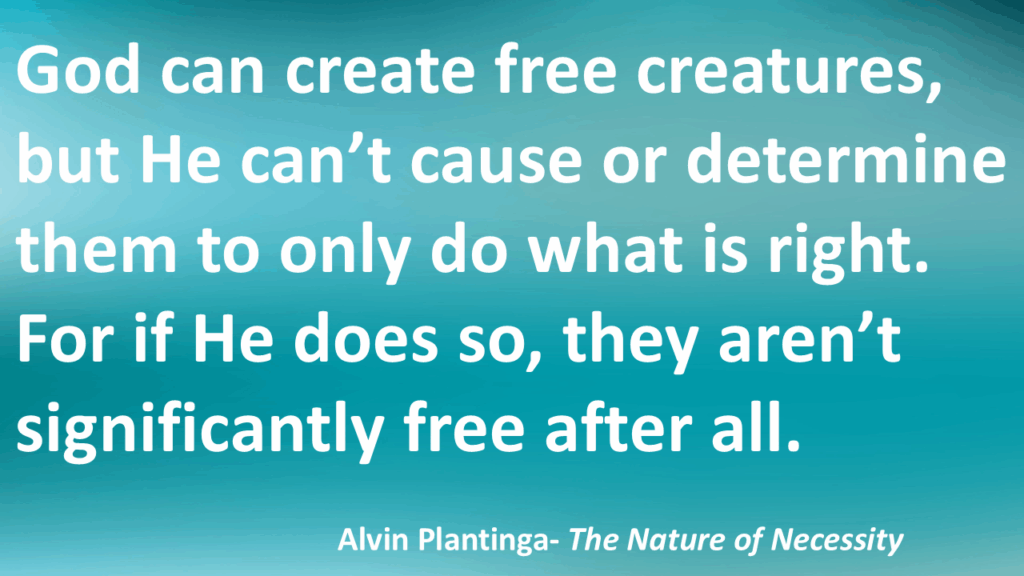
So the presence of moral evil in the world does not disprove God’s existence, power, or goodness. Instead, it affirms that He created a world of beings with significant moral freedom—and that freedom is both the source of our greatest failures and our greatest potential for moral greatness.
What makes evil tragic is not that God caused it, but that free creatures chose it—and what makes goodness meaningful is that those same creatures can still choose otherwise. That’s not a flaw in God’s design; it’s a testament to His desire for real love, real virtue, and real relationship with His creation.
Challenge Question: Can we truly value human freedom and responsibility while demanding a universe in which wrong choices are impossible?
ThinkCube Truth Veracity Grid
- Have I considered the facts carefully and with an open mind?
- Is my conclusion the result of a careful examination of the facts, or is it a conclusion made in spite of the facts?
- Is my conclusion the one that makes the most sense of the evidence?