
Premise 1: Bible Text Are Too Counterproductive To Be Legend
One of the ways scholars assess the honesty and credibility of ancient authors is through what’s known as the “Principle of Embarrassment.” This principle holds that if an author includes details that are personally humiliating, culturally awkward, or damaging to their cause, those details are likely to be authentic—because people don’t usually invent stories that discredit themselves. In most cases, authors are inclined to omit or soften anything that makes them or their movement look weak or flawed.
So how does the New Testament hold up under this test? Remarkably well.
All four Gospel writers include the deeply uncomfortable account of Peter—Jesus’s most prominent disciple—denying Him three times out of fear, right after Jesus was arrested. They also include numerous moments of failure and confusion among the disciples: arguing over who is the greatest, failing to understand Jesus’s teachings, falling asleep during His most agonizing hour in Gethsemane, and deserting Him at the cross. Even Thomas’s doubt, the disciples’ fear after the resurrection, and Paul’s past as a persecutor of Christians are laid bare in the text.
| Examples of self proclaimed failures of Disciples | Associated Scriptures |
| Multiple criticisms of the disciples weak faith by Jesus in all 4 Gospels | “Jesus said, You faithless and corrupt people! How long must I be with you? How long must I put up with you?” (Matthew 17:17) (Mark 9:19) |
| Abandonment of Jesus | “But this is all happening to fulfill the words of the prophets as recorded in the Scriptures.” At that point, all the disciples deserted him and fled.” (Matthew 26:56) (Mark 14:50) (Luke 9:41) |
| Slow to understand | “Aware of their discussion, Jesus asked them: “Why are you talking about having no bread? Do you still not see or understand? Are your hearts hardened?” (Mark 8:17 ) (Matthew 16:9) |
| Pride and Egotism | “Then his disciples began arguing about which of them was the greatest—Jesus said “Whoever is least among you is the greatest” (Luke 9:46-48) (Matthew 20:20-22) (Mark 9:33-34) |
| Lack of Commitment | “Then he returned to his disciples and found them sleeping. “Couldn’t you men keep watch with me for one hour?” (Matthew 26:40)“ |
These kinds of unflattering details are not what one would expect in a fabricated legend or religious propaganda. Instead, they suggest that the Gospel writers were more concerned with truth than self-image—even when the truth was difficult to admit. In this way, the New Testament strongly affirms its own credibility by meeting the Principle of Embarrassment head-on.
When you actually get into the New Testament and see the Apostles, on every page the Apostles look like jerks. They look like fools. They look slow of heart. They look like cowards. They look terrible. Why, if you were a leader of the early church, would you make up any of those accounts, any of those stories, any of those features?
Timothy Keller—Author “The Reason for God: Belief In An Age of Skepticism”
You wouldn’t!
10 Indicators of New Testament Authenticity Based on the Authors’ Actions and Writings:
- They included embarrassing details about themselves
– The writers openly admitted their own weaknesses, doubts, and failures, such as falling asleep while Jesus prayed, abandoning Him, and even denying Him. - They recorded difficult sayings of Jesus without alteration
– Teachings that were hard to understand or follow—like “love your enemies” or “eat my flesh”—were not softened or avoided, showing honesty over convenience. - They carefully distinguished Jesus’s words from their own
– The Gospel writers consistently made clear when Jesus was speaking versus when they were narrating, showing careful attention to accuracy. - They included details that could be easily verified or falsified
– By naming real people, places, and events, they invited scrutiny and cross-examination from those alive at the time. - They admitted their lack of understanding and faith
– The disciples often failed to grasp Jesus’s mission, argued among themselves, and misunderstood His teachings—things unlikely to be fabricated by proud followers. - They portrayed themselves as cowardly and slow to believe
– Their fear during Jesus’s arrest and their initial disbelief in His resurrection highlight the raw honesty of the accounts. - They preserved teachings that offended or confused their culture
– Statements on topics like humility, sexual ethics, divorce, and sacrificial love went against both Jewish and Roman norms, yet they were faithfully recorded. - They suffered persecution and death for their testimony
– The authors gave up careers, family ties, and safety, and many faced martyrdom—all for proclaiming what they saw and knew to be true. - They appealed to the knowledge of their audience
– Phrases like “as you yourselves know” show that they were not inventing distant myths, but referencing public events within living memory. - They showed remarkable unity on core truths despite diverse backgrounds
– Whether fishermen, tax collectors, or scholars, they all consistently affirmed Jesus’s identity, miracles, death, and resurrection—suggesting shared truth, not collusion.
A significant portion of historical writing has come from individuals who were far removed—both in time and relationship—from the events and people they described. By contrast, the New Testament authors were not distant observers but active participants in the very events they recorded. Their accounts are filled with firsthand experiences, humbling confessions, and socially uncomfortable details—the kinds of things that fictional authors would be unlikely to invent. These features point to honest reporting, not myth-making, and lend strong credibility to the New Testament as a trustworthy historical record.
If the Bible Were Fiction It Wouldn’t Spotlight The Failures It’s Greatest Heroes
Legends and fictional accounts typically omit flaws or minimize failures of their central figures, portraying heroes as idealized, morally perfect, and virtually invincible. Such stories are designed to inspire, protect reputations, or elevate the status of leaders and founders.
In contrast, the Bible portrays its heroes of the faith—figures like Peter, David, Moses, and even the apostles—as deeply human, often stumbling in significant and public ways. They are shown doubting, disobeying, denying God, and at times failing in their greatest moments of testing. These unflattering and vulnerable details run directly counter to the aims of mythmaking or religious propaganda. Instead, they point to a commitment to historical authenticity—where truth is valued above image, and the message is grounded in reality rather than idealized fiction.
| Name | Incident | Passage |
| Abraham Patriarch Of Christianity | Cowardly told ruler his wife was his sister to avoid being killed | Genesis 20:1-16 |
| Noah Man Chosen To Perpetuate Humanity | Public Intoxication in front of his sons | Genesis 9:18-23 |
| Moses Prophet Who Free Israelites. Author Of 5 Books Of OT | Pridefully disobeyed God and was not allowed to go into promised land | Numbers 20:1-12 |
| Sampson Judge In Israel | Disobedience to parents and God which led to his defeat and death. | Judges 14:1-3 |
| Jacob Father Of 12 Tribes of Israel | Deceived his father and stole brother’s birthright. His name in Hebrew literally means “the deceiver” | Genesis 27:5-35 |
| Jonah Prophet and Preacher | Lack of compassion and prioritizing his own feelings over God’s will | Jonah 1:1-3 |
| David King of Israel and Author of Psalms | Disobedience to God. Adultery and Murder | 2 Samuel 11:1-26 |
| Solomon King of Israel and Author of Proverbs and Ecclesiastes | Polygamy and Idolatry | 1 Kings 11:1-12 |
| Peter Apostle and Author of 2 New Testament Books | Gross Cowardice denying Jesus 3 times. | Matthew 26:69-74 |
If your goal were to create a compelling story designed to inspire people to abandon their comfort, social standing, and even risk their lives, would it make sense to portray the movement’s greatest heroes as deeply flawed and frequently failing? And yet, the Bible does exactly that—recounting in detail how central figures like Peter, David, and even Moses made serious mistakes, faced public rebuke, and were sometimes severely corrected by God. Such honesty reflects not fiction or propaganda, but authentic, unembellished history.
Legendary Heroes vs. Biblical Figures
| Characteristics in Legends/Myths | Contrasting Biblical Characteristics |
|---|---|
| Idealized and flawless heroes | Flawed, sinful, and morally complex individuals |
| Born of divine or royal lineage with inherent greatness | Often born into poverty, obscurity, or unlikely circumstances |
| Perform superhuman feats to gain glory | Serve God through obedience, weakness, and humility |
| Rarely questioned or corrected | Frequently rebuked, corrected, or disciplined by God |
| Glorified in every achievement | Fail publicly—e.g., denial (Peter), doubt (Thomas), disobedience (Jonah) |
| Stories promote national pride and power | Stories often show national failure, exile, and divine judgment |
| Never show emotional weakness | Express fear, sorrow, depression, and uncertainty (e.g., Jeremiah, Elijah) |
| Win through personal strength or magic | Rely on God’s power, not their own (e.g., David vs. Goliath) |
| Deaths are glorious or triumphant | Many die humiliated, persecuted, or martyred for truth |
| Worshipped or venerated as demigods | Point away from themselves to the glory of God |
Well, if I’m a church leader living 70-80 years after Jesus and I am concocting these stories, would I put in there that Jesus, in the garden of Gethsemane, asked the Father if he could get out of it?
Timothy Keller—The Reason for God: Belief in the Age of Skepticism”
Would I put in there that Jesus Christ, in the garden of Gethsemane, says to the Father, “Can I get out of this salvation thing?” “Can this cup pass from me?”
Secondly, would I put Jesus on the cross saying, “You’ve forsaken me” to God?
The Bible portrays its heroes of the faith and it’s greatest leaders—as deeply human, often stumbling in significant and public ways. They are shown doubting, disobeying, denying God, and at times failing in their greatest moments of testing. These unflattering and vulnerable details run directly counter to the aims of mythmaking or religious propaganda. Instead, they point to a commitment to historical authenticity—where truth is valued above image, and the message is grounded in reality rather than idealized fiction.
Challenge Question: Why would the biblical authors include embarrassing or damaging details about their greatest leaders unless they were committed to telling the truth—and how does this strengthen the case for the Bible’s authenticity?
Premise 2: The Bible Has Unexpected Role Models
The Bible is filled with individuals who, by human standards, would seem unqualified, unremarkable, or even disqualified from playing significant roles in God’s story. Yet time and again, God chooses the unexpected—shepherds, fishermen, outcasts, former enemies, and deeply flawed people—to accomplish His purposes. This stands in sharp contrast to myth or legend, where heroes are typically idealized and their faults glossed over or ignored. In Scripture, however, many key figures are portrayed with striking honesty—some having experienced moral failure, personal ruin, or shattered lives before encountering God’s grace and being transformed into instrumental examples of His redemptive work.
Unlikely Heroes in the Bible: Evidence Against Mythmaking
| Person | Background / Flaw | Role in God’s Story |
|---|---|---|
| Rahab | Canaanite prostitute | Protected Israelite spies; became part of Jesus’ genealogy (Joshua 2; Matt. 1:5) |
| Tamar | Pretended to be a prostitute to secure justice | Mother in the Messianic line through Judah (Genesis 38) |
| Ruth | Moabite widow (foreigner, outsider) | Ancestor of King David and Jesus (Ruth 4; Matt. 1:5) |
| Mary Magdalene | Formerly possessed by 7 demons | First witness of the resurrection (Luke 8:2; John 20:1–18) |
| Jacob | Deceiver and manipulator | Renamed “Israel”; father of the 12 tribes (Genesis 25–32) |
| Moses | Murderer and reluctant speaker | Delivered Israel from Egypt; received the Ten Commandments (Exodus 2–4) |
| David | Committed adultery and murder | Greatest king of Israel; “man after God’s own heart” (2 Sam. 11–12; Acts 13:22) |
| Matthew | Tax collector (viewed as a traitor and thief) | Chosen as a disciple and Gospel author (Matt. 9:9–13) |
| Paul (Saul) | Persecutor and executioner of Christians | Became the most prolific New Testament missionary and writer (Acts 9) |
| Peter | Denied Jesus three times out of fear | Became a bold leader of the early Church (Matt. 26:69–75; Acts 2) |
This list includes a coward, two murderers, a tax fraud, and a chronic deceiver. The coward—Peter—became the bold leader of the early Church. One murderer—David—became Israel’s greatest king and the author of many Psalms. The other—Paul—was transformed from a persecutor of Christians to the Church’s most prolific missionary and wrote 13 of the 27 New Testament books. The tax collector—Matthew—became one of Jesus’s disciples and wrote the Gospel bearing his name. And the deceiver—Jacob—who schemed his way through life, was renamed Israel by God and became the father of the twelve tribes of God’s chosen people. These transformations testify to the Bible’s central theme: that God redeems and uses the unlikely for His purposes.
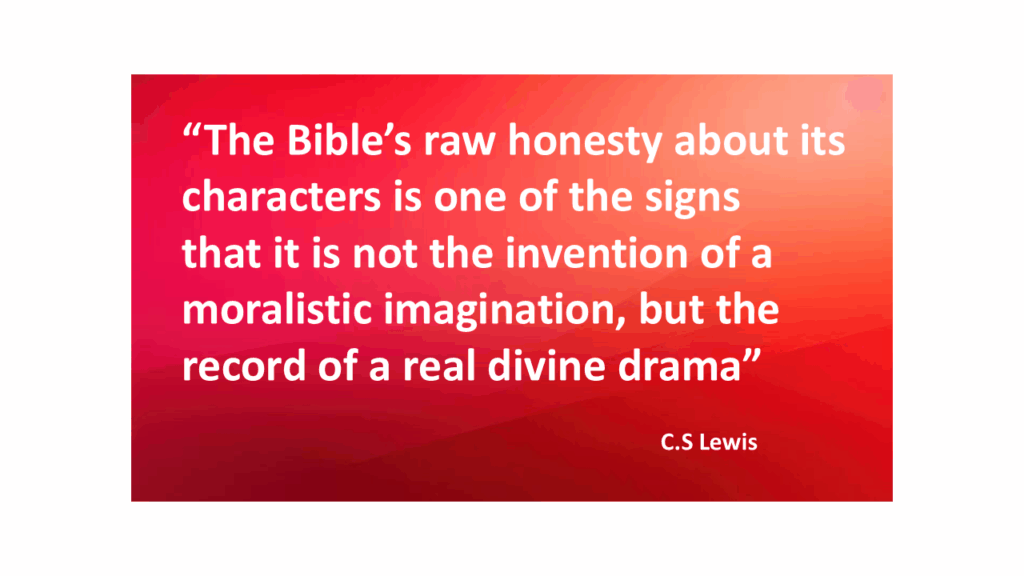
The Bible’s raw honesty about its central figures sets it apart from embellished history or political and religious propaganda in several profound ways. While propaganda typically idealizes leaders, glorifies victories, and suppresses failure to maintain control or inspire loyalty, the Bible does the opposite. It openly documents the flaws, doubts, sins, and moral failures of key figures—such as Abraham’s lies, Moses’s disobedience, David’s adultery, Peter’s denial, and Paul’s violent past. These unflattering details serve no promotional purpose and would undermine credibility if the goal were manipulation or image control. Instead, this transparency reflects a commitment to truth over image, suggesting the Bible is not a man-made invention, but a divinely inspired record with nothing to hide and everything to reveal.
If the Bible portrays God as omnipotent, then from a human standpoint you would expect Him to choose flawless heroes—“central-casting” candidates—to represent His movement. In Captain America, Steve Rogers is selected for the super-soldier program precisely because he is honest, humble, brave, and unwaveringly reliable.
But the Bible does the opposite. If Christianity were a man-made invention designed to promote a movement, why aren’t its central figures written like Steve Rogers—idealized, polished, and morally impeccable? Instead, Scripture consistently presents its key characters with raw honesty: their failures, doubts, sins, and weaknesses are placed front and center. Far from appearing like propaganda, the Bible’s cast looks exactly like what you’d expect if the story were true—broken people transformed not by their own virtue, but by God’s grace.
Challenge Question: How does the Bible’s honest portrayal of flawed and unlikely individuals—who are later used by God—contrast with the idealized heroes typically found in myths or legends, and what does this suggest about the Bible’s authenticity?
Premise 3: If Made Up—The Bible Would Not Highlight Women
If the Bible were merely a product of ancient human invention—crafted to serve social, political, or religious agendas of its time—it is highly unlikely that it would feature women in prominent, spiritually significant roles. In the patriarchal cultures of the ancient Near East and Greco-Roman world, women were generally marginalized in both public life and historical records.
Rights and Privileges Commonly Denied to Women In Ancient Cultures
| Denied Right or Cultural Limitation | Description |
|---|---|
| Legal Testimony | Women’s testimony was often inadmissible in courts (especially in Greco-Roman and Jewish law). |
| Formal Education | Women were typically barred from formal study of Scripture, philosophy, or literature. |
| Property Ownership | In many cultures, women could not own or inherit land independently of male guardians. |
| Choice in Marriage | Marriages were arranged by fathers; women had little say in whom or when they would marry. |
| Freedom of Movement | Women were often restricted from appearing in public without a male escort. |
| Access to the Temple’s Inner Courts | In Judaism, women were confined to the Women’s Court and could not enter the Court of Israel. |
| Valuation in Census or Inheritance | Men were prioritized in genealogies, censuses, and inheritance rights. |
| Divorce Rights | Men could divorce at will; women had very limited legal protection or grounds for divorce. |
| Value in Historical Records | Ancient writings almost exclusively recorded the achievements of men, ignoring women’s roles. |
The Bible not only includes women, it elevates many of them to positions of deep honor, spiritual insight, and leadership—highlighting their faith, courage, and influence in ways that were radically countercultural for their time. From prophets and judges to disciples and eyewitnesses of the resurrection, these women are portrayed as essential to God’s redemptive plan.
Figures like Deborah, who served as both a prophet and judge over Israel, Ruth, a Moabite widow who became a key link in the lineage of King David and Jesus, and Esther, whose courage preserved the Jewish people, stand out as extraordinary women in their time. Remarkably, two books of the Bible are named after women—Ruth and Esther.
The New Testament continues this pattern. Mary, the mother of Jesus, is honored not for wealth, status, or political influence, but for her humble faith and obedience to God. Mary Magdalene, once demon-possessed, is chosen as the first witness to the risen Christ and the first to proclaim His resurrection—a role no fictional account of that era would likely assign to a woman, especially in a culture where women’s testimony was widely regarded as legally unreliable.
Women in the Ancient World vs. the Bible’s Elevation of Women
| Marginalization | Common Ancient Practice | How the Bible Contrasts |
|---|---|---|
| Legal Testimony | Women’s testimony was often inadmissible in court (esp. in Roman & Jewish law) | Women are the first witnesses of Jesus’ resurrection (Luke 24:1–11; John 20:1–18) |
| Religious Participation | Women were excluded from priesthoods and central religious roles | Women like Deborah (Judges 4–5) served as prophet and judge over Israel |
| Education | Women were rarely taught or expected to study Scripture or philosophy | Jesus taught women directly, such as Mary of Bethany (Luke 10:39) |
| Genealogical Records | Ancient genealogies nearly always excluded women | Jesus’ genealogy names five women (Matt. 1:1–17) |
| Cultural Voice | Women’s stories were often left out or minimized in ancient literature | Books like Ruth and Esther center entirely on women’s lives and choices |
| Public Authority | Women typically had no leadership roles in civic or spiritual life | Priscilla taught alongside Paul (Acts 18), and Phoebe was a deacon (Romans 16:1) |
| Social Status | Seen as property or under strict male control (e.g., Greek & Roman law) | The Bible teaches that men and women are equal in value before God (Gal. 3:28) |
In both the life of Jesus and the growth of the early Church, women played a far more active and honored role than was typical in the ancient world. Far from being background figures, they were deeply involved in ministry, service, discipleship, and leadership. The Gospels and Epistles highlight how women were not only present but essential—offering resources, hospitality, faithfulness, and bold witness at critical moments in the Christian story. Their involvement underscores the radically inclusive nature of Jesus’s ministry and the early Christian movement, breaking with the restrictive norms of surrounding cultures.
Women Who Played Key Roles in the Ministries of Jesus and Paul
| Name | Role/Contribution | Scripture Reference(s) |
|---|---|---|
| Mary (mother of Jesus) | Chosen vessel for the incarnation; example of obedience and faith | Luke 1–2; John 2 |
| Mary Magdalene | Delivered from demons; supported Jesus financially; first witness to the resurrection | Luke 8:2–3; John 20:1–18 |
| Joanna | Supported Jesus’s ministry financially; present at the empty tomb | Luke 8:3; 24:10 |
| Susanna | Financial supporter of Jesus’s ministry | Luke 8:3 |
| Martha | Hosted Jesus in her home; dialogued with Him about the resurrection | Luke 10:38–42; John 11:21–27 |
| Mary of Bethany | Sat at Jesus’s feet learning; anointed Him before His death | Luke 10:39; John 12:1–8 |
| Salome | Present at Jesus’s crucifixion and tomb | Mark 15:40; 16:1 |
| Phoebe | Deacon in the early Church; delivered Paul’s letter to Rome | Romans 16:1–2 |
| Priscilla | Taught Apollos alongside her husband Aquila; co-worker with Paul | Acts 18:26; Romans 16:3 |
| Lydia | Wealthy merchant; first European convert; hosted early church | Acts 16:14–15, 40 |
| Junia | Described as “outstanding among the apostles” | Romans 16:7 |
| Chloe | Hosted a house church; her people communicated with Paul | 1 Corinthians 1:11 |
| Lois and Eunice | Timothy’s grandmother and mother; praised for sincere faith | 2 Timothy 1:5 |
| Tryphena & Tryphosa | Named as hardworking women in the Lord | Romans 16:12 |
| Nympha | Hosted a church in her house | Colossians 4:15 |
The inclusion of women throughout the New Testament were countercultural and and would actually be the type of things you would leave out if you are trying to establish a religious movement. Their presence in the text strongly suggests that the biblical authors were not inventing a socially convenient narrative, but faithfully recording what truly happened—even when it challenged the expectations of their world.
The resurrection was first discovered by women.
N.T. Wright—New Testament Scholar
This is perhaps the most powerful evidence we have that the Gospel accounts are true—
Because no one in the ancient world would have invented that.
The presence of these women—named, praised, and entrusted with vital roles in the ministries of Jesus and Paul—stands in stark contrast to the cultural norms of the ancient world, where women were typically excluded from leadership, education, and religious authority. Their inclusion in the biblical record not only highlights the countercultural nature of Christianity but also reinforces the authenticity of the Gospels and Epistles. These are not the kind of details one would invent in a fabricated religious narrative aimed at cultural acceptance or control. Instead, they reflect a faithful recording of real events and people who played a genuine role in the unfolding of God’s redemptive plan.
Challenge Question: What does the prominent and trusted role of women in the ministries of Jesus and Paul—especially in a highly patriarchal culture—suggest about the authenticity and countercultural nature of the Bible’s message?
Premise 4: The Bible Includes Elements That Make No Sense If It Was Made Up
Compared to other “holy books,” the Bible is distinct. Not only was it written by at least 40 writers , on three continents, over a time period of 1,500 years, it is not what we would expect if it were a fabricated book.
Reality, in fact, is usually something you could not have guessed. That is one of the reasons I believe Christianity. It is a religion you could not have guessed. If it offered us just the kind of universe we had always expected, I should feel we were making it up. But, in fact, it is not the sort of thing anyone would have made up.
C.S Lewis—Mere Christianity
It has just that queer twist about it that real things have.
It is well known that many historians, writers, and educators have recorded history from a biased perspective. In numerous countries, history textbooks and religious literature are often government-sponsored and crafted to portray national heritage and heroes in the most favorable light—highlighting victories, downplaying failures, and omitting shameful events. This makes the Bible’s approach remarkably unique.
The Old Testament was the national text of Israel—revered as sacred Scripture, memorized by its people, and rigorously taught to children from generation to generation. And yet, unlike most national documents designed to promote pride, the Old Testament offers an unflinching and honest record of Israel’s repeated failures, rebellion, and stubborn disobedience. Far from glorifying the nation, it often shows Israel under divine judgment, warned by prophets, disciplined by God, and even conquered by enemies due to its own unfaithfulness.
Rather than whitewashing its history, the Bible records Israel’s flaws with raw transparency—further supporting its authenticity as a faithful historical record rather than a work of national propaganda. The books of Jeremiah and Lamentations were written by the prophet Jeremiah, who is often called “the weeping prophet” because of his deep sorrow over Israel’s persistent rebellion and the devastating judgment that followed.
lam·en·ta·tion
/ˌlamənˈtāSHən/
the passionate expression of grief or sorrow; weeping.
Many biblical authors candidly document God’s chastisement of Israel, which often involved the nation being overtaken and humiliated by pagan powers. These acts of judgment were not random but served to humble the people, correct their course, and call them back to God. The book of Lamentations is a powerful example—an emotional outcry from the prophet Jeremiah expressing deep sorrow, shame, and disillusionment over Israel’s moral collapse and the severe consequences of God’s righteous judgment.
Israel’s Failures and Punishments in the Old Testament
| Book | Key Failure(s) of Israel | Resulting Judgment or Punishment |
|---|---|---|
| Genesis | Envy, deceit, and immorality in families (e.g., Jacob’s sons sell Joseph) | Famine, family division, and exile to Egypt |
| Exodus | Idolatry (Golden Calf), grumbling, disobedience | Death in wilderness; only the next generation enters the Promised Land |
| Leviticus | Disregard for God’s holiness and laws | Warnings of expulsion from the land (Leviticus 26) |
| Numbers | Rebellion, unbelief, and complaining | Wandering 40 years in the wilderness |
| Deuteronomy | Covenant warnings ignored; idolatry foretold | Foretold exile and scattering among nations (Deuteronomy 28) |
| Joshua | Disobedience at Ai; failure to fully drive out pagan nations | Military defeat; future corruption from remaining nations |
| Judges | Repeated idolatry and moral decline | Oppression by foreign nations; cycles of suffering |
| 1 Samuel | Israel demands a king like other nations | God grants Saul; nation suffers under flawed leadership |
| 2 Samuel | David’s sin with Bathsheba and national consequences | Family turmoil; civil war; death in David’s household |
| 1–2 Kings | Widespread idolatry; unjust kings; turning from God | Division of the kingdom; exile of Israel (722 B.C.); exile of Judah (586 B.C.) |
| 1–2 Chronicles | Failure to follow God and His temple instructions | Recounts exile and loss of Jerusalem |
| Ezra | Intermarriage with pagans; spiritual neglect | National repentance and reforms required |
| Nehemiah | Violation of Sabbath; neglect of temple duties | Public rebuke and renewed covenant |
| Isaiah | Hypocrisy in worship; social injustice; idolatry | Prophecies of judgment and exile; also hope of restoration |
| Jeremiah | Repeated rejection of God’s word; idolatry | Jerusalem destroyed; people exiled to Babylon |
| Lamentations | Mourning the fall of Jerusalem due to sin | Deep sorrow and devastation following judgment |
| Ezekiel | Abominations in the temple; spiritual rebellion | God’s glory departs; prophetic judgment and promised restoration |
| Hosea | Spiritual adultery; unfaithfulness to God | Metaphor of unfaithful marriage; threat of judgment |
| Amos | Social injustice; complacency in prosperity | Warning of impending destruction |
| Micah | Corrupt leaders; unjust scales and violence | Judgment and promised redemption |
| Zephaniah | Idolatry and pride among people and leaders | “Day of the Lord” judgment declared |
| Malachi | Contempt for God’s name; neglect of tithes and offerings | Call to repentance and warning of coming judgment |
This pattern of honest self-indictment is striking for a national religious text, supporting the view that the Bible is a truthful record—not crafted propaganda. Unlike most ancient documents, which glorify a nation’s origins, leaders, and victories, the Bible openly recounts Israel’s repeated failures, disobedience, and the severe consequences that followed. It exposes the moral and spiritual shortcomings of kings, prophets, priests, and the people themselves. Such transparency would have undermined national pride unless the goal was genuine truth rather than image control. This radical honesty lends weight to the Bible’s historical credibility and spiritual authority.
The 14 books of the prophets from Isaiah to Malachi that contain contain numerous prophecies of judgements that were to befall on the nation if they didn’t repent. Many contain precise accounts of these negative prophecies being fulfilled. Here is an example of a severe rebuke and warning against priests and prophets in the book of Isaiah that is hard to imagine being there if the Bible was made up:
These also reel with wine
Isaiah 28:7-8
and stagger with strong drink;
the priest and the prophet reel with strong drink,
they are swallowed by wine,
they stagger with strong drink,
they reel in vision,
they stumble in giving judgement.
For all tables are full of filthy vomit,
with no space left.
The Old Testament contains hundreds of judgments and warnings against both Israel (the northern kingdom) and Judah (the southern kingdom), scattered across historical, prophetic, and poetic books. While there’s no universally fixed number, scholars estimate that there are:
- Over 100 specific prophetic judgments pronounced by major and minor prophets
- Dozens of covenantal warnings in the Torah (especially in Leviticus 26 and Deuteronomy 28–32)
- Dozens more narrative examples in historical books like Judges, Kings, and Chronicles where Israel or Judah is judged for disobedience
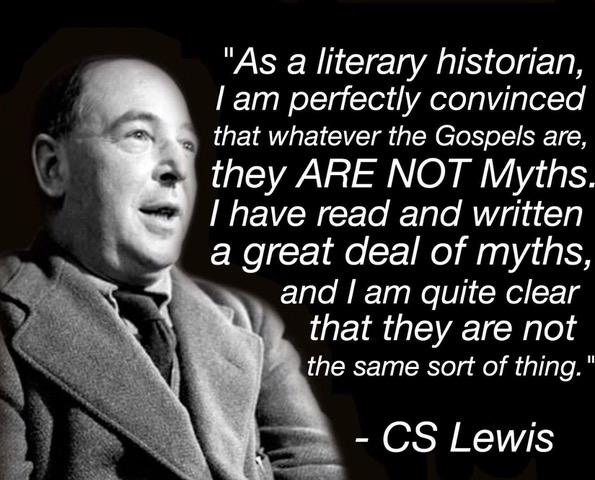
Ironically, the Old Testament contains approximately 120 specific judgments against pagan nations—nearly the same number as those directed at Israel and Judah themselves. In both the Old and New Testaments, God inspired the authors to record not only victories and blessings but also the repeated moral failures, rebellions, and embarrassments of His own people. This level of self-indictment is highly unusual—especially for a text intended to promote a religious system. Fabricated or agenda-driven religions typically glorify their founders, idealize their followers, and suppress inconvenient truths. The Bible does the opposite, documenting both the triumphs and the sins of its central figures with striking transparency—evidence of its authenticity rather than invention.
Challenge Question: Why would the authors of the Bible include so many accounts of failure, disobedience, and judgment—especially against their own people—if their goal were to invent or promote a religion? What does this suggest about the Bible’s authenticity?
Premise 5: Why Would The Disciples Invent A God Whose Holiness Terrified Them?
Immediately he made the disciples get into the boat and go before him to the other side, while he dismissed the crowds. And after he had dismissed the crowds, he went up on the mountain by himself to pray. When evening came, he was there alone, but the boat by this time was a long way from the land, beaten by the waves, for the wind was against them. And in the fourth watch of the night he came to them, walking on the sea. But when the disciples saw him walking on the sea,
Matthew 14:22-26
They were terrified, and said, “It is a ghost!” and they cried out in fear
Wind and waves on the sea of Galilee in a small boatBecause the Sea of Galilee is relatively shallow, it is especially susceptible to the strength of these winds, which cause dangerous climatic conditions to develop quickly and without warning. Winds from the east can whip up waves that, in extreme cases, can grow up to 10 feet high.
What is most amazing about this story is that the disciple’s fear of Jesus was far greater than their fear of the huge waves and strong wind. The storm made them afraid—but Jesus revealing His deity in being able to control nature and walk on water made them afraid of something even more than nature itself: His Holiness and divinity.
Sigmund Freud believed that people invent religion out of a fear of nature. That the human instinct is to invent a God to bring comfort and mitigate distress caused by nature. In seeing Jesus walk on water in the middle of the wind and waves the disciples met something more frightening than they had ever met in nature.
Why would the disciples invent a God whose holiness was more terrifying than the forces of nature that would provoke them to invent a God in the first place?
R.C. Sproul—The Holiness of God
In Deuteronomy 4:21–24, Moses, the revered leader of the Exodus and author of the first five books of the Old Testament, reflects on a deeply personal and sobering moment. Despite his pivotal role in delivering Israel from Egypt and receiving the Law at Sinai, Moses recounts how God, in His holiness and justice, would not permit him to enter the Promised Land. He says:
The Lord was angry with me because of you, and he solemnly swore that I would not cross the Jordan and enter the good land the Lord your God is giving you as your inheritance. I will die in this land; I will not cross the Jordan; but you are about to cross over and take possession of that good land. Be careful not to forget the covenant of the Lord your God that he made with you; do not make for yourselves an idol in the form of anything the Lord your God has forbidden.
Deuteronomy 4:21-24
For the Lord your God is a consuming fire, a jealous God.
This raises a compelling question for skeptics: If Christianity—or the Bible as a whole—were merely a human invention, why would its authors create a God whose holiness was so overwhelming that even the most honored leaders feared Him?
In virtually all man-made religions, the gods tend to be either indulgent, manipulatable, or reflective of human weaknesses and desires. But the God of the Bible is fundamentally other—unapproachable in His purity, intolerant of sin, and unwavering in His moral standards, even toward His chosen servants. Such a portrayal is not convenient for those trying to build a following or justify their own leadership; it is brutally honest and often personally costly. The inclusion of Moses’ punishment—despite his stature—demonstrates that this God cannot be controlled or flattered. He is not a product of human imagination, but a Being who confronts humanity with awe, fear, and the need for obedience.
The Concept Of Radical Holiness Does Not Resemble Mythology
Sigmund Freud expressed the idea that religion, including Christianity, was a psychological illusion—a human invention created to cope with the harsh realities of life, death, and suffering. In his 1927 work, The Future of an Illusion, Freud critiques religion as a kind of wish fulfillment or emotional panacea.
Religion is an illusion and it derives its strength from the fact that it falls in with our instinctual desires. The terrifying impression of helplessness in childhood aroused the need for protection—for protection through love—which was provided by the father.
Sigmund Freud—The Future of an Illusion
Thus the benevolent rule of a divine Providence allays our fear of the dangers of life.
Throughout the Bible, one central theme consistently refutes Freud’s theory: the greatest reality to be feared is not nature, suffering, or even physical death—but the absolute holiness of God. Scripture does not portray God as a mere emotional refuge from life’s hardships; instead, it presents Him as a righteous and consuming fire before whom all sin must be judged. Far from being a comforting invention, the biblical God confronts humanity with the most sobering truth—that our deepest need is not protection from the world, but reconciliation with a holy Creator.
And do not fear those who kill the body but cannot kill the soul.
Matthew 10:28
Rather fear Him who can destroy both soul and body in hell.
The concept of fearing or reverencing God is mentioned over 300 times throughout the Bible. The Bible emphasizes the fear of God so frequently because it is foundational to a right relationship with Him. Far from being mere terror, biblical fear of God combines awe, reverence, humility, and obedience in response to His holiness, power, and authority. Here are several reasons why this theme is so central:
Fear of God Is the Beginning of Wisdom
- “The fear of the Lord is the beginning of wisdom…” (Proverbs 9:10)
- Reverent fear rightly orients us to God as the Creator, Judge, and Lawgiver, and it teaches us to live with humility and moral clarity.
God’s Holiness Demands Reverence
- Scripture repeatedly reveals God as holy—utterly pure, morally perfect, and set apart.
- The fear of the Lord acknowledges that God cannot tolerate sin and must be approached with awe and respect (Isaiah 6, Hebrews 12:28–29).
- Even great leaders like Moses, Isaiah, and the apostle John fell in fear before God’s presence.
Fear Reminds Us of Divine Justice
- “Do not fear those who kill the body… rather fear Him who can destroy both soul and body in hell.” (Matthew 10:28)
- The fear of God guards against pride, rebellion, and casual attitudes toward sin. It brings sober awareness that God’s judgment is real and inescapable.
Fear Leads to Deeper Love and Trust
- Paradoxically, fearing God leads to greater intimacy, not distance.
- Those who fear Him are promised mercy, protection, and closeness (Psalm 103:11, Luke 1:50).
- It’s the fear of displeasing a holy and loving Father, not the fear of a cruel tyrant.
It Separates the True God from Idols
- In ancient paganism (and modern secularism), gods are either indulgent or easily appeased.
- The biblical God demands moral accountability, obedience, and purity of heart—something no man-made deity would require.
- The fear of God confronts us with a God who cannot be manipulated, who is majestic and sovereign, not made in our image.
This radical concept of divine holiness—one that demands reverence rather than mere admiration—carries the weight of reality, not mythology. It is not the kind of God human beings would naturally invent; it is the kind of God who truly exists.
Sigmund Freud and other skeptics have often accused Christians of inventing God as a comforting father figure—a projection of human desire for protection, security, and moral order. However, this characterization fundamentally misunderstands the nature of the God revealed in the Bible. Scripture does not primarily present a God of mere emotional comfort, but one whose central attribute is perfect holiness and righteousness. According to the Bible, this holy God cannot overlook sin; instead, His justice requires that sin be punished. The central message of Christianity is that because of humanity’s sinfulness, a substitute must die in our place to satisfy God’s righteous judgment—culminating in the sacrificial death of Jesus Christ.
In stark contrast to most world religions, which teach that one can escape judgment by performing more good deeds than bad, Christianity teaches that no amount of good works can erase even a single sin before an infinitely holy God. Sin is not merely a moral failing—it is a direct offense against God’s perfect character. Therefore, rather than inventing a comforting deity who overlooks wrongdoing, Christianity presents a God so holy that only His own provision of a sinless substitute can bridge the gap between Himself and mankind. Far from being a human invention, this concept confronts human pride, self-sufficiency, and moral relativism—traits no one would naturally choose in a god of their own making.
Challenge Question: If Christianity were merely a human invention designed to offer emotional comfort, why would it present a God so holy that He cannot overlook even a single sin, and require the death of a perfect substitute rather than accepting human effort or good deeds?
ThinkCube Truth Veracity Grid
- Have I considered the facts carefully and with an open mind?
- Is my conclusion the result of a careful examination of the facts, or is it a conclusion made in spite of the facts?
- Is my conclusion the one that makes the most sense of the evidence?