
Premise 1: Why Invent A Religion That Makes You An Outcast?
In the first century A.D., when the New Testament was being written, Christians were among the most despised and persecuted people on earth. They stood at the crossroads of two powerful forces: the iron grip of the Roman Empire and the entrenched religious authority of their own Jewish heritage.
The Roman government not only authorized but carried out the execution of Christianity’s founder, Jesus of Nazareth, through the most brutal and humiliating method available—crucifixion. His followers, accused of subversion and sedition, were viewed as threats to public order. Their refusal to worship the emperor or participate in the Roman pantheon marked them as atheists and enemies of the state, subjecting them to arrest, torture, and execution.
Simultaneously, the early Christians—many of whom were ethnically and culturally Jewish—faced intense hostility from within their own communities. Jewish religious leaders rejected Jesus as the Messiah and saw His followers as blasphemous heretics. Those who confessed Christ were excommunicated from synagogues, cut off from family and community, harassed, imprisoned, and sometimes killed. Stephen, the first Christian martyr, was publicly stoned (Acts 7), and Saul of Tarsus—later the Apostle Paul—led violent campaigns against the early church.
To follow Christ in the first century was not to gain social status or material comfort—it was to embrace rejection, hardship, and the real possibility of death. And yet, the New Testament authors proclaimed Jesus as the risen Lord with unwavering conviction. They had no earthly incentive to invent such claims. On the contrary, they had every reason to stay silent—unless they were bearing witness to a truth too powerful to deny.
But Jews came from Antioch and Iconium, and having won over the multitudes, they stoned Paul and dragged him out of the city, supposing him to be dead. But while the disciples stood around him, he arose and entered the city. And the next day he went away with Barnabas to Derbe.
Acts 14:19
And on that day a great persecution arose against the church in Jerusalem; and
Acts 8:1
they were all scattered throughout the regions of Judea and Samaria, except the apostles.
The Reasons Jews Hated Christians:
- They had deserted their Jewish faith which was the highest form of blasphemy
- They believed in Jesus who called himself God which was the highest form of blasphemy
- They were jealous and felt threatened that Christianity would destroy their traditions and political hold on the region
Soon after Christ died, the Roman nation began persecuting Christians in some of the most horrific ways imaginable. Christian men and women were imprisoned, beheaded, crucified, and and some were killed, stuffed in animal carcasses and hung from bridges or poles as an example.
The Reasons Romans Hated Christians:
- Christians refused to worship the emperor or any other of their pantheon of gods
- Christianity appeared as a movement that promoted disruption of the established order and dangerous social tendencies
- The widespread perception that Christians refusal to worship other Gods was the source of all disasters brought against the human race by the other gods
To Profess Christianity Invited Reproach, Alienation, Imprisonment And Even Death
To profess Christianity in the first century was to immediately invite reproach, alienation, imprisonment, and even death. It meant being cut off from one’s community, condemned by religious leaders, and hunted by civil authorities. Following Jesus was not a path to privilege or popularity—it was a public declaration that came with a high cost. Jesus not only predicted this, but guaranteed it.
Look, I am sending you out as sheep among wolves. Be as wary as
Matthew 10:16-22
snakes and harmless as doves. But beware! For you will be handed
over to the courts and beaten in the synagogues. And you must stand
trial before governors and kings because you are my followers. This
will be your opportunity to tell them about me, yes, to witness to the world
Jesus’ Warnings About the Cost of Discipleship
| Scripture Reference | Key Phrase or Quote | Summary of Warning |
|---|---|---|
| Matthew 10:22 | “You will be hated by everyone because of Me, but the one who stands firm to the end will be saved.” | Following Jesus will result in widespread hatred. |
| Matthew 10:34–36 | “I did not come to bring peace, but a sword… a man’s enemies will be the members of his own household.” | Loyalty to Christ will divide families and bring conflict. |
| Matthew 5:10–12 | “Blessed are those who are persecuted because of righteousness… Rejoice and be glad, because great is your reward in heaven.” | Persecution is expected and even a cause for joy. |
| Luke 6:22–23 | “Blessed are you when people hate you, exclude you, insult you and reject your name as evil because of the Son of Man.” | Social exclusion and insults will come to His followers. |
| John 15:18–20 | “If the world hates you, keep in mind that it hated Me first… If they persecuted Me, they will persecute you also.” | Hatred and persecution from the world are inevitable. |
| Mark 13:9–13 | “You will be handed over to the local councils… All men will hate you because of Me, but the one who stands firm to the end will be saved.” | Arrest, trial, and betrayal even by family members are expected. |
| Luke 21:12–17 | “They will seize you and persecute you… and they will put some of you to death. Everyone will hate you because of Me.” | Imprisonment and martyrdom foretold. |
| John 16:2 | “They will put you out of the synagogue; in fact, the time is coming when anyone who kills you will think they are offering a service to God.” | Religious persecution and even martyrdom will be seen as righteous acts by the persecutors. |
| Matthew 16:24–25 | “Whoever wants to be My disciple must deny themselves and take up their cross and follow Me.” | Discipleship requires self-denial and willingness to suffer. |
Jesus never promised ease or acceptance to His followers—instead, He prepared them for rejection, hardship, and suffering. These warnings underscore that early Christians didn’t follow Christ because it was comfortable, but because they believed He was the truth, even at great personal cost.
If Christianity is a human invention , it would have been invented just shortly after these words were spoken by Jesus. After the disciples watched Jesus brutally die on the cross, why invent a Christianity that promised the same kind of treatment to them, their wives, and their children ?
Instead of seeking comfort Christians Chose To Became Virtual Outlaws
The early Christians had every reason to conform, compromise, or keep silent for the sake of comfort and safety. Instead, they chose the path of faithfulness—even when it meant being rejected by society, disowned by families, and hunted by authorities. In a culture where loyalty to Caesar was law and conformity to pagan norms ensured survival, these believers willingly became outcasts. Their allegiance to Christ made them virtual outlaws—not because they were rebels by nature, but because they refused to deny a higher authority. Their courage was not driven by power or popularity, but by a deep conviction that truth was worth suffering for.
In fact, everyone who wants to live a godly life in Christ Jesus will be persecuted.
2 Timothy 3:12
The Apostle Paul was a prominent Jewish The Apostle Paul, who was instrumental in planting many of the first Christian churches across the Roman Empire, also made it unmistakably clear that suffering and persecution were not exceptions but guarantees for those who follow Christ. He didn’t hide this reality from new believers—instead, he emphasized it as a core part of the Christian life. In his travels, he warned the churches, “We must go through many hardships to enter the kingdom of God” (Acts 14:22). Paul spoke from experience: beaten, imprisoned, stoned, and shipwrecked—his life bore the scars of a faith lived out in a hostile world. His message was clear: to follow Christ is to embrace both His grace and His sufferings.
Before becoming a Christian, Paul—then known as Saul of Tarsus—held impressive Jewish credentials that positioned him as a rising star within Judaism. Born into a devout Jewish family and circumcised on the eighth day, he was a “Hebrew of Hebrews,” thoroughly immersed in Jewish tradition and culture. He belonged to the tribe of Benjamin, a source of national pride, and was educated under the esteemed Rabbi Gamaliel, one of the most respected teachers of the Law in Jerusalem. As a Pharisee, he adhered to the strictest interpretation of the Mosaic Law and was known for his intense zeal, which led him to persecute early Christians, believing he was defending the purity of the Jewish faith. From both a religious and social standpoint, Paul’s pedigree was impeccable—making his conversion to Christianity all the more striking. Paul knew he would immediately be severely persecuted because he was a feared persecutor before conversion. Paul himself became severely persecuted almost immediately after becoming a Christian.
The Sufferings Of The Apostle Paul
| Type of Suffering | Description | Scripture Reference |
|---|---|---|
| Imprisonment | Frequently imprisoned for preaching the gospel | 2 Corinthians 11:23; Acts 16:23–24 |
| Beaten with rods | Beaten three times | 2 Corinthians 11:25 |
| Flogged (lashes) | Received 39 lashes five times from the Jews | 2 Corinthians 11:24 |
| Stoned | Stoned and left for dead in Lystra | Acts 14:19; 2 Corinthians 11:25 |
| Shipwrecks | Shipwrecked three times, spent a night and day in the open sea | 2 Corinthians 11:25; Acts 27 |
| Dangerous travels | Faced danger from rivers, robbers, Jews, Gentiles, false believers, etc. | 2 Corinthians 11:26 |
| Hunger and thirst | Often without food or water | 2 Corinthians 11:27 |
| Exposure to cold and lack of clothing | Endured physical hardship and exposure | 2 Corinthians 11:27 |
| Labor and toil | Worked hard, often to exhaustion | 2 Corinthians 11:27 |
| Sleepless nights | Frequently went without sleep | 2 Corinthians 11:27 |
| Emotional pressure | Daily anxiety for the churches | 2 Corinthians 11:28 |
| Rejected and abandoned | Rejected by his own people, abandoned by others at times | Acts 13:45–50; 2 Timothy 4:16 |
| House arrest in Rome | Two years under Roman guard, still preaching the gospel | Acts 28:16–31 |
| Awaiting execution | Wrote of being poured out like a drink offering—anticipating martyrdom | 2 Timothy 4:6–8 |
Instead of seeking comfort, early Christians willingly chose a path that made them virtual outlaws and outcasts in both Roman and Jewish society. They aligned themselves with a crucified Messiah—a man condemned as a blasphemer by religious authorities and executed as a criminal by the state. In doing so, they invited social scorn, legal persecution, and even violent death.
To be baptized in Christ’s name was to publicly declare allegiance to someone the world had rejected, which often meant being cut off from family, community, employment, and the protections of the law. In Roman eyes, Christians were seen as subversive and disloyal citizens for refusing to worship Caesar or the empire’s gods. Among the Jews, they were viewed as heretics who had betrayed their faith and corrupted the Scriptures.
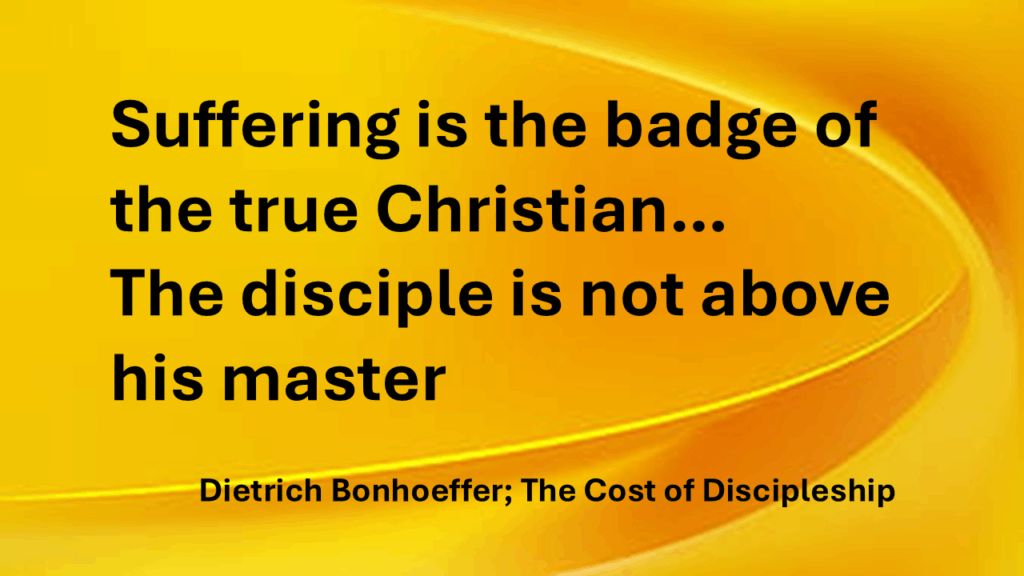
Yet despite this rejection, Christians did not retreat or compromise. They embraced their outcast status, knowing that their true citizenship was in heaven (Philippians 3:20) and that to suffer for Christ was to share in His glory (Romans 8:17). Their unwavering commitment was not born from comfort, but from conviction.
Challenge Question: If Christianity were a human invention designed for comfort or control, why would its earliest followers willingly embrace rejection, suffering, and even death—especially for a message that offended both religious and political powers?
Premise 2: Why Invent A Religion That Emphasizes Serving Over Being Served…Humility Over Prominence?
But among you it will be different. Whoever wants to be a leader among you must be your servant,
Matthew 20:26
In the first-century world, prestige, honor, wealth—and even the perceived favor of the gods—were measured by outward signs: land, livestock, servants, and social status. Society was sharply divided between those who were served and those who served, with greatness being defined by how many others were beneath you.
Yet in stark contrast to this cultural norm, the disciples and apostles—those who walked with Jesus and wrote the 27 books of the New Testament—did not invent a religion that elevated themselves or promised power, privilege, or prestige. If anything, they did the opposite. Instead of claiming divine favor through riches or status, they consistently denounced the pursuit of earthly power and acclaim, and they exalted humility, service, and sacrificial love as the highest virtues.
Throughout the New Testament, the language of servanthood saturates the text. Terms for serving others appear over 200 times, with believers repeatedly called to deny themselves, take up their crosses, and follow the example of Christ—not into worldly greatness, but into costly obedience. Jesus Himself declared, “Whoever wants to be first must be the servant of all” (Mark 9:35), and “The Son of Man did not come to be served, but to serve, and to give His life as a ransom for many” (Mark 10:45). No other religion places its founder in the position of a servant who lays down His life for those who rejected Him.
The Son of Man came not to be served but to serve, and to give his life a ransom for many
Matthew 20:28
If the apostles were trying to create a religion for personal gain, they chose the worst possible model. They forfeited wealth, power, safety, and even their lives to proclaim a message that called people not to self-exaltation, but to self-sacrifice. They followed a crucified Messiah who washed His disciples’ feet, embraced the rejected, and chose a crown of thorns over a throne of gold. Why would anyone make this up—unless it was true?
The Most Comfortable Lives Are Not Characterized By Lowliness, Humility And Consideration Of Others
The most comfortable lives—by the world’s standards—are rarely marked by lowliness, humility, or selfless consideration of others. In a culture that elevates personal achievement, independence, and the pursuit of comfort, the values of Christian discipleship seem radically out of step. True lowliness doesn’t promote self—it lowers it. Genuine humility requires a surrender of ego, pride, and entitlement. And sincere consideration of others calls for sacrifice, inconvenience, and a heart that puts the needs of another above personal ease. These traits are not the fruits of a life chasing comfort—they are the marks of a life transformed by Christ.

Christianity, uniquely among worldviews, teaches that greatness is found not in being served but in serving; that life is gained by giving it away, and that glory comes through suffering, not self-promotion. These values are so countercultural, so costly, that no one would choose them unless they were compelled by truth, not convenience.
Three Main Tenets Of Christian Humility
1. Lowliness:
- Definition: A posture of the heart that does not seek to elevate oneself above others.
- Biblical Foundation: “Whoever humbles himself like this child is the greatest in the kingdom of heaven.” (Matthew 18:4)
- Contrast with Comfort: Lowliness resists the human instinct for dominance, recognition, or comfort. It embraces being unseen or undervalued for the sake of others.
2. Humility:
- Definition: A realistic view of oneself in light of God’s greatness and grace, leading to dependence on Him.
- Biblical Foundation: “God opposes the proud but gives grace to the humble.” (James 4:6)
- Contrast with Comfort: Humility doesn’t seek status or control, and it often leads to positions the world sees as weak or undesirable.
3. Consideration of Others:
- Definition: Putting the needs, burdens, and well-being of others ahead of one’s own desires.
- Biblical Foundation: “Do nothing from selfish ambition or conceit, but in humility count others more significant than yourselves.” (Philippians 2:3)
- Contrast with Comfort: This kind of love costs time, energy, and emotional investment. It’s the opposite of self-preservation or comfort-seeking.
Jesus told His disciples—some of whom had begun to speculate about status and favored positions—that “the last will be first, and the first will be last” (Matthew 20:16). With these words, He made it unmistakably clear that the Christian life is not about maximizing personal ease, privilege, or recognition, but about minimizing self for the sake of others. This teaching was not what the disciples expected—nor is it the kind of message one would invent if the goal were to create a religion designed to boost self-esteem or provide emotional comfort. It was, and still is, a radical reversal of human values.
Lowliness, humility, and self-giving love are not natural pathways to comfort—but they are the supernatural signs of a heart shaped by the gospel. A faith that calls for such things is not one we would invent to serve ourselves—it is one that calls us to serve others, even at great personal cost.
Challenge Question: Why would the apostles invent a religion that relegated them to the status of those lowest in society, that commanded them to become servants to even the lowest of society ?
Premise 3: Why Invent A religion That Brought The Leader The Death Penalty And Promised The Same To followers?
One of the most compelling reasons former atheists often cite for rethinking Christianity is the undeniable sincerity of the early Christians—particularly their willingness to suffer and die for what they claimed to have seen and experienced. This reality stands in stark contrast to Sigmund Freud’s hypothesis that religion, and Christianity in particular, is merely a psychological coping mechanism—a man-made construct designed to provide emotional comfort and security in a frightening world.
But what kind of “opiate” leads people not to ease and comfort, but to beatings, imprisonment, exile, torture, and brutal executions? The apostles and early followers of Jesus didn’t inherit these beliefs blindly; they were in a unique position to know whether the resurrection actually happened. They claimed to have personally seen the risen Christ, touched Him, walked with Him, and spoken with Him after His death. If it were a fabrication, they would have been the authors of the lie—and yet every one of them willingly endured suffering and death rather than deny their testimony.
As former atheist and cold-case detective J. Warner Wallace rightly observes:
“People will die for their religious beliefs if they sincerely believe they’re true, but no one dies for a lie they know is a lie.”
Cold-Case Christianity
This distinction is fatal to Freud’s theory. Christianity didn’t gain traction because it offered psychological escape; it spread because it was believed to be true, even at unimaginable cost. It’s one thing to be deluded—it’s another to knowingly die for something you invented. And for many honest skeptics, the unwavering courage and sacrificial devotion of the early Christians became too powerful to dismiss as a mere emotional coping mechanism.
In the apostolic era, Christianity did not emerge in a neutral or tolerant environment—it arose in one of the most dangerous climates imaginable. Public allegiance to Christ marked believers as social outcasts, religious traitors, and political threats. Christians faced expulsion from synagogues, loss of family and livelihood, imprisonment, beatings, and execution by both Jewish authorities and the Roman state. There were no cultural benefits, legal protections, or material incentives for believing—only risk. To follow Jesus in the first century was to knowingly step into a life where suffering was expected and death was a real and frequent outcome.
Ultimately, the early Christian movement was not built on the comforts of illusion, but on the bold testimony of those who claimed to have seen a risen Savior and were willing to lose everything for Him. Far from being an opiate, Christianity—especially in its earliest form—was a call to self-denial, suffering, and costly discipleship. Freud’s theory simply cannot account for that kind of sacrifice.
The Apostles and Their Deaths: Witnesses Willing to Die
| Apostle | Cause of Death / Suffering | Notes / Tradition Source |
|---|---|---|
| Peter | Crucified upside down in Rome | Refused to be crucified like Christ (Origen, Tertullian) |
| Andrew | Crucified on an X-shaped cross in Greece | Preached until death (Foxe’s Book of Martyrs) |
| James (son of Zebedee) | Beheaded by sword in Jerusalem | Recorded in Acts 12:2 – executed by Herod |
| John | Exiled to the island of Patmos; died of old age | Survived attempted execution (early church tradition) |
| Philip | Crucified or stoned in Hierapolis (Turkey) | Died preaching the gospel (Tradition) |
| Bartholomew (Nathaniel) | Flayed alive and beheaded in Armenia | Martyred for preaching in hostile regions |
| Thomas (Didymus) | Speared to death in India | Evangelized in India (Syrian Christian tradition) |
| Matthew (Levi) | Killed by sword or spear in Ethiopia or Persia | Martyred for his bold preaching (Tradition) |
| James (son of Alphaeus) | Thrown from the temple and beaten to death | Possibly stoned after fall (Hegesippus, early historian) |
| Thaddeus (Jude) | Clubbed to death or killed by arrows in Persia | Preached with Simon the Zealot |
| Simon the Zealot | Sawn in half or crucified in Persia | Evangelized hostile territories |
| Judas Iscariot | Suicide after betraying Jesus | Matthew 27:5 |
This chart tells a powerful story: the men who were closest to Jesus—eyewitnesses to His life, death, and resurrection—did not die comfortably in power or prestige. They were hunted, tortured, exiled, and killed. If Christianity were merely a comforting illusion or a man-made invention, these men would have had every reason to abandon it when the cost became high. Instead, they sealed their testimony with their blood. Their sacrifices defy Freud’s claim that religion is a psychological crutch—they prove that Christianity was not built on comfort, but on conviction.
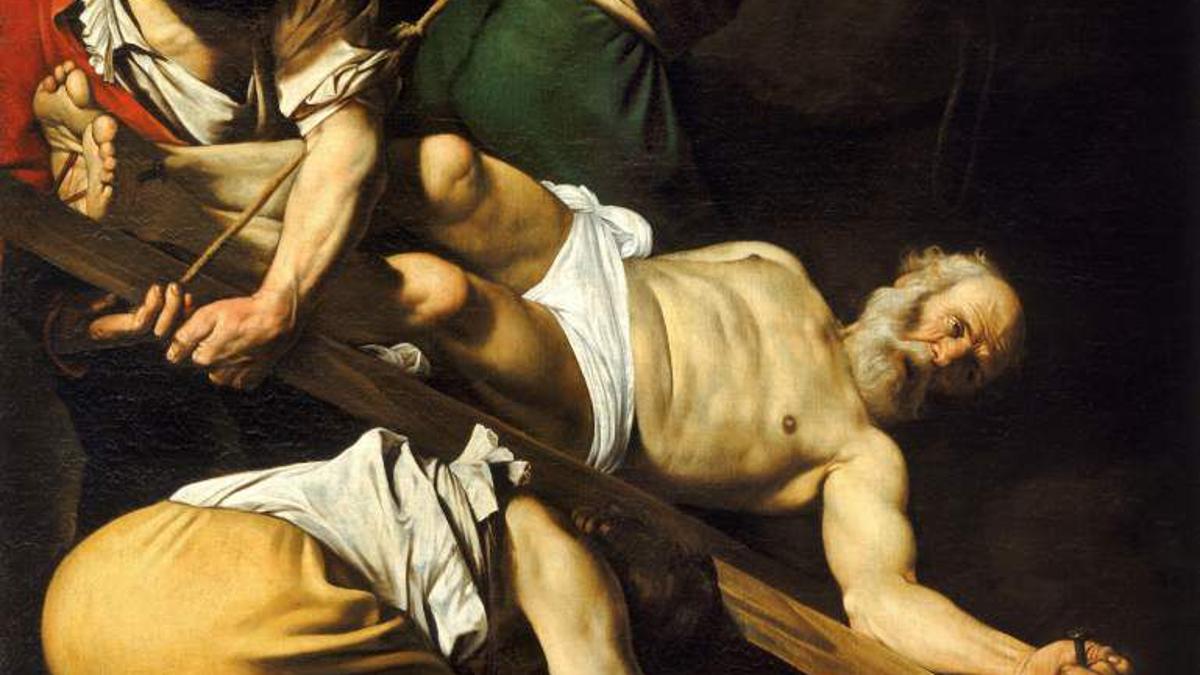
The disciples did not enter Christianity with their eyes closed to the potential for suffering and death. They had seen firsthand their Teacher and King—Jesus—brutally beaten, publicly humiliated, and crucified in the most shameful and excruciating way imaginable. Far from hiding the cost, Jesus warned them explicitly that following Him would likely mean walking the same path of rejection, persecution, and even martyrdom.
“Then they will deliver you up to tribulation and put you to death, and you will be hated by all nations for my name’s sake.”
Matthew 24:9
He told them plainly: “If they persecuted Me, they will also persecute you” (John 15:20), and “Whoever wants to be My disciple must deny themselves, take up their cross, and follow Me” (Matthew 16:24). These were not poetic metaphors or symbolic gestures—they were sobering warnings. The disciples knew exactly what they were choosing. They didn’t follow Jesus under any illusion of comfort, safety, or social advantage; they followed Him because they were utterly convinced He was the truth—even if that truth led to suffering, rejection, and death.
The greatest proof of Christianity for others is not how far a man can logically analyze his reasons for believing, but how far in practice he will stake his life on his belief.
TS Eliot
Their courage was not blind faith—it was informed, deliberate, and grounded in the unshakable conviction that Jesus had risen from the dead and was worth everything. This stands in direct contradiction to Sigmund Freud’s claim that religion is merely a psychological crutch, invented to ease the fears of life and death. Christianity is not a crutch—it is a cross. And those who carried it did so not to escape reality, but to proclaim the greatest reality the world has ever known.
Challenge Question: If Christianity were merely a psychological crutch, as Freud claimed, why did its earliest followers embrace suffering, rejection, and death instead of comfort, security, or power? What does their willingness to carry the cross—rather than seek escape—suggest about the truth and nature of their belief?
ThinkCube Truth Veracity Grid
- Have I considered the facts carefully and with an open mind?
- Is my conclusion the result of a careful examination of the facts, or is it a conclusion made in spite of the facts?
- Is my conclusion the one that makes the most sense of the evidence?