
Premise 1: The Crucifixion Of Jesus Is One Of The Most Well-Attested Facts Of Ancient History
The death of Jesus by crucifixion is not only central to the Christian faith but also stands as one of the most firmly established events in ancient history. Its historical credibility is supported by multiple independent sources, both within and outside the Bible, and is affirmed by the vast majority of scholars—Christian and non-Christian alike.
1. Multiple Independent Sources
The crucifixion is recorded in all four canonical Gospels (Matthew, Mark, Luke, and John), which, while theological in purpose, contain independent lines of historical tradition. Additionally, the event is referenced in early Christian creeds and letters, such as:
- 1 Corinthians 15:3–4, an early creed dating to within a few years of Jesus’ death, affirms that “Christ died for our sins…was buried…and was raised.”
- Acts 2:23, part of Peter’s earliest public preaching, also testifies to Jesus’ crucifixion in Jerusalem.
These early proclamations circulated while eyewitnesses were still alive, reducing the likelihood of fabrication.
2. Confirmation by Non-Christian Sources
Several ancient non-Christian historians also refer to Jesus’ crucifixion:
- Tacitus, a respected Roman historian, wrote in Annals (c. AD 116) that “Christus, from whom the name had its origin, suffered the extreme penalty during the reign of Tiberius at the hands of one of our procurators, Pontius Pilatus.”
- Josephus, a first-century Jewish historian, refers to Jesus’ crucifixion in Antiquities of the Jews (Book 18), noting that Pilate condemned Him to the cross.
- Lucian of Samosata, a Greek satirist from the 2nd century, mocked Christians for worshiping a man who was crucified, indirectly confirming the mode of execution.
- The Babylonian Talmud mentions Jesus being “hanged” on the eve of Passover—”hanged” being a term used for crucifixion.
These sources are significant because they come from those who had no reason to promote Christianity and, in some cases, were openly hostile to it.
3. Historical Context of Roman Crucifixion
Crucifixion was a common Roman execution method, particularly used for political rebels, slaves, and criminals. It was deliberately public, agonizing, and humiliating—designed to deter dissent. Jesus’ crucifixion fits this pattern, as He was charged with claiming to be “King of the Jews”—a political threat to Rome.
The physical nature of crucifixion—scourging, blood loss, exposure, and asphyxiation—ensured death. The notion that Jesus somehow survived the ordeal (the “swoon theory”) has been overwhelmingly rejected by scholars and medical experts due to the brutal efficiency of Roman execution practices.
4. Scholarly Consensus
Even among critical and secular scholars, there is near-universal agreement on this point. For example:
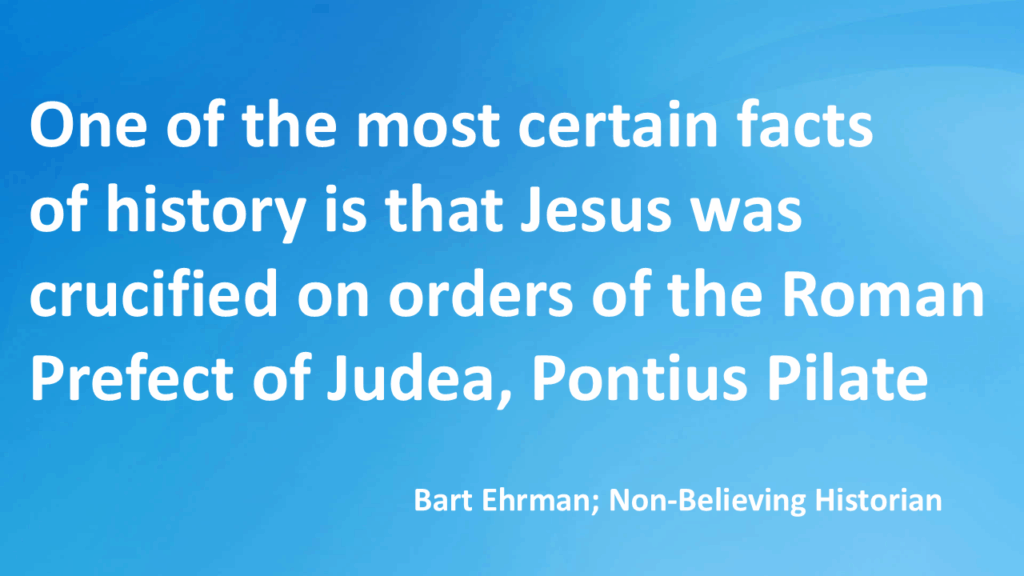
- Bart Ehrman (agnostic historian): “One of the most certain facts of history is that Jesus was crucified on orders of the Roman prefect of Judea, Pontius Pilate.”
- John Dominic Crossan (skeptical scholar): “That he was crucified is as sure as anything historical can ever be.”
- Gerd Lüdemann (atheist scholar): “Jesus’ death as a consequence of crucifixion is indisputable.”
Such broad consensus underscores that the crucifixion is not a matter of religious wishful thinking but of solid historical grounding.
5. Theological and Historical Significance
The fact of the crucifixion is not merely an isolated historical detail—it lies at the very heart of Christian theology. Without Jesus’ death, the resurrection has no meaning. Without a real death, there can be no real victory over it.
The Significance Of The Historical Credibility Of The Crucifixion
The historical certainty of Jesus’ crucifixion is more than just a well-established fact—it forms the bedrock upon which the entire case for the resurrection rests. If Jesus did not truly die, then claims of His resurrection collapse into legend or misunderstanding. But because His death by crucifixion is affirmed by both biblical and non-biblical sources, including hostile witnesses, we can confidently say that Jesus was genuinely executed and buried. This matters immensely. A real resurrection requires a real death. The credibility of the crucifixion, therefore, lends critical weight to the resurrection account—not just as a theological claim, but as a historical event that demanded explanation. The transformation of the disciples, the explosion of the early church, and the willingness of eyewitnesses to suffer and die—all point back to something extraordinary following a death that no serious historian denies.
The crucifixion of Jesus stands as a historical anchor—firm, immovable, and universally acknowledged even by skeptics. It is not a myth woven into religious sentiment but a documented event witnessed, recorded, and preserved across diverse sources and perspectives. That such a shameful and torturous death would become the very centerpiece of Christian proclamation is not something a movement would invent—it is something they had to explain. The cross was not a symbol of power or appeal; it was a scandal. And yet, from it sprang a faith that claimed not just a death, but a resurrection. Any honest inquiry into the truth of Christianity must reckon first with this: Jesus truly died.
Challenge Question: If Jesus’ crucifixion is one of the most historically certain events of the ancient world, what would have to happen afterward to convince His followers—and even His enemies—that He was more than just another executed man?
Premise 2: Non-Christian Sources Confirm The Execution of Jesus Under Pilate
The crucifixion of Jesus is not only central to the Christian faith—it is also one of the most historically secure facts of ancient history. What makes this event especially compelling is that even non-Christian sources, many of whom were either indifferent or hostile to Christianity, independently confirm that Jesus was executed under the authority of Pontius Pilate, the Roman governor of Judea.
Tacitus (c. AD 56–120) – Roman Historian
One of the most important references comes from Tacitus, considered one of Rome’s most reliable historians. In his work Annals (Book 15, Chapter 44), written around AD 116, he refers to Jesus (called “Christus”) and His execution:
“Christus, from whom the name [Christian] had its origin, suffered the extreme penalty during the reign of Tiberius at the hands of one of our procurators, Pontius Pilatus…”
Tacitus, a Roman senator and staunch opponent of Christianity, had no incentive to promote Christian beliefs. Yet he confirms key facts: Jesus existed, He was executed, and Pontius Pilate was responsible—all aligning with the Gospel accounts.
Josephus (c. AD 37–100) – Jewish Historian
Flavius Josephus, a Jewish historian writing for a Roman audience, also mentions Jesus in Antiquities of the Jews (Book 18, Chapter 3):
“Now there was about this time Jesus, a wise man… Pilate, at the suggestion of the principal men among us, had condemned him to the cross.”
Most scholars agree that the core reference to Jesus’ execution under Pilate is authentic. Josephus acknowledges Jesus as a historical figure, confirms His crucifixion, and implicates the Jewish leadership and Roman authorities—exactly as recorded in the New Testament.
Other Mentions
Additional non-Christian sources such as Lucian of Samosata (a 2nd-century Greek satirist) and the Babylonian Talmud also refer to Jesus’ death, further cementing the event as widely known and accepted, even among critics.
The crucifixion of Jesus is not just a theological claim—it is a historically documented event. The agreement between Christian sources and hostile or neutral non-Christian writers like Tacitus and Josephus provides strong external confirmation. These sources, independent of the New Testament, help establish the crucifixion of Jesus under Pontius Pilate as one of the most reliable facts of ancient history.
Why This Matters: The Significance of Non-Christian Confirmation
Non-Christian confirmations of Jesus’ death validate the reliability of the New Testament, provide a powerful defense against skepticism, and support the central claim of Christianity: that Jesus died, was buried, and rose again. The fact that non-Christian sources confirm Jesus’ crucifixion under Pontius Pilate is profoundly important for several reasons—both historically and theologically:
1. It Establishes Jesus as a Real Historical Figure
These independent accounts demonstrate that Jesus was not a myth or religious invention. He was a real person who lived, taught, and was executed in a specific place and time—under Roman rule, during the reign of Emperor Tiberius, by order of Pontius Pilate. This anchors the central figure of Christianity in verifiable history, not legend.
2. It Confirms Core Gospel Claims from Outside the Bible
When external, secular sources like Tacitus and Josephus—who had no interest in promoting Christianity—report the same key facts found in the Gospels, it greatly enhances the credibility of the biblical accounts. These sources are independent corroborations, which historians value highly.
3. It Strengthens the Case for the Resurrection
The crucifixion is the necessary precondition for the resurrection. If Jesus did not die, there is no resurrection to speak of. By affirming that Jesus truly was crucified, these sources eliminate theories like the “swoon theory” (that Jesus only fainted) and ground the resurrection claim on a solid historical foundation.
4. It Challenges Skepticism
Because Tacitus and Josephus were not Christians, they had no theological agenda. Their agreement with the Christian narrative undermines claims that the crucifixion was fabricated by Jesus’ followers. In fact, their testimony makes the crucifixion one of the most historically certain events in antiquity.
The crucifixion was not a myth—it was a moment in real history, anchored in time, place, and testimony. It was witnessed by followers and skeptics alike, recorded not only by believers but also by hostile observers, and verified through both Scripture and secular history. Its impact rippled outward from Jerusalem, shaping civilizations and transforming countless lives. Far from being a fictional tale, the crucifixion stands as a historically grounded, publicly witnessed, and prophetically fulfilled event—the turning point of human history, remembered not just in faith, but in fact.
Challenge Question: If both Christian and non-Christian sources independently confirm that Jesus was crucified under Pontius Pilate, what reason is there to doubt the event’s historicity—and what implications does that have if the resurrection claim also has credible support?
Premise 3: Death By Roman Crucifixion Was Brutal And Efficient
Many skeptics have proposed that the empty tomb does not necessarily prove a resurrection—suggesting instead that Jesus never truly died, but merely lost consciousness and later revived in the coolness of the tomb. This idea, often called the “swoon theory,” attempts to explain the resurrection without appealing to the supernatural. However, this speculation collapses under historical and medical scrutiny. To evaluate its plausibility, we must first understand the brutal and efficient nature of Roman crucifixion—a method designed not just to punish, but to ensure death beyond all doubt.
Roman crucifixion was one of the most excruciating and shameful forms of execution ever devised—designed not only to kill but to humiliate, terrorize, and deter. It was reserved for the lowest of criminals: slaves, rebels, and those deemed threats to Roman order. Victims were typically scourged beforehand with a flagrum—whips embedded with bone or metal—that tore flesh and caused severe blood loss. This alone could sometimes be fatal.
Afterward, the condemned would carry the heavy crossbeam to the execution site, often collapsing under its weight, as Jesus did (Mark 15:21). Once nailed to the cross—through the wrists and feet—victims hung in a position that made breathing agonizing. Each breath required the person to push up against the nails in their feet and pull with their arms, scraping their shredded back against the rough wood. As exhaustion set in, they would lose the strength to lift themselves, leading to slow asphyxiation, cardiac arrest, or circulatory collapse.
Romans Were Experts in Execution
Romans were experts in execution and had no incentive to leave a man alive. To hasten death, soldiers sometimes broke the legs of the crucified (as they did with the thieves next to Jesus in (John 19:31–32), which made breathing impossible. In Jesus’ case, they found Him already dead and confirmed it by thrusting a spear into His side, which brought out blood and water—evidence of pericardial rupture or fluid buildup consistent with death (John 19:33–34).
In 1986 the Journal of the American Medical Association did a forensic and medical analysis of Jesus death and here are the results:
Medical Evidence of Jesus’ Death by Crucifixion—The Journal of the American Medical Association
| Physiological Effect | Description | Medical Explanation / Consequence |
|---|---|---|
| 1. Extreme Pain (Excruciating) | Nails driven through wrists and feet; thorns pressed into scalp; scourging with embedded whips | Nerves (particularly the median nerve in the wrist) were likely crushed, producing shooting, burning pain. The term “excruciating” comes from ex cruce—”from the cross”. |
| 2. Severe Blood Loss (Hypovolemia) | Extensive bleeding from scourging, nail wounds, and crown of thorns | Loss of blood volume leads to hypovolemic shock: rapid heartbeat, low blood pressure, organ failure, extreme thirst (cf. John 19:28), and collapse. |
| 3. Progressive Asphyxiation | Crucified person must lift body to inhale; eventually lacks strength to breathe | Chest muscles and diaphragm fatigue; CO₂ builds up, blood oxygen drops, causing respiratory acidosis, labored breathing, and suffocation over hours. |
| 4. Cardiac Arrest / Circulatory Collapse | Combined effects of shock, blood loss, and asphyxiation stress the heart until it stops | Pulse weakens, blood pressure crashes, and the heart ultimately fails—a likely cause of death. Possible pericardial rupture as supported by spear wound evidence. |
| 5. Spear to the Chest (Post-Mortem) | Roman soldier pierced Jesus’ side; “blood and water” flowed out (John 19:34) | Likely pierced the pericardium (sac around heart) and lungs. The clear fluid (“water”) was pericardial or pleural effusion—a clinical sign of death, not survivable. |
The brutality of crucifixion, combined with the precision of Roman military procedure, makes any theory that Jesus merely “swooned” or faked His death completely implausible. Roman crucifixion was not only lethal—it was unmistakably final.
The certainty of Jesus’ death is absolutely critical because, as even the Bible and historical records affirm, there was no dispute that the tomb was empty. The Roman guards and Jewish leaders never produced a body—they instead claimed it had been stolen, implicitly acknowledging that Jesus’ corpse was missing. This undeniable fact has led some skeptics to suggest that Jesus didn’t actually die but merely fainted and later revived—a theory known as the “swoon theory.” However, this speculation collapses under the weight of both historical and medical evidence. The Journal of the American Medical Association’s retrospective medical analysis, combined with what we know about the brutal, lethal efficiency of Roman crucifixion, makes it clear: Jesus did not survive the cross. He was clinically and undeniably dead. That leaves the empty tomb demanding another explanation—one not rooted in legend or deception, but in the extraordinary claim that He truly rose, just as He said.
Challenge Question: If the historical and medical evidence confirms that Jesus truly died, and even His enemies admitted the tomb was empty, what is the most reasonable explanation for why His body was never found?
Premise 4: Isaiah Predicted The Crucifixion 700 Years Before It Happened
One of the most astonishing features of the Bible is the prophet Isaiah’s vivid and detailed description of the crucifixion—written more than 700 years before Jesus’ death. What makes this prophecy all the more extraordinary is that crucifixion as a method of execution had not even been invented yet. Isaiah 53 describes a servant who would be “pierced for our transgressions,” “despised and rejected,” “led like a lamb to the slaughter,” and “cut off from the land of the living”—language that aligns uncannily with the suffering and death of Jesus on the cross.
Surely he has borne our griefs
Isaiah 53:4-6
and carried our sorrows;
yet we esteemed him stricken,
smitten by God, and afflicted.
But he was pierced for our transgressions;
he was crushed for our iniquities;
upon him was the chastisement that brought us peace,
and with his wounds we are healed.
All we like sheep have gone astray;
we have turned—every one—to his own way;
and the Lord has laid on him
the iniquity of us all.
Historically, crucifixion was first developed by the Persians around the 6th century B.C., nearly 200 years after Isaiah wrote, and it wasn’t perfected into the slow, torturous execution we associate with Roman crucifixion until centuries later. That Isaiah could so accurately portray the physical and emotional dimensions of Jesus’ death—before the Romans even existed as an empire—points to something far greater than coincidence. It underscores the divine origin of Scripture and affirms that Jesus’ death was not a tragic accident, but a fulfillment of a long-planned redemptive purpose, foreseen and foretold by the prophets of old.
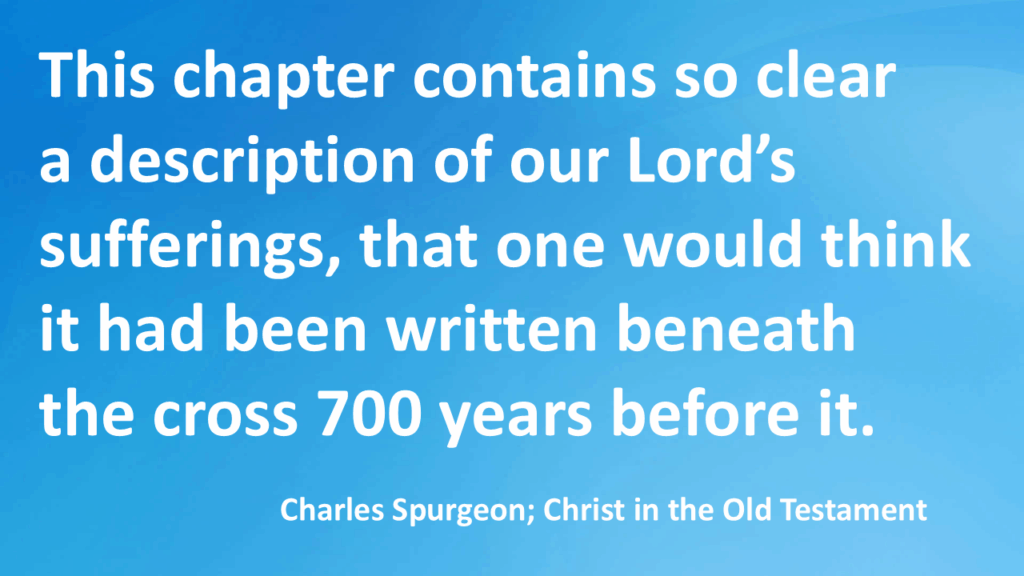
The very idea that someone could accurately forecast the physical, emotional, and redemptive aspects of an execution method that had not yet been conceived defies natural explanation. f this were merely coincidence, the level of detail would be astronomically improbable. If it were a fabrication, it would require Isaiah or later writers to possess knowledge of future execution methods and align them precisely with Jesus’ life and mission—a feat not only historically implausible but textually impossible, given the evidence for the antiquity and integrity of the Isaiah scrolls (e.g., the Dead Sea Scrolls).
Odds of Isaiah 53 Being Fulfilled by Chance in One Person
| Prophetic Detail in Isaiah 53 | Fulfillment in Jesus’ Life | Estimated Probability |
|---|---|---|
| Despised and rejected by men (Isa. 53:3) | Rejected by religious leaders and His own people | 1 in 10 |
| Silent before His accusers (Isa. 53:7) | Silent before Pilate and during His trial | 1 in 100 |
| Pierced for our transgressions (Isa. 53:5) | Nails through hands and feet; crucifixion | 1 in 1,000 |
| Assigned a grave with the wicked (died with criminals) (v.9) | Crucified between two thieves | 1 in 1,000 |
| With the rich in His death (Isa. 53:9) | Buried in the tomb of a wealthy man (Joseph of Arimathea) | 1 in 1,000 |
| No violence or deceit in Him (Isa. 53:9) | Declared innocent by Pilate, Herod, and the centurion | 1 in 100 |
| Bore the sins of many / substitutionary death (Isa. 53:5–6, 11) | Early Christian testimony and doctrine centered on this belief | 1 in 10 |
| Made intercession for transgressors (Isa. 53:12) | Prayed for His executioners on the cross | 1 in 100 |
The most reasonable and compelling explanation is that Isaiah’s prophecy was divinely inspired. It reveals that the crucifixion of Jesus was not a tragic accident of history, but a foreordained act of redemption seen centuries in advance. It speaks to a God who is not bound by time and who declared through the prophet: “I make known the end from the beginning, from ancient times what is still to come” (Isaiah 46:10).
Combined Probability (Cumulative Odds):
Using conservative math, we multiply the probabilities:
1/10 × 1/100 × 1/1,000 × 1/1,000 × 1/1,000 × 1/100 × 1/10 × 1/100 = 1 in 10¹⁹ (10 quintillion)
This means the chances of just these eight Isaiah 53 details being fulfilled by random chance in one man is approximately 1 in 10,000,000,000,000,000,000—or 1 in 10 quintillion.
The Significance of Historical And Prophetical Validation
The historical certainty of Jesus’ crucifixion is extraordinarily high—so high, in fact, that virtually no serious historian disputes it, regardless of their religious beliefs. Scholars across the academic spectrum, from devout Christians to agnostics and atheists, widely affirm that Jesus of Nazareth was executed by Roman crucifixion under Pontius Pilate. When artificial intelligence or historians are asked to estimate the probability of this event based on the sheer volume, diversity, and quality of the evidence—both biblical and non-biblical—the conclusion is consistent: the likelihood exceeds 99.9%.
But when we pair this overwhelming historical certainty with the prophetic accuracy of Isaiah 53, written over 700 years before the crucifixion—and centuries before crucifixion was even practiced—it elevates the discussion from the historical to the divine. Isaiah describes, in stunning detail, a figure who would be despised, pierced, silent before His accusers, and assigned a grave with the wicked yet with the rich in His death. These details align precisely with the life and death of Jesus in ways that defy mere coincidence or human foresight.
Taken together, the near-universal historical agreement on Jesus’ crucifixion and the ancient prophetic specificity of Isaiah form a compelling case: this was not a random execution in the annals of Roman history—it was a cosmically ordained event, foreseen centuries in advance and fulfilled with precision. Even the most skeptical observer must wrestle with the improbability that such alignment could occur by chance. The evidence calls for more than admiration—it invites reflection, and perhaps even belief.
Challenge Question: If Jesus’ crucifixion is historically certain and Isaiah 53 accurately described its details centuries before crucifixion even existed, what is the most reasonable explanation for such a precise alignment between prophecy and history—and can it be dismissed as coincidence?
ThinkCube Truth Veracity Grid
- Have I considered the facts carefully and with an open mind?
- Is my conclusion the result of a careful examination of the facts, or is it a conclusion made in spite of the facts?
- Is my conclusion the one that makes the most sense of the evidence?