
Premise 1: The Bible Exceeds The Historical Reliability Test
Before historians accept an ancient document as historically reliable, they evaluate it using well-established standards. These standards help determine whether a source is trustworthy enough to reconstruct past events. The stronger a document performs in these areas, the greater historians’ confidence in its historical reliability.
| Rules And Standars Used to Evaluate Ancient Historical Documents |
|---|
| Was the document written during, or close to, the events it describes? |
| Did the author have firsthand knowledge of the events, or rely on trustworthy eyewitnesses? |
| Does the document contain verifiable people, places, dates, and events? |
| Is its account confirmed by other independent sources? |
| Has the text been accurately preserved over time? |
What makes something historically reliable depends on the reliability of primary sources and secondary sources. Records created at the same time as an event, or as close as possible to it, usually have a greater chance of being accurate than records created later and by sources without firsthand knowledge of the events. After applying these standards, historians conclude that some ancient documents are more reliable than others.
The Bible performs exceptionally well in every one of these categories. It is supported by tens of thousands of manuscripts, many copied relatively close to the original writings. Its historical details have been repeatedly confirmed by archaeology, and its text has been preserved with remarkable accuracy. As a result, the Bible has proven to be one of the most thoroughly documented and historically reliable collections of writings from the ancient world, making it an invaluable resource for historians and archaeologists studying the ancient Near East.
How The Bible Stacks Up Against Reliability Standards
1. Was the source created at the same time as the events it describes?
✅ Bible:
Many biblical books were written within the lifetimes of the people who witnessed the events they describe. For example, the New Testament was written between A.D. 40–100, with Paul’s letters appearing just 20–30 years after Jesus’ resurrection. This short time gap makes fabrication or legendary development highly unlikely. Old Testament books also reflect cultural and historical knowledge accurate to the time periods they describe, often confirmed by archaeology.
2. Who furnished the information and were they in a position to provide facts?
✅ Bible:
Biblical writers often identify themselves as eyewitnesses or close associates of eyewitnesses. For instance, Luke explicitly states that he investigated “everything carefully” from those who were eyewitnesses from the beginning (Luke 1:1–4). Authors like Moses, Isaiah, Jeremiah, Paul, John, and Peter were either direct participants or had close access to firsthand accounts, enhancing their credibility.
3. Was the informant a participant in the events?
✅ Bible:
Many of the biblical authors were direct participants in the events they recorded. Examples include:
- Moses recording the Exodus,
- David writing many Psalms tied to his life experiences,
- Apostles like Peter and John documenting their time with Jesus,
- Paul writing letters about his missionary journeys and interactions with early churches.
The authors of all 27 New Testament books lived during the events they wrote about and had personal relationships or encounters with Jesus.
4. Are names, dates, places, events, and relationships verifiable?
✅ Bible:
Yes. The Bible is filled with specific historical details—names of rulers, cities, customs, genealogies, and events—that are testable and verifiable. Thousands of archaeological findings confirm biblical references, such as the existence of King Hezekiah, the Pool of Bethesda (John 5), Pontius Pilate, and ancient cities like Jericho and Nineveh. These confirmations lend strong historical credibility.
5. Does more than one reliable source give the same information?
✅ Bible:
The Bible offers multiple independent and overlapping accounts of the same events. The four Gospels, for example, provide complementary perspectives on the life, death, and resurrection of Jesus. Additionally, early non-Christian sources such as Tacitus, Josephus, Pliny the Younger, and the Talmud confirm core events like Jesus’ crucifixion, the existence of early Christians, and persecution under Roman emperors—further validating the biblical record.
When judged by the same historical standards used for evaluating any ancient biographical or historical text, the Bible meets—and often exceeds—the criteria for reliability. Its short time gap between events and documentation, eyewitness testimony, internal coherence, verifiable details, and multiple corroborating sources all support its trustworthiness as a historical document.
How Other Ancient World History Accounts stack up against Historical Reliability Standards
Most other accepted historical texts from the same period are far less verifiable. For instance the literary evidence for all of the Roman Caesars come mainly from only two sources Tacitus and Suetonius. Neither Tacitus who wrote “Annals of Imperial Rome” in 116 AD or Suetonius who wrote “Lives of The Caesars” lived during the reign of Caesars that they wrote about. Neither Tacitus or Suetonius were acquainted with or first hand knowledge pertaining to any of the Caesar’s they wrote about. Both Annals of Imperial Rome (by Tacitus) and Lives of the Caesars (commonly known as The Twelve Caesars by Suetonius) are considered academically credible and valuable historical sources.
Academic Credibility
| Work | Author | Date | Status in Academia |
|---|---|---|---|
| Annals of Imperial Rome | Tacitus | c. AD 100–120 | Highly regarded for political and historical insight; considered one of the most reliable Roman historians though sometimes biased |
| The Twelve Caesars (Lives of the Caesars) | Suetonius | c. AD 121 | Considered an important biographical and literary source; used extensively in classical and historical studies |
Common Institutions Where These Are Found:
- Universities: Harvard, Oxford, Cambridge, University of Chicago, Stanford, Yale, etc.
- Libraries: British Library, Library of Congress, Vatican Apostolic Library, Bibliothèque nationale de France (BNF)
- Digital Databases: JSTOR, Perseus Digital Library, Loeb Classical Library, Internet Archive
- Academic Disciplines: Classical Studies, Ancient History, Roman Law, Latin Literature, Political Philosophy
The point is—while both of these works are considered academically credible and valuable historical sources, each relies on a single non-primary author who neither lived through nor personally witnessed the events they describe.
The primary sources used for biographies of Alexander the Great are mainly ancient Greek and Roman texts, with the most important being the works of Arrian, Plutarch, Diodorus Siculus, Quintus Curtius Rufus, and Justin. These authors wrote their accounts hundreds of years after Alexander’s death—and relied on earlier, now lost contemporary sources and oral traditions.
All of these are considered classic works and primary biographical source material for the people that are written about, but none of the three meet the Rules of Historical Reliability like the Bible does. Not even close!
Ancient Historical Texts Vs The 5 Rules of Historical Reliability
| Ancient Text | Author | Number of Historical Reliability Rules They Comply With |
| Old Testament | 25-30 | All 5 Rules |
| New Testament | 9 Authors | All 5 rules |
| History of Roman Caesars | Seutonius | 2 |
| History of Alexander The Great | Plutarch | 1 |
| The Twelve Caesars | Seutonius | 2 |
| Roman History | Cassius Dio | 1 |
| Histories | Herodotus | 2 |
| Geography | Strabo | 1 |
| Annals of History | Tacitus | 2 |
The history of Ancient Greece, including the story of Alexander the Great is taught in World History classes at schools and universities as a very important part of Western Civilization history because of it’s massive influence on vast regions stretching across Europe, Asia, and Africa. These globally accepted sources are taught and accepted as historical fact— yet they have far fewer primary sources than the Bible. Also, unlike the New Testament’s authors the primary sources did not live during or participate in the events they document.
The primary sources of these historical accounts were not personally acquainted with their subjects and were historically removed from most if not all of the events they wrote about. In contrast , all 9 authors who wrote the New Testament books lived during, and participated in the events and with the people they wrote about.
Scholars have applied textual criticism, archaeological comparison, and historical cross-referencing to assess the reliability of these widely accepted ancient works—the same methods used on the Bible. Ironically, while the Bible often faces more intense skepticism, many of these other texts are accepted with far fewer manuscripts, longer time gaps, and limited external verification—highlighting a clear double standard.
The ways New Testament sources exceed any other sources of ancient historical text:
- All 27 New Testament authors lived during the time of the events they described and either had direct encounters with Jesus or close relationships with those who did. Their writings reflect firsthand knowledge or immediate access to eyewitness testimony.
- The majority of New Testament authors were participants in the events they recorded. Apostles like Peter, John, and Paul wrote from personal experience—whether walking with Jesus, witnessing miracles, or leading the early Church.
- Multiple independent and reliable sources within the New Testament record the same events. The Gospels offer overlapping accounts of Jesus’ life, teachings, death, and resurrection, and the epistles confirm these core truths from different perspectives.
- Many of the people, places, and events mentioned in the New Testament are historically verifiable. Archaeology and ancient non-Christian sources have confirmed the existence of figures like Pontius Pilate and Herod, and locations such as Nazareth, Capernaum, and the Pool of Bethesda—adding significant historical credibility to the biblical account.
The Bible not only meets but far exceeds the standard tests for historical reliability when compared to other widely accepted ancient texts. Unlike most classical works—which were written centuries after the events they describe and rely on relatively few manuscript copies—the Bible was written by eyewitnesses or close contemporaries, contains multiple independent accounts, and is supported by a vast wealth of manuscript evidence and archaeological confirmation.
Secular and Mainstream Scholars on the Bible’s Historical Reliability
| Scholar | Credentials | Representative Quote |
|---|---|---|
| A. N. Sherwin-White | Oxford University Roman historian | “For Acts, the confirmation of historicity is overwhelming… Any attempt to reject its basic historicity must now appear absurd. Roman historians have long taken it for granted.” |
| Michael Grant | Classical historian; former Vice-Chancellor, Queen’s University Belfast | “No serious scholar has ventured to postulate the non-historicity of Jesus.” |
| Bart D. Ehrman | Agnostic New Testament scholar, University of North Carolina | “Jesus certainly existed, as virtually every competent scholar of antiquity… agrees.” |
| Nelson Glueck | Jewish archaeologist; President, Hebrew Union College | “No archaeological discovery has ever controverted a Biblical reference.” |
| Sir William Ramsay | Scottish archaeologist and classical historian | “Luke is a historian of the first rank.” |
| Sir William Ramsay | Archaeologist and historian of Asia Minor | “This author should be placed along with the very greatest of historians.” |
| F. F. Bruce | Rylands Professor of Biblical Criticism and Exegesis, University of Manchester | “The evidence for our New Testament writings is ever so much greater than the evidence for many writings of classical authors.” |
| John A. T. Robinson | New Testament scholar; Bishop of Woolwich (Church of England) | “The book of Acts was written between A.D. 40 and 60.” (from his early-dating argument in Redating the New Testament*)* |
| W. F. Albright | Dean of American biblical archaeology, Johns Hopkins University | “Discovery after discovery has established the accuracy of innumerable details of the Bible as a source of history.” |
| Craig S. Keener | New Testament historian, Asbury Theological Seminary | “Luke’s historical reliability has been repeatedly confirmed by archaeology and ancient sources.” (paraphrases a recurring conclusion from his multi-volume Acts*)* |
Its events, people, and places have been repeatedly verified by historical and archaeological discoveries. Yet while ancient texts by authors like Homer, Plato, or Tacitus are accepted without hesitation and occupy shelves in libraries and universities around the world, the Bible—despite far greater evidence—often faces disproportionate skepticism. When judged by the same historical standards, the Bible stands as not only a spiritual document but one of the most trustworthy historical records from antiquity.
Challenge Question: If ancient texts with far fewer manuscripts, greater time gaps, and less historical verification are accepted as reliable in universities and libraries worldwide, what justifies the heightened skepticism often directed toward the Bible?
Premise 2: The New Testament Was Written Too Early To Be Legend
Skeptics often claim that the accounts of Jesus’ life, death, and resurrection found in the New Testament are the result of legendary development over time. However, this assertion collapses under historical scrutiny. Scholars across disciplines agree that significant legends—especially those that reshape public memory—require the passage of multiple generations, typically 80 to 150 years, before they can override eyewitness testimony and become widely accepted.
The rate at which legend accumulates varies, but it generally takes time—typically several generations—before the distortion of public historical memory can occur.
A. N. Sherwin-White— Roman Historian, Oxford
In the case of the New Testament, the core events were recorded and circulated within a single generation, while many who had witnessed Jesus’ ministry were still alive. This early dating makes it virtually impossible for myth to have replaced fact without people quickly speaking out against it.
Early New Testament Writings Were Written Within the Lifetimes of the Eyewitnesses
One of the most powerful reasons to trust the historical reliability of the New Testament is that its writings were completed during the lifetimes of those who personally witnessed the events it records. Contrary to the common claim that the Gospels and letters evolved decades or centuries later as legends, the evidence shows that the majority of the New Testament was written between AD 48 and 70—well within a single generation of Jesus’ death and resurrection. Many of the individuals named in the texts—disciples, family members, political figures, and even critics—were still alive, and could confirm or challenge the accounts. Jesus’s crucifixion was in AD 30 and most New Testament Books were written between AD 48-70. This proximity to the actual events makes legendary development historically implausible and strongly supports the authenticity of the New Testament’s testimony.
Writings Within Eyewitness Lifetimes
1. Undisputed Letters of Paul (AD 48–62)
These letters are universally accepted by even skeptical scholars as authentically Pauline and are written within 15–30 years of Jesus’ death:
- 1 Thessalonians (ca. AD 48–51) – Earliest NT book. Paul references persecution, Jesus’ return, and resurrection hope.
- Galatians (ca. AD 49–55) – Contains Paul’s personal interaction with Peter, James, and John (Gal. 1:18–19).
- 1 Corinthians (ca. AD 54–56) – Paul cites the resurrection appearances of Jesus in 1 Corinthians 15:3–8, naming Cephas (Peter), the Twelve, James, and over 500 eyewitnesses, many of whom were “still alive” at the time of writing.
“Then he appeared to more than five hundred brothers at one time, most of whom are still alive, though some have fallen asleep.” – 1 Corinthians 15:6
2. The 1 Corinthians 15 Creed (AD 30–35)
- This pre-Pauline creed is widely dated to within 5 years of the crucifixion, possibly even earlier.
- It reflects a formal oral tradition Paul “received” and “passed on,” used to preserve and transmit eyewitness testimony of Jesus’ death and resurrection.
- Scholars like Bart Ehrman, James D.G. Dunn, and Gary Habermas agree it dates to immediately after the events.
3. Book of Acts (ca. AD 62)
- Acts ends with Paul alive and under house arrest in Rome, but does not mention his martyrdom (~AD 64–67), nor the deaths of James (AD 62) or Peter (AD 65), nor the destruction of the Jerusalem temple (AD 70).
- Strong internal evidence that Acts was written before these events, making it very early.
- Luke–Acts are a two-volume work; if Acts is early, Luke’s Gospel must be even earlier (ca. AD 60).
4. The Gospel of Mark (ca. AD 60–70)
- Considered the earliest Gospel, Mark preserves eyewitness detail (e.g., Peter’s perspective, Aramaic phrases, names).
- Early church tradition (e.g., Papias, c. AD 110) confirms Mark recorded Peter’s eyewitness account.
5. The Gospel of Luke (Before AD 62)
- Luke 1:1–4 claims he used eyewitness sources.
- He names many specific people: Mary, Elizabeth, Zechariah, Anna the prophetess, Pilate, Herod, Quirinius—implying investigation during their lifetime.
- Luke’s Gospel shares over 50% overlap with Mark, further supporting an early date.
“Many people have set out to write accounts about the events that have been fulfilled among us. They used the eyewitness reports circulating among us from the early disciples”—Luke 1:1-2
6. The Gospel of Matthew (ca. AD 60–70)
- Written for a Jewish audience, draws on Mark and independent traditions.
- Matthew contains specific teachings and names (e.g., the Great Commission, Sermon on the Mount) that would have been known and reviewable by surviving disciples.
7. The Letter to the Hebrews (~AD 64–68)
- No mention of the temple’s destruction in AD 70, despite its heavy focus on temple rituals.
- This implies it was written before the event, while the first generation of Jewish believers was still present.
8. James and Jude (Likely Before AD 70)
- These epistles are attributed to Jesus’ half-brothers, both of whom were key early church leaders.
- James died in AD 62, so his letter must be dated before that—within the lifetime of early believers.
9. Peter’s Letters (ca. AD 60–65)
- Written by the apostle Peter, one of the original disciples.
- 2 Peter references eyewitness testimony of the Transfiguration (2 Peter 1:16–18), affirming firsthand experience.
- Written before Peter’s martyrdom (ca. AD 64–67).
10. John’s Gospel and Letters (AD 70–90)
- While possibly later, John was an eyewitness (John 19:35; 1 John 1:1–3).
- He claims to have seen, touched, and heard Jesus directly—testimony still within his own lifetime.
“What we have heard, what we have seen with our eyes, what we looked at and touched with our hands—this we proclaim.” – 1 John 1:1
11. The Book of Revelation (ca. AD 95)
- Authored by John the Apostle, the last surviving eyewitness.
- Even though late, it still falls within the lifespan of a direct disciple of Jesus.
I passed on to you what was most important and what had also been passed on to me. Christ died for our sins, just as the Scriptures said. He was buried, and he was raised from the dead on the third day, just as the Scriptures said. He was seen by Peter and then by the Twelve.
1 Corinthians 15:3-6
After that, he was seen by more than 500 of his followers at one time, most of whom are still alive
One of the most compelling pieces of evidence for the early and reliable testimony of Jesus’ resurrection is Paul’s reference to over 500 eyewitnesses who saw the risen Christ at one time. In 1 Corinthians 15:6, written around AD 54–56 which is only 21-26 years after the resurrection. This is well within most of these witnesses lifetime. Paul states that Jesus “appeared to more than five hundred of the brothers at once, most of whom are still living, though some have fallen asleep.” This statement is more than a passing remark—it is a deliberate historical appeal. Paul is essentially telling his readers that the resurrection was not a private or mystical experience shared by a few, but a public event witnessed by a multitude—most of whom were still alive and could be consulted. This is critical, because Paul is writing within just 25 years of the crucifixion, a time when many of these eyewitnesses were still accessible. If his claim had been false, it would have been easily refuted by contemporaries, including both skeptics and hostile opponents.
Secular Historians, Church Fathers, and Creeds Show The New Testament Is Not Legend
One of the strongest reasons historians reject the idea that the New Testament is legendary is the abundance of early, independent sources. Within a few decades of Jesus’ death we find Christian creeds, New Testament documents, Roman historians, Jewish historians, and Church Fathers all affirming the same central events. Together these sources leave little time for legend to replace history.
creed
/krēd/
a formal statement of Christian beliefs that summarizes essential teachings. Because creeds were memorized and recited publicly, they preserve some of the earliest Christian beliefs.
Even more significantly, creeds that are embedded in the writings of Paul, especially in 1 Corinthians 15, preserve formal declarations of faith that date to within five years of the crucifixion. Together, these sources offer a powerful cumulative case: the New Testament is not the product of legend, but a reliable record grounded in early, eyewitness testimony and publicly affirmed belief.
Historical EvidenceThe New Testament Is Not Legend
| Source / Date | Connection to Events | Significance |
|---|---|---|
| Early Creed — 1 Corinthians 15:3–7 (AD 30–35) | Oral formula affirming Jesus’ death, burial, resurrection, and eyewitnesses | Dated within ~5 years of the crucifixion; earliest structured Christian tradition |
| Early Creed — Philippians 2:5–11 (AD 40–50) | Pre-Pauline hymn declaring Christ’s deity, incarnation, death, and exaltation | Shows early, high Christology and public worship of Jesus as Lord |
| Jewish Historian — Josephus, Antiquities (AD 93–94) | Mentions Jesus’ execution, James (Jesus’ brother), and early followers | Non-Christian corroboration of Jesus, His death, and early Christian movement |
| Roman Historian — Tacitus, Annals (AD 115) | Notes Jesus’ execution under Pontius Pilate and persecution of Christians | Roman confirmation of Jesus’ death and early Christian suffering |
| Roman Official — Pliny the Younger (AD 111–113) | Reports Christians worshiping Christ as divine | Confirms early Christian worship practices and moral distinctiveness |
| Roman Historian — Suetonius, Life of Claudius (AD 120) | Refers to disturbances among Jews caused by “Chrestus” | Alludes to early Christian presence in Rome |
| Church Father — Clement of Rome (ca. AD 96) | Affirms resurrection, Christian ethics; references Peter and Paul | Shows continuity with apostles and early church structure |
| Church Father — Ignatius of Antioch (ca. AD 110) | Emphasizes Jesus’ deity, incarnation, death, and resurrection | Treats Gospel facts as established; combats early heresies |
| Church Father — Polycarp of Smyrna (ca. AD 110–140) | Cites NT texts; affirms Jesus’ life, death, and resurrection | Direct disciple of John; strong eyewitness connection |
| Apologist — Quadratus (ca. AD 125) | States people healed by Jesus were still alive in his day | Shows enduring eyewitness testimony into the second century |
| Apologist — Aristides of Athens (ca. AD 125–135) | Defends belief in Jesus’ incarnation and resurrection | Early philosophical defense grounded in historical claims |
| Apologist — Justin Martyr, Apologies (ca. AD 150) | Confirms Jesus’ trial, crucifixion, and fulfillment of prophecy | Uses Roman and Jewish sources; insists on NT historical truth |
Notice the diversity of these witnesses. They include Christian, Jewish, and Roman sources, friends and critics of Christianity, official government correspondence, early hymns, public creeds, and the writings of Church Fathers. These sources were written independently, yet consistently affirm Jesus’ existence, crucifixion under Pontius Pilate, the rapid spread of Christianity, and the earliest Christian belief in His resurrection and deity.
What Makes This Evidence So Powerful?
- The earliest Christian creed dates to within five years of the crucifixion.
- Multiple independent writers describe the same historical events.
- Roman and Jewish historians confirm key Gospel facts.
- Church Fathers preserve and quote New Testament teachings before the second century.
- These sources come from both supporters and opponents of Christianity.
- The evidence appears too early for legendary development.
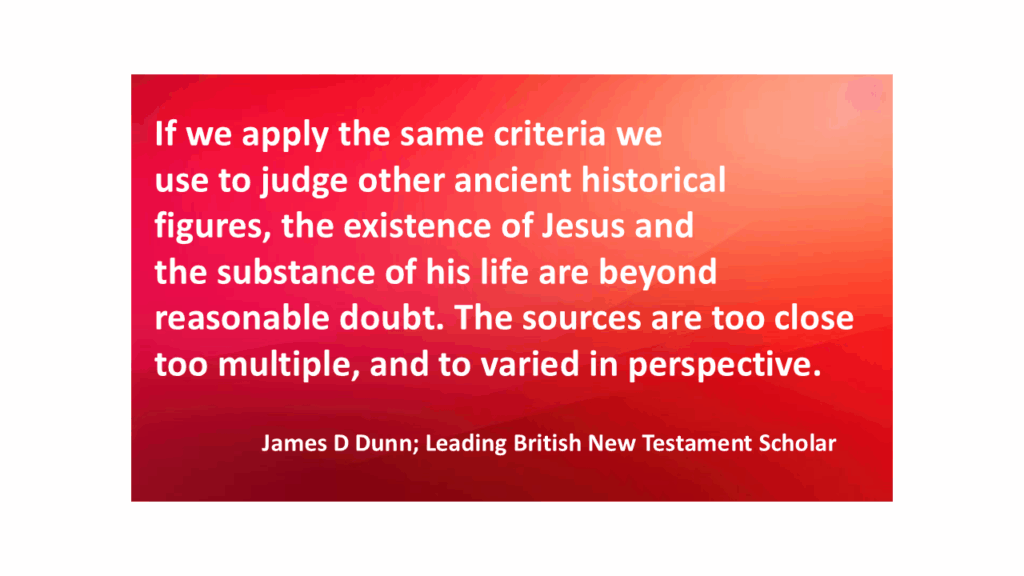
Unlike legends that develop over centuries, the core claims of Christianity can be traced to the earliest years after Jesus’ death. They were publicly proclaimed while eyewitnesses were still alive, preserved in creeds, recorded by New Testament authors, acknowledged by Roman and Jewish historians, and repeated by the earliest Church Fathers. When historians evaluate the evidence using the same standards applied to every other ancient event, the conclusion is clear: the New Testament is not late legend but a historically grounded record rooted in eyewitness testimony and early public proclamation.
Challenge Question: If the New Testament accounts were legendary, how do you explain the fact that its core claims—like the resurrection of Jesus—were publicly proclaimed, documented, and defended within the lifetime of hundreds of eyewitnesses, without any credible historical refutation from contemporary critics?
Premise 2: New Testament Authors Were Authentic And Credible
There are two main kinds of historical sources— primary and secondary. A primary source is a doorway to the past because it is an artifact or document that comes directly from the time period to which it refers. Primary sources are considered more valuable to than any other sources because they are as close in time as you can get to the events being studied. The New Testament is composed of 26 books and all of them are written by people who either participated , witnessed or lived during the events and the lives of the people they write about.
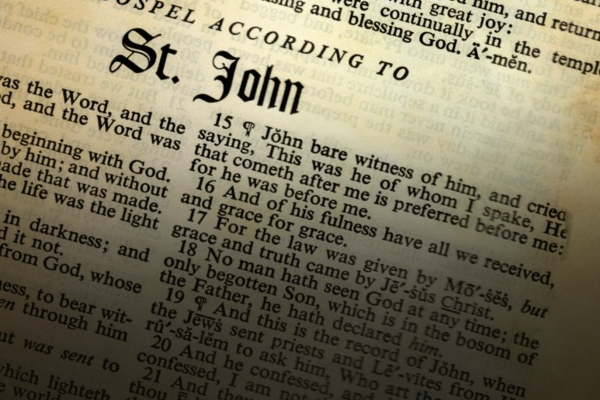
The four Gospels—Matthew, Mark, Luke, and John—provide four personal biographical accounts of Jesus’s life and ministry. Each is named after the author traditionally associated with it, and all were written relatively soon after the events they describe.
While all four Gospels offer eyewitness testimony to Jesus’s life, teachings, and the events surrounding His ministry, each reflects the distinct perspective, style, and personality of its author. This diversity enriches the overall narrative, providing a multidimensional portrait of Jesus grounded in firsthand experience.
The New Testament Authors Were Intimate Eyewitnesses
Unlike most ancient works that rely on non-primary sources, the New Testament stands apart as a collection of firsthand accounts written by eyewitnesses and close associates, offering unparalleled historical credibility. Its authors personally experienced the events they recorded, and their writings reflect detailed knowledge of the people, places, and customs of the time—hallmarks of genuine historical testimony.
Twelve of the twenty-six books of the New Testament were written by individuals who were intimate companions of Jesus. These authors—His disciples—traveled with Him, lodged with Him, and ministered alongside Him continuously for nearly four years. As rabbinical students under His direct teaching, they not only shared in His public ministry but also had close personal relationships with His family, including His mother, Mary. Notably, the book of James was written by Jesus’s half-brother, and Jude was authored by His cousin—both of whom were closely connected to Jesus’s earthly life.
The remaining fourteen New Testament books were written by the Apostle Paul. Although he was not one of the original disciples, Paul was a contemporary of Jesus and lived in the same region during the time of Jesus’s ministry and the early Christian movement. Paul became a close associate of the other apostles and played a foundational role in spreading and articulating the Christian faith, making him a credible and deeply informed contributor to the New Testament canon.
Relationship of New Testament Authors to Jesus and the Events They Recorded
| Author / Books Written | Relationship to Jesus & the Apostles | Connection to the Events |
|---|---|---|
| Matthew Matthew | One of the Twelve Apostles; tax collector personally called by Jesus. | Eyewitness to Jesus’ ministry, miracles, teachings, crucifixion week, resurrection appearances, and Great Commission. |
| Mark Mark | Companion of Peter; also worked with Paul and Barnabas. The early church consistently identified Peter as Mark’s primary source. | Records Peter’s eyewitness testimony of Jesus’ life, ministry, death, and resurrection. |
| Luke Luke, Acts | Physician and companion of Paul. Personally interviewed eyewitnesses and carefully investigated the events (Luke 1:1–4). | Historian who compiled eyewitness testimony and documented the birth and expansion of the early Church. |
| John John, 1–3 John, Revelation | One of the Twelve Apostles and member of Jesus’ inner circle with Peter and James. | Eyewitness to Jesus’ ministry, crucifixion, resurrection, and leadership of the early Church. |
| Paul Romans, 1–2 Corinthians, Galatians, Ephesians, Philippians, Colossians, 1–2 Thessalonians, 1–2 Timothy, Titus, Philemon | Contemporary of Jesus; personally knew Peter, James (Jesus’ brother), John, Barnabas, Luke, Timothy, Titus, and many eyewitnesses. Personally encountered the risen Christ. | Wrote within the lifetime of hundreds of eyewitnesses and frequently appealed to publicly known events (e.g., 1 Corinthians 15). |
| James James | Half-brother of Jesus and leader of the Jerusalem church. Initially skeptical but became a believer after seeing the risen Christ. | Personally knew Jesus throughout His earthly life and became one of the earliest leaders of Christianity. |
| Peter 1 Peter, 2 Peter | One of the Twelve Apostles and one of Jesus’ closest companions. | Eyewitness to nearly Jesus’ entire public ministry, the Transfiguration, crucifixion events, resurrection appearances, and Pentecost. |
| Jude Jude | Half-brother of Jesus and brother of James. | Personally knew Jesus before His public ministry and became an early church leader after the resurrection. |
Of the eight New Testament authors (excluding Hebrews):
- Five personally knew Jesus (Matthew, John, Peter, James, and Jude).
- One recorded Peter’s eyewitness testimony (Mark).
- One carefully interviewed eyewitnesses and investigated the events (Luke).
- One personally knew the apostles, Jesus’ family, and many eyewitnesses while writing within their lifetime (Paul).
This chart makes a compelling historical point: every New Testament author either witnessed the events firsthand or had direct access to those who did. Few, if any, other works from antiquity can claim such close proximity between their authors and the events they describe.
One of the most significant contributors, Luke, authored both the Gospel of Luke and the Book of Acts. He was a trained physician and historian,and was not only an eyewitness to many of the events he recorded but also a careful investigator. His writings exhibit a methodical and detailed approach, reflecting the same level of scholarly rigor and narrative precision found in the work of modern professional biographers.
In as much as many have undertaken to compile a narrative of the things that have been accomplished among us, just as those who from the beginning were eyewitnesses and minsters of the word have delivered them to us, it seemed good to me also, having followed all things closely for some time past, to write an orderly account for you, most excellent Theophilus, that you may have certainty concerning the things you have been taught.
Luke 1:1-4
In my former book, Theophilus, I wrote about all that Jesus began to do and to teach until the day he was taken up to heaven, after giving instructions through the Holy Spirit to the apostles he had chosen.
Acts 1:1
In the opening lines of both Luke’s Gospel, and Acts Luke makes it clear that what he is writing is being written from a historical and biographical perspective. He provides an opening disclaimer that what he has authored is truth that has been meticulously investigated.
Luke has often been recognized by modern historians for his trustworthiness as a documentarian of places, dates, people and events. Sir William Ramsay a British archaeologist and the foremost scholar on the ancient history of Asia Minor carefully examined Luke’s references to thirty-two countries, fifty-four cities, and nine islands—he did not find a single mistake.
I found myself often brought into contact with the Book of Acts as an authority for the topography, antiquities, and society of Asia Minor. It was gradually borne in upon me that in various details the narrative showed marvelous truth.
Luke is a historian of the first rank; not merely are his statements of fact trustworthy—this author should be placed along with the very greatest of historians. Luke’s history is unsurpassed in respect of it’s trustworthiness.
Sir William Ramsay; British Archeologist—leading authority on Roman history, geography, and archaeology
Together, these authors—eyewitnesses, family members, disciples, and close associates—offer a uniquely credible and cohesive account of Jesus’s life, teachings, death, and resurrection. Unlike most ancient texts, which rely on secondhand reports written long after the events occurred, the New Testament stands as a firsthand, multi-perspective testimony rooted in direct experience and personal relationship, making it unparalleled in historical reliability.
Challenge Question: If most ancient writings were written by people who didn’t see the events themselves, why is the New Testament often criticized for bias—even though it was written by people who knew Jesus personally—while those other less reliable writings are widely accepted?
Premise 3: Why Would The Authors Be Willing To Die For A Lie?
The New Testament writers had no logical motivation to invent a story that would lead to their persecution, suffering, and, in many cases, death. Prior to encountering Jesus, they were devout Jews who believed wholeheartedly that Judaism was the one true faith and that they, as Israelites, were God’s chosen people.
Embracing and proclaiming Jesus as the Messiah meant abandoning long-held religious traditions, risking excommunication from their communities, and putting themselves and their families in danger. From a worldly perspective, they had every reason to reject or suppress the events they witnessed. Yet, they boldly testified to what they saw and heard—despite knowing it would cost them everything. Such unwavering conviction strongly supports the sincerity and truthfulness of their accounts.
Jesus Warned and Predicted that the Disciples Would Suffer and Most Would Die
Jesus not only warned His disciples about the cost of following Him—He clearly foretold that suffering, persecution, and even death were not just possible outcomes, but inevitable realities.
They will lay their hands on you and persecute you, delivering you up to the synagogues and prisons, and you will be brought before kings and governors for my name’s sake—you will be delivered up even by parents and brothers and relatives and friends, and some of you will be put to death.
Luke 21:12-17
You will be hated by all for my name’s sake.
The Luke 21 Prophecy Became True For Every New Testament Author!
| Author | Books Written | Cause of Death |
| Matthew | Gospel of Matthew | Stabbed to death |
| Mark | Gospel of Mark | Dragged to death by the neck |
| Luke | Gospel of Luke, Acts | Hanged |
| John | Gospel of John, 1st John, 2nd John, 3rd John, Revelation | Exiled to Island of Patmos where he died of Old Age |
| Paul | 1st Corinthians, 2nd Corinthians, Galations, Ephesians, Phillipians, 1st Thessalonians, 2nd Thessalonians, 1 Timothy, 2nd Timothy | Beheaded |
| James | James | Stoned and Clubbed to death |
| Peter | 1st Peter, 2nd Peter | Crucified upside down |
| Jude | Jude | Beheaded |
In John 21:18-19 Jesus directed a specific and sobering prophecy at Peter, the man who would become a central leader in the early Church. By saying Peter would “stretch out your hands,” Jesus was foretelling the manner of Peter’s death—crucifixion. In the Roman world, this phrase unmistakably pointed to being nailed to a cross with outstretched arms. Jesus was making it clear that following Him would lead Peter not only into leadership, but into suffering and martyrdom. It was a dire and personal prediction that the cost of discipleship would be life itself. Thirty years later—Peter was crucified upside down.
“I tell you the truth, when you were young, you were able to do as you liked; you
John 21:18-19
dressed yourself and went wherever you wanted to go. But when you are old,
you will stretch out your hands, and others will dress you and take you where you don’t want to go.”
Jesus said this to let him know by what kind of death he would glorify God.
Then Jesus told him, “Follow me.”
Jesus made it clear to every New Testament writer that following Him would bring grave and often horrifying consequences. He openly foretold that His followers would face persecution, suffering, and even death. This adds significant credibility to the New Testament accounts—because the authors had every reason not to fabricate such stories. Knowing the cost they would face, their willingness to proclaim and preserve these events strongly suggests they were compelled by truth, not personal gain.
Fulfillment of Jesus’ Warnings Of Persecution and Martyrdom
| Name | Role/Contribution | Fulfillment of Jesus’ Warning | Type of Suffering or Death |
|---|---|---|---|
| Peter | Apostle; wrote 1 & 2 Peter | “You will stretch out your hands…” (John 21:18–19) | Crucified upside down in Rome under Nero |
| James (Son of Zebedee) | Apostle | “You will drink my cup…” (Matt. 20:23) | Beheaded by Herod Agrippa (Acts 12:1–2) |
| Paul | Apostle; wrote 13 NT books | “I will show him how much he must suffer…” (Acts 9:16) | Beaten, imprisoned, and beheaded in Rome |
| John | Apostle; wrote John, 1–3 John, Revelation | “If I want him to remain alive…” (John 21:22) | Imprisoned, exiled to Patmos; died of old age |
| Matthew | Apostle; wrote Gospel of Matthew | “You will be hated by all…” (Matt. 10:22) | Killed by sword in Ethiopia (according to tradition) |
| James (Brother of Jesus) | Leader of Jerusalem Church; wrote James | Faced threats from Jewish leaders | Stoned to death in Jerusalem |
| Jude (Cousin of Jesus) | Wrote the book of Jude | Warned others of judgment | Martyred in Persia (according to tradition) |
| Thomas | Apostle | Boldly proclaimed faith after resurrection | Speared to death in India (according to tradition) |
| Andrew | Apostle | Preached despite danger | Crucified on an X-shaped cross in Greece |
| Luke | Historian; wrote Luke and Acts | Traveled with Paul amid danger | Hanged in Greece (according to early church tradition) |
It is extremely unlikely that the disciples would have willingly suffered and died for something they knew to be false. People may die for what they believe is true, even if they are mistaken—but no one willingly endures torture, loss, and execution for a message they know they made up. The disciples were in a unique position: they weren’t passing along secondhand beliefs—they were the firsthand witnesses of Jesus’s life, death, and resurrection. If they had fabricated the story, they would have known it was a lie. Yet nearly all of them chose hardship, poverty, imprisonment, and martyrdom rather than deny what they saw. That level of unwavering conviction under extreme pressure is strong evidence that they truly believed—and knew—what they were proclaiming was real.
The persecution of Christians in the first century certainly doesn’t prove Christianity is true.
Impact 360 Institute
But it does raise the question of why so many people believed when it cost them so dearly. In particular, as I demonstrate in The Fate of the Apostles, the apostles were all willing to suffer and die for their belief that Jesus had risen from the grave. They were not liars. They really believed it. They put their lives on the line to proclaim the risen Lord.
What more could they have done to convince us of the depth of their sincerity?
The apostles truly believed that Jesus was the Messiah and that He had risen from the dead—an event they claimed to have witnessed with their own eyes. Their willingness to suffer rejection, persecution, and ultimately martyrdom is a powerful testimony to the depth of their conviction. People may die for a cause they mistakenly believe is true, but the apostles were in a position to know whether their claims were real or fabricated. Their unwavering commitment, even in the face of death, strongly affirms that they were not promoting a lie—they were proclaiming a truth they had personally encountered.
Challenge Question: If the apostles had knowingly made up the story of Jesus’s resurrection, what possible reason would they have to suffer persecution and die for something they knew was false?
ThinkCube Truth Veracity Grid
- Have I considered the facts carefully and with an open mind?
- Is my conclusion the result of a careful examination of the facts, or is it a conclusion made in spite of the facts?
- Is my conclusion the one that makes the most sense of the evidence?