Premise 1: God Is Not Indifferent To Evil
One of the most common assumptions among skeptics is that God’s apparent “silence” in the face of evil means He is indifferent to it. Yet the biblical record—and human history viewed through its lens—tells a radically different story. From Genesis to Revelation, God not only acknowledges the full depth of human evil but actively confronts it with justice, tempers it with mercy, and moves history toward its ultimate eradication.
Blessed are those who wash their robes, so that they may have the right to the tree of life and they may enter the city by the gates. Outside are the dogs and sorcerers and the sexually immoral and murderers and idolaters, and everyone who loves and practices falsehood.
Revelation 22:14-15
While we may not fully understand why God allows evil to exist—or why He sometimes allows it to persist—one thing is certain: He is not detached or disinterested. Throughout Scripture, God’s stance toward evil is unambiguous. He reveals exactly how He feels about it, what He is doing about it in the present, and how He will one day deal with it decisively and permanently.
God’s disdain for evil and His judgment against it appears hundreds of times throughout Scripture—well over 600 passages explicitly describe God hating, judging, opposing, condemning, or promising to punish evil, wickedness, injustice, and evildoers. The words evil, wicked, and wickedness appear more than a thousand times in the biblical text. So while there may be mystery about why God allows evil for a time, there is absolutely no mystery about His attitude toward it.
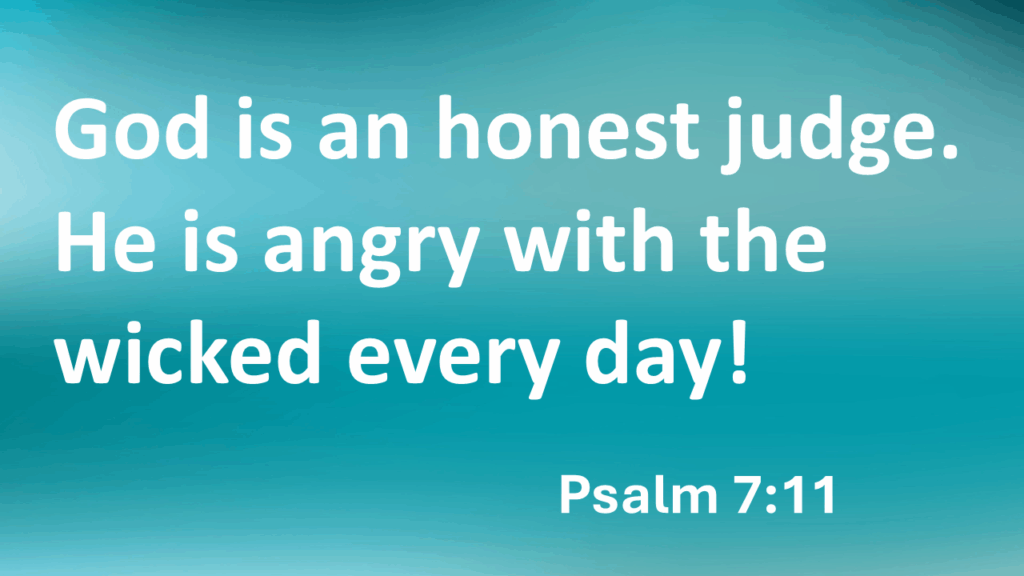
While the existence of evil remains one of the profound mysteries of human experience, God’s stance toward it is anything but unclear. Scripture never fully explains why evil is permitted for a season, but it repeatedly and emphatically reveals God’s hatred of evil, His commitment to judge it, and His promise to one day eradicate it completely. The mystery lies in the timing of God’s justice, not in His attitude toward wickedness.
God Sees Evil Clearer Than We Do
Our outrage at atrocities like genocide, abuse, or oppression is real—but it is also partial. We see events in fragments, through our own biases and limited understanding. God, however, sees evil in its entirety—both the act and its ripples through time and eternity.
The eyes of the Lord are in every place,
Proverbs 15:3
keeping watch on the evil and the good
Proverbs 15:3 is not describing casual or indifferent observation—it is the gaze of moral evaluation. When God sees evil acts, He sees them with the moral clarity and precision of a perfect Judge. His assessment is not based on hearsay or partial evidence; it is complete, accurate, and untainted by bias. In Reformed theology, believers often use the Latin phrase Coram Deo—“before the face of God”—to express the reality that all of life is lived under God’s watchful eye. Scripture repeatedly affirms that nothing escapes His careful attention. While countless evil actions may go unseen, unreported, or unpunished by human beings, not a single one passes unnoticed by Him. His perfect awareness guarantees that every act of evil is both witnessed and accounted for, and that ultimate justice will be rendered in His time. Below is a chart demonstrating God’s perfect awareness of all evil:
| Scripture Reference | Full Text | Implication |
|---|---|---|
| Ecclesiastes 12:14 | “For God will bring every deed into judgment, with every secret thing, whether good or evil.” | If God exists, no evil act is ultimately hidden—justice will be perfect and complete. |
| Job 34:21-22 | “For His eyes are on the ways of a man, and He sees all his steps. There is no gloom or deep darkness where evildoers may hide themselves.” | There is no “getting away with it” before an all-seeing Judge. |
| Jeremiah 16:17 | “For my eyes are on all their ways. They are not hidden from me, nor is their iniquity concealed from my eyes.” | Every injustice, even those unseen by humans, is fully visible to God. |
| Hebrews 4:13 | “And no creature is hidden from His sight, but all are naked and exposed to the eyes of Him to whom we must give account.” | Accountability is unavoidable—there is no escape from divine judgment. |
| Psalm 11:4-5 | “The LORD is in His holy temple; the LORD’s throne is in heaven; His eyes see, His eyelids test the children of man. The LORD tests the righteous, but His soul hates the wicked and the one who loves violence.” | God not only sees evil but evaluates it morally and hates it. |
| 2 Chronicles 16:9 | “For the eyes of the LORD run to and fro throughout the whole earth, to give strong support to those whose heart is blameless toward Him.” | God’s watchfulness covers all humanity—He notices both faithfulness and wickedness. |
| Psalm 94:9-10 | “He who planted the ear, does He not hear? He who formed the eye, does He not see? He who disciplines the nations, does He not rebuke? He who teaches man knowledge—” | God is the source of human senses; nothing escapes His detection or judgment. |
| Proverbs 5:21 | “For a man’s ways are before the eyes of the LORD, and He ponders all his paths.” | God’s awareness includes not just actions but motives and intentions. |
God’s judgment is perfect because His knowledge is perfect. He is never misinformed, never uncertain, and never forgetful. Every sin—whether don in the darkness of night, behind closed doors, or in the recesses of the human heart—is fully known to Him.
John MacArthur—Theologian
No act of evil escapes God’s sight, no matter how hidden it may seem from human eyes. Scripture makes it clear that His awareness is not passive observation but active moral evaluation—every thought, word, and deed is weighed by the standard of His perfect holiness. While human justice can fail, be delayed, or overlook the guilty entirely, divine justice misses nothing. The Judge of all the earth will not allow a single act of wickedness to go unaccounted for.
Challenge Question: If even human courts insist that crimes must be seen, recorded, and judged, would it be safe to assume that an all-knowing God would be less attentive—or less committed—to holding evil accountable?
Premise 2: God Is Actively Punishing And Restraining Evil
One of the most common misconceptions about God is that He is passive toward evil—merely watching history unfold as if He were an indifferent observer. The biblical record paints an entirely different picture. From Genesis to Revelation, God is consistently portrayed as a righteous Judge who not only promises to ultimately eradicate evil but is also actively engaged in restraining, confronting, and punishing it in the present. His actions are neither delayed nor disconnected; rather, they are woven into the unfolding events of history.
Even now, Scripture affirms that God is not idly allowing evil to run its course—He is actively limiting its reach, exposing its lies, and bringing consequences upon those who persist in it. Whether through the conviction of the Holy Spirit, the restraint of law and government, the natural consequences of sin, or direct acts of judgment, God is continually working to control, mitigate, and punish evil in real time. Below is a chart with the ways God actively restrains and judges evil even as we speak:
| Method | Description | Scripture Reference |
|---|---|---|
| Restraining Evil’s Full Expression | God limits the scope of evil so it cannot fully overrun humanity. | 2 Thessalonians 2:7 – “The mystery of lawlessness is already at work; only he who now restrains it will do so until he is out of the way.” |
| Handing People Over to Consequences | When people persistently reject His truth, God allows them to experience the natural results of their rebellion. | Romans 1:24–28 – God “gave them up” to impurity, dishonorable passions, and a debased mind. |
| Using Human Authority as His Servant | Governments, though imperfect, are tasked with punishing wrongdoing and maintaining order. | Romans 13:1–4 – “He is the servant of God, an avenger who carries out God’s wrath on the wrongdoer.” |
| Direct Acts of Judgment in History | At times, God intervenes with visible acts of judgment on individuals, cities, or nations. | Acts 12:23 – God struck down King Herod for his arrogance. |
| Convicting the World Through the Holy Spirit | The Spirit confronts human conscience with the reality of sin, righteousness, and judgment. | John 16:8 – “He will convict the world concerning sin and righteousness and judgment.” |
| Disciplining His People | God corrects and purifies believers through discipline so they will share in His holiness. | Hebrews 12:6–11 – “The Lord disciplines the one he loves.” |
| Protecting and Preserving the Righteous | God restrains evil by shielding His people so that His purposes can be fulfilled. | Psalm 121:7 – “The Lord will keep you from all evil; he will keep your life.” |
These Scriptures represent some of the primary ways God deals with evil retroactively, but His great desire is that mankind obey His word and the ten commandments in order to restrain and prevent evil proactively.
Obeying Gods Moral Instructions Would Eliminate Most Evil
pro·ac·tive
/prōˈaktiv/
intending or intended to produce a good result or avoid a problem
As we have seen, evil is not merely an environmental byproduct—it is ultimately a symptom of the human heart. God addresses evil at its deepest root, beginning with the individual heart and working outward to the structures of society. His Word provides clear instructions for preventing, restraining, and punishing evil, and if these were faithfully applied, much of the evil skeptics attribute to God’s “failure” to be good would be drastically reduced—or even eliminated.
God’s plan begins in the family, where parents are called to teach His Word and the Ten Commandments to their children from an early age (Deut. 6:6–7). Parents are to correct wrongdoing and affirm right behavior, laying the foundation for moral responsibility that shapes communities and nations. From there, governments—appointed by God—are charged with upholding justice, protecting the innocent, and punishing those who violate laws rooted in God’s moral order, such as prohibitions against murder, theft, and false testimony (Rom. 13:1–4).
But when families neglect God’s truth, when communities compromise morality, and when nations replace God’s standard with shifting human opinion, the result is inevitable: moral chaos. This breakdown produces the very psychological, social, and spiritual conditions in which evil takes root, grows, and flourishes. The problem is not God’s lack of goodness, but humanity’s rejection of His blueprint for righteousness.
God’s Blueprint for Moral Formation and Restraining Evil
| Level | Described | Scripture Reference | What Happens When Neglected |
|---|---|---|---|
| Individual Heart | God begins by transforming individuals through His truth and Spirit, renewing the heart to desire righteousness. | Ezekiel 36:26–27 – “I will give you a new heart and put a new spirit in you… I will move you to follow my decrees.” | Moral decay begins at the core; selfishness, greed, and violence dominate choices. |
| Family | Parents are to train children in God’s ways from the earliest age, building a foundation for life. | Deuteronomy 6:6–7 – “Impress them on your children. Talk about them when you sit at home and when you walk along the road…” | Ignorance of God’s truth; children grow up without a moral compass or respect for authority. |
| Family | Parents are to correct wrongdoing and reward right behavior, shaping moral responsibility. | Proverbs 13:24 – “Whoever spares the rod hates their children, but the one who loves their children is careful to discipline them.” | Lack of self-control, entitlement, and disregard for consequences; rising crime and rebellion. |
| Community / Society | Communities are to encourage righteousness and restrain wickedness through mutual accountability. | Leviticus 19:17–18 – “Rebuke your neighbor frankly so you will not share in their guilt… love your neighbor as yourself.” | Social breakdown; tolerance of injustice; indifference toward neighbors’ suffering. |
| Government | Governments are appointed by God to enforce laws aligned with His moral order. | Romans 13:1–4 – “…He is God’s servant, an agent of wrath to bring punishment on the wrongdoer.” | Corruption, lawlessness, oppression, and the protection of evildoers over victims. |
| Nation | National well-being depends on obedience to God’s principles of justice, compassion, and truth. | Proverbs 14:34 – “Righteousness exalts a nation, but sin condemns any people.” | National decline, loss of freedom, moral confusion, and eventual collapse. |
U.S. church membership rose from about 49% in 1940 to over 69% by 1960—the highest in American history. By contrast, between 2000 and 2020, church membership fell sharply—from roughly 70% in 2000 to just 47% by 2020, the lowest point in Gallup’s eight-decade record. Over the same period, the escalation of heinous crimes—mass shootings, sexual exploitation, gang violence, and human trafficking—has been staggering. Mass shootings were virtually non-existent when church attendance was the highest and violent crimes were up over 136 percent when it was the lowest.
| Category | 1940–1960 window | 2000–2020 window |
|---|---|---|
| Rape (reported to police) | 1960 rate: 9.6 per 100,000 | 2019 rate: 42.6 per 100,000 |
| Gangs (national scope) | No reliable national counts for 1940s–50s. | ~27,000–30,000+ gangs in 2000s–2010s; highest estimate since 1996 |
| Mass shootings | No national dataset for 1940–60; only scattered historical cases. | Active-shooter incidents: 600 with 2,961 victims |
| Sex trafficking / human trafficking | No national system or legal category in 1940–60 period. | Polaris Hotline logged tens of thousands of cases |
| Violent Crime | 160 per 100,000 | 379 per 100,000 |
Following God’s counsel is not merely a religious preference—it is the most reliable safeguard against the moral decay that erodes both individuals and societies. The rejection of God’s order does not only lead to personal dysfunction; it distorts entire cultures. If governments, families, and communities embraced God’s design for justice, morality, and mutual care, the vast majority of evil we witness today would vanish—not through coercion, but through the transformation of hearts and systems shaped by His wisdom.
The rapid spread of evil when God’s principles are abandoned is not theoretical—it is measurable. When skeptics challenge the goodness of God for permitting evil, they often overlook His gracious provision of “evil restrictors”—divinely revealed moral boundaries that, if followed, would remove much of the very evil they question.
Challenge Question: If violent crime in America has increased by more than 130% since the mid-20th century—while church membership and biblical influence have sharply declined—should we consider whether abandoning God’s moral framework has real consequences for society?
Premise 4: God Will Judge And Eradicate Evil
The Christian hope is not grounded in the expectation that we will fully grasp all the reasons for evil and suffering in this life. Scripture acknowledges that “now we see in a mirror dimly” (1 Corinthians 13:12), and that some mysteries will remain beyond our comprehension until the day when all is revealed. Our confidence rests instead in the unshakable promise that God will one day set all things right.
Justice is not a distant hope—it is a divine certainty. Every wrong will be accounted for, every injustice exposed, and every hidden deed brought into the light before the throne of the righteous Judge. The Christian rests in the assurance that even if a wrongdoer evades justice on earth, their case has not been dismissed; their appointment before God’s court is certain, and justice will be fully and perfectly administered. This confidence flows from the believer’s trust in God’s repeated promises to judge evil—whether if not in the short term—then certainly in the long term.
God’s Judgment of Evil and the Wicked
| Biblical Truth | Supporting Scripture | Eternal Outcome |
|---|---|---|
| God will repay the wicked for their deeds | Romans 2:6–8 – “God ‘will repay each person according to what they have done.’ To those who are self-seeking and who reject the truth and follow evil, there will be wrath and anger.” | Perfectly measured judgment without partiality |
| The wicked will not escape God’s judgment | Nahum 1:3 – “The Lord will not leave the guilty unpunished.” | No injustice will be overlooked |
| Evil will be eradicated from God’s kingdom | Psalm 37:9 – “For those who are evil will be destroyed, but those who hope in the Lord will inherit the land.” | Eternal separation of evil from the righteous |
| The unrepentant will face eternal punishment | Matthew 25:46 – “Then they will go away to eternal punishment, but the righteous to eternal life.” | Everlasting separation from God’s presence |
| God’s judgment will be public and final | Revelation 20:12 – “And I saw the dead, great and small, standing before the throne, and books were opened.” | All deeds will be revealed before all creation |
| The proud and arrogant will be humbled | Isaiah 2:12 – “The Lord Almighty has a day in store for all the proud and lofty, for all that is exalted—and they will be humbled.” | Human pride crushed, God’s glory exalted |
| The destroyers of the earth will be destroyed | Revelation 11:18 – “The time has come for judging the dead… and for destroying those who destroy the earth.” | Cosmic justice and restoration of creation |
Evil—no matter how entrenched or overwhelming it appears—is living on borrowed time. Its ultimate defeat is guaranteed, for Christ has already secured the decisive victory through His death and resurrection, disarming the powers of darkness and triumphing over them at the cross (Colossians 2:15). The day is coming when God will wipe away every tear, when mourning, pain, and death will be no more, and when righteousness will dwell unchallenged forever (Revelation 21:4–5).
The delay in evil’s final eradication is not evidence of God’s indifference but of His patience—granting more time for people to repent and receive His grace (2 Peter 3:9). Moreover, the Judge of all the earth measures time far differently than we do (2 Peter 3:8); what seems long to us is but a moment in His eternal plan. Evil’s days are numbered, and the countdown is for unrepentant evil doers is has already started.
God’s Character Hinges On His Promises To Eradicate Evil
The integrity of God’s character is inseparably tied to His commitment to deal with evil once and for all. If He were to overlook wickedness, ignore injustice, or allow sin to reign unchecked, He would cease to be the holy, righteous, and faithful God revealed in Scripture. Holiness demands that evil be confronted; justice demands that wrongs be made right; truth demands that lies be exposed.
God does not sit idly by, unconcerned with the affairs of men. His holiness demands justice, and His justice demands that every sin be punished. No one ever “gets away” with sin. If God overlooked the smallest offense, He would cease to be just.
R.C. Sproul—The Holiness of God
From Genesis to Revelation, God’s covenant promises carry this unshakable thread: evil will not have the final word. In the Garden, He promised that the seed of the woman would crush the serpent’s head (Genesis 3:15). Through the prophets, He pledged a coming day when He would judge the nations, vindicate His people, and wipe away every tear (Isaiah 25:8; Zephaniah 3:15). In Christ, He declared that the cross and the resurrection secured the decisive victory over sin, death, and Satan (Colossians 2:15; Hebrews 2:14).
God’s Promises to Eradicate Evil – Anchored in His Character
| Biblical Promise | Scripture | Connection to God’s Character |
|---|---|---|
| The seed of the woman will crush the serpent’s head | Genesis 3:15 – “He will crush your head, and you will strike his heel.” | Demonstrates God’s commitment from the beginning to defeat Satan and undo sin’s curse |
| God will wipe away every tear and remove death forever | Isaiah 25:8 – “He will swallow up death forever. The Sovereign Lord will wipe away the tears from all faces.” | Reveals His compassion and power to reverse the curse |
| The righteous will inherit the land, but the wicked will be cut off | Psalm 37:9–10 – “For those who are evil will be destroyed, but those who hope in the Lord will inherit the land.” | Displays God’s justice in rewarding the righteous and removing evil |
| The wicked will not stand in judgment | Psalm 1:5–6 – “Therefore the wicked will not stand in the judgment, nor sinners in the assembly of the righteous.” | Shows His separation of righteousness from wickedness |
| Christ’s death destroys the devil’s power | Hebrews 2:14 – “He too shared in their humanity so that by his death he might break the power of him who holds the power of death—that is, the devil.” | Displays God’s faithfulness to act through Christ to defeat evil’s root |
| Christ disarmed powers and authorities | Colossians 2:15 – “And having disarmed the powers and authorities, he made a public spectacle of them, triumphing over them by the cross.” | Declares His victory as a public and unchallengeable reality |
| God will repay each person according to their deeds | Romans 2:6–8 – “God ‘will repay each person according to what they have done’… wrath and anger for those who are self-seeking and who reject the truth and follow evil.” | Affirms His impartiality and moral integrity |
| God will make all things new | Revelation 21:4–5 – “He will wipe every tear from their eyes. There will be no more death or mourning or crying or pain… I am making everything new!” | Shows His unchanging nature and power to restore creation |
| Evil will be eternally judged | Revelation 20:10 – “And the devil… was thrown into the lake of burning sulfur… and will be tormented day and night for ever and ever.” | Underscores His holiness and the finality of His judgment |
The Hope the Non-Christian’s Are Missing
God’s faithfulness guarantees that His promises are not empty words. If He has said He will remove every trace of evil, then His honor is bound to it. This is why the Day of the Lord—when He will judge the wicked, reward the righteous, and renew creation—is not merely a theological concept, but the necessary outworking of His perfect nature. This is what is referred to as the Christian’s living hope or the blessed hope which is a constant theme in the New Testament.
sal·va·tion
/salˈvāSH(ə)n/
1. preservation or deliverance from harm, ruin, or loss.
2. deliverance from sin and its consequences, believed by
Christians to be brought about by faith in Christ.
One of the greatest consolations—apart from the Christian’s salvation, which means full pardon and adoption by God—is the knowledge that the believer will be delivered from the presence of all evil. The word salvation (Greek: sōtēria) occurs 182 times in Scripture and can mean salvation, deliverance, or rescue. When a person is saved and receives Christ as Savior, he receives the first installment of this promised salvation: deliverance and rescue from the penalty of sin. The second aspect of deliverance is from the power of sin over his nature by the indwelling Holy Spirit—this is called sanctification. The third and final installment of deliverance is future, involving God’s promise to remove His children from the very presence of evil in this world and to translate them into a realm where evil not only does not exist but can never arise.
The Christian’s solace in the face of the world’s obvious evils is anchored in God’s unbreakable promise to bring them into a place where no evil thing dwells, and to eradicate evil once and for all. The Christian hope rests in this truth: because God is perfectly just, perfectly holy, and perfectly faithful, the eradication of evil is not just possible—it is inevitable. His name, His glory, and His promises demand it.
In stark contrast, the non-believer has no such promise. Without Christ, there is no deliverance from sin’s penalty, no power over its enslaving grip, and no future rescue from its presence. Instead of pardon, there remains condemnation; instead of adoption, alienation; instead of an eternal home where evil cannot enter, there awaits a judgment in which every sin is accounted for and no refuge is found. The unbeliever’s destiny is not translation into a realm of life and light, but separation from the presence of God in a place where evil is neither restrained nor ever ended.
ThinkCube Truth Veracity Grid
- Have I considered the facts carefully and with an open mind?
- Is my conclusion the result of a careful examination of the facts, or is it a conclusion made in spite of the facts?
- Is my conclusion the one that makes the most sense of the evidence?