A key strategy in effective apologetics is building a cumulative case—using multiple lines of evidence that reinforce one another while remaining capable of standing on their own. Together, they form a strong overall case. But each individual point should also be clear and compelling enough to challenge an opposing argument when considered on its own.
Ready Responses are designed with this approach in mind. Each response is a concise, memorable Truth Bullet—a key fact, question, or line of reasoning you can introduce into a conversation. You don’t need to deliver an entire argument at once. Sometimes one well-placed truth is enough to challenge an assumption, expose a weakness, or give someone a reason to reconsider what they believe.
Skeptics often raise difficult questions about creation, the universe, God, and the Bible. Ready Responses gives you concise answers, memorable Truth Bullets, key Scriptures or Quotes to help you understand the issue and explain what you believe in your own words.
Purpose: You don’t need to memorize an argument. Learn the key ideas well enough to explain them in your own words.
Christianity’s Core Beliefs Instill a Deep Concern for the Poor
Response
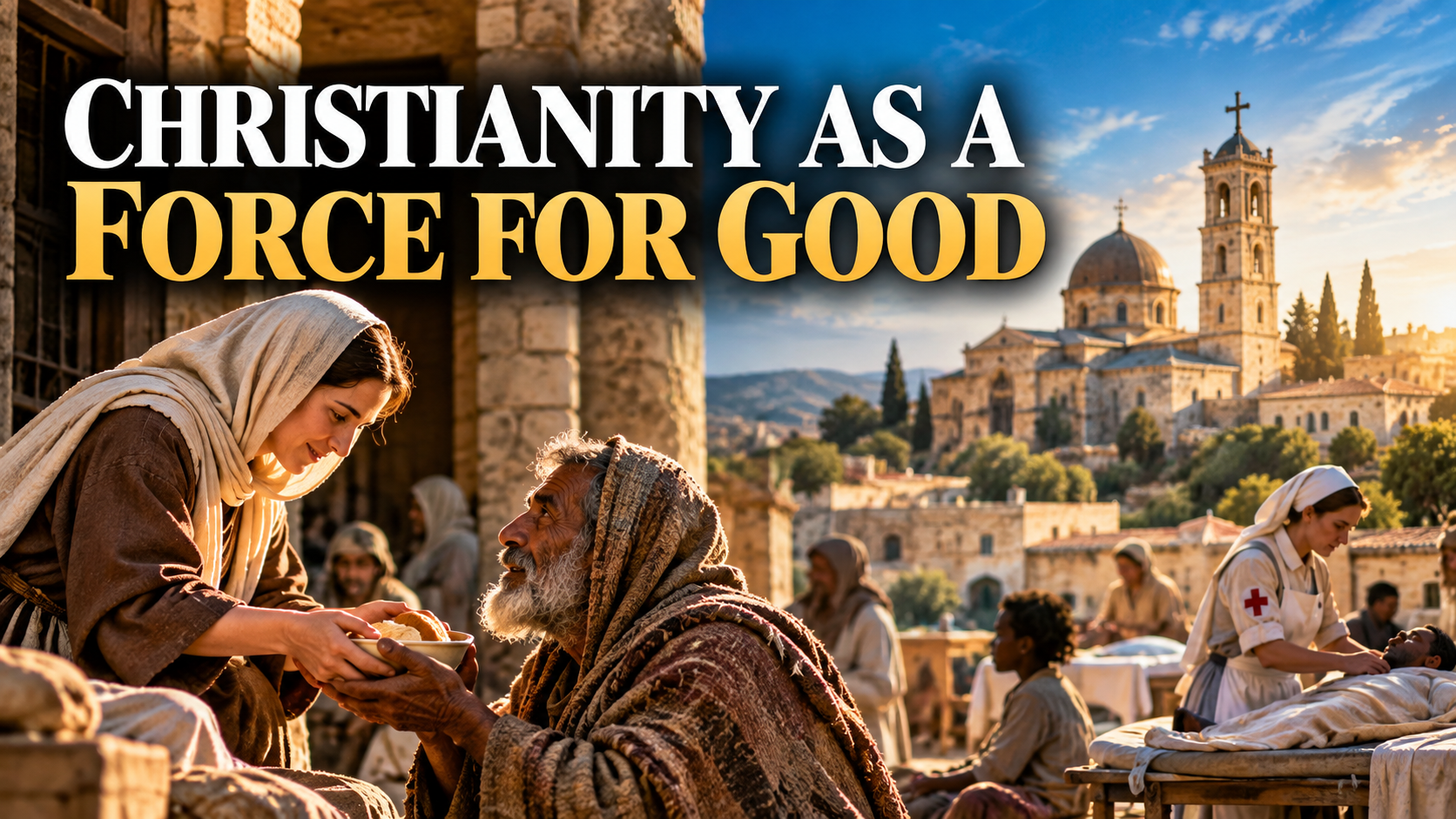
Christianity is frequently criticized for the injustices committed by people claiming to represent it. But there is another side of Christian history that deserves equal attention: For nearly 2,000 years, the teachings of Jesus Christ have inspired extraordinary efforts to feed the hungry, shelter the homeless, care for the sick, and protect society’s most vulnerable people.
This commitment to compassion is not an accidental byproduct of Christianity. It flows directly from the Bible’s teachings about God, human dignity, and our responsibility toward others.
Consider These Important Biblical Foundations:
- Every person bears God’s image. Genesis 1:27 teaches that human beings possess inherent dignity regardless of wealth, race, nationality, or social standing.
- God commands concern for the poor. Proverbs 14:31 connects our treatment of the needy with our attitude toward their Creator.
- Jesus identifies love for others as essential. Matthew 22:37–39 commands believers to love God and love their neighbors as themselves.
- Genuine faith produces compassionate action. James 2:14–17 challenges believers who profess faith but refuse to help someone lacking food or clothing.
- Christians are commanded to remember the poor. In Galatians 2:10, Paul describes caring for the poor as an important responsibility of Christian ministry.
The Early Church Put These Teachings Into Practice
Christian compassion was evident from the church’s earliest days.
Acts 2:44–45 describes believers voluntarily sharing their possessions to meet the needs of others. Acts 6 records the church organizing assistance for widows who were being overlooked in the daily distribution of food.
These were not merely expressions of religious sentiment. They were practical responses to real human suffering.
During devastating epidemics in the Roman Empire, Christian communities became known for caring for the sick and vulnerable, sometimes at considerable personal risk.
As Christianity spread, believers developed increasingly organized forms of assistance, including charitable institutions, shelters, and hospitals.
Christian Compassion Was Revolutionary
In the ancient world, assistance to the poor was often shaped by social rank, family relationships, civic obligation, or the interests of wealthy benefactors.
Christianity introduced a powerful additional motivation: Every human being possesses worth before God, and caring for those who cannot repay us is an expression of obedience to Christ.
Jesus’ parable of the Good Samaritan (Luke 10:25–37) challenged the idea that compassion should be limited to people within one’s own religious, ethnic, or social group.
The Samaritan helped a suffering stranger despite the hostility that existed between their communities.
The lesson was unmistakable: Love for one’s neighbor must cross boundaries.
The Historical Legacy Continues
Christian concern for the poor eventually contributed to the establishment of hospitals, orphanages, schools, rescue missions, food ministries, and charitable organizations.
The Salvation Army, founded by William and Catherine Booth in the nineteenth century, combined evangelism with practical assistance to impoverished communities.
Christian missionaries established medical clinics and educational institutions in regions where such services were limited or unavailable.
Today, churches and Christian organizations continue providing food, shelter, education, medical assistance, and disaster relief around the world. The historical record demonstrates that the Christian obligation to love one’s neighbor has repeatedly inspired remarkable generosity and sacrifice.
Truth Bullet
Christianity’s commitment to helping the poor is not a modern public-relations effort. It is a biblical command that has inspired nearly 2,000 years of organized compassion and charitable service.
Helpful Scripture — 1 John 3:17
But if anyone has the world’s goods and sees his brother in need, yet closes his heart against him, how does God’s love abide in him?
Helpful Quote
Christian content connects belief with action, making it a powerful mobilizing force.
Bernardo Kliksberg
Challenge Question:
If Christianity’s teachings are fundamentally harmful to society, why have those same teachings inspired generations of believers to sacrifice their time, resources, and sometimes their lives to care for the poor and vulnerable?
Christianity Is a Major Driving Force Behind Poverty-Focused Humanitarian Organizations
Response
Christianity’s concern for the poor has not remained confined to individual acts of kindness.
Christian beliefs have inspired the creation of some of the world’s most recognizable and influential humanitarian organizations.
These organizations provide food, clean water, medical treatment, education, disaster relief, and long-term development assistance to millions of people.
Their existence offers compelling evidence that Christianity’s influence extends far beyond churches and religious services.
Consider These Major Christian Humanitarian Organizations:
- World Vision: A Christian humanitarian organization working in international development, child welfare, disaster relief, clean water, and food security.
- Compassion International: A Christ-centered child development organization that partners with local churches to assist children living in poverty.
- Samaritan’s Purse: An evangelical Christian organization providing emergency assistance, disaster relief, medical care, and humanitarian support.
- Catholic Relief Services: A major international humanitarian agency addressing poverty, hunger, emergency response, and sustainable development.
- The Salvation Army: A Christian movement providing homeless services, food assistance, disaster relief, rehabilitation programs, and other community support.
- Tearfund: A Christian relief and development organization addressing poverty, disaster recovery, sanitation, and community development.
- Mercy Ships: A Christian humanitarian organization providing surgical care and medical training through hospital ships.
- Food for the Hungry: A Christian organization supporting vulnerable communities through development programs and emergency assistance.
These examples represent only a portion of the extensive network of Christian humanitarian organizations operating internationally.
What Makes Christian Humanitarian Work Distinctive?
Christian organizations share many practical goals with secular charities and humanitarian agencies.
However, their motivation is often explicitly rooted in Christian theology.
Three biblical convictions are particularly important.
1. Human Dignity
Every person is created in God’s image.
This means human worth is not determined by economic productivity, nationality, physical ability, or social position.
2. Love of Neighbor
Jesus commands believers to love others as themselves.
Christian service therefore extends beyond personal friendships, church membership, or national boundaries.
3. Faith Expressed Through Action
The New Testament repeatedly teaches that genuine faith should produce visible acts of love and generosity.
Providing food, shelter, and medical assistance becomes a practical expression of Christian discipleship.
Christianity Mobilizes More Than Money
One of Christianity’s most significant contributions to humanitarian work is its ability to mobilize people.
Churches provide established networks of volunteers, donors, community leaders, medical professionals, missionaries, and relief workers.
When disasters occur, these networks can organize assistance, collect supplies, raise funds, and support affected communities.
Christian humanitarian organizations also maintain permanent operations in areas experiencing chronic poverty, disease, food insecurity, and inadequate access to education.
Their work frequently involves long-term commitments rather than one-time donations.
A Powerful Historical Observation
The importance of Christian humanitarian organizations is not limited to their religious identity.
It is demonstrated by what they actually accomplish.
Children receive food and education. Families obtain clean water. Patients receive medical treatment. Communities rebuild after disasters.These are tangible contributions to human well-being.
The enormous scale, geographic reach, and continuing influence of Christian humanitarian organizations are undeniable.
Truth Bullet
Christianity does more than teach compassion. It has inspired an extensive global network of organizations that turn biblical convictions into food, medicine, education, clean water, and practical assistance for people in need.
Helpful Scripture — Galatians 6:10
So then, as we have opportunity, let us do good to everyone.
Christianity’s influence should be evaluated not only by historical controversies but also by the organizations, institutions, and humanitarian efforts its teachings have inspired.
Challenge Question
If Christianity is fundamentally detrimental to humanity, how do we explain the extensive network of Christian organizations that have devoted enormous resources, personnel, and expertise to reducing poverty and human suffering?
Christianity Demonstrates an Extraordinary Commitment to Society’s Most Vulnerable
Response
One of the strongest demonstrations of Christianity’s positive influence is found in its sustained commitment to people whom society frequently overlooks.
Throughout history, Christians have established institutions and ministries to care for orphans, widows, the sick, the disabled, the homeless, and victims of disaster.
This commitment often requires substantial financial sacrifice, personal hardship, and years of dedicated service.
Christian compassion is therefore more than an abstract moral ideal. It is something that can be observed in hospitals, orphan-care programs, disaster zones, food ministries, and underserved communities around the world.
Consider These Major Areas of Christian Service:
1. Orphan Care and Vulnerable Children
The Bible repeatedly commands God’s people to defend and care for orphans.
Christian ministries have responded by establishing children’s homes, foster-care networks, adoption services, child sponsorship programs, and educational initiatives.
Organizations such as Compassion International and Bethany Christian Services have developed programs addressing the needs of vulnerable children and families.
These efforts reflect the biblical conviction that children possess inherent dignity and deserve protection, love, and care.
2. Hospitals and Medical Missions
Christianity played an important role in the historical development of organized charitable hospitals.
In the fourth century, Basil of Caesarea established an extensive charitable complex that provided care for the poor, travelers, and the sick.
Over the centuries, Christian communities founded hospitals, clinics, hospices, and medical missions.
Today, organizations such as Mercy Ships and Samaritan’s Purse continue this tradition by providing medical services in areas experiencing serious healthcare shortages.
Christian medical professionals have also volunteered their expertise in remote and impoverished communities, often serving people who could not otherwise afford treatment.
3. Disaster Relief and Emergency Assistance
When hurricanes, earthquakes, floods, wars, and humanitarian emergencies displace families, Christian relief organizations frequently participate in the response.
They provide emergency food, clean water, temporary shelter, medical assistance, and rebuilding support.
Organizations such as World Vision, Catholic Relief Services, and Samaritan’s Purse maintain substantial humanitarian operations to respond to such emergencies.
This work frequently crosses national, cultural, and religious boundaries.
4. Hunger, Homelessness, and Poverty
Christian churches and ministries operate food pantries, homeless shelters, community kitchens, rehabilitation centers, and transitional housing programs.
The Salvation Army is a prominent example of a Christian organization whose ministry has long included practical assistance to people experiencing poverty and homelessness.
Local churches also contribute through volunteer service, emergency financial assistance, food distribution, and community partnerships.
5. Disease Prevention and Clean Water
Christian humanitarian organizations participate in programs addressing malaria, HIV/AIDS, inadequate sanitation, and unsafe drinking water.
Their activities include supporting clinics, providing health education, distributing essential supplies, and helping communities develop sustainable access to clean water.
These initiatives can transform the health and economic prospects of entire communities.
Compassion That Requires Personal Sacrifice
Christian humanitarian service frequently demands more than financial donations.
Missionaries, physicians, nurses, teachers, relief workers, and volunteers have devoted years of their lives to helping people in difficult and sometimes dangerous circumstances.
Many have served in regions affected by disease, war, natural disasters, and extreme poverty.
Their motivation is often straightforward: They believe that loving Jesus Christ requires them to love and serve other people.
The Good Samaritan did not merely express sympathy for the injured traveler.
He stopped, treated his wounds, transported him to safety, and personally paid for his care.
That same principle continues to inspire Christian humanitarian service.
Truth Bullet:
Christianity’s positive influence can be seen in the countless hospitals, relief agencies, orphan-care ministries, food programs, and humanitarian efforts inspired by the command to love God and love our neighbors.
Helpful Scripture — Matthew 25:40
“And the King will answer them, ‘Truly, I say to you, as you did it to one of the least of these my brothers, you did it to me.’”
Helpful Quote
Faith communities are arguably the single most important repository of social capital in America.
Robert Putnam—Harvard Political Scientist
Challenge Question:
When evaluating Christianity’s impact on the world, shouldn’t we consider the millions of people who have received food, shelter, medical treatment, education, and humanitarian assistance through Christian organizations and ministries?