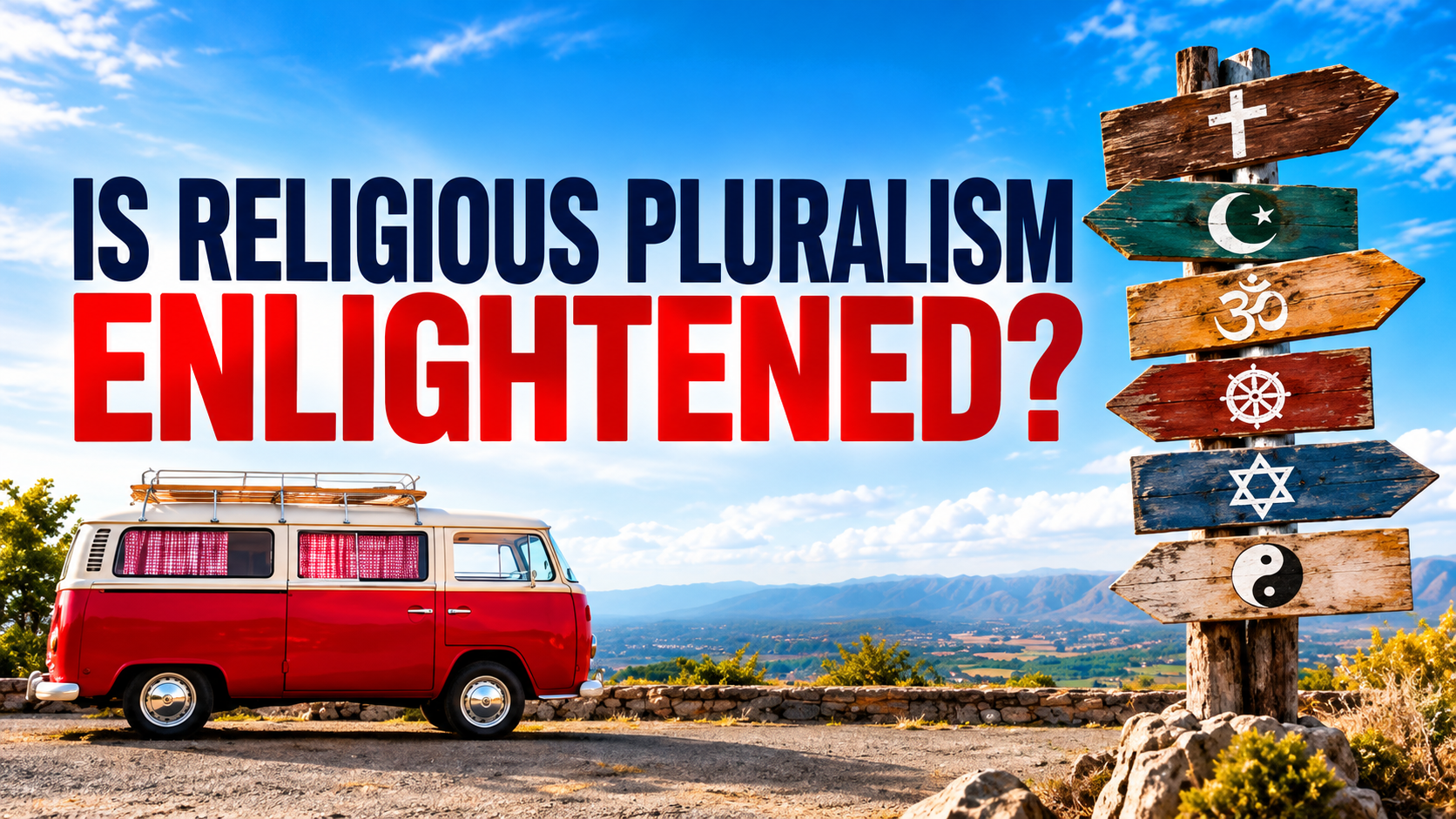
A key strategy in effective apologetics is building a cumulative case—using multiple lines of evidence that reinforce one another while remaining capable of standing on their own. Together, they form a strong overall case. But each individual point should also be clear and compelling enough to challenge an opposing argument when considered on its own.
Ready Responses are designed with this approach in mind. Each response is a concise, memorable Truth Bullet—a key fact, question, or line of reasoning you can introduce into a conversation. You don’t need to deliver an entire argument at once. Sometimes one well-placed truth is enough to challenge an assumption, expose a weakness, or give someone a reason to reconsider what they believe.
Skeptics often raise difficult questions about creation, the universe, God, and the Bible. Ready Responses gives you concise answers, memorable Truth Bullets, key Scriptures or Quotes to help you understand the issue and explain what you believe in your own words.
Purpose: You don’t need to memorize an argument. Learn the key ideas well enough to explain them in your own words.
Religious Pluralism Only Appears to Be Enlightened
Response
Religious pluralism is often presented as a more enlightened, intellectually sophisticated approach to religion. Rather than insisting that one religion is true, pluralists suggest that all religions are different expressions of the same ultimate truth.
But being enlightened means having a rational, well-informed understanding of reality—not simply embracing ideas that sound inclusive or progressive.
Consider the problem:
- Knowledge: The world’s major religions make fundamentally different claims about God, salvation, and eternity.
- Reason: Contradictory claims cannot all be true at the same time and in the same sense.
- Understanding: Recognizing and examining these differences demonstrates intellectual honesty. Ignoring them does not.
Religious pluralism may sound enlightened, but its central claim often requires dismissing the very doctrines that distinguish one religion from another.
True Enlightenment Pursues Truth, Not Popularity
Imagine someone claiming to have a superior understanding of mathematics while insisting that conflicting answers to the same equation are equally correct.
We would not consider that person enlightened. We would question whether they understood mathematics.
The same principle applies to religion.
If Christianity teaches that Jesus is God incarnate and Islam explicitly denies His deity, an informed person must recognize that both claims cannot be correct in the same sense.
True enlightenment requires examining the evidence and determining which explanation is most reasonable—not declaring every explanation equally valid.
Truth Bullet
Being enlightened means recognizing and pursuing truth, not ignoring contradictions to make every belief appear equally valid.
Helpful Quote
It is comforting to pretend that the great religions make up one big, happy family. But this sentiment, however well-intentioned, is neither accurate or ethically possible.
— Stephen Prothero, God Is Not One
Challenge Question: How is it intellectually enlightened to insist that all religions are equally true while ignoring the fundamental contradictions in what those religions actually teach?
Religious Pluralism Only Appears to Be Tolerant
Response
Religious pluralism is frequently praised as tolerant because it refuses to declare any one religion exclusively true.
Christians, on the other hand, are sometimes accused of intolerance for believing that Jesus Christ is the only way to God.
But tolerance does not mean accepting every belief as true. It means respecting the right of others to hold beliefs with which we disagree.
Consider three important distinctions:
- Tolerance: Respecting another person’s freedom to believe differently.
- Agreement: Accepting another person’s religious claims as true.
- Religious pluralism: Insisting that different religious traditions are ultimately equally valid paths to the same divine reality.
A Christian can respect a Muslim, Hindu, Buddhist, or atheist without agreeing with their religious conclusions.
Disagreement is not the same thing as intolerance.
Religious Pluralism Can Be Intolerant of Religious Differences
Ironically, religious pluralism often does the very thing it accuses exclusive religions of doing: rejecting beliefs that contradict its own.
Christianity teaches that Jesus is the only way to the Father. Religious pluralism rejects that exclusive claim.
Islam teaches that Muhammad is God’s final prophet. Religious pluralism rejects the idea that any one revelation is uniquely authoritative.
Rather than accepting these religions as they define themselves, pluralism reinterprets their central doctrines to fit its own understanding of religious truth.
This raises an important question: Is it genuinely tolerant to tell religious believers that their most deeply held convictions are mistaken because they conflict with pluralism?
True tolerance respects people without requiring everyone to agree about what is true.
Truth Bullet
Tolerance means respecting someone’s right to believe differently—not insisting that all beliefs must be equally true.
Helpful Quote
Tolerance isn’t about not having your own set of beliefs. It’s about how your beliefs lead you to treat people who disagree with you.
Timothy Keller
Challenge Question: If religious pluralism rejects the exclusive teachings of Christianity and other religions, why should its own exclusive beliefs be considered tolerant while theirs are considered intolerant?
Religious Pluralism Is a Faith-Based Concept
Response
Religious pluralism is often presented as a neutral position standing above the competing claims of the world’s religions.
But the assertion that all religions ultimately lead to the same God is not an established fact. It is a theological belief that must be accepted by faith.
Like other religious worldviews, pluralism offers answers to life’s most fundamental questions.
Consider its central claims:
- Who is God? The world’s religions ultimately point toward the same divine reality, despite their conflicting descriptions of God.
- How does someone reach God? Different religious paths are equally valid ways of reaching ultimate spiritual fulfillment.
- What happens after death? The different religious destinations ultimately represent the same spiritual reality.
These are not neutral observations. They are religious claims about God, salvation, and eternity.
And they directly contradict the teachings of many of the religions pluralism claims to embrace.
Pluralism Is Another Competing Worldview
Imagine five people presenting different explanations of what happens after death.
A sixth person enters the conversation and announces that everyone is correct because all five explanations ultimately mean the same thing.
But how does this sixth person know?
What evidence establishes that all five explanations lead to the same reality?
Simply asserting that everyone is correct does not make the assertion true.
Religious pluralism faces the same challenge. It offers its own interpretation of ultimate reality without establishing why that interpretation should be accepted over the religions it contradicts.
Pluralism does not eliminate exclusive religious claims. It introduces another exclusive claim of its own.
The question is not whether pluralism sounds inclusive or compassionate. The question is whether its claims are true.
Truth Bullet
Religious pluralism is not a neutral position above religion. It is another faith-based worldview making its own exclusive claims about God, salvation, and eternity.
Helpful Quote
God is not one. Faith in the unity of all religions is just that—faith.
— Stephen Prothero, God Is Not One
Challenge Question: If religious pluralism makes its own unproven claims about God, salvation, and eternity, on what basis should those claims be considered more authoritative than the religions it contradicts?