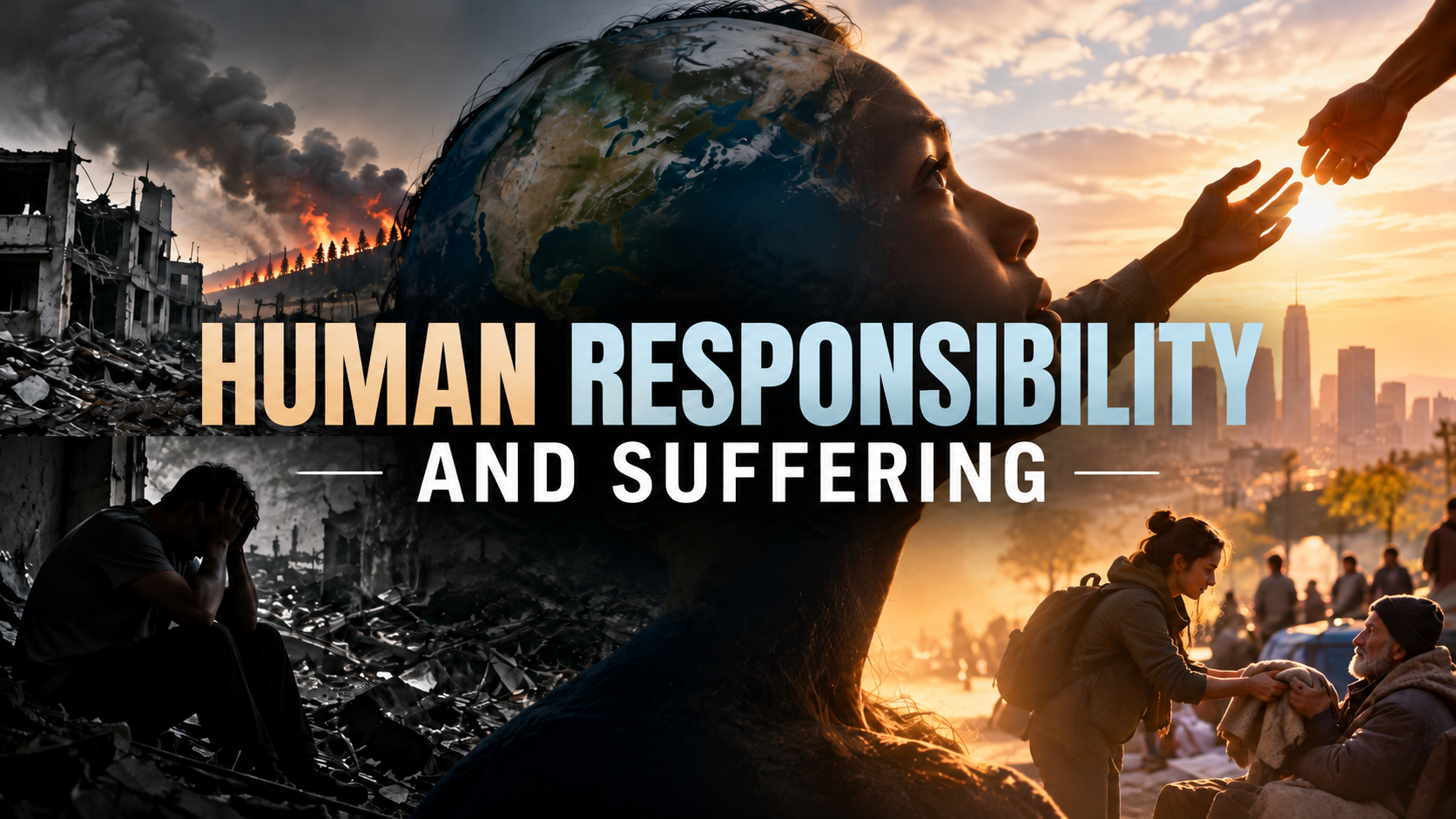
A key strategy in effective apologetics is building a cumulative case—using multiple lines of evidence that reinforce one another while remaining capable of standing on their own. Together, they form a strong overall case. But each individual point should also be clear and compelling enough to challenge an opposing argument when considered on its own.
Ready Responses are designed with this approach in mind. Each response is a concise, memorable Truth Bullet—a key fact, question, or line of reasoning you can introduce into a conversation. You don’t need to deliver an entire argument at once. Sometimes one well-placed truth is enough to challenge an assumption, expose a weakness, or give someone a reason to reconsider what they believe.
Skeptics often raise difficult questions about creation, the universe, God, and the Bible. Ready Responses gives you concise answers, memorable Truth Bullets, key Scriptures or Quotes to help you understand the issue and explain what you believe in your own words.
Purpose: You don’t need to memorize an argument. Learn the key ideas well enough to explain them in your own words.
Why Does God Allow People to Suffer from Natural Disasters?
Response:
Natural disasters are often unavoidable, but much of the suffering they cause can be anticipated and reduced through responsible human decisions.
Consider Hurricane Katrina. New Orleans was built in a region known to be vulnerable to catastrophic flooding. Scientists and government agencies warned of the dangers years before the disaster, yet adequate protections and evacuation preparations were lacking.
Around the world, millions live in areas threatened by earthquakes, hurricanes, flooding, and volcanic eruptions. Some have little choice, while others knowingly accept these risks.
God has given mankind intelligence, foresight, and the ability to prepare for danger. When we ignore known risks or fail to protect vulnerable populations, we contribute to the suffering that follows.
Truth Bullet
- We cannot prevent every natural disaster, but we can prevent much of the suffering caused by poor planning, negligence, and ignoring known dangers.
Helpful Scripture
The prudent sees danger and hides himself, but the simple go on and suffer for it.
Proverbs 22:3
Challenge Question: If mankind knowingly exposes millions of people to predictable dangers while ignoring opportunities to protect them, is it reasonable to hold God solely responsible for the resulting suffering?
Mankind Is Directly Responsible for Much of the World’s Suffering
Response: History reveals that mankind has been one of the greatest causes of human suffering.
Wars, genocide, murder, human trafficking, terrorism, oppression, and exploitation have caused untold misery. These tragedies are not the result of natural disasters. They are the consequences of human decisions.
God has given mankind moral freedom, but He has also established clear moral boundaries. He commands us not to murder, steal, lie, oppress, or exploit others. Instead, He instructs us to love our neighbors as ourselves.
Yet humanity repeatedly chooses to disregard these commands.
When people deliberately violate the very principles God established to protect human life, the resulting suffering demonstrates the consequences of human evil—not an absence of divine moral instruction.
Truth Bullet
- Much of the suffering blamed on God is caused by mankind doing precisely what God has commanded us not to do. Imagine how much suffering would dissappear if mankind simply obeyed the ten commandments.
Helpful Quote
Much of the suffering in our world is not the result of God’s silence, but mankind’s refusal to obey what God has already said.
Brett Shannon—Is God To Blame?
Challenge Question: If God commands mankind to love our neighbor as ourself prohibits the very behaviors responsible for so much suffering, why should He be blamed when humanity chooses to disobey?
How Much Suffering Do We Bring Upon Ourselves?
Response
Not all suffering is self-inflicted, but many hardships are the predictable consequences of our personal choices.
Consider the consequences of substance abuse, financial irresponsibility, infidelity, reckless behavior, and neglecting our health. These decisions can produce suffering that extends far beyond the individual, affecting spouses, children, families, and entire communities.
The Bible provides practical instruction concerning marriage, parenting, financial stewardship, self-control, honesty, and personal responsibility.
These principles are not arbitrary restrictions. They are safeguards intended to protect us from unnecessary hardship.
When people disregard wise instruction and experience the consequences, it is worth considering whether the source of their suffering is God’s indifference or their own decisions.
Truth Bullet
- Many of God’s commands are designed to protect us from the very suffering we create when we ignore them.
Helpful Scripture
People ruin their lives by their own foolishness and then are angry at the Lord.
Proverbs 19:3
Challenge Question: If someone repeatedly ignores God’s instructions for wise and responsible living, is it fair to blame God for the consequences of those choices?
If the World Has So Much Wealth, Why Do Millions Still Suffer?
Humanity possesses extraordinary resources, knowledge, and technology capable of preventing or alleviating enormous suffering.
We have the agricultural technology to produce tremendous quantities of food, medical treatments for many preventable diseases, and engineering capabilities to provide clean drinking water and sanitation. Pharmaceutical companies sometimes charge hundreds of dollars for life-saving medications whose ingredients and manufacturing costs amount to mere pennies per dose, placing essential treatments beyond the reach of those who desperately need them.
Yet millions continue to suffer from hunger, disease, poverty, and inadequate access to basic necessities.
Why?
In many cases, corruption, greed, warfare, mismanagement, and misplaced priorities prevent available resources from reaching those who need them most.
God repeatedly commands generosity, justice, compassion, and care for the poor. The problem is not always that God has failed to provide resources. Sometimes it is that mankind has failed to distribute and steward them responsibly.
Much of humanity’s suffering persists not because we lack the resources to help, but because we lack the willingness, wisdom, or cooperation to use them effectively.
Helpful Quote
The tragedy is not simply that millions suffer, but that so much of their suffering could be prevented.
Challenge Question: If mankind possesses the resources and technology to alleviate enormous suffering but repeatedly fails to use them, shouldn’t we question humanity’s priorities before questioning God’s goodness?